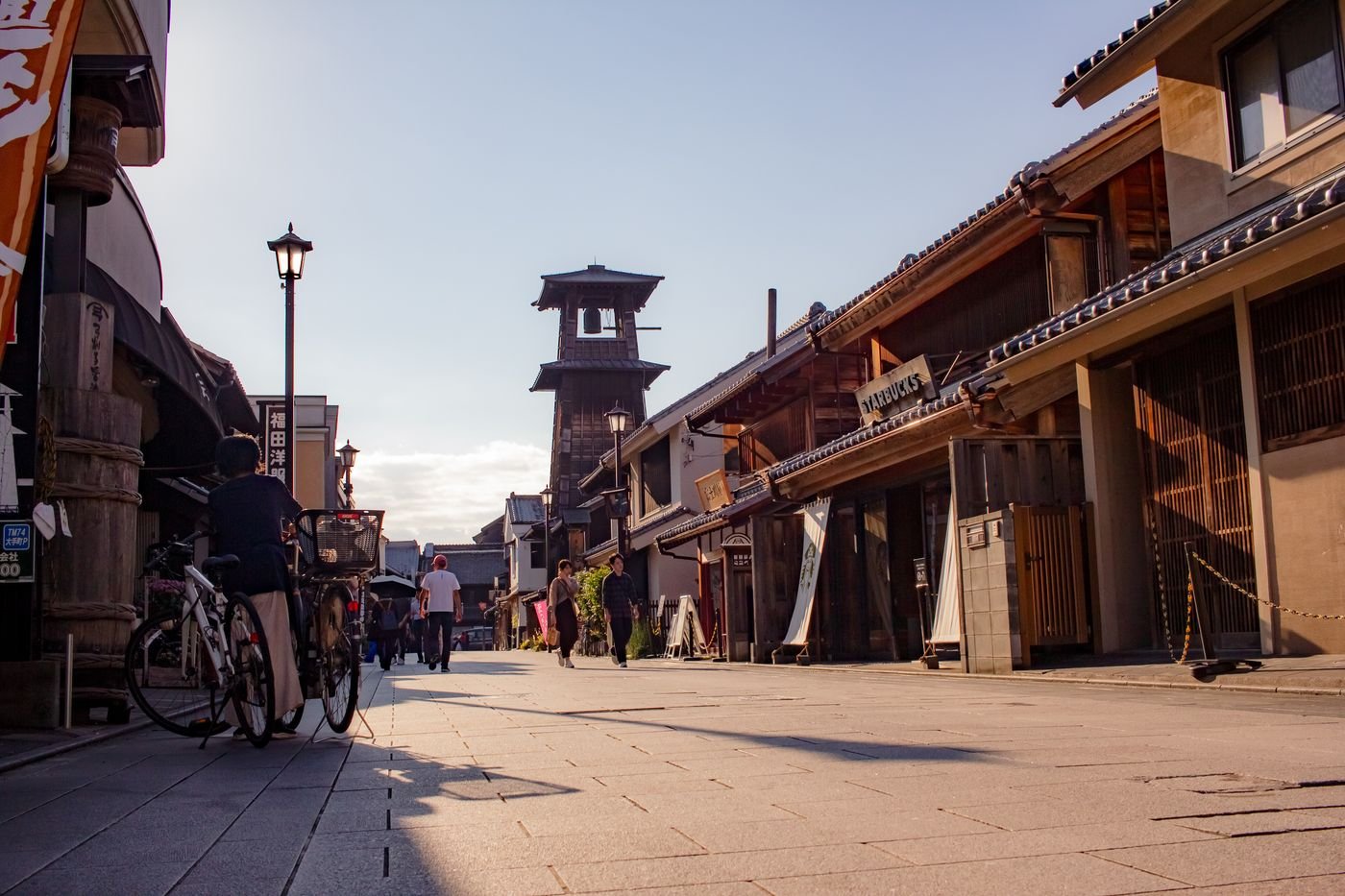
Kawagoe is the easiest way to see an Edo-period merchant town from Tokyo. It sits in Saitama Prefecture, about 30 minutes north-west of Ikebukuro, and is nicknamed Koedo, or “Little Edo”, because its centre keeps rows of heavy black clay-walled warehouses that look much as Tokyo did before the fires and the bombing. We rate it as one of the best low-effort additions to a Tokyo itinerary, and it fits neatly alongside the bigger options on our Tokyo day trips guide.
Kawagoe day trip at a glance (fares as of 2026):
| Item | Detail |
|---|---|
| Fastest route | Tobu Tojo Line Express from Ikebukuro, about 30 minutes, roughly ¥490 |
| Alternative route | Seibu Shinjuku Line to Hon-Kawagoe, 50-60 minutes, roughly ¥600 |
| Main sight | Kurazukuri Street of clay-walled warehouses |
| Landmarks | Toki no Kane bell tower, Candy Alley, Kitain Temple |
| Kitain entry | About ¥400 for paid areas |
| Discount pass | Tobu Kawagoe Premium pass, ¥1,200 adult at last check |
Getting to Kawagoe from Tokyo
There are two main routes, and the choice mostly depends on where your hotel is.
Tobu Tojo Line from Ikebukuro (fastest): the Express runs from Ikebukuro to Kawagoe Station in about 30 minutes and costs roughly 490 yen one way as of 2026. No seat reservation is needed on the regular express. Trains are frequent through the day, so there is no timetable to plan around.
Seibu Shinjuku Line from Seibu-Shinjuku: the express to Hon-Kawagoe takes about 50 to 60 minutes and costs roughly 600 yen one way. Hon-Kawagoe is the stop closest to Candy Alley and the old merchant district, so it can be the better choice if you are staying around Shinjuku. Check the current fare in your navigation app, since fares shift slightly with each revision.
From Kawagoe Station: the Kurazukuri street is around 15 to 20 minutes on foot, or a short bus ride. Hon-Kawagoe is a little closer, at roughly 15 minutes’ walk.
Kawagoe Discount Pass
Tobu sells a Kawagoe Discount Pass aimed at overseas visitors, bundling a round trip from Ikebukuro with unlimited rides on local Kawagoe buses and small discounts at partner shops and cafes. The Premium version is listed on the official Tobu Kawagoe pass page at 1,200 yen for adults at the time of writing, though older listings show lower prices, so confirm before you buy. If you plan to walk everything on foot, the plain return fare is usually cheaper; the pass pays off when you want to use the buses between the old town and the castle-side sights. Our Tokyo getting around guide explains IC cards if you would rather tap in and out.
What to See in Kawagoe
Kurazukuri Street (Ichibangai)
The main attraction is the Kurazukuri Zone, the street of black clay-walled merchant warehouses (kura) built after a major fire in 1893 as fire-resistant shops and storehouses. Heavy tiled roofs, thick shutters and dark plaster make it look like a film set, and many ground floors now sell sweets, pottery, pickles and sweet-potato snacks. Some buildings are open as small museums. Visit on a weekday morning if you can.
Toki no Kane Bell Tower
Rising above the street is the Toki no Kane, a wooden bell tower that is Kawagoe’s symbol. The bell has marked the time for the town since the Edo period, and the present tower is a later rebuild. It is typically rung at 6am, noon, 3pm and 6pm. The best photo is from the street looking up toward it with the shopfronts in the foreground.
Kashiya Yokocho (Candy Alley)
A short lane of traditional sweet shops selling dagashi, cheap old-style Japanese snacks, along with roasted sweet potato treats, sembei and sticky rice candy. Kawagoe is known for its sweet potatoes, so expect them in ice cream, chips and tarts. Most shops open from about 10:00 and some close on Mondays. Budget 500 to 1,000 yen for a good tasting walk.
Kitain Temple
Kitain is a Tendai Buddhist temple known for its collection of more than 500 stone Gohyaku Rakan statues, each with a different expression, and for rooms said to have been moved here from Edo Castle. Paid areas cost around 400 yen as of our last check, so confirm at the gate. It is a quiet counterpoint to the shopping streets, and about 15 minutes’ walk from the central district.
Hikawa Shrine and Other Stops
Hikawa Shrine is a short walk from the old town and known for its summer wind-chime display and for marriage-luck charms. The Kawagoe Festival Kaikan introduces the October festival floats that are listed as UNESCO intangible heritage. If you still have time, Honmaru Goten, the surviving palace hall of Kawagoe Castle, is inexpensive to enter and usually closed Mondays.
How to Spend a Day in Kawagoe
A comfortable half-day loop works like this: arrive at Kawagoe Station by 10:00, walk to Kitain, return via Hikawa Shrine, lunch in the old town, then browse Kurazukuri street and Candy Alley before the tower bell rings at 3pm. Leave from Hon-Kawagoe or Kawagoeshi Station for the return, and you are back in central Tokyo by early evening.
If you prefer to go with a guide, there are private and small-group options with local explanations of the warehouse architecture. Browse Kawagoe tours on GetYourGuide for walking tours that meet in Ikebukuro, and book ahead on weekends.
Combining Kawagoe with the Rest of Tokyo
Because the trip is short, Kawagoe pairs with an evening in Ikebukuro or Shinjuku. If you are building a longer trip, see how it compares with Kamakura for temples and sea air or Nikko for a full-day shrine excursion. For a base near the Ikebukuro line, search Tokyo hotels on Booking.com or read our where to stay in Tokyo guide. Our Tokyo city guide covers the rest of the city.
For general planning, Japan Guide’s Kawagoe page is a useful independent reference for current access details.