Tokyo’s position at the heart of Japan’s Kanto region means that within two hours of the city by train, you can reach mountain shrines, ocean coastlines, volcanic landscapes, traditional castle towns, and the slopes of Mt Fuji. Japan’s rail network makes all of these accessible independently - no tour, no driver, no complicated logistics required.
The eight destinations below cover the range from a 50-minute commuter train ride to a two-hour Fuji Lakes journey. We have included transport options, entry costs, and recommendations for how long to spend at each.
1. Nikko - UNESCO Shrines and Mountain Scenery
Travel time: 2 hours from Asakusa (Tobu Nikko Limited Express, ¥2,720 reserved seat) or 1 hour 50 minutes from Shinjuku via JR + bus (¥5,000+ total, or covered by JR Pass to Nikko Station plus bus) Best for: History, mountain landscape, autumn foliage Recommended time: Full day
Nikko’s Tosho-gu shrine complex is one of Japan’s most ornately decorated built environments. Commissioned in 1634 by the Tokugawa shogunate to enshrine the spirit of the founder Tokugawa Ieyasu, the complex covers a forested hillside and includes the famous Yomeimon Gate - covered in 508 individual decorative carvings - and the Nemuri-neko (Sleeping Cat) carving above a doorway leading to Ieyasu’s mausoleum.
Entry: Tosho-gu temple complex ¥1,300 (includes most shrines; Ieyasu’s mausoleum requires an additional ¥520)
The wider Nikko area extends into Nikko National Park, with Ryuzu and Kegon waterfalls (Kegon ¥570 for the observation lift), Lake Chuzenji, and the Senjogahara plateau accessible by bus from Nikko Station. The mountain altitude means autumn colours arrive 2–3 weeks earlier than in central Tokyo.
Practical note: The Tobu Nikko Pass (¥4,780 from Asakusa, covering two days) includes unlimited bus travel within the Nikko area, which is useful since the main shrine complex is 2km from the train station.
2. Kamakura - Great Buddha and Zen Temples
Travel time: 1 hour from Tokyo Station (JR Yokosuka Line, ¥940 each way) or 1 hour from Shinjuku (via Shonan-Shinjuku Line, ¥920) Best for: History, coastal atmosphere, hiking between temples Recommended time: Full day
Kamakura served as Japan’s de facto capital from 1185 to 1333 under the Kamakura shogunate, and the town retains a density of temples and shrines - 65 Buddhist temples and 19 Shinto shrines - within a compact area of forested hills and coastal lowland.
The Kotoku-in Great Buddha (Kamakura Daibutsu) is the town’s most recognisable sight - a 13.35-metre bronze figure completed in 1252, seated outdoors with the hills as a backdrop. Entry ¥300. The interior of the hollow bronze figure can be entered for ¥20 extra.
Hase-dera temple (¥400) contains a large gilded wooden Kannon statue, a cave pathway decorated with Jizo stone figures, and a coastal garden with views across Sagami Bay. Allow 45 minutes.
The Enoden Line (¥260 for a single section) is a narrow-gauge coastal train running from Kamakura Station to Enoshima (see entry 8 below), passing through the residential streets of Kamakura at close quarters - houses within arms’ reach of the track. It is an experience in itself.
The Daibutsu Hiking Course connects several inland temples across a 2-hour forested ridge walk between Kitakamakura and the Great Buddha area. No entry fee for the trail itself.
3. Hakone - Mt Fuji Views and Open Air Museum
Travel time: 1 hour 20 minutes from Shinjuku (Odakyu Romance Car, ¥2,470 reserved seat to Hakone-Yumoto) or covered from Odawara by JR Pass Best for: Mt Fuji views, onsen, art, mountain scenery Recommended time: Full day or overnight
Hakone is one of the most consistently popular day trips from Tokyo precisely because it offers multiple distinct experiences within a compact area: mountain volcanic scenery, views of Mt Fuji from Lake Ashi on clear days, one of Japan’s best outdoor sculpture parks, and some of the region’s finest onsen ryokan.
Hakone Open Air Museum: ¥1,600 adults. A large sculpture park on a hillside with major works by Henry Moore, Picasso, and contemporary Japanese sculptors. A glass-enclosed Picasso Pavilion holds over 300 works. One of the best outdoor art spaces in Japan.
Lake Ashi (Ashinoko): A volcanic caldera lake with views of Mt Fuji (weather permitting) directly above the opposite shoreline. The Hakone Sightseeing Cruise (¥1,200 one way) crosses the lake in replica pirate ships. The Torii gate of Hakone Shrine, partially submerged in the lake edge, is the area’s most photographed image.
Owakudani: A volcanic valley still actively releasing sulphurous gas, accessible by ropeway. Kuro tamago (black eggs hard-boiled in the volcanic hot springs, ¥500 for 5 eggs) are the local speciality. The ropeway (¥1,800 round trip) provides aerial views over the volcanic landscape.
Hakone Free Pass: ¥6,100 from Shinjuku (covers Odakyu train from Shinjuku to the Hakone area, and unlimited use of the Hakone Tozan train, ropeway, Lake Ashi cruise, and buses within the area). If you plan to use most transport options, the pass pays for itself within a single day.
Hakone also has some of Japan’s finest onsen ryokan - for an overnight stay, properties like Gora Kadan (¥80,000+/night) or more accessible options around Hakone-Yumoto (from ¥20,000/night per person including dinner) make it worth extending to two days.
4. Yokohama - Chinatown and Waterfront
Travel time: 30 minutes from Shibuya or Shinjuku (Tokyu Toyoko Line, ¥570), or 25 minutes from Tokyo Station (JR Tokaido Line, ¥480) Best for: Food, urban exploring, maritime history Recommended time: Half day or full day
Yokohama is Japan’s second-largest city by population and one of its major port cities, opened to foreign trade in 1859. The city has a distinct character from Tokyo - more open and spacious, with a European and Chinese influence visible in its architecture and food culture.
Yokohama Chinatown is the largest in Japan, with over 600 restaurants and shops. The visual density of lanterns, red temple gates, and competing restaurant fronts is striking. Dim sum, buns, and roast duck are everywhere from approximately ¥500 for a street snack.
Minato Mirai 21: The waterfront redevelopment district with the Yokohama Landmark Tower (observation deck ¥1,000), the Yokohama Museum of Art (¥1,700), the Cosmo World amusement park, and a pleasant waterfront promenade. The Red Brick Warehouse (Akarenga Soko) - converted 1910s port warehouses - contains cafes, bars, and a seasonal events space.
Sankeien Garden (¥700) is a large traditional garden built in the early 1900s by a silk merchant, with relocated historic buildings from across Japan set among ponds and planted hillsides. Less crowded than most Yokohama attractions and most beautiful in plum and cherry blossom season.
5. Kawaguchiko - Fuji Five Lakes and the Best Mt Fuji Views
Travel time: 2 hours from Shinjuku by Fuji Excursion Limited Express train (¥2,800 reserved) or 2 hours by Keio Highway Bus (¥1,800 one way - pre-book at the Keio bus counter or online) Best for: Mt Fuji views, hiking, cycling around the lake Recommended time: Full day, or overnight for sunrise views
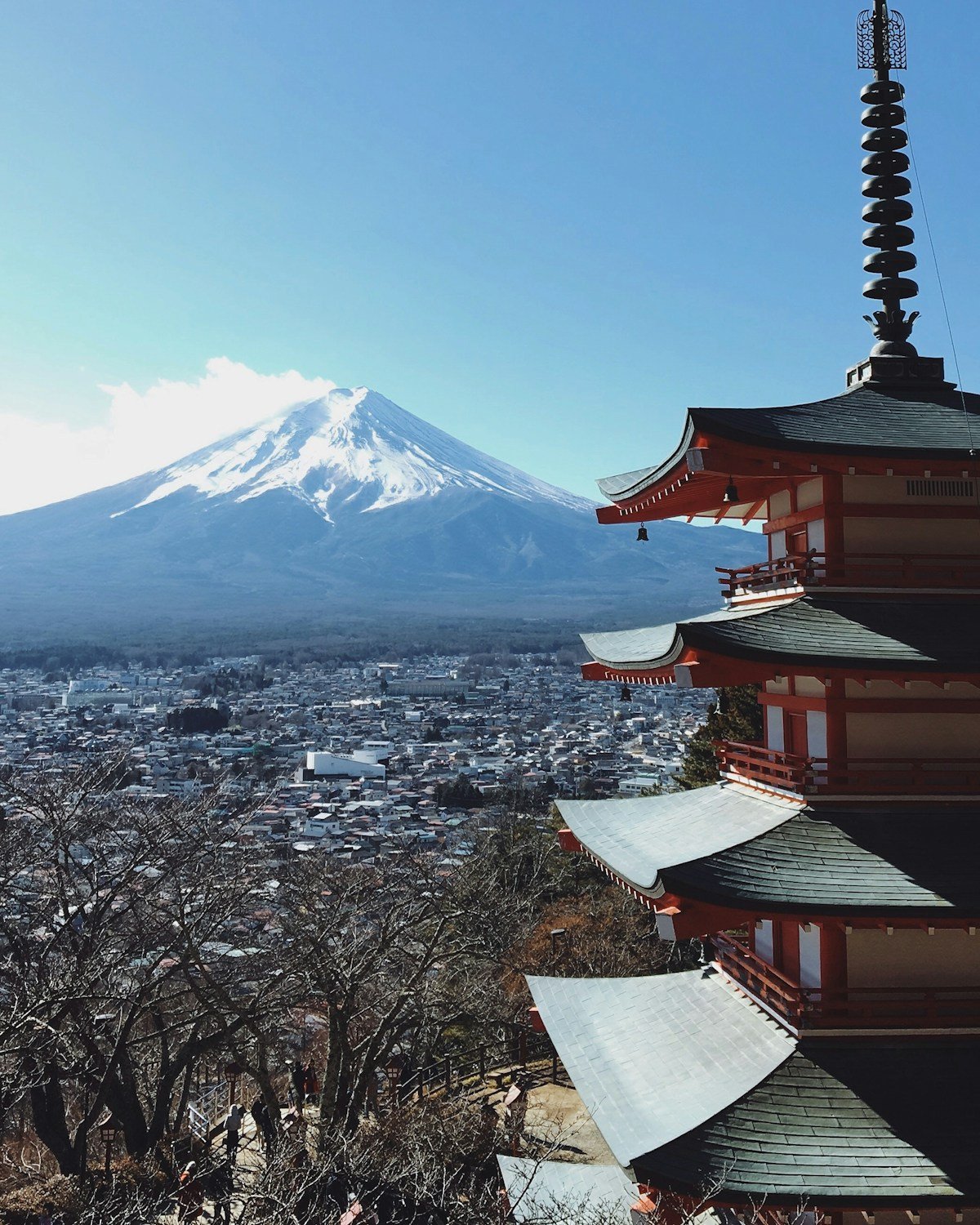
Of the five lakes surrounding Mt Fuji, Kawaguchiko (Lake Kawaguchi) is the most accessible and offers the widest range of activities. The north shore of the lake provides one of the most iconic views in Japan: Fuji rising above the southern shoreline, doubled in the lake’s reflection on still, clear mornings.
Views are most reliable from November through March. In summer (July–August), cloud cover hides the summit more often than not. Mt Fuji’s climbing season runs from early July to early September - the fifth station on the Yoshida Trail is accessible by bus from Kawaguchiko Station year-round.
The Chureito Pagoda at Arakurayama Sengen Shrine - reached by 398 steps - is the other classic Fuji viewpoint, with the pagoda framing the mountain in the background. Budget 30–45 minutes each way.
Cycling around Lake Kawaguchi (circumference approximately 20km) takes 2–3 hours at a relaxed pace. Rental bikes are available from shops near the station for approximately ¥500–¥700 per hour or ¥1,500–¥2,000 for a full day.
6. Mt Takao (Takaosan) - Accessible Hiking Close to the City
Travel time: 50 minutes from Shinjuku (Keio Line to Takaosanguchi, ¥390 each way) Best for: Hiking, nature, temple, autumn foliage Recommended time: Half day
Mt Takao stands at 599 metres and sits within a national forest on the western edge of Tokyo’s metropolitan area. It is the most climbed mountain in the world by volume (over 2.5 million visitors per year), which gives some indication of how accessible and well-maintained the trails are.
Trail 1 (the most popular) leads from the base to the summit in approximately 90 minutes, passing Yakuo-in temple complex (free to enter) en route. A cable car (¥490 one way, ¥950 round trip) and chair lift (¥490 one way) run parallel to the lower trail section for those who prefer to reduce the climbing distance.
The summit provides views west to Mt Fuji on clear days. In autumn (late October to mid-November), the maple and beech foliage along the trails is excellent. The approach area near the station has several good restaurant options for soba noodles (a local specialty at ¥900–¥1,400) after the descent.
7. Enoshima - Island Temples and Sea Caves
Travel time: 1 hour from Shinjuku (Odakyu Line to Katase-Enoshima, ¥900) or 1 hour 15 minutes from Tokyo via Kamakura and the Enoden Line Best for: Sea caves, shrines, coastal atmosphere, combining with Kamakura Recommended time: Half day (well combined with Kamakura)
Enoshima is a small island (approximately 4km in circumference) connected to the mainland by a 600-metre bridge in Sagami Bay. The island is home to Enoshima Shrine - a complex of three smaller shrines dedicated to the goddess Benzaiten - and a dramatic series of sea caves (Iwaya Caves) accessible at the island’s southern tip (¥500 entry).
The narrow Benzaiten Nakamise shopping street climbing from the bridge to the main shrine sells shirasu (whitebait) dishes - the local speciality - in every form: fresh on rice (shirasu-don, ¥1,200–¥1,800), dried, and in pastries. The Enoshima Sea Candle observation tower (¥500) gives views over the surrounding coastline.
Enoshima works particularly well as a half-day addition to a Kamakura day trip - take the Enoden Line from Kamakura Station to Enoshima Station (¥260, 25 minutes), explore the island, and return to Tokyo directly from Katase-Enoshima Station.
8. Narita - Temple Town Near the Airport
Travel time: 1 hour from Tokyo Station (Narita Express, ¥3,070 - or Keisei Skyliner from Ueno/Nippori, ¥2,570) Best for: Combining with airport arrivals or departures; traditional temple town; calm day Recommended time: 3–4 hours
Most visitors know Narita purely as the city containing Tokyo’s international airport, but the town itself has a genuine historic character. Naritasan Narita-ji - a large and active Shingon Buddhist temple established in 940 AD - sits at the end of a 800-metre stone-paved approach road lined with traditional restaurants, eel (unagi) specialist shops, and craft stores.
The temple complex is free to enter and covers a significant forested parkland with a main hall, three-storey pagoda, and several garden areas. The Narita city walking circuit takes about two hours at a relaxed pace.
Naritasan Park adjacent to the temple grounds contains landscaped gardens, a large pond with carp, and seasonal plantings - plum blossoms in February and cherry blossoms in late March.
Unagi: Narita has an unusual concentration of eel restaurants - a tradition connected to the temple town’s long history of pilgrimage. Unaju (eel on rice in a lacquer box) costs ¥3,000–¥5,000 at most establishments. This is a practical stop if you have a late afternoon departure from Narita Airport and want a proper meal before a flight. For a direct hotel-to-airport transfer with luggage, Kiwitaxi private transfers offer fixed prices and a meet-and-greet service.
Day Trip Comparison Table
| Destination | Travel Time | Cost Each Way | Best For | Time Needed |
|---|---|---|---|---|
| Nikko | 2 hours | ¥2,720 (Tobu Ltd Exp) | UNESCO shrines, autumn colour | Full day |
| Kamakura | 1 hour | ¥940 (JR Yokosuka) | Great Buddha, Zen temples | Full day |
| Hakone | 1h 20m | ¥2,470 (Romance Car) | Fuji views, onsen, art | Full day or overnight |
| Yokohama | 30 minutes | ¥480–¥570 (JR or Tokyu) | Chinatown, waterfront | Half to full day |
| Kawaguchiko | 2 hours | ¥1,800–¥2,800 | Mt Fuji views, hiking | Full day |
| Mt Takao | 50 minutes | ¥390 (Keio) | Accessible hiking, foliage | Half day |
| Enoshima | 1 hour | ¥900 (Odakyu) | Island temples, sea caves | Half day |
| Narita | 1 hour | ¥2,570–¥3,070 | Temple town, unagi lunch | 3–4 hours |
Practical Day-Trip Logistics
IC card vs tickets: For Kamakura, Yokohama, Mt Takao, and Enoshima, an IC card (Suica/Pasmo) works fine - just tap in and out. For Nikko (Tobu Limited Express) and Hakone (Odakyu Romance Car), you will need reserved seats booked at the station counter or online.
Luggage storage: Tokyo Station has coin lockers (¥500–¥800/day depending on size) in multiple locations throughout the station complex. If you are arriving in Tokyo with luggage on the day of a day trip, store bags at the station and travel light. Kamakura Station also has lockers (¥500/day).
Timing: Leave Tokyo by 8:00–9:00 for Nikko, Hakone, or Kawaguchiko to maximise time at the destination. Kamakura, Yokohama, and Mt Takao are quick enough that a 10:00 departure still allows a full experience.
Tokyo Disney Resort: Disneyland and DisneySea sit in Urayasu, 15–20 minutes from Tokyo Station on the JR Keiyo Line - closer than any entry on this list.
Where to stay: Search hotels in Tokyo on Booking.com
See also: Tokyo travel guide · Kamakura city guide · Nikko city guide · Hakone city guide · Kawaguchiko travel guide · Mount Fuji climb guide · Snow monkeys at Jigokudani · Kanto region guide · Japan Rail Pass guide