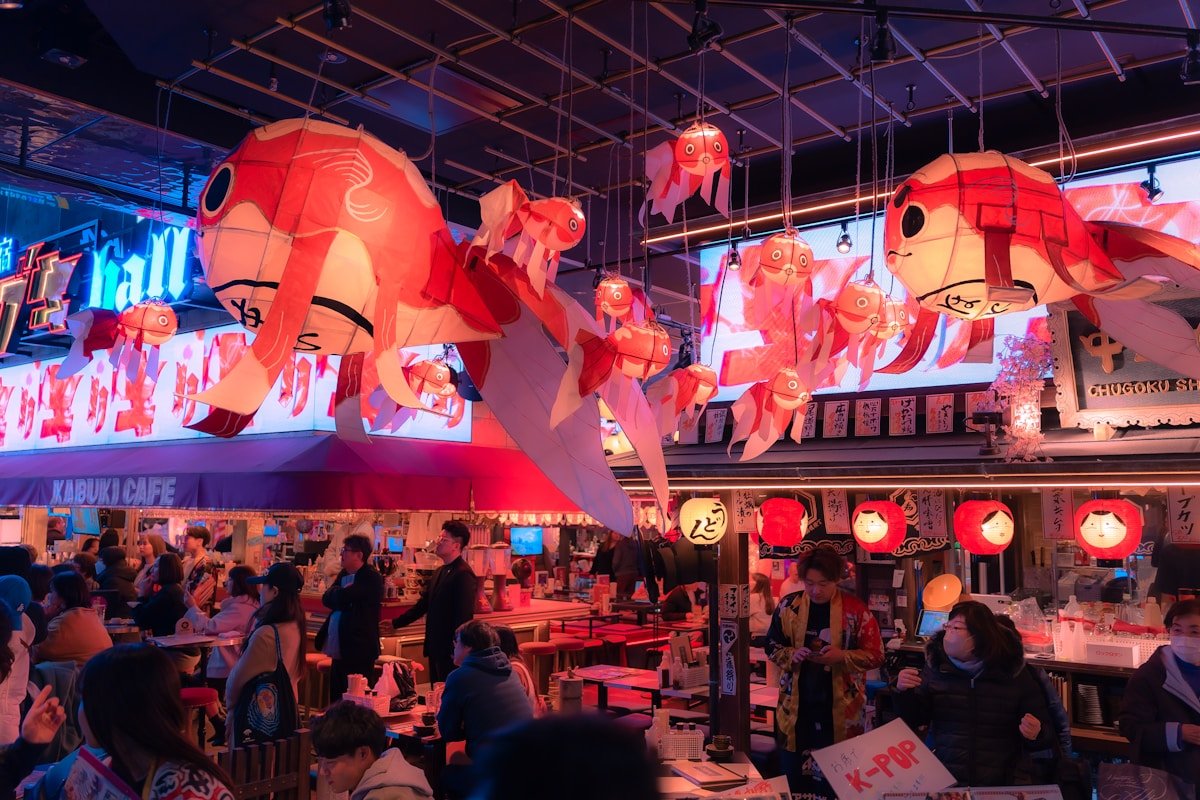
Tokyo holds more Michelin stars than any other city in the world - 226 as of the 2024 Michelin Guide, spread across establishments ranging from multi-decade sushi counters to ramen shops run by former bankers, izakaya perfecting a single yakitori skewer, and tonkatsu restaurants with waiting lines forming before the door opens. The city’s relationship with food is not casual.
Understanding where to eat requires understanding that Tokyo’s food landscape is not geographically uniform. Each neighbourhood has its own food identity - Tsukiji for fresh seafood, Shibuya for trendier international cuisine, Shinjuku for density and variety across every price point, Ueno for cheap market eating, Yanaka for traditional Japanese home cooking. Eating well here means learning the geography.
Ramen
Ramen in Tokyo is its own category. The city has thousands of ramen shops, each typically specialising in one style. The Tokyo-area default is shoyu (soy-based broth), but you will find all regional styles represented, often executed by chefs who have spent years mastering a single recipe.
Fuunji, Shinjuku - One of Tokyo’s most celebrated tsukemen shops. Tsukemen is ramen served with the noodles and broth separately - you dip thick, chewy noodles into an intensely concentrated dipping broth. A bowl costs ¥950–¥1,100. Expect a queue of 20–45 minutes during peak lunch hours (noon–14:00). The shop is small (about 16 seats) and efficient - turnover is fast. Access: 7-minute walk from Shinjuku Station south exit.
Ichiran, multiple locations - Ichiran is a chain, but it is a distinctive one. Each customer sits alone in an individual booth, separated from neighbouring diners by partitions and from the kitchen by a bamboo screen. You customise your bowl on a paper order form - richness, spice level, noodle texture, amount of garlic - and food is delivered through the screen without direct interaction. The basic tonkotsu bowl costs ¥980. This is a useful solo dining experience with no social pressure.
Fuji-ya, Yurakucho - Small counter shop under the Yamanote Line tracks serving shoyu ramen in a pure, classic Tokyo style. Around ¥850 per bowl. Minimal English, cash only.
Sushi
Breakfast Sushi at Tsukiji Outer Market
The former wholesale tuna auction may have moved to Toyosu, but the outer market in Tsukiji continues to operate as a dense cluster of sushi and sashimi specialists who begin serving by 5:30–6:00. A tuna sashimi breakfast at one of the small counter restaurants costs approximately ¥2,000–¥4,000 depending on the cut and portion. Stalls along the outer market sell individual pieces of sushi from ¥200 per piece. Arrive by 7:30 to avoid the longest queues at popular spots.
Kaiten Sushi (Conveyor Belt)
The conveyor belt sushi chains offer good quality at low prices and are genuinely worth visiting - they are not a compromise, they are their own category.
Sushiro - Japan’s largest conveyor belt sushi chain, with plates from ¥100 (salmon, tuna, egg) to ¥300 (premium cuts). Quality is reliable, and the app-based ordering system at some locations means you can request specific items directly rather than waiting for them to pass. Busy locations have app-based queue tickets.
Uobei Shibuya - Lane-based conveyor belt delivery system where your order arrives on a rapid lane directly to your seat. Plates start at ¥110. Useful if you want speed and variety.
Mid-Range Sushi Counter (¥5,000–¥15,000 for omakase)
Numerous excellent sushi counters across the city offer multi-course chef’s selection (omakase) lunches for ¥5,000–¥10,000 - significantly cheaper than dinner at the same restaurants. Look in Ginza, Minami-Aoyama, and the areas around Nakameguro and Ebisu for mid-range counters that take online reservations through Tabelog or SAVOR Japan.
Three-Michelin-Star Sushi
Sushi Saito in Minato Ward is Japan’s most difficult reservation - the chef accepts bookings almost exclusively through regular customers or referrals. It is mentioned here as a reference point, not a practical suggestion. For high-end accessible omakase, counters in the Ginza area with one or two Michelin stars are achievable with planning and a hotel concierge’s help.
Yakitori
Yakitori - chicken and vegetable skewers grilled over charcoal - is among Tokyo’s most satisfying and accessible food categories. Price per skewer ranges from ¥150 for basic tsukune (meatball) to ¥300–¥500 for premium cuts like kawa (skin) or kokoro (heart) at higher-end establishments.
Yurakucho Yakitori Alley - The cluster of tiny yakitori restaurants operating under and beside the elevated JR tracks between Yurakucho and Shimbashi stations is one of Tokyo’s most atmospheric dining experiences. Dozens of minuscule establishments - some seating eight or ten people - grill skewers over charcoal while smoke drifts up to the concrete overhead. Budget ¥2,000–¥3,500 per person with drinks. Most are cash-only. Some do not have English menus, but pointing at skewers from the glass display case works reliably.
Toriki, Shibuya - A more polished yakitori experience with English menus and online reservation capability. Premium Nagoya Cochin chicken cuts, ¥200–¥450 per skewer. Reservation recommended for weekend evenings.
Tempura
Tempura - vegetables and seafood individually battered in a light egg batter and fried - spans the full price range in Tokyo.
Tendon Tenya - A national chain serving tempura rice bowls (tendon) with combinations of prawns, vegetables, and fish for ¥750–¥950. The batter is reliable, the oil is fresh, and the set includes miso soup and pickles. There are no reservations, the queues move quickly, and it is one of the best value lunches in the city.
Tsunahachi, Shinjuku - A long-established tempura restaurant in Shinjuku, open since 1924. Set menus start at ¥1,800 for lunch, rising to ¥4,000–¥8,000 for dinner omakase. English menus available.
Tonkatsu
Tonkatsu - breaded and deep-fried pork cutlet - is Tokyo comfort food. The quality difference between a mid-range and high-end tonkatsu restaurant is primarily in the pork breed and the bread crumb texture.
Tonki, Meguro - Established in 1939, Tonki is a Tokyo institution. The set meal - hire katsu (fillet), miso soup, rice, pickles, and cabbage - costs ¥2,200. There are almost always queues, particularly at lunch and early dinner. The counter seating around the open kitchen is the best way to watch the cooking process. Cash only, no reservations.
Maisen, Omotesando - Located in a converted public bathhouse building, Maisen is one of Tokyo’s most famous tonkatsu restaurants. Hire katsu set ¥2,600, rosu katsu set ¥2,200. They also sell katsu sandwiches to go from ¥800 - popular with the Omotesando lunch crowd.
Izakaya Districts
Shinjuku Omoide Yokocho (Memory Lane)
A narrow alley - roughly 2 metres wide and 100 metres long - running north from Shinjuku Station’s west exit, lined with tiny grilled skewer and yakitori restaurants operating since the 1940s. Most shops have 8–12 seats at a counter. Grilled chicken innards, tsukune, edamame, and cold beer are the staples. Budget ¥1,500–¥2,500 per person with drinks. Arrive after 18:00 for the full atmospheric effect. Cash only at most establishments.
Shinjuku Golden Gai
A grid of six narrow alleys containing approximately 200 tiny bars - most seating 5–8 people maximum. Each bar has its own personality, often curated around a specific theme (jazz, film noir, horror, cats). Most charge a seating cover fee of ¥700–¥1,500 per person on top of drinks. Cocktails and whisky highballs run ¥700–¥1,500. Not a food destination per se, but an irreplaceable Tokyo drinking experience. Many bars welcome visitors; some are regulars-only (signs indicate this).
Yurakucho Under the Tracks
Similar in character to the Yurakucho yakitori alley but extending further into a broader cluster of izakaya, seafood restaurants, and old-style beer halls under the elevated tracks. The Ginza side of Yurakucho Station has classier options; the Hibiya side is more utilitarian and cheaper.
Convenience Store Food
Visiting Japan’s convenience stores - 7-Eleven, FamilyMart, and Lawson - for at least one or two meals is not a compromise. The food quality is significantly above the convenience store standard of most countries.
Onigiri (rice balls): ¥130–¥200. Fillings include salmon, tuna mayo, kombu seaweed, pickled plum, and seasonal specials. The packaging includes a tear-and-peel system that keeps the nori (seaweed wrap) crisp until you open it.
Hot foods counter: Karaage (fried chicken), nikuman (steamed pork buns, ¥130–¥170 each), corn dogs, pizza buns, and sausages are sold from a heated cabinet at every location. Nikuman is best in winter - buy two.
Sandwiches: ¥200–¥330. Notably good - soft, slightly sweet Japanese sandwich bread, careful filling construction.
Chilled noodles: Hiyashi chuka (cold ramen) and zaru soba (cold buckwheat noodles) are available in summer for ¥350–¥500.
Desserts: The dessert section of Japanese convenience stores consistently surpasses what most European or American bakeries offer - strawberry shortcake cups, puddings, parfaits, and seasonal cream pastries for ¥200–¥450.
A complete meal from a convenience store (onigiri + hot item + drink) costs approximately ¥450–¥700.
Meal Price Comparison Table
| Meal Type | Where | Average Cost | Notes |
|---|---|---|---|
| Convenience store meal | Any 7-Eleven/FamilyMart/Lawson | ¥450–¥700 | Fast, good quality, available 24hrs |
| Ramen | Fuunji (tsukemen) / Ichiran | ¥950–¥1,100 | Queue expected at Fuunji |
| Tendon set lunch | Tendon Tenya | ¥750–¥950 | Chain, fast, reliable |
| Lunch teishoku | Local neighbourhood restaurant | ¥900–¥1,500 | Often same kitchen as ¥3,000 dinner |
| Kaiten sushi | Sushiro | ¥100/plate, avg ¥1,500 per person | No reservation needed |
| Yakitori izakaya | Yurakucho alley | ¥2,000–¥3,500 per person | Includes drinks, cash only |
| Tonkatsu set | Tonki Meguro | ¥2,200 | Queue, cash only |
| Conveyor sushi | Uobei Shibuya | ¥110/plate, avg ¥1,200 per person | App/tablet ordering |
| Mid-range sushi omakase lunch | Ginza area | ¥5,000–¥10,000 | Advance booking recommended |
| Kaiseki dinner | Mid-range Kyoto-style Tokyo restaurant | ¥15,000–¥30,000 | Multiple courses |
| Three-Michelin-star omakase | By referral only | ¥30,000–¥60,000+ | Months of advance planning |
Depachika: Department Store Food Halls
No food experience in Tokyo is quite like the basement floors of a major department store. The depachika (a contraction of depato, department store, and chika, underground) are full retail food operations - not food courts. Individual stands specialise in wagashi (traditional Japanese sweets), imported chocolate, premium sushi, yakitori, bento boxes assembled to order, fresh pasta, French pastry, handmade mochi, and every conceivable category of prepared food.
Isetan Shinjuku, B1–B2 - Widely considered the finest in Tokyo. The basement floors stock an overwhelming selection of Japanese and international food products, with a particularly strong confectionery hall.
Mitsukoshi Ginza, B1–B2 - Strong emphasis on premium Japanese products. The box lunch selection for a picnic in Hibiya Park is excellent.
Takashimaya Times Square, Shinjuku, B1–B2 - Large floor space, strong mix of Japanese and French-influenced pastry and prepared food.
See Tokyo through its food: Food and cultural tours in Tokyo often include market visits, tastings, and dishes you’d never find independently.
Vending Machine Culture
Vending machines selling hot and cold drinks are on virtually every street corner and in every train station, priced at ¥120–¥180. In winter, the “hot” column of a machine - identified by red text - sells warm cans and bottles of coffee, tea, corn soup, and cocoa. In summer, the cold column dominates. Vending machines do not accept foreign cards - keep ¥10–¥100 coins available.
Take a Guided Food Tour of Tokyo
Tokyo has more Michelin-starred restaurants than any city on earth, but the food experiences that tend to stay with visitors longest are harder to find without help: the specific sushi counter in Ginza where the chef trained under three generations of masters, the Tsukiji outer market stall that opens at 5:30am for the overnight fishing fleet, or the standing ramen bar in Shinjuku’s Golden Gai where 12 seats and a single menu item have created a 40-year institution. A guided food tour navigates this scale - Tokyo’s neighbourhoods eat differently from each other, and knowing whether you’re in a yakitori district, a ramen corridor, or a kaiseki zone changes where you walk in the evening.
Guided food tours in Tokyo take you beyond tourist-obvious spots - local guides know which stall has the freshest tuna, where to find the best ramen, and how to navigate an all-Japanese menu.
See also: Tokyo travel guide · Tokyo food guide · Things to do in Tokyo · Where to stay in Tokyo · Tokyo food tours
Search hotels in Tokyo: browse stays in Tokyo