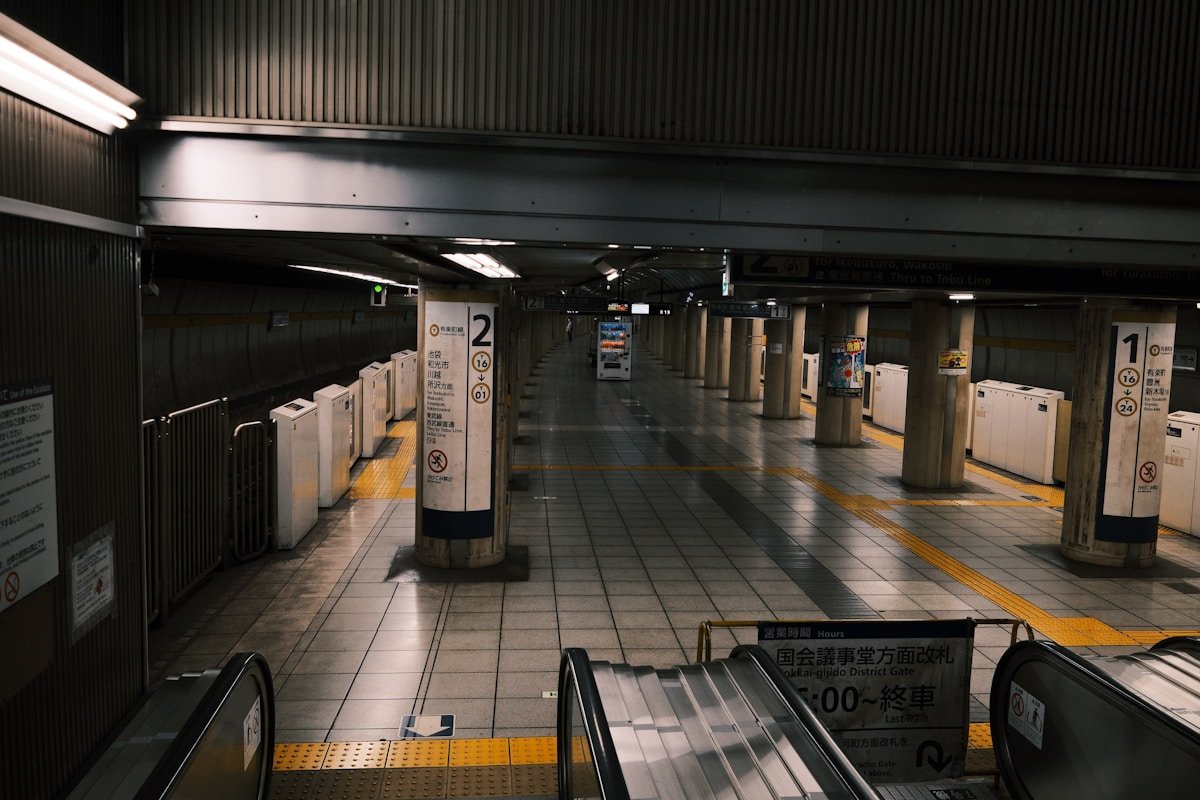
Tokyo’s public transport network is simultaneously one of the world’s most complex and most user-friendly. Over 290 train and metro stations serve the 23 special wards, operated by a mixture of companies - Tokyo Metro, Toei Subway, JR East, and more than a dozen private rail companies. Despite the complexity, navigating it as a visitor is straightforward once you understand the core structure.
If you plan to ride a lot, we suggest buying a Tokyo Metro 24/48/72-hour pass in advance on Klook.
The Network Structure
Tokyo Metro (9 Lines)
The primary urban subway network, operated by Tokyo Metro Corporation. Nine colour-coded lines serve the core 23 wards.
Key lines for visitors:
- Ginza Line (orange, G) - Tokyo’s oldest subway line (1927), running east–west from Shibuya to Asakusa via Akasaka, Toranomon, and Nihonbashi. Useful for reaching Asakusa without a transfer.
- Hibiya Line (grey, H) - Runs north–south through Akihabara, Ginza, and Roppongi. Useful for reaching Roppongi from the city centre.
- Hanzomon Line (purple, Z) - Links Shibuya to Oshiage (Skytree), passing through Omotesando, Aoyama-Itchome, and Nagatacho.
- Marunouchi Line (red, M) - Circular in character, connecting Tokyo Station to Shinjuku and Ogikubo via Akasaka and Yotsuya.
Toei Subway (4 Lines)
Operated separately from Tokyo Metro. The Toei Oedo Line (circular, dark pink) is the most useful, connecting Shinjuku with Ryogoku, Tsukishima, and Daimon (Zojo-ji). Fares on Toei are separate from Tokyo Metro fares - a journey crossing networks costs more than a single-network journey.
JR Lines
Japan Railways East operates surface and elevated rail throughout Tokyo, including the vital Yamanote Line loop.
- Yamanote Line (green, JY) - The most important line for tourists. A 34-station loop (approximately 34.5km circumference, journey time around the full loop approx 65 minutes) linking all major districts: Shinjuku, Harajuku, Shibuya, Osaki, Shinagawa, Tamachi, Hamamatsucho, Shimbashi, Yurakucho, Tokyo, Kanda, Akihabara, Ueno, Uguisudani, Nippori, and back north. Fares ¥140–¥200 depending on how many stations you travel.
- Chuo/Sobu Line (orange/yellow) - Runs east–west through central Tokyo, connecting Tokyo Station to Shinjuku and continuing west to Mitaka (for the Ghibli Museum) and Takao (Mt Takao). The orange Chuo Express skips stations; the yellow Sobu line is the all-stations local.
- Keihin-Tohoku Line (light blue) - Runs north–south on the eastern side of the Yamanote loop, connecting Omiya to Yokohama via Akihabara, Tokyo, Shinagawa, and Kamata. Useful for Yokohama access without changing trains.
Private Lines
Several private operators run services out of Tokyo into the suburbs and surrounding prefectures. The most useful for visitors:
- Odakyu Line (from Shinjuku) - For Hakone (Romance Car) and Mt Takao area
- Tobu Skytree Line / Tobu Nikko Line (from Asakusa) - For Nikko
- Keio Line (from Shinjuku/Hachioji) - For Mt Takao (Takaosanguchi)
IC Cards: Suica and Pasmo
The Suica (JR East) and Pasmo (Tokyo Metro/Toei) IC cards are functionally identical in Tokyo - both work on all trains, buses, and many other services. The choice between them does not matter. Both can be obtained from ticket machines at any major station.
Setup:
- Select “New Suica” or “New Pasmo” at the ticket machine
- Pay ¥500 deposit
- Load any amount (minimum ¥1,000 suggested to start)
- Tap the card on the yellow reader at entry and exit gates
What IC cards work on:
- All Tokyo Metro, Toei, JR, and private rail lines in Tokyo
- Buses throughout the Tokyo metropolitan area
- Limousine buses (some, not all)
- 7-Eleven, FamilyMart, Lawson convenience stores
- Many vending machines
- Some taxis
- Some restaurant chains
Top up at any ticket machine - look for the “Charge” option. You can load up to ¥20,000 at a time. Foreign Visa/Mastercard debit cards work at most JR ticket machines for loading.
Mobile Suica: Available on compatible iPhone (SE 2020 and later, iOS 13+) and Android devices. Set up through the Suica app before departure. Eliminates the need for a physical card and allows loading via Apple Pay or Google Pay.
Tokyo Subway Day Passes
For visitors planning to use the subway heavily (five or more journeys per day), the Tokyo Metro 24/48/72-hour tourist pass offers savings over pay-as-you-go.
| Pass | Duration | Cost | Average journeys to break even |
|---|---|---|---|
| Tokyo Metro only | 24 hours | ¥800 | ~5 journeys |
| Tokyo Metro only | 48 hours | ¥1,200 | ~7 journeys |
| Tokyo Metro only | 72 hours | ¥1,500 | ~8 journeys |
| Tokyo Metro + Toei Subway | 24 hours | ¥1,000 | ~5 journeys |
Important: These passes cover only Tokyo Metro and/or Toei lines - not JR lines (including Yamanote). If your day includes JR Yamanote travel, you will need to tap your IC card for those legs or hold a separate JR pass.
Passes are sold at major Tokyo Metro station offices. Purchase with a valid passport (they are tourist-only products).
How to Navigate Tokyo’s Train System
Tokyo’s train system looks overwhelming on a full network map. In practice, most tourists use a small subset of lines repeatedly. The Google Maps transit function handles routing automatically in English, including real-time train information, exact platform numbers, and transfer instructions.
Basic navigation tips:
- Trains run to timetable - not approximately on time, but exactly. Missing a train by 30 seconds means waiting for the next.
- Platforms are numbered. Follow the platform number in Google Maps instructions - the overhead signs in stations show platform numbers and train destinations in both Japanese and English at major stations.
- Long trains (10–16 cars) have car position diagrams painted on the platform floor, showing where each door will align. Position yourself near the right door if you know your transfer exit - this matters on very long platforms at busy stations like Shinjuku.
- Avoid trains during 7:30–9:30 and 17:30–19:30 on weekdays if you can. Trains are extremely crowded during these windows.
Airport Transport Connections
| Airport | Service | Journey Time | Cost |
|---|---|---|---|
| Narita (NRT) | Narita Express (N’EX) to Shinjuku | 80–90 minutes | ¥3,070 |
| Narita (NRT) | N’EX to Tokyo Station | 53 minutes | ¥3,070 |
| Narita (NRT) | Keisei Skyliner to Ueno | 41 minutes | ¥2,570 |
| Narita (NRT) | Limousine Bus to central hotels | 60–120 minutes | ¥3,200 |
| Narita (NRT) | Taxi to central Tokyo | 60–90 minutes | ¥20,000–¥30,000 |
| Haneda (HND) | Tokyo Monorail to Hamamatsucho | 13 minutes | ¥500 |
| Haneda (HND) | Keikyu Line to Shinagawa | 13 minutes | ¥300 |
| Haneda (HND) | Keikyu Line to Asakusa | 35 minutes | ¥340 |
| Haneda (HND) | Limousine Bus to central Tokyo | 30–50 minutes | ¥1,000–¥1,300 |
| Haneda (HND) | Taxi to central Tokyo | 20–40 minutes | ¥4,000–¥8,000 |
Haneda vs Narita for accommodation choice: If you are staying in western Tokyo (Shinjuku, Shibuya, Harajuku), arriving at Haneda saves significant time and money. If staying in eastern Tokyo (Asakusa, Ueno, Akihabara), either airport is reasonably convenient. Narita is inconvenient for most accommodation and should be avoided as a connection point where possible.
Taxis
Tokyo taxis are metered, clean, and reliable. The rear passenger door opens and closes automatically - do not touch it. Most taxis accept payment by IC card now, though cash (¥500–¥5,000 notes) is always accepted.
Fares:
- Flag fall: ¥500 (covers first 1.05km)
- Per 255m increment: ¥100
- Typical 3km journey: ¥1,000–¥1,500
- Late-night surcharge (22:00–05:00): +20%
Ride-hailing apps:
- GO (Japan’s primary taxi app) - real-time dispatch from registered taxi companies, shows price estimate upfront, payment by card or IC within the app
- Uber - available in Tokyo but using local taxi drivers; surge pricing applies; slightly less reliable fleet than GO
Finding a taxi after midnight on weekend nights in Shibuya or Shinjuku can take 15–30 minutes during peak hours. Consider walking to a less congested street or booking via app.
Buses
City buses within Tokyo operate on fixed routes with a flat ¥210 fare (pay with IC card or exact change - buses do not give change). They are slower than the train for most journeys, but useful for:
- Reaching parts of the city not served by the train network
- Shorter hops in areas with widely spaced stations
- Scenic routes (the 都01 Toei bus route through Odaiba is pleasant)
Highway buses connect Tokyo to destinations further afield - Shinjuku Expressway Bus Terminal (Busta Shinjuku) above Shinjuku Station is the main departure point for long-distance routes. Fuji Five Lakes (Kawaguchiko) buses depart from here at ¥1,800–¥2,000 per trip.
Cycling
Tokyo is more cyclable than its reputation suggests, at least in areas outside the main commercial and entertainment districts. Docomo Bike Share operates a docked cycle-share system covering most of the 23 wards.
Docomo Bike Share:
- App-based rental: set up at docomo-cycle.jp or via the app
- Per 30 minutes: ¥165
- Daily pass: ¥1,650
- Docking ports across the city - bikes can be returned to any port
Independent rental shops near major tourist areas typically charge ¥300–¥500 per hour or ¥1,500–¥2,000 per day. The flat areas around Asakusa, Ueno, and the Sumida River waterfront are well-suited to cycling.
Cycling rules: You must ride on the road (not pavements except where signed), observe traffic signals, and use lights after dark. Cycling on Yamanote-dori or other major arterials is possible but not relaxing. Smaller streets and river paths are more pleasant.
Transport essentials for Tokyo: The Japan Rail Pass covers Shinkansen and most JR services - useful if you’re travelling between multiple cities. For airport arrivals, Kiwitaxi offers fixed-price airport transfers. If you’re planning day trips outside the city, car hire in Japan gives flexibility for destinations off the rail network.
IC Card Refund at Departure
Return your Suica or Pasmo at any major JR or Tokyo Metro station service window before or on your departure day. Present the card and request a refund. You will receive:
- Remaining balance on the card
- ¥500 deposit
- Minus a ¥220 handling fee
If your remaining balance is under ¥220, you will receive only the ¥500 deposit. To minimise the fee impact, use the remaining balance at a convenience store or vending machine before returning the card.
Alternatively, keep the card for a return trip - it does not expire and can be recharged on a future visit. This is the most practical option if you plan to visit Japan again within a few years.
Plan Your Trip
- Flights - Find the best fares to Japan
- Hotels - Search hotels in Tokyo on Booking.com
- Travel Insurance - Get covered before you go
- eSIM - Stay connected from landing
- Car Rental - Compare prices across providers
See also: Tokyo travel guide · Getting around Japan · Japan Rail Pass guide · Japan Shinkansen guide · Things to do in Tokyo