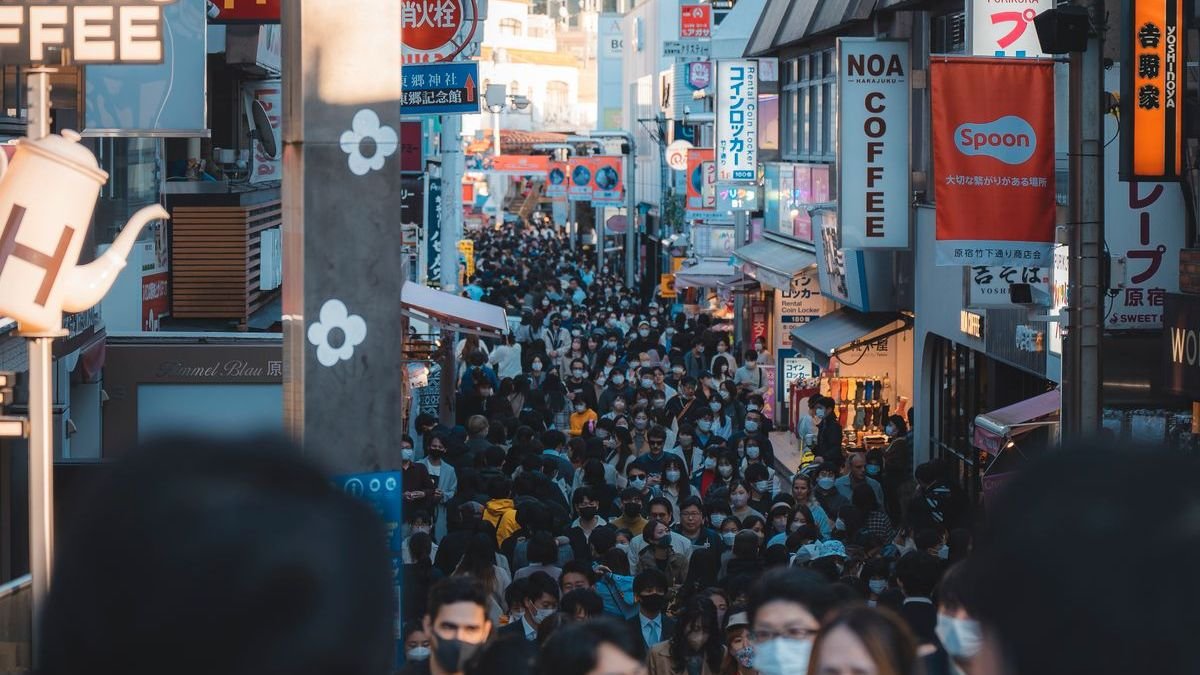
Harajuku sits on the Yamanote Line between Shinjuku and Shibuya, and it holds three very different things within a few minutes’ walk: a forested Shinto shrine, a pedestrian street of teen fashion and sweets, and a boulevard of flagship luxury stores by well-known architects. That contrast is why it works so well for a short visit.
This guide covers the main things to do in Harajuku, how to avoid the worst crowds, and how it connects with Shibuya and Omotesando. For the other districts, see our Tokyo neighbourhoods guide.
Harajuku at a glance:
| Sight | What it is | Cost |
|---|---|---|
| Meiji Jingu | Shrine in about 70 hectares of forest | Free |
| Meiji Jingu Gyoen | Inner garden, irises in June | About ¥500 |
| Takeshita Street | 350 m lane of cheap fashion and crepes | Free |
| Omotesando | Zelkova-lined avenue of flagship stores | Free |
| Yoyogi Park | Picnics and weekend gatherings | Free |
| Cat Street | 15-minute walk to Shibuya | Free |
Meiji Jingu
Meiji Jingu is the shrine dedicated to Emperor Meiji and Empress Shoken, completed in 1920 and rebuilt after wartime damage. It sits inside roughly 70 hectares of planted forest, with more than 100,000 trees donated from across Japan. The path from the Harajuku Station entrance to the main hall takes about ten minutes, past giant wooden torii and a wall of sake barrels offered to the shrine.
Entry to the grounds is free. The inner garden, Meiji Jingu Gyoen, costs approximately ¥500 and is known for irises in June. The shrine often hosts traditional Shinto weddings on weekends, so you may see a procession in the courtyard. Arrive early; the shrine opens at sunrise and the paths are quiet before about 9am.
Takeshita Street
Takeshita Street is a 350-metre pedestrian lane running from Harajuku Station towards Meiji-dori. It holds cheap fashion, costume and accessory shops, photo sticker booths, and street food, the best known being crepes in paper cones. Prices are low: crepes start at approximately ¥500 to ¥800, and a cup of rainbow cotton candy is about ¥600 to ¥1,000.
The street is busiest on weekends and school holidays. Weekday mornings are calmer and shops open around 10am to 11am. Pickpocketing is unusual in Japan, but bags can be knocked in the crush, so carry them in front. For a quieter version, walk the parallel back lanes, where independent boutiques sell vintage clothes and accessories.
Omotesando and Architecture
Omotesando is a zelkova-lined avenue running southeast from Harajuku, built as the approach to Meiji Jingu. It now carries flagship stores for Dior, Louis Vuitton, Prada and others, and many of the buildings are worth seeing for the architecture alone. Omotesando Hills, by Tadao Ando, has a spiral ramp running through a mall; Tod’s Omotesando and the Prada Aoyama building are among other well-known examples.
You do not need to shop to enjoy it. The avenue is wide, tree-lined and a good counterpoint to the crowd on Takeshita Street. The Nezu Museum in nearby Aoyama, with its Japanese garden and tearoom, is a calm stop if you have time.
Yoyogi Park and Cat Street
Yoyogi Park sits next to Meiji Jingu and is a place for picnics, music practice and weekend gatherings. On Sundays, rockabilly dancers and street performers once gathered near the entrance, though the scene is smaller now, so check before you build a plan around it. The park is free and open all day.
Cat Street is a pedestrian route built over an old river channel connecting Harajuku to Shibuya. It is lined with independent fashion shops, cafes and vintage stores, and takes about 15 minutes to walk. It is the best route between the two areas, with fewer crowds than the main streets. At the Shibuya end you will reach Miyashita Park; see our Shibuya guide.
Food and Drink
Harajuku food leans sweet and quick. Marion Crepes is one of the better-known crepe shops on Takeshita Street. For savoury food, Gyukatsu Motomura serves beef cutlet cooked on a hot stone at your table (sets from approximately ¥1,500 to ¥2,500 as of 2026). Along Omotesando, Maison Kayser and several cafes offer coffee and bakery items from approximately ¥600. Kiddy Land near the Omotesando end is an anime and character goods shop that makes a useful stop for souvenirs.
Suggested Half-Day Route
- Start at Meiji Jingu at opening time, when the forest is quiet.
- Walk to Takeshita Street for a snack and a look at the shops.
- Walk Omotesando for the architecture and coffee.
- Finish along Cat Street towards Shibuya, or continue to Shibuya Sky for sunset.
A guided Tokyo walking tour can cover Meiji Jingu and Harajuku with context on the shrine’s history, and a tea ceremony is a good way to add something quieter.
Getting There
Harajuku Station is on the JR Yamanote Line, about 3 minutes from Shibuya and 5 minutes from Shinjuku (around ¥150 to ¥170). Meiji-jingumae station on the Tokyo Metro Chiyoda and Fukutoshin lines is also a short walk from both Takeshita Street and the shrine. The main entrance to Meiji Jingu is a two-minute walk from Harajuku Station. A Suica or IC card works on all lines.
Where to Stay
Harajuku itself has few hotels, and Shibuya and Shinjuku are the nearest bases, each about one stop away. Browse hotels in Tokyo on Booking.com to compare areas.