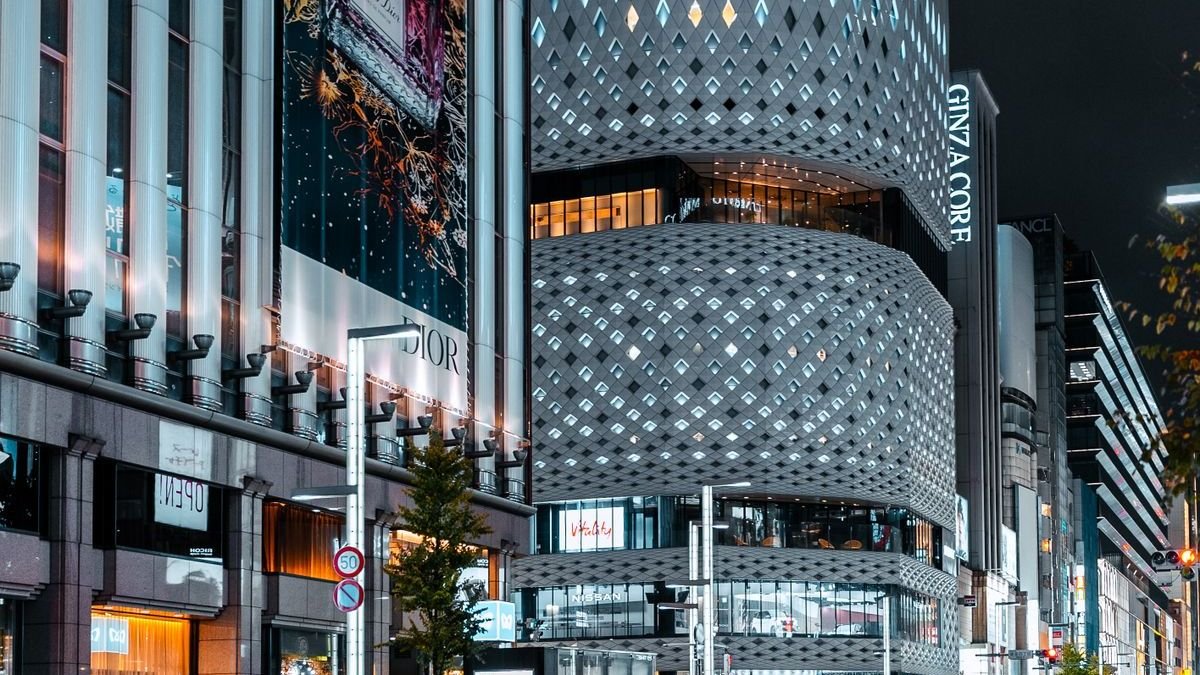
Ginza has been Tokyo’s premier shopping district since the 1870s, when brick buildings and gas lamps replaced older wooden streets. Today its blocks hold department stores, flagship brands and small restaurants that have been serving the same dishes for decades. It is the most polished district in the city, and it is also less expensive to enjoy than its reputation suggests if you pick your moments.
This guide covers what to do in Ginza, how to eat well at different budgets, and how it fits with Tsukiji and Tokyo Station. For the other districts, see our Tokyo neighbourhoods guide.
Ginza at a glance:
| Stop | Best for | Cost |
|---|---|---|
| Chuo-dori | Pedestrian street on weekend afternoons | Free |
| Mitsukoshi, Matsuya, Ginza Six | Department store food floors and rooftops | Free to enter |
| Kabuki-za | Single-act Kabuki tickets | Ticketed |
| Ginza Bairin | Tonkatsu since 1927, lunch sets | About ¥2,000-¥3,000 |
| Hamarikyu Gardens | Tidal-pond garden near Tsukiji | About ¥300 |
| Sushi and kaiseki dinner | Top counters | ¥15,000-¥40,000+ per person |
Chuo-dori and the Department Stores
Chuo-dori is the main avenue, running between Shimbashi and Kyobashi. On weekend and holiday afternoons it closes to cars and becomes a wide pedestrian street, and tables and chairs appear on the road. The most recognisable building is the Wako department store, with its clock tower on the Ginza 4-chome crossing, completed in 1932.
Mitsukoshi and Matsuya are long-established department stores with excellent food floors. Ginza Six, opened in 2017, has a rooftop garden and a mix of luxury brands, and Tokyu Plaza Ginza has a rooftop terrace and Edo Kiriko glass shops. Uniqlo Ginza and Muji have large flagships for visitors who want more affordable options.
Kabuki-za
Kabuki-za at the Higashi-Ginza end is Tokyo’s dedicated Kabuki theatre, rebuilt in 2013 with a modern tower behind the traditional facade. Performances run in matinee and evening programmes lasting about four to five hours each. If you do not want a full programme, you can buy a single-act ticket (makumi) for roughly ¥1,000 to ¥2,000 as of 2026, valid for one act, with seating in the fourth-floor gallery. English commentary earphones can be rented.
The basement has a shopping arcade, Kabuki-za Gallery on the fifth floor, and a rooftop garden with a small shrine.
Eating in Ginza
Ginza is where Tokyo’s top sushi counters and kaiseki restaurants are concentrated, and dinner can run from ¥15,000 to well over ¥40,000 per person. Lunch is where most visitors should eat. Many restaurants serve set lunches for a fraction of the price: tempura sets from approximately ¥2,500, sushi lunch from about ¥4,000 to ¥8,000, and ramen or curry from ¥1,000.
Ginza Kyubey is a long-running sushi restaurant that is easier to book than the top counters. Ginza Bairin serves tonkatsu from a restaurant opened in 1927, with lunch sets from approximately ¥2,000 to ¥3,000. Kimuraya is a bakery that has sold anpan (red bean buns) since 1869 and is a good snack stop. For the cheapest food, go to the basement food halls at Mitsukoshi and Matsuya, which sell bento, sandwiches, sweets and fruit.
Tsukiji Outer Market and the Waterfront
The old fish market area at Tsukiji is a 10 to 15-minute walk southeast of Ginza. The wholesale market moved to Toyosu in 2018, but the Outer Market remains, with sushi counters, tamago-yaki (sweet omelette) stalls and knife shops. Go early, since many shops close by early afternoon and some stalls are closed on Wednesdays and Sundays. A guided Tsukiji food tour is a good option if you want help choosing what to eat.
From Tsukiji, you can walk on to Hamarikyu Gardens, a landscaped garden with a teahouse on a tidal pond, about 15 minutes away. Entry is approximately ¥300.
Art, Galleries and Quiet Stops
Ginza is also a gallery district. The Shiseido Gallery, one of Japan’s oldest corporate galleries, has shown contemporary art since 1919 in a building at the south end of the main shopping area, and entry is free. Many smaller galleries sit on upper floors of buildings along the side streets, and most are free to enter. The Itoya stationery store, a 12-floor building near the Ginza crossing, is one of Tokyo’s best places to buy pens, notebooks and washi paper, and it makes a good souvenir stop.
For a break from the crowds, Ginza Maison Hermes has a small gallery space on its top floor, and the rooftop gardens at Ginza Six and Tokyu Plaza give a quiet place to sit between shops. Many of these stops are free, which makes Ginza easier on a budget than its reputation suggests.
Evening in Ginza
Ginza is quiet compared with Shinjuku or Shibuya, but it has a bar scene of its own. Small Japanese whisky bars and cocktail bars sit on upper floors of unmarked buildings, and some have cover charges of ¥1,000 to ¥2,000. The streets look best after dark, when the department store facades and Ginza Core building are lit. If you prefer lively streets, take the metro one stop to Yurakucho, where yakitori restaurants line the tracks.
Suggested Half-Day Plan
- Morning at the Kabuki-za building for a single-act ticket, or coffee at Kimuraya.
- Walk Chuo-dori and look into Wako, Mitsukoshi and Ginza Six.
- Lunch at a set-menu restaurant or a depachika picnic.
- Walk to Tsukiji for a snack, then Hamarikyu Gardens.
- Return at dusk for a drink.
Getting There
Ginza Station is on the Tokyo Metro Ginza, Marunouchi and Hibiya lines, and Higashi-Ginza Station is on the Toei Asakusa line. The JR Yurakucho and Shimbashi stations are each a 5 to 10-minute walk. From Tokyo Station it is about 10 minutes on foot or 5 minutes by Metro. A Suica or IC card works on all lines.
Where to Stay
Ginza is central and quiet at night, with a mix of mid-range business hotels and luxury options, and it is close to the Haneda airport bus. Browse hotels in Tokyo on Booking.com to compare areas.