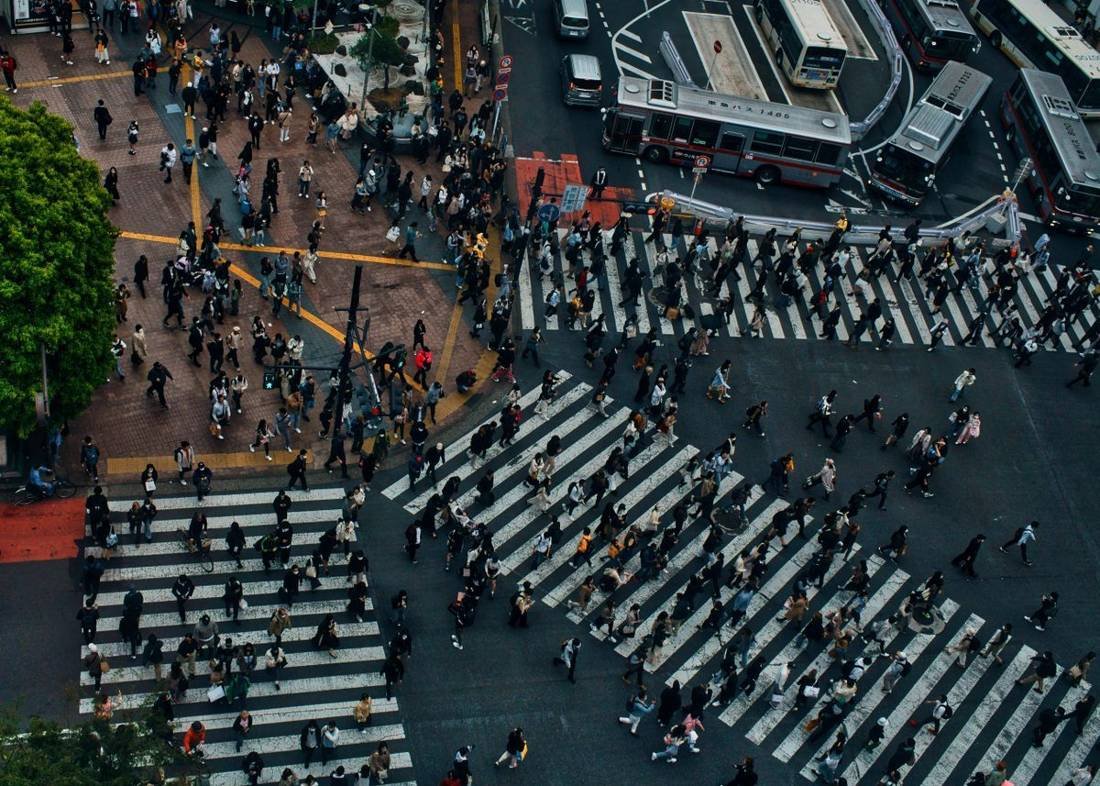
Shibuya is the Tokyo most first-time visitors picture: a wall of screens, a station that spills onto a huge intersection, and shop floors stacked up the hillsides behind it. It is also a better neighbourhood than its reputation as a photo stop suggests, because the area around the crossing runs from cheap ramen and arcades to rooftop gardens and some of the city’s best coffee within about ten minutes on foot.
This guide covers the main things to do in Shibuya, how to organise a half-day or full-day visit, and how it connects to nearby areas. For the wider city, see our Tokyo neighbourhoods guide.
Shibuya at a glance:
| Sight | What it is | Cost |
|---|---|---|
| Scramble Crossing | Five-way pedestrian crossing at Hachiko Exit | Free |
| Hachiko statue | Tokyo’s busiest meeting spot | Free |
| Shibuya Sky | Rooftop deck about 230 m up on Scramble Square | Ticketed, book ahead |
| Center Gai and Shibuya 109 | Pedestrian lane and fashion tower | Free to browse |
| Miyashita Park and Cat Street | Rooftop park and walk to Harajuku, about 15 minutes | Free |
| Ramen at Ichiran or Ippudo | Quick lunch | About ¥1,000-¥1,300 |
Shibuya Scramble Crossing
The crossing outside Hachiko Exit is the reason many people come. When the lights turn red in every direction, all five crossings open at once and pedestrians move diagonally as well as straight across. Counts vary by hour, but several thousand people cross on a busy light change. Walking through it takes about a minute and costs nothing, so do it at least once, ideally in the early evening when the big screens are lit.
For a view from above, the first options are free. The Starbucks on the second floor of the Tsutaya building overlooks the crossing directly, though window seats fill quickly. The Shibuya Station connecting passage on the Keio Inokashira side also gives a free angle. For a paid, elevated view, see Shibuya Sky below.
Hachiko and the Station Area
The bronze statue of Hachiko, the Akita dog who waited at the station for his owner for years after the owner’s death in 1925, stands in the small plaza by the Hachiko Exit. It is Tokyo’s most popular meeting spot, so expect a crowd and a queue for photos. The dog died in 1935, and a statue has stood here since 1934 with a postwar replacement installed after the original was melted down in the war.
The station itself is a maze under permanent rebuilding. Allow extra time if you are catching a train, and use the exit names on signs rather than the street map.
Shibuya Sky and Scramble Square
Shibuya Sky is the rooftop observation deck on top of Shibuya Scramble Square, about 230 metres up. It has an open-air section with no overhead glass at the edges, which gives clear photos of the crossing and, on a good day, Mount Fuji to the west. Tickets are approximately ¥2,000 booked in advance and ¥2,200 on the day as of 2026. Sunset slots sell out first, so book ahead. Our full Shibuya Sky tickets guide covers timings, lockers and what to expect.
The lower floors of Scramble Square hold shops and restaurants, and the building is connected directly to the station.
Center Gai, Shibuya 109 and Shopping
Center Gai (officially Basketball Street) is the pedestrian lane north of the crossing, lined with arcades, karaoke chains, cheap fashion and late-night food. It is loud and tourist-heavy, and worth ten minutes. Shibuya 109, the cylindrical fashion tower at the Dogenzaka fork, is the long-running centre of young women’s fashion; even if you do not shop, the floor-by-floor brand mix explains a lot about Tokyo street style.
For something more considered, walk up Dogenzaka to Mega Don Quijote for souvenirs and snacks, then continue to Tokyu Hands Shibuya (now Hands) for stationery and travel goods. The big department stores at the station, Tokyu and Seibu, have food floors that suit lunch on a budget.
Miyashita Park and Cat Street
Miyashita Park, on the Harajuku side of the station, is a long strip of rooftop park over a shopping and dining complex. It has a climbing wall, a skate area, and a row of restaurants and bars at the Shibuya end. It is also a calmer place to sit than the crossing.
From there, Cat Street leads towards Harajuku through a low-rise area of independent fashion shops and cafes. It is one of the best walks in the area and takes about 15 minutes. Our Harajuku guide picks up from the other end.
Where to Eat and Drink in Shibuya
Shibuya suits cheap, quick meals better than long ones. Ichiran and Ippudo both have branches for tonkotsu ramen (bowls from approximately ¥1,000 to ¥1,300). Standing sushi counters and conveyor-belt chains cluster around the station, with plates from about ¥130. For a drink, Nonbei Yokocho (“Drunkard’s Alley”) is a pair of narrow lanes beside the JR tracks with tiny bars seating five to eight people, some with cover charges, so check the sign before you sit.
Nakameguro, one stop away on the Tokyu Toyoko Line, has stronger cafes and canal-side dining. See our Nakameguro guide.
Day Plan: Half a Day in Shibuya
- Arrive mid-morning and walk the crossing from the Hachiko side.
- Coffee and a high view at Tsutaya or Scramble Square.
- Center Gai and Shibuya 109 for a look around, then lunch at a ramen counter.
- Miyashita Park, then Cat Street towards Harajuku.
- Return for a sunset slot at Shibuya Sky.
If you prefer a guide, a Tokyo walking tour can cover Shibuya and Harajuku together, and a short food tour fits well on a different day.
Getting to Shibuya
Shibuya Station is on the JR Yamanote Line, Saikyo Line and Shonan-Shinjuku Line, the Tokyo Metro Ginza, Hanzomon and Fukutoshin Lines, and the Tokyu and Keio Inokashira private lines. From Shinjuku it is about 5 minutes on the Yamanote Line (¥170 as of 2026). From Tokyo Station it is about 25 minutes. A Suica or IC card saves buying tickets.
Where to Stay
Shibuya is convenient but expensive for its size, and rooms book out around weekends. Shinjuku and Ebisu are often better value for the same transport access. Browse hotels in Tokyo on Booking.com to compare areas.