Few rituals in Japan carry as much weight as chado - the Way of Tea. What began as a Zen Buddhist practice in the 13th century evolved into one of Japan’s most codified art forms, governing everything from the architecture of the tea room to the angle at which a ceramic bowl is turned before drinking. For visitors to Tokyo, a guided tea ceremony experience is the clearest window into this tradition that a short trip allows.
Maikoya Asakusa runs one of the most accessible English-language tea ceremony sessions in the city, held in a dedicated tea room close to the Kaminarimon Gate in Asakusa. The location matters: Asakusa is the part of Tokyo where historical atmosphere is thickest - rickshaws on stone-paved streets, the five-storey Senso-ji pagoda above the rooftops, and the smell of ningyo-yaki from the Nakamise shopping arcade. Attending a tea ceremony here, rather than in a modern office building or hotel event space, gives the experience a sense of place that complements the instruction.
Top Tours at a Glance
Here’s a quick comparison of top-rated Tokyo tea ceremony experiences on GetYourGuide:
| Tour | Duration | Price (from) | Highlights |
|---|---|---|---|
| Tea Ceremony Experience in Asakusa | 1 hr | from ¥4,200 | Matcha and wagashi included, English instruction, Senso-ji area |
| Kimono Tea Ceremony with Matcha and Sweet | 1.5 hrs | from ¥6,750 | Kimono dressing, tea preparation, seasonal wagashi |
| Tea Ceremony and Sweets Making Class - Asakusa | 1.5 hrs | from ¥7,500 | Tea ceremony + nerikiri wagashi crafting, matcha making |
| Private Japanese Traditional Tea Ceremony | 1 hr | from ¥9,000 | Private session, fully guided, flexible timing |
Browse all Tokyo tea ceremony experiences → GetYourGuide
What Happens During the Session
Sessions begin with a short explanation of the core principles of chado: harmony (wa), respect (kei), purity (sei), and tranquillity (jaku). These are not abstract concepts - the instructor points to how each is expressed in the physical space and in the movements of the ceremony itself: the deliberate pace of the host, the way guests bow on entry, the silence held while the tea is prepared.
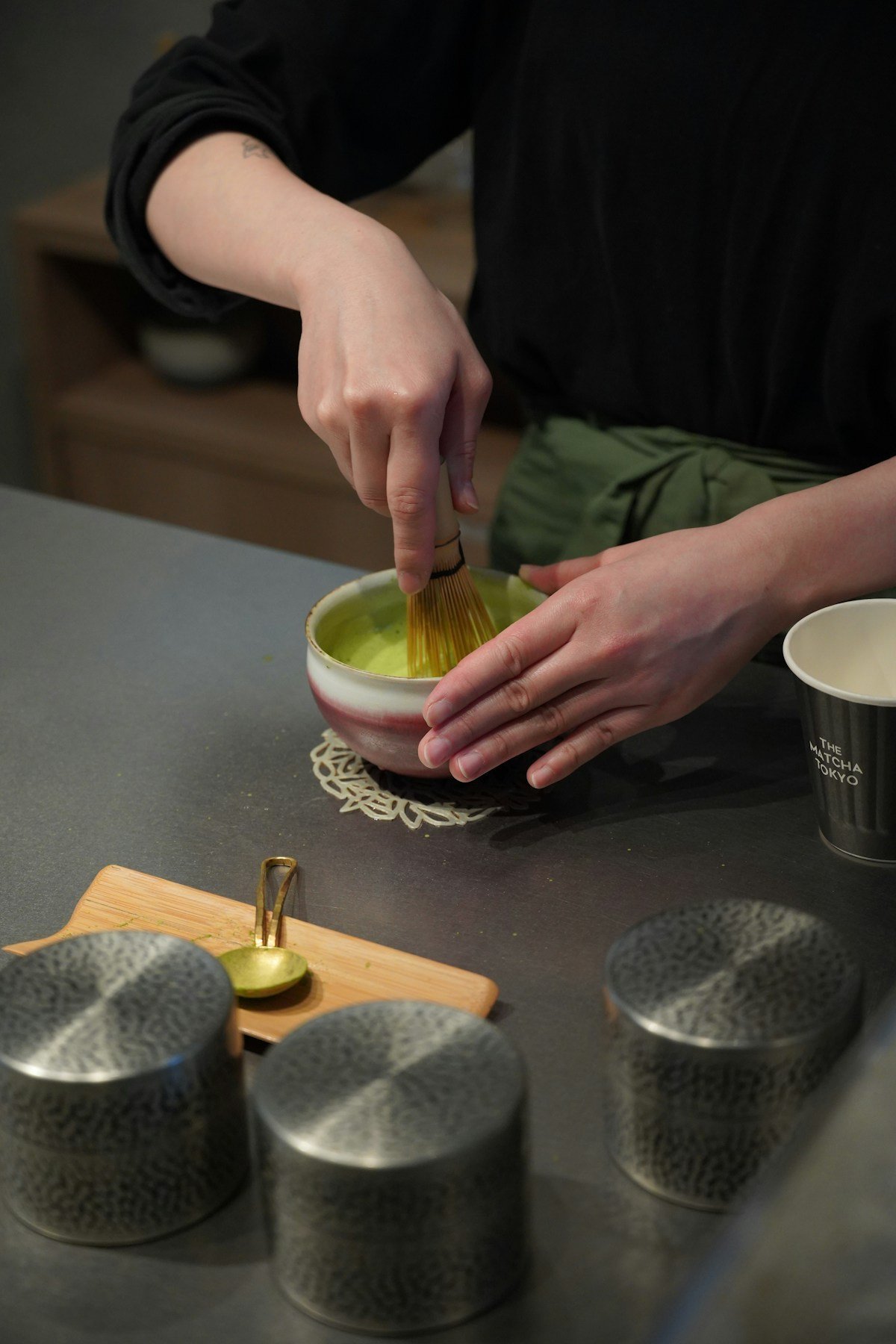
From there, participants move through the preparation sequence step by step. The instructor demonstrates each action - warming the chawan (tea bowl) with hot water, measuring matcha powder with the chashaku (bamboo scoop), whisking with the chasen until the tea forms a smooth, bright green foam - and then guides participants through doing the same themselves. This hands-on component is what distinguishes this type of experience from simply watching a demonstration.
Before the tea arrives, a piece of wagashi (traditional Japanese confectionery) is served. The sweetness of wagashi is designed to balance the subtle bitterness of high-grade matcha - eating it first prepares your palate, and the pairing is part of the ritual logic of the ceremony. The wagashi changes seasonally, so what you receive in April (often a sakura-shaped piece) will differ from what appears in November.
The session ends with time for questions, which experienced instructors use to explain aspects of tea culture beyond the ceremony itself: the regional differences between Urasenke and Omotesenke schools of tea, the significance of the hanging scroll and single flower in the tokonoma alcove, and the reasons why tea bowls are often deliberately irregular in shape.
Venue Details
Maikoya Asakusa is located a short walk from the Kaminarimon Gate in Asakusa, Taito, Tokyo. The exact address and entrance instructions are provided on the Klook booking confirmation. Look for the signage near the Nakamise arcade approach; the tea room entrance is distinct from the main tourist flow.
Sessions run throughout the day, typically between 10:00 and 17:00, with the last session starting at around 16:00. The tea room holds a small number of participants per session - group bookings cap at around eight to ten guests, keeping the experience intimate.
Pricing (as of 2026)
- Group session (approximately 45 minutes): approximately ¥3,980 per person
- Private session (approximately 60 minutes): approximately ¥6,000–¥8,000 per person depending on group size
- Optional kimono/yukata rental: additional charge, typically approximately ¥2,000–¥3,000; book this add-on at the same time as your session
All prices include matcha and wagashi. Entry fees for Asakusa itself are free - there is no temple admission required to reach the venue.
What to Wear
Sit on the floor (tatami) for the entire session. The main practical requirements:
- Clean socks with no holes (shoes are removed at the entrance)
- Comfortable clothing you can sit cross-legged or kneel in for 45 minutes
- Avoid strong perfume or cologne - the subtle aromas of the tea room and wagashi are part of the experience and strong scents are considered disruptive
If you plan to wear a kimono for the experience, Maikoya’s kimono rental option includes dressing assistance. Allow an extra 15–20 minutes before your tea session start time if you choose this add-on.
Getting There by Train
Asakusa Station is served by two lines:
- Tokyo Metro Ginza Line (orange): Direct from Shibuya (approx. 26 minutes) and Ueno (approx. 6 minutes). Use Exit 1, which deposits you directly in front of Kaminarimon Gate.
- Toei Asakusa Line (pink): Direct from Shinagawa (approx. 38 minutes) and Oshiamge/Tokyo Skytree (approx. 3 minutes). Use Exit A4.
From either station exit, the Maikoya tea room is a 3–5 minute walk. The booking confirmation includes a map - follow it rather than relying on general navigation to Senso-ji, which is a larger complex set back from the gate.
IC cards (Suica, PASMO) are accepted on both lines serving Asakusa. For mobile data to navigate from the station and pull up your booking confirmation, a Japan eSIM is the simplest option - activate before your flight.
Best Season to Visit
All four seasons work well for a tea ceremony in Asakusa, but two windows stand out:
Late March to early April (cherry blossom): The streets around Senso-ji are lined with flowering cherries and the wagashi often echo the season. This is peak tourist season for Tokyo, so book as far ahead as possible.
October to November (autumn foliage): Cooler temperatures and golden-red maples throughout Asakusa’s grounds create the most atmospheric backdrop for a tea-focused visit. Crowds are significant but slightly thinner than during sakura season.
January to February is the quietest period and has the advantage of genuine winter atmosphere - perfect for a warm bowl of matcha - with the easiest session availability and the shortest queues at Senso-ji before or after your experience.
Booking Tips
- Book through Klook for confirmed session times and straightforward cancellation terms (usually free cancellation up to 24 hours in advance - check the listing for current policy)
- Specify any dietary requirements when booking; wagashi is generally vegan-friendly but some seasonal varieties contain small amounts of dairy or egg
- Arrive 10 minutes early - late arrivals disrupt the group sequence and the instructor will begin on time
- Photography is generally permitted during the hands-on preparation stage; ask your instructor which parts of the session are photograph-friendly before raising a camera