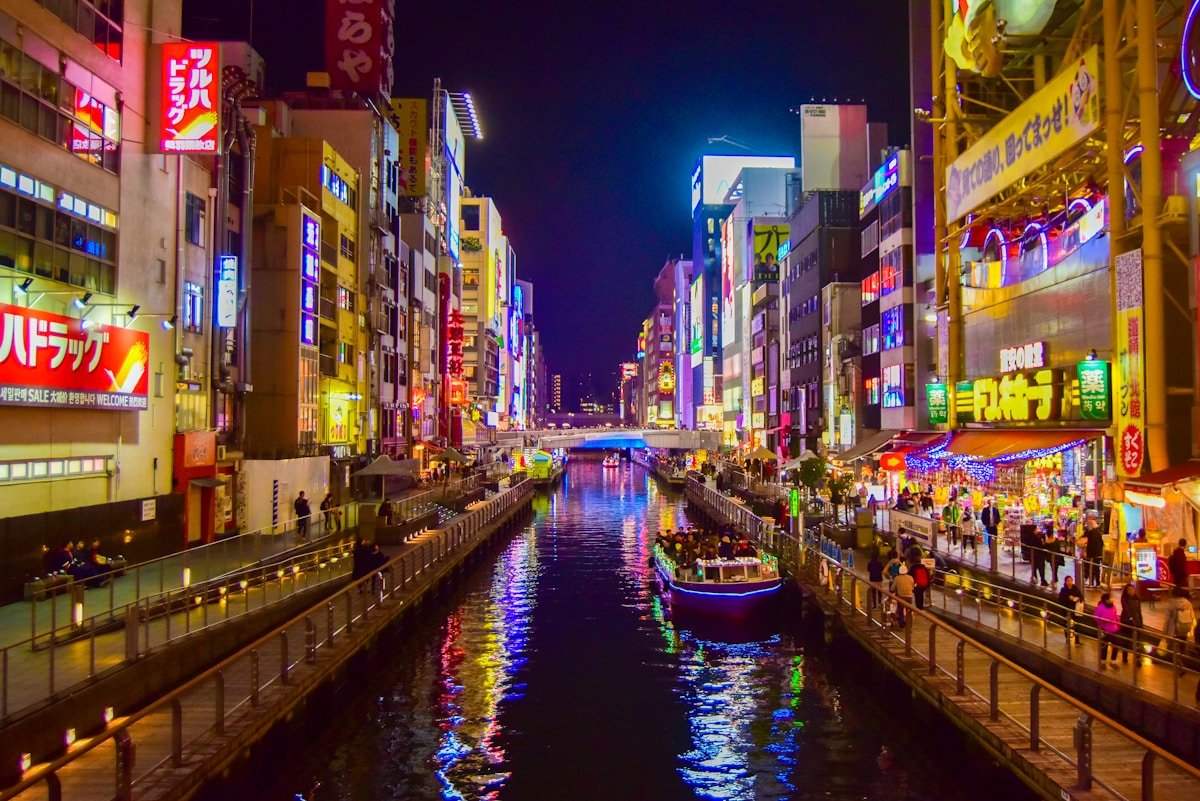
Osaka is the most straightforwardly enjoyable city in Japan - less formal than Kyoto, less frenetic than Tokyo, and with a food culture so central to city identity that locals use the phrase kuidaore (eat until you drop) as both a boast and a philosophy. These tour experiences cover the city’s culinary, cultural, and historical dimensions: a street food crawl through Dotonbori and Shinsekai, a half-day trip to Nara’s deer park, and Osaka Castle’s stone walls and Toyotomi history.
Prices are approximate as of 2026.
Top Tours at a Glance
Here is a quick comparison of specific top-rated tours in Osaka on GetYourGuide:
| Tour | Duration | Price (from) | Highlights |
|---|---|---|---|
| Hungry Osaka Street Food Tour Shinsekai: 15 Tastings, 3 Drinks | 3 hrs | from approximately $49 | 15 tastings, 3 drinks, doteyaki, kushikatsu, takoyaki |
| Osaka Must-Visit Local Food Tour: Dotonbori and Shinsekai | 3 hrs | from approximately $74 | Takoyaki, okonomiyaki, kushikatsu with local guide |
| Personalized Osaka Street Food Tour with a Local Guide | 2.5 hrs | from approximately $53 | 6 stops, Namba back alleys, local-favourite eateries |
| Osaka Street Food Adventure in Tenjinbashi: 8 Tastings | 2.5 hrs | from approximately $55 | 8 tastings, Tenjinbashi, Kuromon area, local guide |
| Nara Day Tour from Osaka | 6-7 hrs | from approximately $51 | Deer park, Todaiji, Kasuga Taisha, transport included |
| Osaka, Nara and Uji Day Trip with Deer Park and Hot Spring | 9-10 hrs | from approximately $80 | Nara deer, Uji, onsen access, full day |
| Nara E-Bike and Osaka History Food: Ultimate Combo | Full day | from approximately $85 | E-bike Nara, Osaka food and history combined |
Browse all Osaka tours on GetYourGuide
Tours by Traveller Type
Not every Osaka tour suits every visitor. Here is how we break down the best options.
Families with Children
The Nara Day Tour from Osaka is the most reliably enjoyable family experience in the Osaka area. Children engage intensely with the semi-wild deer of Nara Park - the deer have learned to bow for crackers, approach calmly, and tolerate patient visitors at close range. The Todaiji Great Buddha Hall (the largest wooden building in the world) provides genuine architectural spectacle that registers with younger visitors. Transport and timing are handled by the tour operator, removing the stress of navigating Kintetsu rail connections with children and bags.
For families who want to stay within Osaka, the Osaka Must-Visit Local Food Tour is a manageable three-hour format that covers Dotonbori and Shinsekai at a pace that accommodates younger eaters - takoyaki, okonomiyaki, and kushikatsu are all accessible foods that children tend to enjoy and remember.
Solo Travellers
The Personalized Osaka Street Food Tour with a Local Guide works particularly well for solo visitors. The Namba-based format moves through back alleys and local-favourite spots rather than the tourist strip of Dotonbori’s main canal - the kind of exploration that is significantly harder to do alone without local knowledge. The guide navigates the warren of lanes around Hozenji Yokocho and Kuromon, explaining the history of each dish and the neighbourhood context behind each stop.
Solo visitors with an interest in combining food and culture should consider the Nara E-Bike and Osaka History Food Combo - a full-day experience that covers Nara’s heritage sites on an e-bike and transitions to Osaka’s food and historical quarters in the afternoon. Covering two cities in one day by e-bike is a genuinely unusual way to experience the Kansai region.
Budget Travellers
The Hungry Osaka Street Food Tour Shinsekai: 15 Tastings, 3 Drinks represents outstanding value for the quantity included. Fifteen food tastings spanning doteyaki (miso-simmered beef tendon), karaage, takoyaki, yakitori, oden, and udon noodles, plus three drinks, over three hours in Shinsekai and surrounds. The per-item cost of the food alone would comfortably exceed the tour price at individual stall prices in the area. Shinsekai is less touristically polished than Dotonbori, which means prices are lower and atmosphere is considerably more authentic.
For Nara on a budget, the independent Kintetsu train (approximately ¥680 from Namba, 40 minutes) works well for confident independent travellers. A guided day tour that includes transport, entrance fees, and an English guide adds context that genuinely transforms the experience of the deer park and temple complex.
Culture Seekers
The Osaka Must-Visit Local Food Tour - Dotonbori and Shinsekai pairs food with the cultural history of each neighbourhood. Dotonbori has been in continuous operation as an entertainment district since the 1600s - the canal-side location, the theatre tradition of Bunraku and kabuki, and the specific food culture of Osaka are all connected in ways a good guide makes explicit. Shinsekai’s 1912 origin as a model of Paris and Coney Island simultaneously is a genuinely unusual piece of urban history.
For deeper cultural context across multiple sites, the Osaka, Nara and Uji Day Trip extends the itinerary to include Uji, the centre of Japan’s highest-grade green tea production and the site of Byodoin Temple (featured on the ¥10 coin).
Adventure Seekers and Outdoor Enthusiasts
The Nara E-Bike and Osaka History Food Combo is the active choice. Nara’s heritage sites spread across broad parkland and hilly terrain that is genuinely better explored by bike than on foot - covering Kasuga Taisha, Nigatsudo, Todaiji, and the Naramachi district on an e-bike removes the physical toll without removing the outdoor character of the visit. The transition to Osaka food culture in the second half makes this a full day with real variety.
Luxury Travellers
The Personalized Osaka Street Food Tour can be booked as a private experience, transforming it into a bespoke culinary route shaped by your specific interests - more seafood from Kuromon, a longer stop at a particular ramen counter, or extending into Hozenji Yokocho for dinner. Combined with a private Nara day trip that includes a guide-secured restaurant reservation for unaju (eel over rice) at a Naramachi venue, this creates a genuinely premium Kansai day.
For Osaka Castle, a private guide specialising in the Toyotomi period can add dimensions that the museum interior cannot convey - the political circumstances of Hideyoshi’s construction, what the surviving stone walls reveal about Edo-period engineering, and the specific tactics used in the 1615 siege. Private castle tours can be arranged through GetYourGuide.
Osaka Street Food: Dotonbori, Kuromon and Shinsekai
Osaka’s food tour scene is one of the most developed in Japan. A guided street food tour typically covers 2 to 4 areas over 3 hours, with stops at 6 to 15 tastings included in the price.
Dotonbori
Dotonbori is Osaka’s most famous food and entertainment district - a canal-side strip of neon signs, mechanical crabs, and competing restaurant facades that has been in continuous operation since the 1600s.
What to eat in Dotonbori:
- Takoyaki: Osaka invented the octopus ball. Approximately ¥700 for 8 pieces at well-regarded independent shops along the canal.
- Kushikatsu: Battered and deep-fried skewers of meat, vegetables, and seafood. The ironclad rule: no double-dipping in the communal sauce.
- Okonomiyaki: Osaka-style savoury pancake made to order with cabbage, egg, and your choice of protein. Approximately ¥800 to ¥1,400.
- Ramen: Ichiran near Dotonbori offers solo cubicle dining designed to focus entirely on the bowl. Approximately ¥980 to ¥1,200 for a standard bowl.
Kuromon Ichiba Market
Known locally as “Osaka’s kitchen,” Kuromon Ichiba is a covered market approximately 800 metres from Dotonbori. The Osaka Street Food Adventure in Tenjinbashi extends from this area northward through Tenjinbashi, Japan’s longest shopping street.
What to look for at Kuromon:
- Fresh tuna from approximately ¥800 per 100g (lean akami) to ¥3,000+ per 100g (premium otoro)
- Grilled scallops and clams at stall counters, approximately ¥300 to ¥500 each
- Professional kitchen knives from approximately ¥3,000 for a home cook’s gyuto upward
Shinsekai
For visitors who want to go beyond the tourist-optimised Dotonbori circuit, Shinsekai in Tennoji has the best kushikatsu in Osaka at shops like Daruma (the original 1929 chain). The Hungry Osaka Street Food Tour Shinsekai focuses here specifically, combining neighbourhood atmosphere with maximum tasting quantity per yen spent.
Nara Day Trip from Osaka
Nara, Japan’s first permanent capital (710-784 AD), sits 40 minutes from Osaka by the Kintetsu line. The Nara Day Tour from Osaka handles transport, entrance fees, and guidance through the three sites that repay most from having an English-speaking guide.
Nara Park and the Deer
The approximately 1,300 semi-wild deer of Nara Park are designated a national treasure. Deer crackers (shika senbei) are sold by vendors near the park entrance for approximately ¥200 per packet. Best visiting times: morning before 9am and late afternoon after 4pm, when tour groups thin out.
Todaiji Temple and the Great Buddha
Todaiji houses Japan’s largest bronze Buddha statue - the Rushana Buddha at 15 metres tall. Entry: ¥600 per adult. Open daily 7:30am to 5pm (shorter hours November to March).
Kasuga Taisha Shrine
Founded in 768 AD. Entry to outer grounds: free. Inner precincts: ¥500. The approach along a stone lantern-lined path through old-growth forest is one of the finest shrine approaches in Japan.
Osaka Castle
Osaka Castle was built by Toyotomi Hideyoshi in 1583 and at construction was the largest castle in Japan. The current tower is a 1931 concrete reconstruction; the original burned during a siege in 1615 and was rebuilt only to burn again in 1868. The exterior matches the original; the interior museum covers 8 floors of Toyotomi-era history.
Entry to the castle donjon: ¥600 per adult. The 8th-floor observation deck gives a 360-degree view across Osaka.
Getting there: Tanimachi 4-chome station (Tanimachi/Chuo lines), 5 minutes walk to Ote-mon Gate; or Osakajokoen station (JR Osaka Loop Line) on the park’s north side. The Nishimaru Garden west of the main tower has approximately 600 cherry trees - one of Osaka’s best hanami spots in late March to early April.
Book Osaka experiences early: Tours and activities in Osaka cover food tours, cooking classes, and cultural experiences. For same-week bookings, check availability for the next few days - it filters out anything already sold out.
Osaka’s compact geography makes these experiences straightforward to combine. The castle takes a morning; Nara fits a half-day; a guided food tour in Dotonbori or Shinsekai fills the evening. Allow at least two full days in Osaka to experience more than the surface of what the city offers.
See also: Osaka travel guide · Things to do in Osaka · Osaka food guide · Fukuoka vs Osaka · Kansai region guide