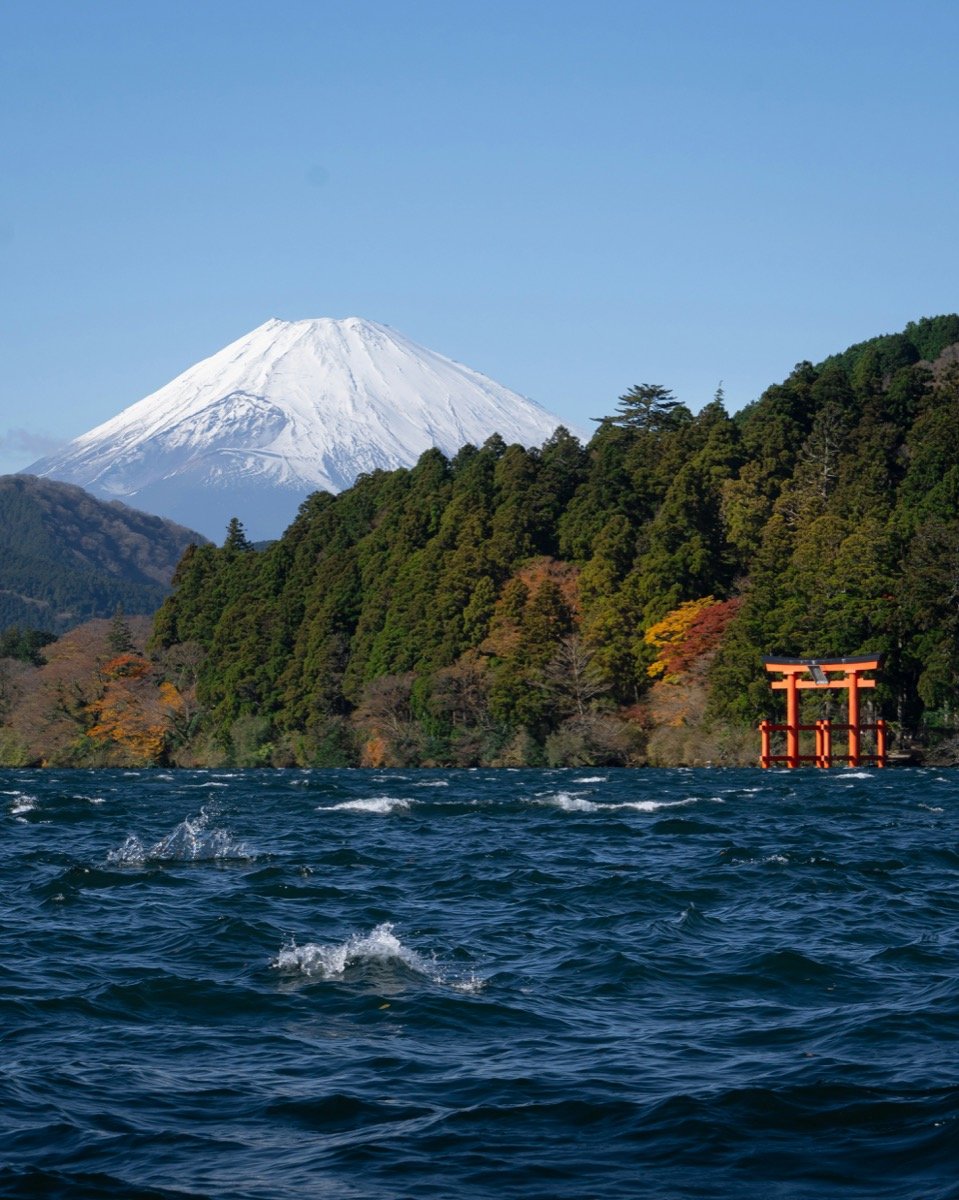
Hakone sits 80 kilometres southwest of Tokyo in the Fuji-Hakone-Izu National Park, and it delivers one of the most varied single-day itineraries in Japan. On a clear day, Mt Fuji dominates the horizon from Lake Ashi. The Hakone Ropeway crosses an active volcanic crater. The Open Air Museum houses world-class sculpture. And a network of traditional ryokan offers onsen bathing fed by centuries-old hot springs. Most visitors come on a day trip from Tokyo; staying overnight adds significantly to the experience.
Prices are approximate as of 2026.
Top Tours at a Glance
Here’s a quick comparison of top-rated Hakone tours departing from Tokyo on GetYourGuide:
| Tour | Duration | Price (from) | Highlights |
|---|---|---|---|
| Mt Fuji Tour, Hakone Ropeway, Owakudani, Lake Ashi | 10 hrs | from approximately $80 | Fuji 5th Station, ropeway, volcanic crater, Lake Ashi cruise |
| Mount Fuji and Hakone Full Day Tour with Ramen Making | Full day | from approximately $85 | Hakone pirate ship, Lake Ashi, Owakudani, ramen class |
| 1 Day Tour: Mount Fuji and Hakone | 11 hrs | from approximately $75 | Both Mt Fuji and Hakone highlights in one day |
| Mount Fuji, Gotemba and Hakone Day Trip by Luxury Bus | Full day | from approximately $90 | Luxury coach, Gotemba shopping, Lake Ashi, Hakone Shrine |
| Private Customizable Mt Fuji and Hakone Full-Day Tour | 10 hrs | from approximately $300 per vehicle | Private vehicle, flexible itinerary, hotel pickup |
| Hakone Private Tour with Onsen and Lake Ashi Cruise | Full day | from approximately $200 | Private onsen, Lake Ashi cruise, Fuji views, hotel pickup |
| From Tokyo: Private Tour to Fuji/Hakone - Onsen, Art, Nature | Full day | from approximately $200 | Open Air Museum, onsen, Fuji views, private format |
| Tokyo: Mt. Fuji, Owakudani, Hakone Shrine and Open Air Museum | Full day | from approximately $85 | Open Air Museum, Hakone Shrine, Owakudani, small group |
Browse Hakone tours on GetYourGuide
Tours by Traveller Type
Hakone draws a wide range of visitors from Tokyo — some come specifically for the Mt Fuji views, others for the onsen, and others to cross the ropeway over an active crater. Here is how the main tours map to different travel priorities.
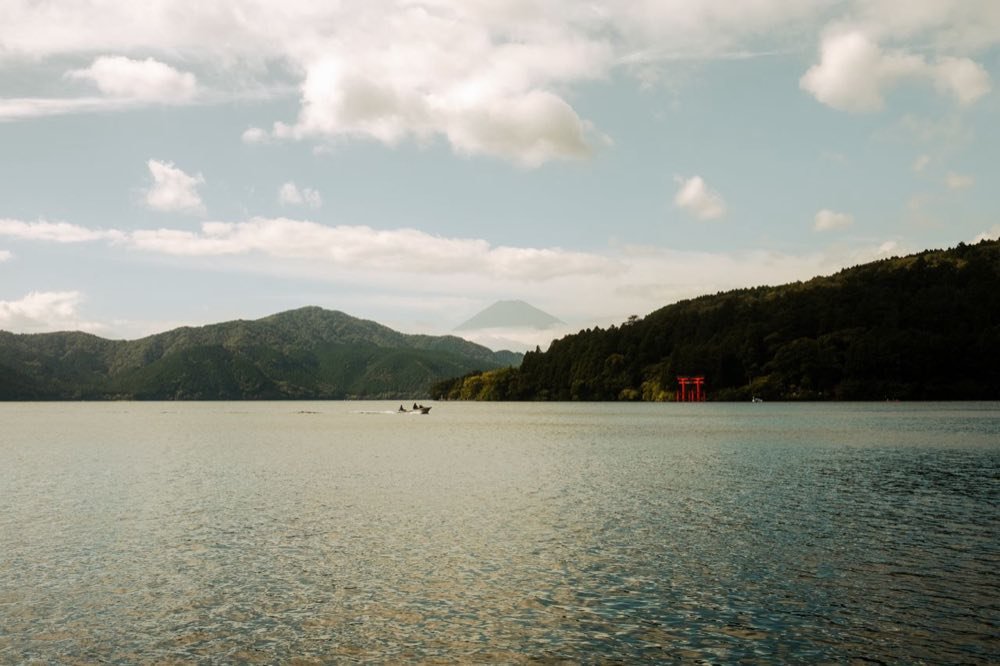 Lake Ashi, with the Hakone Shrine torii on the far shore and Fuji on the horizon.
Families with Children
The Mount Fuji and Hakone Full Day Tour with Ramen Making stands out for families because it includes a ramen-making session alongside the standard Hakone circuit. Younger children engage far more with hands-on food activities than with scenic viewpoints, and the Hakone Pirate Ship cruise on Lake Ashi — a replica European sailing vessel with a cartoonishly dramatic design — reliably delights kids. The Owakudani volcanic crater, with its sulphur vents and the famous black eggs hard-boiled in geothermal water, adds another sensory layer that children remember long after the mountain views have faded.
For families who want a more relaxed pace, the 1 Day Tour: Mount Fuji and Hakone covers the essential circuit without overloading the schedule — coach-based transport removes the stress of managing multiple rail connections with young children, and the guide handles all the logistics from Shinjuku departure to the return transfer.
Solo Travellers
The Mt Fuji Tour, Hakone Ropeway, Owakudani, and Lake Ashi runs as a small group format that works particularly well for solo visitors. The shared coach from central Tokyo provides natural opportunities for conversation with other travellers, and the structured day removes all the planning complexity of navigating the Hakone Free Pass transport circuit independently on a first visit. Starting from approximately $80, it is also the most accessible price point for solo travellers watching their budget.
For solo visitors who prefer more flexibility, the Hakone Free Pass (approximately ¥6,100 from Shinjuku as of 2026) covers all Hakone transport including the ropeway, cable car, Lake Ashi cruise, and local buses — an excellent self-guided option for confident navigators who want to move at their own pace through the circuit.
Budget Travellers
The 1 Day Tour: Mount Fuji and Hakone is the most cost-effective way to cover both Mt Fuji and Hakone’s headline sights in a single day. Starting from approximately $75, it undercuts private tour pricing significantly while still providing an English-speaking guide, coach transport, and the core Hakone circuit: Owakudani, Lake Ashi, and Hakone Shrine. For visitors whose primary goal is seeing Mt Fuji and experiencing the ropeway without spending premium prices, this format is the practical choice.
Alternatively, independent visitors who buy the Hakone Free Pass (approximately ¥6,100 from Shinjuku as of 2026) and self-navigate the circuit can do the full ropeway, pirate ship, and shrine for under ¥10,000 total. The pass covers all Hakone transport — an excellent value proposition on a full-day visit for travellers comfortable with Japanese rail systems.
Culture Seekers
The From Tokyo: Private Tour to Fuji/Hakone - Onsen, Art, Nature is purpose-built for visitors who want Hakone’s cultural and artistic depth alongside its scenic highlights. The tour specifically includes time at the Hakone Open Air Museum — 70,000 square metres of outdoor sculpture featuring Henry Moore, Rodin, Giacometti, and Japan’s leading postwar sculptors — alongside a traditional onsen experience and the standard Fuji viewpoints. For visitors who find art more compelling than volcanic craters, this is the correct tour: it builds the Open Air Museum into the day rather than treating it as an optional extra.
The Tokyo: Mt. Fuji, Owakudani, Hakone Shrine and Open Air Museum offers a similar cultural focus in a small group format — covering the Open Air Museum’s Picasso Pavilion and sculpture gardens, Hakone Shrine’s lakeside torii, and Owakudani in one structured day. A good option for culture-focused visitors who prefer the company of a small group over a private tour.
Adventure and Outdoor Enthusiasts
The volcanic crater walk at Owakudani is the adventure highlight of any Hakone day trip, and all of the standard tours listed include the ropeway over the crater. The Mt Fuji Tour with Hakone Ropeway, Owakudani, and Lake Ashi explicitly includes the Owakudani crater area when conditions allow — check the volcanic alert status before booking as the walk is intermittently closed when alert levels rise. The combination of Fuji 5th Station at 2,300 metres, the aerial ropeway crossing over active sulphur vents, and the Lake Ashi cruise delivers genuine variety for outdoor visitors in a single day.
For visitors who want to hike Mount Misen on Miyajima or cycle Onomichi during the same Japan trip, Hakone’s terrain itself offers walking trails through cedar forest around the Fuji Five Lakes area — independent half-day hikes from Kawaguchiko are straightforward and require no guide.
Couples and Luxury Travellers
The Hakone Private Tour with Onsen and Lake Ashi Cruise combines the most romantic elements of Hakone into a fully private day: hotel pickup, a natural outdoor onsen experience, the Lake Ashi cruise with Mt Fuji on the horizon, and the freedom to linger wherever the cloud conditions over the mountain are best. The private format means stops are timed to your pace rather than a coach schedule — essential when the primary variable of any Hakone day trip is whether Mt Fuji’s summit is visible.
The Private Customizable Mt Fuji and Hakone Full-Day Tour provides a private vehicle with a flexible itinerary — hotel pickup, stops timed around cloud conditions, and the option to incorporate the Hakone Open Air Museum or a kaiseki lunch at a lakeside restaurant depending on your interests. For couples making Hakone a meaningful part of a Japan trip rather than just a tick on a day trip list, this format delivers a fundamentally different experience from any coach tour.
Day Trips from Tokyo to Hakone
The most common access point is Shinjuku Station via the Odakyu Romancecar (approximately 85 minutes, from ¥2,470 per person one-way as of 2026). The Hakone Free Pass (¥6,100 from Shinjuku, as of 2026) covers the Romancecar fare and unlimited use of all transport within Hakone — including the ropeway, cable car, pirate ships on Lake Ashi, and local buses. It is excellent value on a full-day visit.
Day trip tours from Tokyo typically depart from Shinjuku or Harajuku, handle the Odakyu booking, and guide you through the circuit of Hakone’s main sights. Small group tours (8 to 15 people) run from approximately ¥8,000 to ¥12,000 per person; private tours for two from approximately ¥25,000 to ¥40,000.
Most full-day tours cover:
- Hakone Checkpoint Museum (Hakone Sekisho)
- Lake Ashi pirate ship cruise
- Hakone Shrine torii gate at the lakeside
- Mt Fuji viewpoints (weather-dependent)
- Owakudani volcanic crater (when open; subject to volcanic alert levels)
- Hakone Open Air Museum (optional add-on or independent visit)
The Classic Hakone Circuit
Hakone’s transport network is designed as a circuit — most visitors follow it in one direction and return by a different route. The standard route from Hakone-Yumoto:
- Hakone Tozan Railway (switchback mountain train) to Gora — 35 minutes, included in Free Pass
- Hakone Tozan Cable Car from Gora to Sounzan — 10 minutes
- Hakone Ropeway from Sounzan to Togendai — 30 minutes across Owakudani crater
- Pirate ship (Hakone Sightseeing Cruise) from Togendai to Moto-Hakone — 25 to 40 minutes
- Bus back to Hakone-Yumoto or Odawara
Guided tours typically navigate this circuit while adding commentary and pausing for photos and food at the right places. Independent travel is straightforward if you have the Free Pass and a clear schedule.
Hakone Open Air Museum
The Hakone Open Air Museum (箱根彫刻の森美術館) opened in 1969 and covers 70,000 square metres of outdoor sculpture garden on the side of a mountain. The permanent collection includes work by Picasso, Henry Moore, Rodin, Giacometti, and major Japanese sculptors. The Picasso Pavilion alone holds over 300 works. Entry costs ¥1,600 for adults as of 2026; open 09:00 to 17:00 daily.
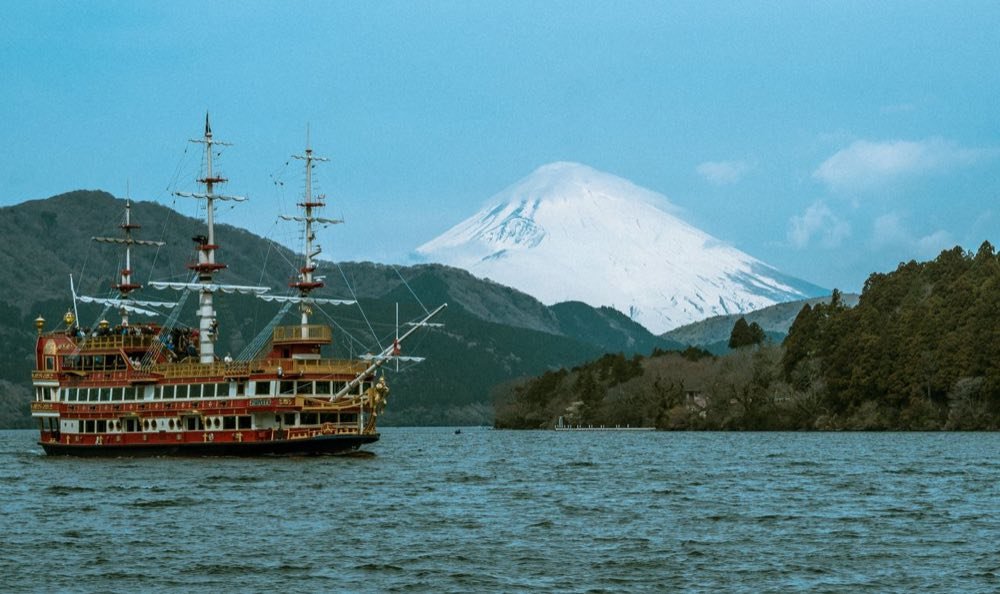 One of the pirate-style sightseeing ships that cross Lake Ashi.
The museum is next to Chokoku-no-Mori Station on the Hakone Tozan Railway — 5 minutes by train from Hakone-Yumoto. Most day trips from Tokyo either include the museum in the itinerary or allow free time here while the guide handles logistics for the rest of the group.
Owakudani Volcanic Crater
Owakudani (大涌谷) is a post-eruption crater zone from the 3,000-year-old Hakone volcano. Sulphur vents, boiling pools, and the distinctive smell of hydrogen sulphide make it unlike anything else in the Kanto region. The area is intermittently closed when volcanic alert levels rise — check the current status via the Hakone Tourism Association before planning your visit.
When open, the crater walk takes approximately 45 minutes. The signature local product is kuro-tamago (black eggs) — regular eggs hard-boiled in the sulphurous hot spring water, which turns the shells black. One egg is said to add seven years to your life. A bag of five costs approximately ¥500.
The ropeway from Sounzan to Togendai passes directly over the crater; on clear days the views of Mt Fuji across the crater are exceptional.
Lake Ashi and Hakone Shrine
Lake Ashi (芦ノ湖) is a caldera lake formed about 3,000 years ago. The pirate ships — actually replicas of historic European sailing vessels — are kitsch but effective: the 40-minute crossing between Togendai and Moto-Hakone or Hakone-machi offers the clearest view of the Mt Fuji reflection on calm mornings.
Hakone Shrine sits at the lake’s eastern shore at Moto-Hakone. The lakeside torii gate is the most photographed spot in Hakone — best visited early morning before tour groups arrive. The shrine dates to 757 AD and is dedicated to three mountain deities. Entry is free; the precincts take 30 to 45 minutes to explore properly.
Hakone Checkpoint (Hakone Sekisho) is a reconstructed Edo-period barrier where travellers were inspected on the old Tokaido road between Edo (Tokyo) and Kyoto. Entry ¥500 as of 2026; open 09:00 to 17:00.
Onsen Experiences in Hakone
Hakone has nine hot spring resort districts (onsen machi), each fed by different mineral waters. Hakone-Yumoto is the largest and most accessible.
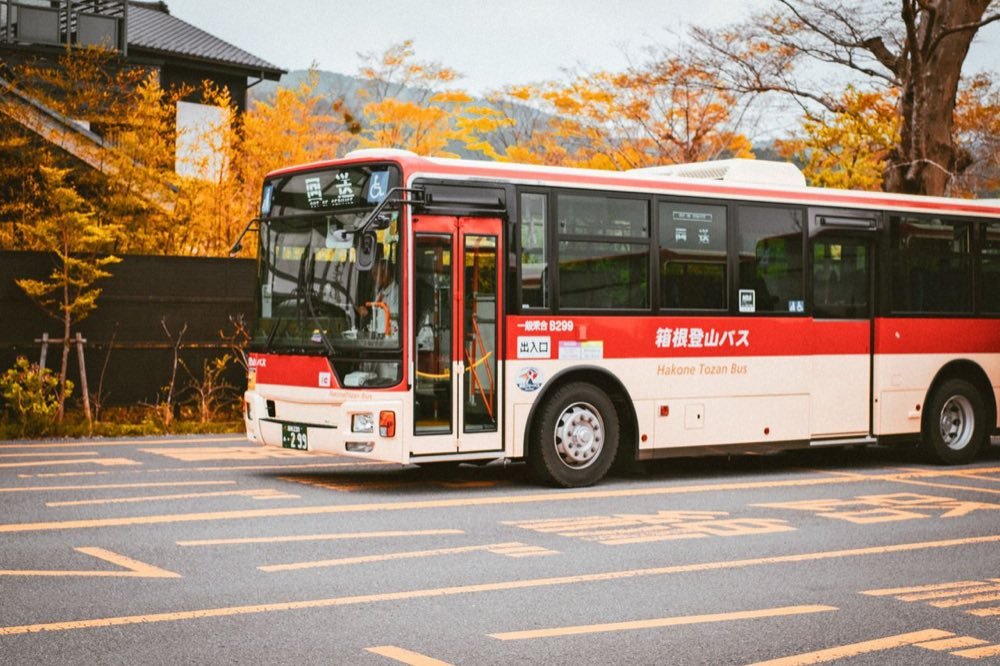 A Hakone Tozan bus, the workhorse of the Hakone Free Pass loop.
Day-use onsen (higaeri onsen): Most ryokan and dedicated onsen facilities accept day visitors without an overnight stay. Tenzan Toji-kyo (天山湯治郷) in Hakone-Yumoto is one of the best — natural outdoor baths in a forested setting, approximately ¥1,300 per person, open 10:00 to 22:00.
Private baths: Many ryokan offer private indoor or outdoor baths bookable by the hour without an overnight stay (approximately ¥2,000 to ¥4,000 per hour for two people).
Overnight ryokan: Staying at a traditional inn includes dinner (kaiseki), breakfast, and unlimited onsen use. Rates vary significantly: budget ryokan from approximately ¥12,000 per person per night; mid-range from ¥20,000; high-end (Gora Kadan, Hakone Ginyu) from ¥50,000 to ¥100,000 per person.
Seasonal Highlights
Cherry blossom (late March to early April): The lakeside at Moto-Hakone and the approach to Hakone Shrine are especially beautiful. Crowds are heavier than usual.
Autumn foliage (mid-October to mid-November): The Hakone Tozan Railway route and Sengokuhara pampas grass fields (Susuki no Hara) are the best autumn colour spots. The pampas grass at Sengokuhara peaks in mid-October.
New Year: Hakone Ekiden — the famous relay marathon from Tokyo to Hakone and back (2 to 3 January) — closes roads and draws enormous spectator crowds.
Booking Guided Tours
Tours that include the Hakone Free Pass in the price typically represent the best value — the pass alone costs ¥6,100 from Shinjuku, so any tour priced at ¥8,000 to ¥10,000 is adding relatively little to the pass cost while providing a guide, logistics, and narrative.
Private tours allow for more flexibility on Mt Fuji viewpoint timing (cloud cover is the biggest variable) and can detour to Gotemba Premium Outlets or the Fuji Five Lakes region if Mt Fuji is obscured. The Private Customizable Mt Fuji and Hakone Full-Day Tour is the clearest option for visitors who want that level of flexibility.
Browse Hakone tours and day trips from Tokyo on GetYourGuide for current availability and pricing.
The Hakone Free Pass includes all transit within the Hakone area. For mobile data to check real-time Mt Fuji visibility and navigate the Odakyu network, a Japan eSIM is worth having - activate before your flight so it’s working from arrival.
See also: Tokyo travel guide · Mt Fuji climb guide · One week Tokyo itinerary · Kanto region guide