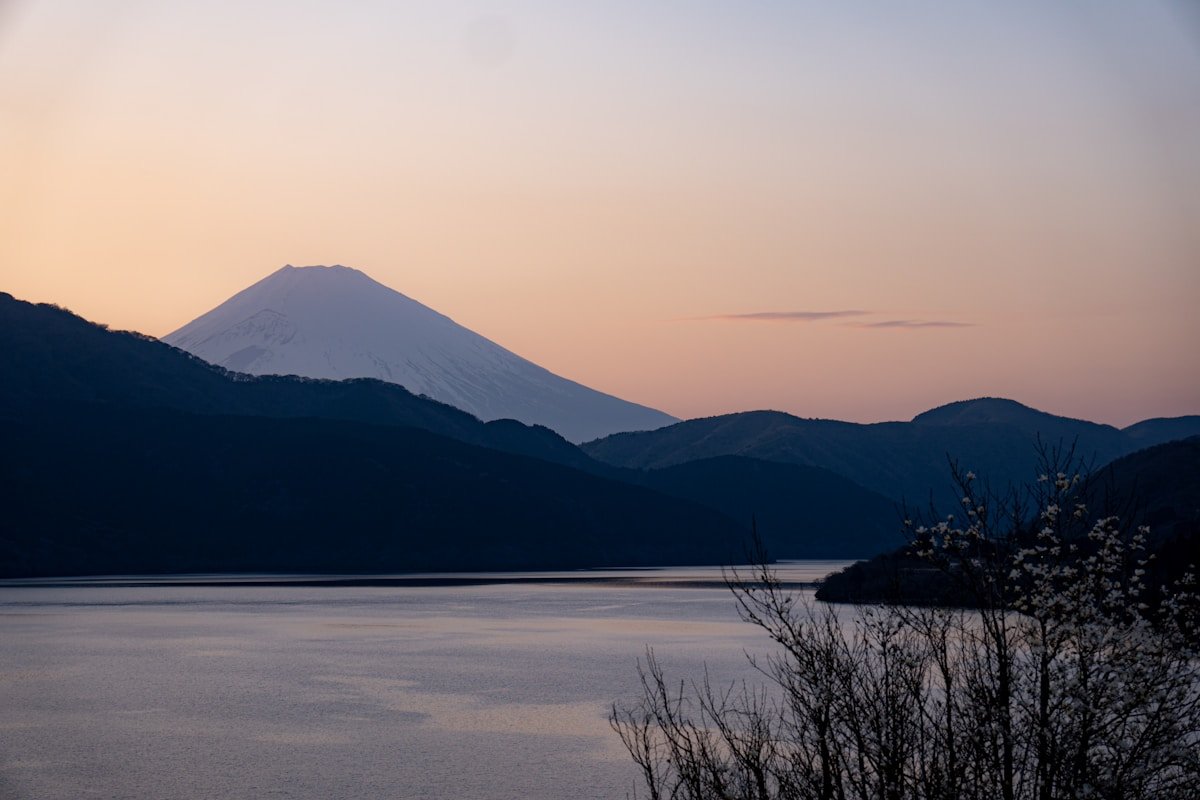
The Mt Fuji and Hakone combination is one of Japan’s most satisfying day trips - two very different landscapes within 90 minutes of Shinjuku, easy to combine on a single Hakone Free Pass, and with enough options to fill a full day without rushing. On a clear day, you’ll see Fuji reflected in Lake Ashi. On a cloudy one, you’ll have the volcanic landscape of Owakudani and the Hakone Open Air Museum entirely to yourself.
Here’s how to plan it properly. If you go independently, we suggest buying the Hakone Free Pass in advance on Klook.
Top Tours at a Glance
Here’s a quick comparison of top-rated Mt Fuji and Hakone day trip tours on GetYourGuide:
| Tour | Duration | Price (from) | Highlights |
|---|---|---|---|
| Mt Fuji highlights full-day trip from Tokyo | 10 hrs | from $66 | Lake Kawaguchi, Oshino Hakkai, 5th Station; group coach |
| Mt Fuji, Kamakura & Lake Ashi day trip | 10–11 hrs | from $80 | Fuji + Big Buddha + Lake Ashi cruise in one day |
| Hakone private day trip from Tokyo | 10 hrs | from $110 | Romancecar, ropeway, cruise - custom pacing |
| Mt Fuji guided climb tour (July–Sept) | 12–14 hrs | from $120 | Summit attempt, mountain huts, English guide |
Browse Mt Fuji & Hakone tours → GetYourGuide
The Hakone Free Pass: Worth Buying?
The Odakyu Hakone Free Pass (sold at Shinjuku Station and Odakyu travel centres) covers unlimited rides on the Romancecar limited express train, Hakone Tozan Railway, Hakone Ropeway, Lake Ashi cruise, Hakone Tozan Bus, and the Hakone Sightseeing Cruise for two or three consecutive days.
- 2-day pass: approximately ¥6,100 (USD 40) from Shinjuku
- 3-day pass: approximately ¥6,500 (USD 43) from Shinjuku
- Children’s passes: roughly half price
For a single day trip that uses the ropeway, the cruise, and the mountain railway, the pass pays for itself. If you’re going straight to the 5th Station area and back without using Hakone’s transport network, individual tickets may cost less. Most visitors doing the full Hakone loop find the pass saves around ¥1,500–¥2,000 in a day.
The pass does not include the admission price to attractions like the Hakone Open Air Museum or Owakudani volcanic area.
Getting There: Romancecar or Regular Train
From Shinjuku Station, two options:
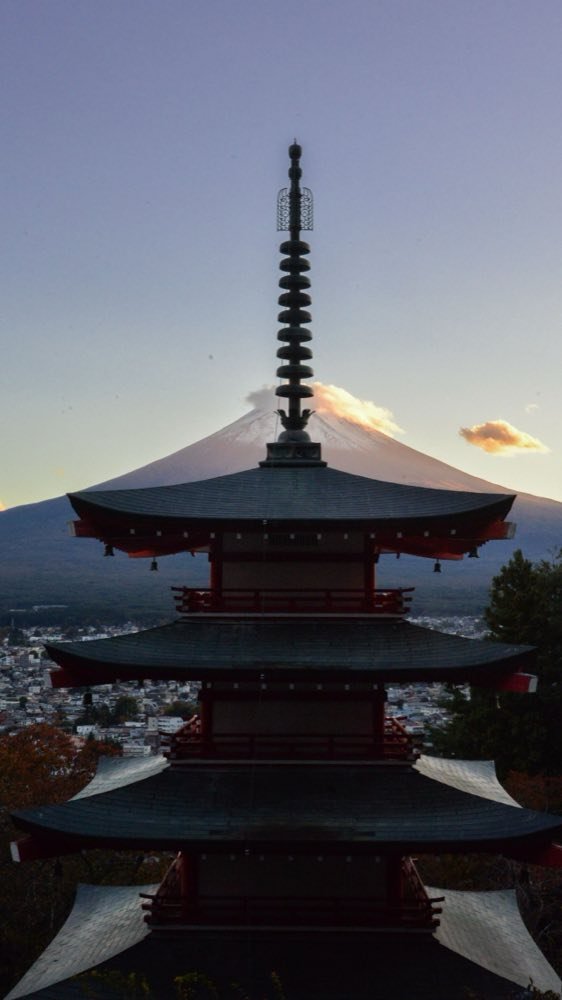 Chureito Pagoda above Fujiyoshida, the classic Fuji photo stop.
Option A - Romancecar Limited Express (recommended) The Odakyu Romancecar is a reserved-seat express with panoramic front windows. Journey time to Hakone-Yumoto is approximately 85 minutes with no transfers. Supplements are required on top of the Free Pass: approximately ¥1,200 (USD 8) for the reserved seat surcharge. Morning trains (departing 7:00 am–8:30 am) on weekends fill up fast - book two to three weeks in advance via the Odakyu Romance Car reservation portal or at Shinjuku ticket machines.
Option B - Odakyu Express + Tozan Railway Take the Odakyu Line rapid express from Shinjuku to Odawara (approximately 75 minutes, included in the Free Pass), then transfer to the Hakone Tozan Railway to Hakone-Yumoto. Slightly slower but no seat surcharge.
From Tokyo Station, the JR Tokaido Shinkansen to Odawara takes 35 minutes (approximately ¥3,740 one-way, USD 25, not covered by Hakone Free Pass - check if your JR Pass covers it). Then the Hakone Tozan Railway from Odawara to Hakone-Yumoto.
The Hakone Tozan Railway
The switchback railway from Hakone-Yumoto up to Gora is a slow, charming climb through increasingly steep forested hillside. The full run (Hakone-Yumoto to Gora) takes about 50 minutes, with drivers performing careful three-point turns at the switchbacks mid-route. Seats on the right side of the train heading uphill give the better views at most sections.
The line is famous for hydrangeas in June and July, when the steep embankments alongside the tracks bloom in dense blue and purple. Timed correctly, the slow speed of the train makes this one of the better ways to photograph the flowers without needing a wide lens.
The Hakone Ropeway: Owakudani and Beyond
At Gora, board the funicular to Sounzan (3 minutes), then the Hakone Ropeway for the scenic gondola ride over the volcanic Owakudani crater zone to Togendai on the shores of Lake Ashi.
The ropeway covers approximately 4 kilometres and takes about 25 minutes end-to-end. On clear days, the views of Mt Fuji opening up as you rise above the treeline are outstanding - this section, between Ubako and Togendai, offers the most open sightline.
Owakudani (literally “Great Boiling Valley”) is the midpoint stop on the ropeway. The active volcanic zone features visible fumaroles, sulphurous steam vents, and the famous kuro-tamago - hard-boiled eggs cooked in the volcanic springs, which turn the shells black. Five eggs for approximately ¥600 (USD 4). The local legend claims each egg adds seven years to your life. Whether or not that’s accurate, they taste like hard-boiled eggs.
Note: The ropeway occasionally closes during periods of elevated volcanic activity. Check the Hakone Ropeway website for status before your trip.
Lake Ashi Cruise
From Togendai Pier, the Hakone Sightseeing Cruise operates pirate-ship-style vessels across Lake Ashi to Moto-Hakone and Hakone-machi on the southern shore. The cruise takes approximately 30 minutes and is included in the Hakone Free Pass.
The classic photograph - Fuji reflected in Lake Ashi with the red torii gate of Hakone Shrine visible in the water - is taken from the southeastern shore near Moto-Hakone. The shrine itself is a short walk from the pier. The famous Avenue of Cedars (Sugi Namiki), a 500-metre stretch of the old Tokaido Highway lined with ancient cedar trees, starts a few minutes’ walk from the pier and is one of the most atmospheric short walks in the region.
Weather caveat: Fuji is visible from Lake Ashi roughly 50% of days in summer due to haze and cloud. Best visibility is typically in winter (December–February) and autumn (October–November) on clear mornings. Check the live Fuji webcam at mtfuji.or.jp before departing.
Mt Fuji 5th Station
If Mt Fuji itself is the priority, the route diverges from the Hakone loop. From Kawaguchiko or Gotemba (both accessible from Shinjuku or Odawara by bus), the Subaru Line 5th Station on the north side and the Fujinomiya Route 5th Station on the south side are accessible by highway bus (most services run May–November, some year-round).
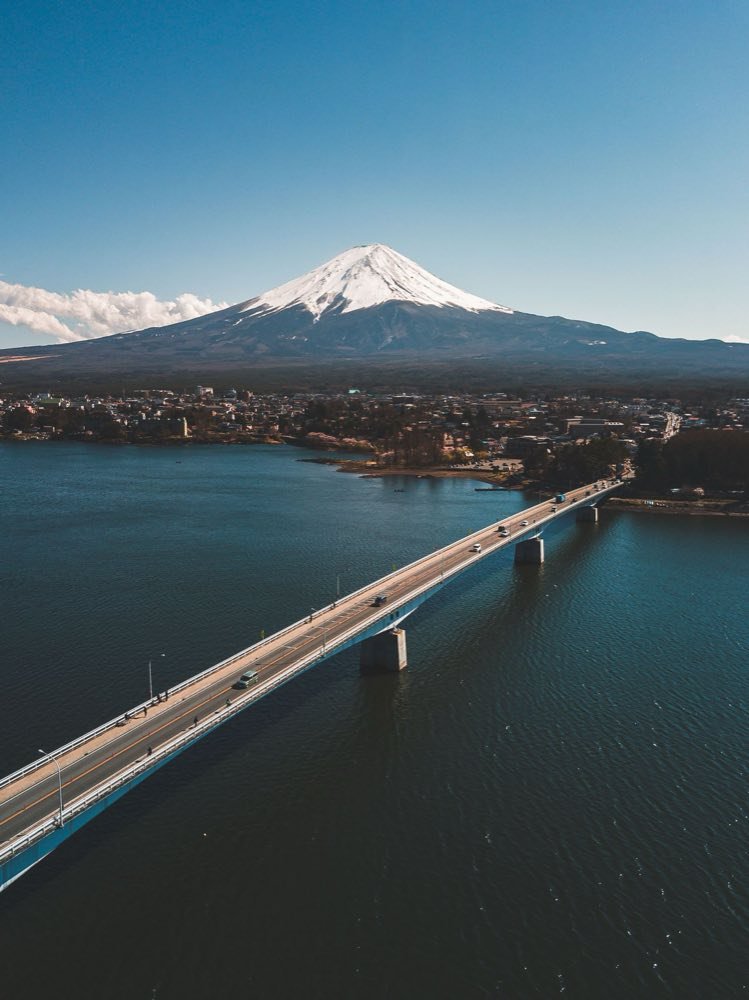 The Lake Kawaguchiko bridge with Fuji beyond.
- From Shinjuku: Highway bus to Mt Fuji 5th Station (Subaru Line), approximately 2 hours 15 minutes. From approximately ¥2,800 (USD 19) one-way with Keio Bus.
- From Kawaguchiko: Bus to 5th Station, approximately 55 minutes. ¥1,800 one-way (USD 12) on local buses.
The 5th Station sits at 2,305 metres. There are several souvenir shops, a visitor centre, and a small shrine. The air is noticeably thinner and cooler - bring a layer even in summer. On clear days, the views south across the Fuji Five Lakes region and north toward the Japanese Alps are excellent.
Combining 5th Station with Hakone in a single day is possible but tight. A suggested sequence: early start from Tokyo to Kawaguchiko (approximately 2 hours), bus to 5th Station (1 hour), two to three hours at the station and viewpoints, bus back to Kawaguchiko (1 hour), then express bus or train to Odawara to connect with the Hakone network for the afternoon. This leaves time for the ropeway and Lake Ashi cruise before last buses or trains back to Tokyo (most services from the Hakone area run until around 8:00 pm–9:00 pm).
If you want to climb Fuji rather than visit the 5th Station only, see our separate guide on Mount Fuji climbing routes.
Hakone Open Air Museum
On the Hakone Tozan Railway, the Hakone Open Air Museum (Chokoku no Mori Station, one stop before Gora) is one of Japan’s best-designed sculpture parks and worth two to three hours.
- Entry: approximately ¥1,800 (USD 12) adults, ¥900 (USD 6) children
- Hours: 9:00 am – 5:00 pm daily (last entry 4:30 pm)
- Highlights: The Picasso Pavilion (with around 300 works), a Henry Moore sculpture gallery, a stained-glass tower visitors can climb, and panoramic views of the Hakone mountains from the open grounds
The museum works well as either a morning start or an afternoon stop on the Hakone loop. It’s included in most package tours of the area and is accessible without a guide - the grounds are clearly marked in English and Japanese.
Best Season and Weather
| Season | Fuji Visibility | Crowds | Notes |
|---|---|---|---|
| Spring (Mar–May) | Good (except rainy periods) | High | Cherry blossom at lower altitudes in April |
| Summer (Jun–Aug) | Poor - cloud and haze common | Very high | Fuji climbing season (July–Sept) |
| Autumn (Sep–Nov) | Good | High | Best foliage on the Tozan Railway in October |
| Winter (Dec–Feb) | Excellent | Lower | Coldest at altitude; Fuji usually snow-capped |
Winter is consistently the best time for Fuji views. The air is clearest, and the mountain appears with its full snow cap. Temperatures at Hakone are cold (around 5–10°C) but manageable with appropriate layers.
Summer (July–August) is the official Mt Fuji climbing season and sees enormous crowds at both the 5th Station and the Hakone area. If visiting in summer, leave Tokyo no later than 7:00 am to beat the bus queues and midday heat.
Day Trip vs. Staying Overnight
A well-organised day trip easily covers the Romancecar, the Tozan Railway, the ropeway, Owakudani, the Lake Ashi cruise, and one of the museums. That’s a full, busy day but entirely feasible leaving Shinjuku by 7:30 am and returning by 9:00 pm.
An overnight stay shifts the experience considerably. The Hakone ryokan circuit - traditional inns with onsen (hot spring) baths, kaiseki dinner, and futon bedding - is one of the best examples of the ryokan experience in Japan without travelling as far as Kyoto or the Japan Alps.
- Mid-range ryokan (e.g., Hyatt Regency Hakone Resort & Spa, Hakone Gora Park-side Ryokan): from approximately ¥25,000 (USD 165) per person per night including dinner and breakfast
- Budget option: Several traditional inns in Hakone-Yumoto start from approximately ¥12,000 (USD 80) per person per night with two meals
If you’re choosing between a day trip and overnight, the onsen experience alone makes overnight worth it - particularly in winter, when soaking outdoors with Fuji visible through the steam is hard to beat.
Guided Tours vs. Independent
The Hakone Free Pass system is well designed for independent travel, and the transport connections are straightforward enough that a first-time visitor with Google Maps can navigate the loop comfortably. Most signage is in English.
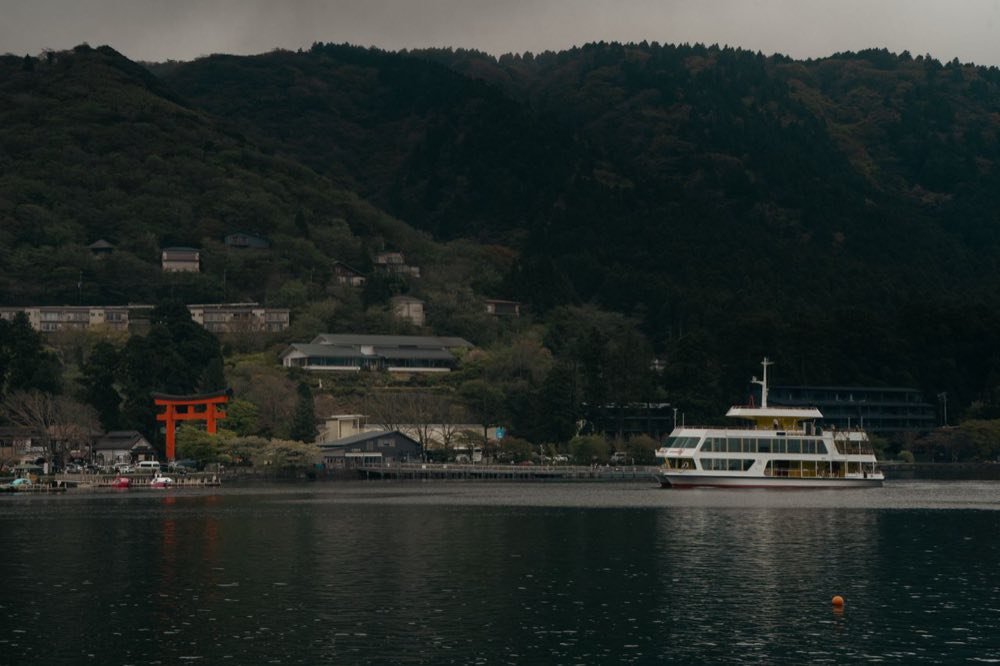 The Lake Ashi ferry passing the Hakone Shrine torii.
Guided group day trips from Tokyo are also widely available:
- Viator Fuji and Hakone Day Trip: approximately ¥16,500 (USD 110) including transport and English guide
- Klook Mt Fuji and Hakone Tour: approximately ¥14,000 (USD 93) from Shinjuku
- Japan Wonder Travel Hakone One-Day Tour: approximately ¥15,000 (USD 100)
These typically include bus transport, a guide who handles logistics, and entry to Owakudani. The trade-off is group pace and fixed itinerary - if you want to spend two hours at the Open Air Museum or detour to a lake viewpoint, a guided bus tour won’t accommodate that.
Mt Fuji and Hakone Tours at a Glance
Prices are approximate as of 2026. Book via GetYourGuide or kawaguchiko tours for free cancellation.
| Tour | Duration | Price (approx.) | Group size | What’s included |
|---|---|---|---|---|
| Mt Fuji 5th Station + Hakone cruise day trip | 11 hrs | from $80 | Group coach | Transport, guide, ropeway, Lake Ashi cruise |
| Mt Fuji + Hakone coach tour (Shinjuku) | 11–12 hrs | from $93 | Group coach | Bus, guide, Owakudani, viewpoints |
| Mt Fuji + Hakone + bullet train return | 11 hrs | from $120 | Group | Shinkansen, guide, full circuit |
| Private Mt Fuji + Hakone day trip (up to 5–6 pax) | 10 hrs | from $300/vehicle | Private | Driver-guide, hotel pickup, flexible stops |
| Hakone sightseeing pass (self-guided) | Full day | ¥6,100 (~$40) | Individual | Ropeway, Lake Ashi ferry, Tozan train |
Last Trains and Buses Back to Tokyo
- Romancecar from Hakone-Yumoto to Shinjuku: last departures around 9:00 pm–9:30 pm (check timetable, changes seasonally)
- Regular Odakyu Line from Hakone-Yumoto: runs later, approximately 10:30 pm–11:00 pm to Odawara, then JR to Tokyo
- Highway bus from Gotemba or Kawaguchiko: last services around 8:00 pm–9:00 pm, check current timetables with Fujikyu Bus and Keio Bus
Do not miss the last Romancecar if you’ve booked reserved seats - standby passengers on the regular services do not get reserved seats and the trains are crowded on weekend evenings.
Start early, carry snacks, and build in 20 minutes of buffer at each connection. A Japan eSIM keeps navigation apps running across the Romancecar, ropeway, and lake cruise legs - the route involves multiple transport modes and offline maps alone won’t cover timetable changes. Done well, the Mt Fuji and Hakone day trip is one of the most visually varied and logistically satisfying excursions in Japan.
For tours with availability confirmed for today or tomorrow, see our last-minute tours page - many Hakone day trips can be booked with just a few hours’ notice.