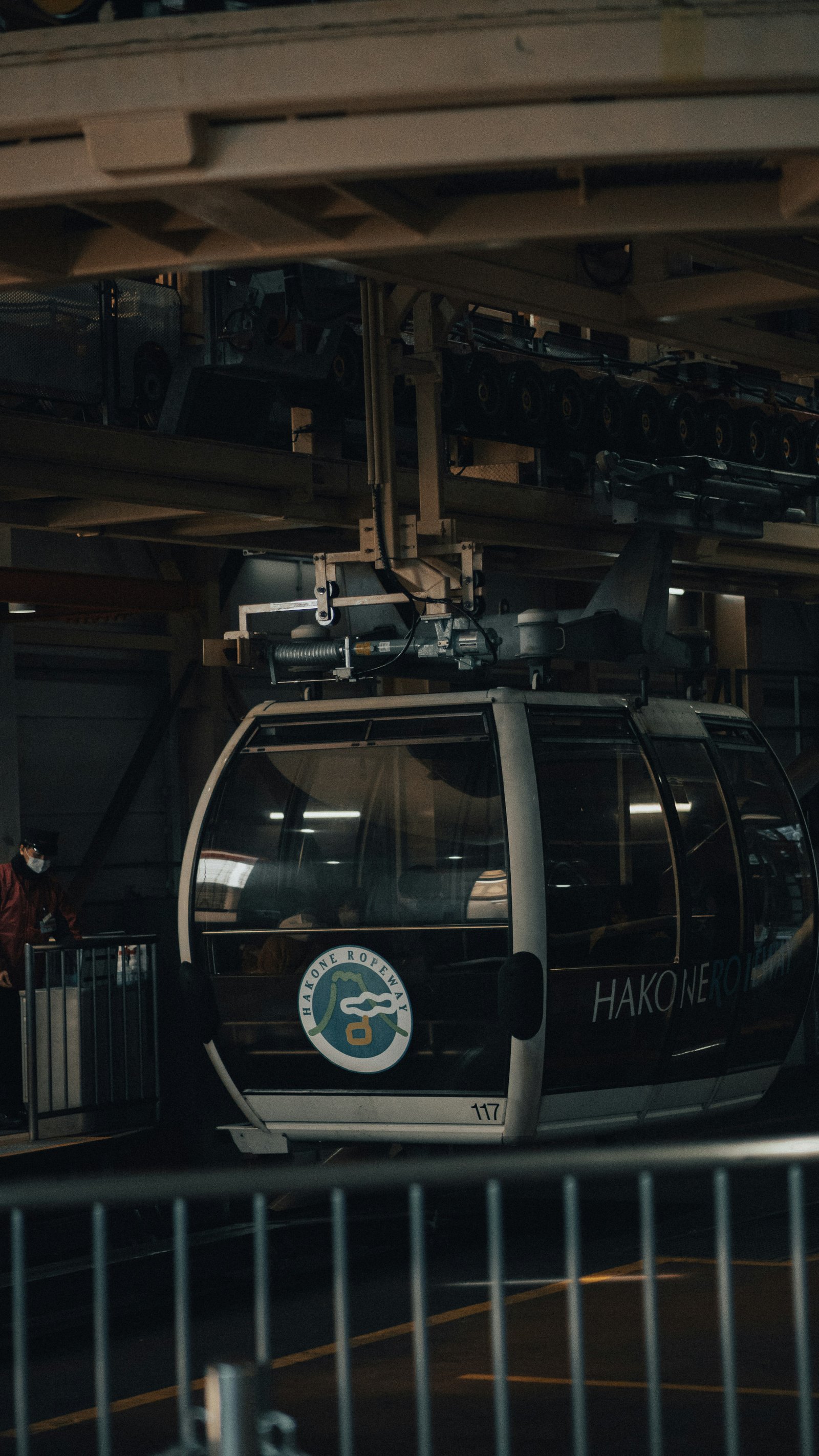
Hakone’s transport network is intentionally designed as a sightseeing circuit: mountain railway, cable car, aerial ropeway, lake cruise, and bus all connect in sequence around the Hakone volcanic area. Once you understand the loop, navigation becomes straightforward. The Hakone Free Pass ties it all together with a single payment.
Getting to Hakone from Tokyo
Hakone is approximately 90km southwest of Tokyo, just under two hours by train. There are two practical routes.
Odakyu Romance Car (recommended): The Romance Car is a reserved-seat limited express that runs from Shinjuku directly to Hakone-Yumoto without changes.
| Route | Journey Time | Fare (approx, 2026) |
|---|---|---|
| Shinjuku → Hakone-Yumoto (Romance Car) | 85 min | ¥2,470–¥3,100 |
| Shinjuku → Hakone-Yumoto (local via Odawara) | 100–110 min | ¥880 + ¥320 |
| Tokyo Station → Odawara (JR Tokaido) | 35 min | ¥1,520 |
Book Romance Car seats in advance through the Odakyu app or at Shinjuku Station. If you’re buying the Hakone Free Pass, the Romance Car fare from Shinjuku is included at a discount. Buy the Hakone Free Pass on Klook to secure yours before arriving.
Via Odawara by Shinkansen: If you’re already in central or eastern Tokyo, take the JR Tokaido or Sanyo Shinkansen Kodama to Odawara (35 minutes, approximately ¥3,960 - or covered by JR Pass), then Hakone Tozan Railway from Odawara to Hakone-Yumoto (15 minutes, ¥320). The shinkansen is faster but more expensive unless you hold a JR Pass.
For private transfers direct from Tokyo hotels or Haneda/Narita airports, Kiwitaxi offers fixed-price pickups to Hakone with no metered surprises - useful when travelling with luggage.
The Hakone Sightseeing Loop
The standard way to see Hakone’s highlights is the loop circuit. Modes of transport connect in this sequence:
1. Hakone Tozan Railway (Odawara/Yumoto → Gōra)
A narrow-gauge mountain railway that climbs from Hakone-Yumoto up to Gōra through tight switchbacks. It is the steepest adhesion railway in Japan and one of the most scenic short rail journeys in the country.
- Frequency: Every 15–30 minutes
- Journey time: Hakone-Yumoto to Gōra - approximately 40 minutes
- Fare (pay-as-you-go): ¥670; covered by Free Pass
- Tip: Sit on the left side (going up) for the best views of the valley and the famous hydrangeas in June
2. Hakone Tozan Cable Car (Gōra → Sōunzan)
At Gōra, transfer to the cable car (a funicular, not an aerial gondola) to continue up to Sōunzan. This 10-minute section covers the steep volcanic flank above Gōra and is the connection point for the ropeway.
- Journey time: 10 minutes
- Frequency: Every 8 minutes
- Fare: ¥320; covered by Free Pass
3. Hakone Ropeway (Sōunzan → Ōwakudani → Tōgendai)
The aerial ropeway runs approximately 4km from Sōunzan down to Tōgendai on the shore of Lake Ashi, passing directly over the Ōwakudani volcanic valley. Ōwakudani is a mandatory stop - exit here to walk the active volcanic crater trail and eat the famous kuro-tamago (black eggs boiled in the sulphurous springs, approximately ¥600 for a bag of five).
- Journey time: Sōunzan to Tōgendai - 30 minutes total (with Ōwakudani stop)
- Frequency: Gondolas depart every 1–2 minutes from each terminal
- Fare: ¥1,500 one-way Sōunzan to Tōgendai; covered by Free Pass
- Note: The ropeway closes intermittently when volcanic activity at Ōwakudani intensifies. Check the Hakone Ropeway website before visiting. When closed, a replacement bus runs the full section.
4. Hakone Sightseeing Cruise (Lake Ashi)
At Tōgendai, board a sightseeing cruise across Lake Ashi (Ashinoko) to Hakone-machi or Moto-Hakone on the southern shore. On clear days, Mount Fuji is visible above the lake from the cruise deck.
- Journey time: Tōgendai to Moto-Hakone-kō - 30 minutes
- Frequency: Every 30–40 minutes
- Fare: ¥1,200; covered by Free Pass
- Departure points: Tōgendai, Hakone-machi-kō, Moto-Hakone-kō (the cruise stops at all three)
Hakone Free Pass
The Hakone Free Pass is the single most useful purchase for most visitors.
| Pass | Price from Shinjuku (2026 approx) |
|---|---|
| 2-day Hakone Free Pass | ¥6,000 (adult) |
| 3-day Hakone Free Pass | ¥6,500 (adult) |
Included: Round-trip Odakyu train from Shinjuku to Odawara (or discounted Romance Car upgrade available), Hakone Tozan Railway, Tozan Cable Car, Ropeway, Lake Ashi Cruise, Tozan Bus, and Hakone Pirate Ship (same service as regular cruise).
Not included: Romance Car surcharge (if you want reserved seats instead of standard), admission fees at attractions, some express bus services.
Buy at Shinjuku Station’s Odakyu ticket counters or at Odawara Station on arrival.
Break-even calculation: The ropeway alone costs ¥1,500, the cruise ¥1,200, and the Tozan Railway ¥670. Together that’s ¥3,370 before the return Odakyu fare - the Free Pass pays for itself on transport alone for any visitor doing the full loop.
Hakone Tozan Bus
The Tozan Bus network is the main way to reach hotels and sights not on the rail or ropeway route. Key routes for visitors:
- H Line: Hakone-Yumoto → Moto-Hakone-kō along the lakeside road. Journey time approximately 40 minutes. Useful for reaching the Hakone Open Air Museum area and the Amazake-chaya teahouse.
- K Line: Odawara → Hakone-Yumoto → Gōra → Sengokuhara. Useful for the Sengokuhara pampas grass fields.
Fares range from ¥200 to ¥1,100 depending on distance. IC cards accepted. Free Pass covers all Tozan Bus routes within the Hakone area.
IC Cards
Suica, Pasmo, and ICOCA all work on the Hakone Tozan Railway and Tozan Bus routes. They do not work on the ropeway, cable car, or lake cruise - these require either the Free Pass or a separate cash or card purchase at the terminal.
Top up IC cards at any station vending machine on the Odakyu or JR network. There are no IC card top-up machines at the ropeway terminals.
Taxis
Taxis are available from Hakone-Yumoto and Odawara stations. They are expensive relative to public transport in this area - a ride from Hakone-Yumoto to Gōra costs approximately ¥2,500–¥3,000.
Useful scenarios for taxis: arriving late when the mountain railway has stopped running, or reaching specific ryokan access roads that bus routes don’t serve. The GO app works in Kanagawa Prefecture for pre-booking.
Cycling
Hakone’s volcanic terrain makes most of the central area impractical for cycling. The eastern approach road from Odawara to Hakone-Yumoto is cyclable for enthusiasts. E-bike rental is available in Hakone-Yumoto town (approximately ¥4,000–¥6,000 per day from rental shops near the station) and makes the lakeside Moto-Hakone area accessible on two wheels on the flatter southern route.
Transport essentials for Hakone: The Japan Rail Pass covers the JR Tokaido Line to Odawara but not the Tozan Railway or ropeway onwards - the Hakone Free Pass is the better value for most visitors unless you have a pass and are connecting from further afield. For private airport or hotel transfers to Hakone, Kiwitaxi offers flat-rate services from Tokyo airports.
Plan Your Trip
- Flights - Find the best fares to Japan
- Hotels - Search hotels in Hakone on Booking.com
- Travel Insurance - Get covered before you go
- eSIM - Stay connected from landing
- Car Rental - Compare prices across providers
See also: Hakone travel guide · Things to do in Hakone · Where to stay in Hakone · Getting around Japan · Japan Rail Pass guide