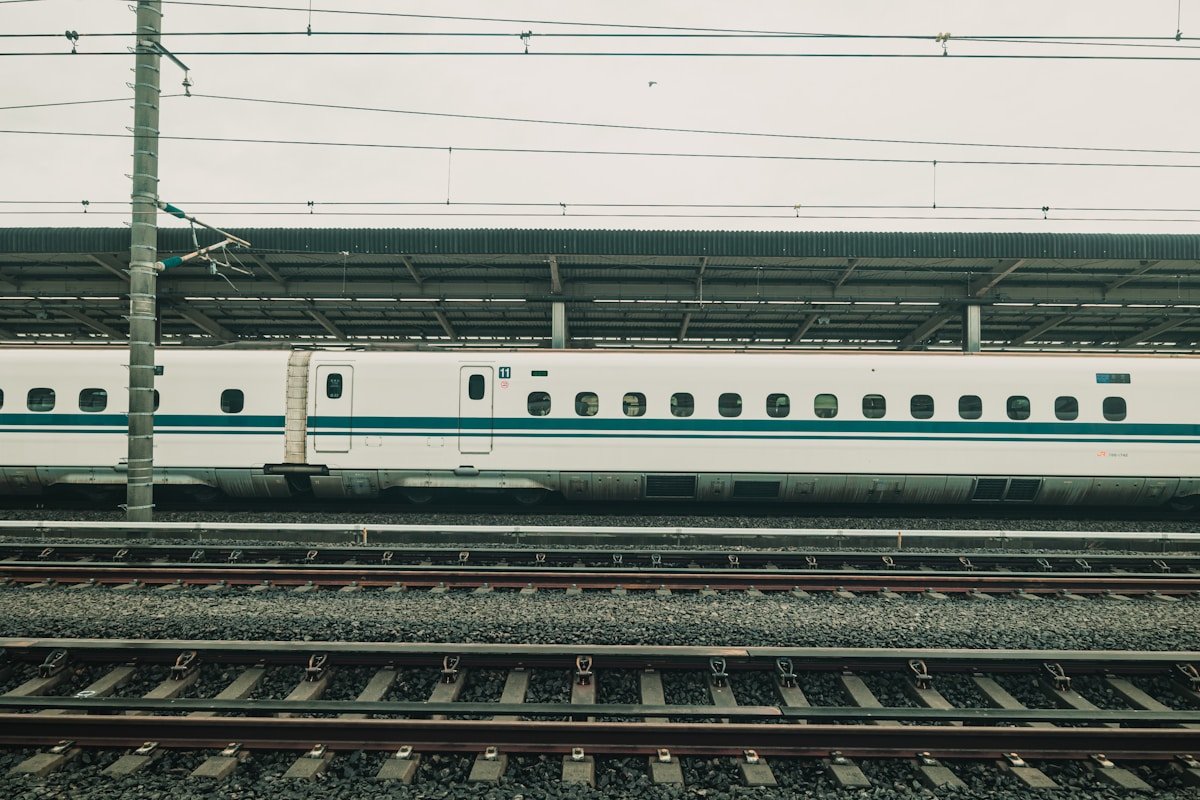
Japan has arguably the best public transport network in the world - punctual, comprehensive, clean, and covering distances from cross-country Shinkansen routes to the last mile within city neighbourhoods. Understanding the network’s structure - the division between JR and private railways, the role of IC cards, and when other transport modes make sense - is the foundation of a good Japan trip.
The Shinkansen Network
The Shinkansen (bullet train) network connects Japan’s major cities with trains running at 240 to 320 kilometres per hour. The main lines:
Tokaido/Sanyo Shinkansen (Tokyo–Osaka–Hiroshima–Hakata/Fukuoka): The world’s busiest high-speed rail line. Nozomi trains (fastest, not JR Pass eligible) take 2 hours 25 minutes from Tokyo to Osaka; Hikari (JR Pass eligible) takes 2 hours 40 minutes. From Tokyo to Hiroshima is 4 hours on the Hikari; to Hakata (Fukuoka) is 5 hours.
Tohoku Shinkansen (Tokyo–Sendai–Morioka–Aomori): Connects Tokyo to the northeast. Hayabusa trains reach Sendai in 1 hour 30 minutes; Morioka in 2 hours 10 minutes. The line continues onto the Hokkaido Shinkansen from Shin-Aomori.
Hokuriku Shinkansen (Tokyo–Nagano–Kanazawa–Tsuruga): Extended to Tsuruga in March 2024, enabling connections to the Biwako line toward Osaka. Tokyo to Kanazawa takes 2 hours 30 minutes.
Hokkaido Shinkansen (Shin-Aomori–Hakodate): Connects Tohoku to Hokkaido under the Tsugaru Strait via tunnel. Hakodate is reached from Tokyo in approximately 4 hours. An extension to Sapporo is planned for 2030.
Kyushu Shinkansen (Hakata–Kumamoto–Kagoshima-Chuo): Connects Fukuoka to southern Kyushu. Kagoshima-Chuo from Hakata takes approximately 1 hour 20 minutes.
Train categories on main lines:
- Nozomi/Mizuho: Fastest services; stop only at major stations; excluded from JR Pass
- Hikari/Sakura: Medium-speed; stop at most major and some secondary stations; JR Pass valid
- Kodama/Tsubame: Slow, stop at all stations; JR Pass valid but rarely used for long distances
IC Cards
An IC card is a rechargeable smartcard used for public transport, convenience stores, vending machines, and many other purchases across Japan. It is the single most useful item you can carry.
Main IC cards:
- Suica (JR East): Works nationwide. Buy at Haneda Airport or any JR East station in Tokyo. ¥500 deposit returned on card surrender.
- Pasmo (Tokyo private railways): Also works nationwide. Buy at Tokyo Metro stations.
- Icoca (JR West): Issued in Osaka, Kyoto, and western Japan. Equivalent to Suica.
- Sugoca (JR Kyushu): Issued in Fukuoka and Kyushu.
All four cards are interoperable at most transit systems in Japan since 2013. Buy whichever is available at the first station you use. The Suica Mobile version on iPhone Apple Wallet or Android Google Pay works at all Suica-compatible readers and requires no physical card or ¥500 deposit.
How to use: Touch the card to the IC reader at the ticket gate to enter. Touch again to exit - the fare is automatically calculated and deducted. There is no need to select a destination or calculate fares manually. Load money at any station machine (minimum ¥1,000; maximum balance ¥20,000). At convenience stores, tap the card on the reader rather than counting cash.
IC card fares vs paper tickets: IC card fares are slightly cheaper (¥5–¥20 per journey) than paper ticket equivalents on most JR lines. On private railways and metro lines, fares are typically identical. While you’re sorting arrival logistics, it’s also worth setting up a Japan eSIM before you fly - you’ll want data from the moment you land to navigate to your accommodation.
Private Railways
A significant portion of Japan’s urban transport network is operated by private railway companies, not JR. These lines are essential for city navigation but are not covered by the JR Pass:
- Tokyo: Keio (Shinjuku to western suburbs), Odakyu (Shinjuku to Odawara/Hakone), Tobu (Asakusa to Nikko), Seibu, Tokyo Metro (9 subway lines), Toei (4 subway lines)
- Osaka/Kyoto: Hankyu (Osaka–Kyoto, Osaka–Kobe), Kintetsu (Osaka–Nara, Osaka–Nagoya), Nankai (Osaka to Kansai Airport)
- Fukuoka: Nishitetsu (city and regional service)
For city travel, the IC card covers all these operators without needing to know which company runs which line. For day trips on private railways (Hakone on Odakyu, Nikko on Tobu), separate passes or individual tickets are required.
Long-Distance Overnight Buses
Japan’s intercity bus network (kokudo bus or highway bus) connects major cities at considerably lower cost than the Shinkansen:
| Route | Bus Price | Journey Time | Shinkansen Price |
|---|---|---|---|
| Tokyo–Osaka | ¥3,000–¥5,500 | 8–9 hours (overnight) | ¥14,170 |
| Tokyo–Kyoto | ¥3,200–¥5,500 | 7–8 hours (overnight) | ¥13,440 |
| Tokyo–Hiroshima | ¥5,000–¥8,000 | 11–12 hours | ¥19,440 |
| Osaka–Hiroshima | ¥3,000–¥4,500 | 3–4 hours | ¥9,950 |
Bus operators: Willer Express, JR Bus Kanto, Meitetsu Bus, and regional operators. Compare intercity bus and train prices with Omio to quickly see the cost gap before booking.
Seat types: Standard seats recline to approximately 40 degrees. Semi-private compartment seats (three in a row rather than four) cost ¥500–¥1,000 more and have a dividing curtain. Full private compartment sleepers (on some routes) cost ¥6,000–¥10,000 but approximate a horizontal sleeping position.
Overnight buses eliminate the need for one night’s accommodation - factored in, the cost saving over the Shinkansen is ¥10,000–¥15,000 per journey.
Taxis
Japan’s taxis are safe, metered, and clean, but expensive by international standards. Initial meter: approximately ¥730 for the first 1.2 kilometres; additional charges around ¥100 per 250 metres thereafter. A 3-kilometre city centre journey typically costs ¥1,000–¥1,500.
Practical notes:
- Taxi doors are controlled by the driver - don’t try to open or close them manually
- Address in English is sufficient; showing the destination on Google Maps to the driver works universally
- Most taxis now accept IC cards and credit cards, though some older vehicles are cash-only
- Tipping is not expected and can cause confusion
Taxi apps: The Go app is the dominant taxi-hailing app in Japan (similar to Uber). Uber operates in some cities in Japan but primarily as a standard taxi dispatch service rather than private car rides. Japan Taxi app also works. Pre-loading a payment method on the app means no payment interaction with the driver.
Rental Cars
Renting a car in Japan is essential in some regions:
- Okinawa: Outside Naha, buses run infrequently (1–2 hours between services). A car is required to visit most beaches and sights.
- Hokkaido: Distances between cities are large and rural areas have limited bus service.
- Rural Tohoku and Shikoku: Mountain villages, onsen towns, and rural areas with no train access
Requirements: International Driving Permit (IDP) obtained in your home country before departure, plus your original home country licence. Japan drives on the left.
Rental companies: Toyota Rent A Car, Times Car Rental, and OTS are the main chains with airport locations. Book through Japanese aggregators (Times, Toppy Car Rental) for the best prices - walk-up rates at airport counters are significantly higher. Prices start from ¥4,000–¥6,000 per day for a small car.
Expressways: Japan has a well-maintained expressway network. Tolls are significant - Tokyo to Osaka is approximately ¥7,000–¥8,000 in tolls on top of fuel costs. An ETC transponder (electronic toll collection device) is standard in rental cars and avoids cash queuing at toll plazas.
Expressway pass for foreign visitors: The Japan Expressway Pass provides unlimited expressway travel for rental car renters for a fixed fee (¥3,000–¥7,000 depending on zone and duration). Available through rental car companies with a foreign driving licence.
Cycling
Japan is a very cycling-friendly country, particularly in smaller cities. Bicycle rentals are available in most tourist areas:
- Kyoto: extensive bicycle network, rental from ¥1,000 per day
- Kanazawa: flat city centre, rental from ¥500 per half day
- Nara: flat park circuit, rental from ¥500 per hour
- Hiroshima: cycle paths along the river and to Miyajima ferry point
Electric assist bicycles (e-bikes) are available in hilly areas and are worth the premium for cities with gradients.
Cycling rules: Cycling on footpaths (sidewalks) is technically permitted in Japan if a blue bicycle icon sign is displayed. In practice, cyclists and pedestrians share paths throughout most cities. Cycling on major roads is legal but requires care with traffic. Locks are essential.
Airport Access
Tokyo Narita (NRT):
- Narita Express (N’EX): to Tokyo/Shinjuku/Yokohama, 80–90 minutes, ¥3,070. JR Pass valid.
- Keisei Skyliner: to Ueno/Nippori, 40–50 minutes, ¥2,570. Faster and slightly cheaper than N’EX for Ueno/Asakusa destinations; not JR Pass.
- Airport Limousine Bus: to major hotels throughout Tokyo, 80–120 minutes, ¥1,400–¥3,000 depending on destination.
Private transfers: If you’re arriving with heavy luggage, late at night, or in a group, a pre-booked private transfer can be competitive with the train once you factor in luggage handling and the walk between platforms. Kiwitaxi offers fixed-price airport transfers so you know the cost before you land - no meter, no surprises. For help finding the right flights to Japan in the first place - including which airport to fly into - see our flights guide.
Tokyo Haneda (HND):
- Tokyo Monorail: to Hamamatsucho (JR Yamanote line), 20 minutes, ¥500. JR Pass valid.
- Keikyu Airport Express: to Shinagawa and beyond, 15–25 minutes, ¥330. Not JR Pass.
- Taxi to central Tokyo: approximately ¥4,000–¥6,000 (30–45 minutes in normal traffic).
- Pre-booked private transfer: GetTransfer covers Haneda to anywhere in greater Tokyo at a fixed fare - useful for late arrivals when rail connections are reduced or when navigating with heavy luggage.
Osaka Kansai International (KIX):
- Haruka Express: to Shin-Osaka/Kyoto, 50–75 minutes, ¥1,910–¥3,090. JR Pass valid.
- Nankai Rapi:t (limited express): to Namba (Osaka), 38 minutes, ¥1,440. Not JR Pass.
- Airport Limousine Bus: to central Osaka hotels, 50–70 minutes, ¥1,600.
- Private transfer: groups or families travelling with luggage often find a pre-booked private transfer via GetTransfer the most practical option from KIX - fixed price, no platform changes, and door-to-door to your hotel in Osaka, Kyoto, or Nara.
Transport Option Comparison for Key Routes
| Route | Fastest Option | Cheapest Option | JR Pass |
|---|---|---|---|
| Tokyo → Osaka | Nozomi (2h25m, ¥15,270) | Night bus (8h, ¥3,000) | Hikari ¥14,170 |
| Tokyo → Kyoto | Nozomi (2h15m, ¥14,440) | Night bus (7h, ¥3,200) | Hikari ¥13,440 |
| Tokyo → Sapporo | ANA/JAL flight (1h45m, ¥15,000+) | Night bus (17h, ¥6,000–¥9,000) | Shinkansen/rail (8h+) |
| Osaka → Hiroshima | Nozomi (1h, ¥9,950) | JR bus (3h, ¥2,500) | Hikari same price |
| Narita → Tokyo centre | N’EX (80m, ¥3,070) | Keisei base fare + local (90m, ¥1,300) | N’EX with JR Pass |
Plan Your Trip
- Trains & buses - Compare train & bus prices with Omio
- Flights - Find the best fares to Japan
- Hotels - Search hotels in Japan on Booking.com
- Travel Insurance - Get covered before you go
- eSIM - Stay connected from landing
- Car Rental - Compare prices across providers
- Tours and activities - Browse experiences on GetYourGuide
See also: Japan Rail Pass guide · Japan shinkansen guide · Flights to Japan · eSIM Japan guide · Budget travel guide Japan · Tokyo travel guide · Kyoto travel guide · Japan Golden Route itinerary · Hokkaido region guide · Okinawa region guide