Hakone’s position on the Odakyu and JR rail networks makes it one of the more useful bases for exploring the wider Kanagawa–Shizuoka corridor. Odawara, the main transit hub, is 15 minutes away by Hakone Tozan Railway. From Odawara, trains spread east toward Kamakura, west toward Atami and Izu, and the Fujikyu network extends north toward the Fuji Five Lakes. Most day trips work on a single full day; a few require an early start.
Kamakura: Great Buddha and Temple Walks
Distance from Hakone Yumoto: approximately 90 minutes
Transport cost: from approximately ¥1,500 one-way as of 2026
Route: Hakone Tozan Railway to Odawara → JR Tokaido Line to Ofuna → JR Yokosuka Line to Kamakura
Kamakura was Japan’s de facto capital from 1185 to 1333 under the Kamakura shogunate, and the density of temples, shrines, and historical sites within walking distance of the station is unusually high. The town sits in a bowl of low hills on Sagami Bay, making it cooler in summer than Tokyo and particularly pleasant in autumn foliage season (late November to mid-December).
Kotoku-in (Great Buddha): The Kamakura Daibutsu is a 13.35-metre bronze seated Amida Buddha completed in 1252, originally housed inside a wooden hall that was destroyed by typhoon and tidal wave in the fifteenth century. The statue has sat outdoors since. Entry costs ¥300 as of 2026; an additional ¥20 allows visitors to step inside the hollow bronze casting, which is worth doing to understand the construction method - the interior shows riveted bronze plates assembled in sections. The site is 20 minutes walk from Kamakura Station, or one stop by Enoden tram to Hase Station.
Hokokuji Temple: A Rinzai Zen temple with a grove of roughly 2,000 mature moso bamboo behind the main hall. Entry ¥300; an additional ¥600 allows access to a small matcha tea ceremony area within the bamboo grove, served on ceramic ware with a wagashi sweet. The bamboo is most atmospheric on grey mornings when low light filters through the canopy. 15 minutes by bus or taxi from Kamakura Station.
Tsurugaoka Hachimangu: Kamakura’s main shrine, dedicated to the Minamoto clan’s patron deity Hachiman, sits at the top of a wide avenue (Wakamiya Oji) running straight from the beach to the shrine gates. Entry is free. The complex includes a museum (¥200 extra) with samurai-era artifacts. On certain mornings, dedicated worshippers perform archery rituals - timing is unpredictable for casual visitors, but worth checking the shrine’s online calendar.
Hase-dera: A temple on the hillside above Hase Station with a carved wooden Kannon (goddess of mercy) standing 9.18 metres - one of Japan’s largest wooden Buddhist figures. Entry ¥400. The terrace gardens have good views over Sagami Bay and are planted with hydrangea for an early June bloom.
Komachi-dori (shopping street, free access): The pedestrian street from Kamakura Station to Tsurugaoka Hachimangu concentrates most of the town’s food and souvenir shops - rice crackers flavored with soy sauce and shichimi pepper (¥400–600 per bag), the local sweet shramai-mochi, and cafés. For lunch: Raitei (a kaiseki-style restaurant in a traditional garden setting, lunch from approximately ¥3,500 per person) is one of Kamakura’s more celebrated mid-range dining options. For a lighter option, Kamakura Kissa near Hase serves matcha and coffee from ¥900.
Kawaguchiko and the Fuji Five Lakes
Distance from Hakone Yumoto: approximately 2–2.5 hours
Transport cost: from approximately ¥2,140 one-way as of 2026 (Hakone bus + Fujikyu Railway)
Route: Hakone Tozan Bus from Togendai to Gotemba (approximately 40 minutes, from ¥1,000) → Fujikyu Railway from Gotemba to Kawaguchiko (approximately 80 minutes, ¥1,140)
Kawaguchiko is the most accessible of the Fuji Five Lakes and the best base for views of Mount Fuji’s north face. On clear days - most reliably in winter and early spring - the mountain’s reflection appears in the lake’s surface. Clear days are approximately 70–80 days per year; the mountain is cloud-covered more often than the tourist literature suggests.
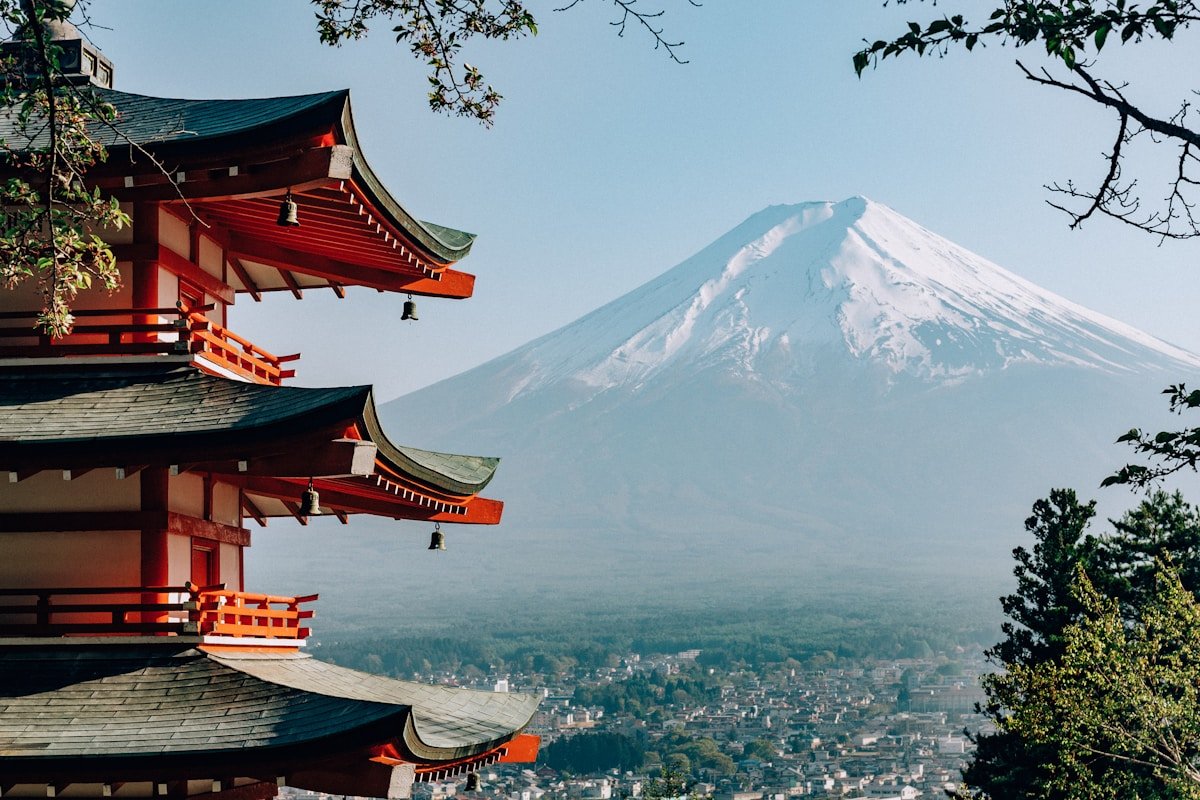
Chureito Pagoda: A five-story pagoda at Arakurayama Sengen Park, reached by 398 steps from Fujisan Station (one stop back toward Gotemba from Kawaguchiko). Mount Fuji appears directly behind the pagoda in photographs taken from the viewing platform below - this is one of the most photographed views in Japan. Entry to the park is free; the climb takes 15 minutes.
Kawaguchiko Music Forest (entry approximately ¥1,800 as of 2026): An unusual museum dedicated to music boxes, barrel organs, and mechanical musical instruments from nineteenth-century Europe, set in gardens with views toward Mount Fuji. Less obvious as a tourism draw but genuinely interesting - the collection is one of the largest of its type outside Europe.
Lake Kawaguchi boat rentals: Pedal boats and rowboats available from the north shore near the visitor centre from approximately ¥500 for 30 minutes. Lake surface temperature is cold year-round; swimming is not the activity.
Fuji-Q Highland: A theme park at Kawaguchiko with several record-holding roller coasters, notably Fujiyama (79 metres high, opened 1996) and Dodonpa (world’s fastest acceleration at launch when it opened). Day entry from approximately ¥6,000 as of 2026. Worth visiting specifically for thrill seekers; the views of Mount Fuji from the coasters on clear days are notable.
Mount Fuji climbing season (for those planning ahead): The official climbing season for the Yoshida Trail on Mount Fuji’s north face runs July 1 to September 10. From 2026, pre-registration is required and a ¥4,000 per-person trail fee applies for the Yoshida Trail. The mountain is closed to summit attempts outside the official season due to safety conditions.
An early start from Hakone - 7:00am Togendai bus - allows 5–6 hours at Kawaguchiko before returning. Departing Kawaguchiko by 16:00 gets back to Hakone Yumoto by approximately 18:30.
Atami: Pacific Coast Onsen Town
Distance from Hakone Yumoto: approximately 40 minutes
Transport cost: from approximately ¥780 one-way as of 2026
Route: Hakone Tozan Railway to Odawara → JR Tokaido Line to Atami
Atami is a compact hot spring resort town on the Pacific coast of Shizuoka Prefecture - older, quieter, and more traditionally Japanese in character than Hakone. Where Hakone markets itself on mountain scenery and ryokan luxury, Atami has the atmosphere of a mid-century Japanese seaside resort, with seafood restaurants along the waterfront, a beachside promenade, and one genuinely exceptional art museum.
MOA Museum of Art (entry ¥1,600 as of 2026): The collection was assembled by Mokichi Okada, founder of a religious organisation, over several decades. It is now one of Japan’s outstanding private art museums - 3,500 objects including National Treasures, Important Cultural Properties, and major works of Momoyama-period painting (Ogata Korin’s Irises screens), Noh costumes, lacquerware, and Chinese ceramics. The museum is built into the hillside above Atami with views over Sagami Bay from the outdoor terraces. Allow 2–3 hours. The bus from Atami Station takes 8 minutes and costs ¥150.
Atami Castle (entry ¥1,000 as of 2026): A concrete reconstruction from 1959 - not a surviving historic castle - but the observation floor at the top has good views over the bay and the town. The interior houses an Edo-period museum with samurai equipment and ukiyo-e prints. Accessible by ropeway from the town centre (ropeway ticket approximately ¥1,050 return).
Atami Plum Garden (Kinomiya Baien, entry ¥300): One of Japan’s largest plum blossom gardens, with over 600 trees. The bloom season runs approximately late January to early March. Outside of this window the garden remains open but offers little.
Seafood lunch: Atami’s fishing port restaurants serve fresh Pacific coast catch - tuna (maguro) over rice (tuna-don) from approximately ¥1,500–2,000, grilled mackerel set meals from ¥1,200. The waterfront area along Nishiki-cho has the highest concentration of fish restaurants. The quality of seafood here reflects proximity to the Pacific fishing grounds - notably fresher and cheaper than equivalent dishes in Hakone.
Izu Peninsula: Coastline and Seafood
Distance from Hakone Yumoto to Ito (gateway): approximately 80 minutes
Transport cost: from approximately ¥1,200 one-way as of 2026
Route: Hakone Tozan Railway to Odawara → JR Tokaido Line to Atami → Izu-Kyuko Line to Ito
The Izu Peninsula extends south from Mishima and Numazu into the Pacific, its mountainous spine dropping to dramatic basalt cliffs along the eastern coast and to calmer coves on the western shore. It is best known for coastal scenery, onsen, and seafood.
Jogasaki Coast: Basalt cliffs formed by lava flows from Omuroyama volcano approximately 4,000 years ago. The Jogasaki Coast Trail (free, approximately 9km long) runs along the cliff edge from Izu Kogen to Kadowaki, with a suspension bridge (Kadowaki Bridge) spanning a 48-metre gorge 10 metres above the surf. The trailhead is accessible from Izu-Kogen Station on the Izu-Kyuko Line. Allow 2–3 hours for the full trail, 1 hour for the Kadowaki Bridge section.
Wasabi farms at Amagi: The Amagi area in central Izu is one of Japan’s main wasabi-producing regions - clear cold mountain streams provide ideal growing conditions. Wasabi grown here is significantly more complex in flavor than the paste version (which is usually mostly horseradish). Several farm stalls sell fresh wasabi for grating at home, from approximately ¥500–1,500 depending on size.
Seafood: Izu’s coastal restaurants are among the better seafood destinations in the broader region. Live ise-ebi (Japanese spiny lobster, equivalent to rock lobster) is the premium ingredient - expect from approximately ¥3,000 for a mid-size lobster served as sashimi or grilled. Local abalone (awabi) appears on menus at similar prices. Even mid-range restaurants in Ito serve visibly fresher tuna and local fish than equivalent Tokyo or Hakone restaurants at comparable price points.
Shimoda: The southern tip of the Izu Peninsula, where Commodore Perry’s Black Ships first arrived to open Japan’s ports in 1853–54, is better suited as an overnight trip (2.5 hours from Hakone Yumoto, from approximately ¥2,500 one-way). The historic sites and beaches at Shimoda are worth the journey but cannot be done comfortably as a day trip from Hakone.
Odawara: Castle and Fish Market
Distance from Hakone Yumoto: 15 minutes
Transport cost: from approximately ¥320 one-way on the Hakone Tozan Railway as of 2026
Odawara is the main transit hub for Hakone - nearly every visitor passes through it. It is also worth a half-day in its own right, particularly for the castle and the fish market.
Odawara Castle (entry ¥510 as of 2026): A concrete reconstruction completed in 1960, built on the site of Hojo clan’s castle which was the largest in the Kanto region before Toyotomi Hideyoshi’s siege in 1590. The reconstructed keep houses a small museum of samurai-era weapons, armor, and maps of the Odawara domain. The castle grounds are free to walk and are planted with cherry trees for spring bloom and Japanese apricot (ume) in February.
Odawara fish market (Minato Machi): Odawara sits on Sagami Bay and receives direct catch from local fishing boats. The market area near the port has fish restaurants serving extremely fresh Sagami Bay seafood - yellowtail (buri), horse mackerel (aji), and shirasu (whitebait) are local specialties. Lunch sets at the market restaurants from approximately ¥1,200–2,000.
Nikko: A Longer Option
Distance from Hakone: approximately 3.5–4 hours (via Tokyo)
Transport cost: from approximately ¥3,500–5,000 one-way as of 2026
Nikko is technically feasible as a day trip from Hakone only with a very early start - it requires traveling back through Tokyo, which adds a 1.5-hour leg each direction. The more practical approach is to route Nikko as a separate Tokyo day trip.
Toshogu Shrine (main complex entry ¥1,300 as of 2026): The mausoleum of Tokugawa Ieyasu, built in 1617 and substantially expanded in 1636, is one of Japan’s most ornate Edo-period structures - lacquerwork, gilded carvings, and the Sleeping Cat (Nemuri-Neko) carving are the focal points. The forest setting at altitude provides natural cool in summer.
Kegon Falls (observation deck lift ¥570 as of 2026): A 97-metre waterfall formed by Lake Chuzenji’s outflow, accessible by a short lift from the observation area. In winter, the falls partially freeze.
For visitors with only one Japan trip who want both Hakone and Nikko, splitting the nights - two in Hakone, one in Nikko - works better than attempting both as day trips from a single base.
Make the most of your time around Hakone: Guided day trips from Hakone handle the logistics - transport, guide, and timing - so you can focus on the experience. For airport arrivals and departures, Kiwitaxi offers fixed-price airport transfers with no meter surprises.
Practical Transport Notes
Hakone Free Pass scope: Issued by Odakyu Railway, available from ¥6,100 from Shinjuku (2-day) as of 2026. It covers: Odakyu Limited Express (Romance Car) to Odawara, Hakone Tozan Railway (Odawara–Gora), Hakone Tozan Funicular (Gora–Sounzan), Hakone Ropeway (Sounzan–Togendai), Hakone Sightseeing Cruise (Togendai–Moto-Hakone), and Hakone Tozan Bus within the Hakone area. It does NOT cover: JR lines to Kamakura or Atami (these require separate fares), Fujikyu Railway, or buses outside the Hakone loop. Verify current coverage at Odakyu’s English website before purchase, as scope is updated periodically.
IC cards: Suica and Pasmo are accepted at all JR stations, Odakyu stations, Odawara, Ito, Atami, and Kawaguchiko. They are not accepted on the Hakone Tozan Railway within Hakone (use the Free Pass or buy individual tickets). Load at least ¥3,000–5,000 for a full day of travel.
Luggage forwarding (takkyubin): Most Hakone ryokan and hotels offer luggage forwarding to Tokyo hotels or Tokyo Station the following morning. Standard cost is approximately ¥2,000–2,500 per bag as of 2026, with next-day delivery by noon. This allows a day-trip bag-free departure from Hakone and luggage waiting at your Tokyo accommodation on arrival.
For more on what to see and do in the area, see our guides to the Hakone city hub and things to do in Hakone.
Where to stay: Search hotels in Hakone on Booking.com
See also: Hakone travel guide · Things to do in Hakone · Where to stay in Hakone · Kamakura travel guide · Kawaguchiko travel guide · Hakone vs Nikko · Kanto region guide