Hakone’s appeal is the combination of natural spectacle, world-class art, volcanic geology, and the onsen ryokan tradition - all within 90 minutes of Tokyo. Below are 16 things to do in Hakone, from the major museums to lesser-known walks and views.
We suggest buying the Hakone Free Pass in advance on Klook so the transport is sorted before you arrive.
1. Hakone Open Air Museum
The Open Air Museum (¥1,600) is the essential Hakone experience for visitors with any interest in modern sculpture. The 70,000-square-meter hillside garden contains over 120 outdoor works by Henry Moore, Giacometti, Rodin, Miró, and others, with the forested Hakone mountains as backdrop. The Picasso Pavilion - a separate domed building included in admission - holds approximately 300 works by Picasso across ceramics, prints, paintings, and sculpture.
The outdoor foot bath (Ashiyu) is included in admission: soak your feet in hot spring water in a tiled pool surrounded by sculpture, which is either absurd or wonderful depending on your perspective. Most visitors find it wonderful. Allow 2 to 3 hours minimum.
2. Owakudani Volcanic Valley and Black Eggs
Owakudani (reached by ropeway, ¥1,000 for the Sounzan to Owakudani segment) is the most geologically dramatic site in Hakone - an open volcanic zone where sulphur gases vent visibly through the ground, the rock stained yellow-white, the air carrying the sharp metallic smell of hydrogen sulphide. The observation paths are paved and safe; the atmospheric effect is immediate.
Kuro-tamago (black eggs, ¥500/5 eggs) are hard-boiled in the mineral spring water, turning the shells jet-black. One egg per person is enough for the experience. The eggs are perfectly ordinary in taste but the context makes them something to remember. Views of Mount Fuji from the observation deck are available on clear days.
3. Lake Ashi Cruise and the Pirate Ships
The Lake Ashi cruise (¥1,200 from Togendai to Hakone-machi or Moto-Hakone) runs on boats styled after 18th-century sailing galleons - incongruously theatrical but worth the ride. The views from the water looking north toward Mount Fuji on clear days are the defining Hakone image. The 30-minute cruise passes cedar-forested shores with occasional glimpses of the mountain. The Hakone Free Pass includes the cruise.
4. Hakone Shrine and the Lake-Side Torii Gate
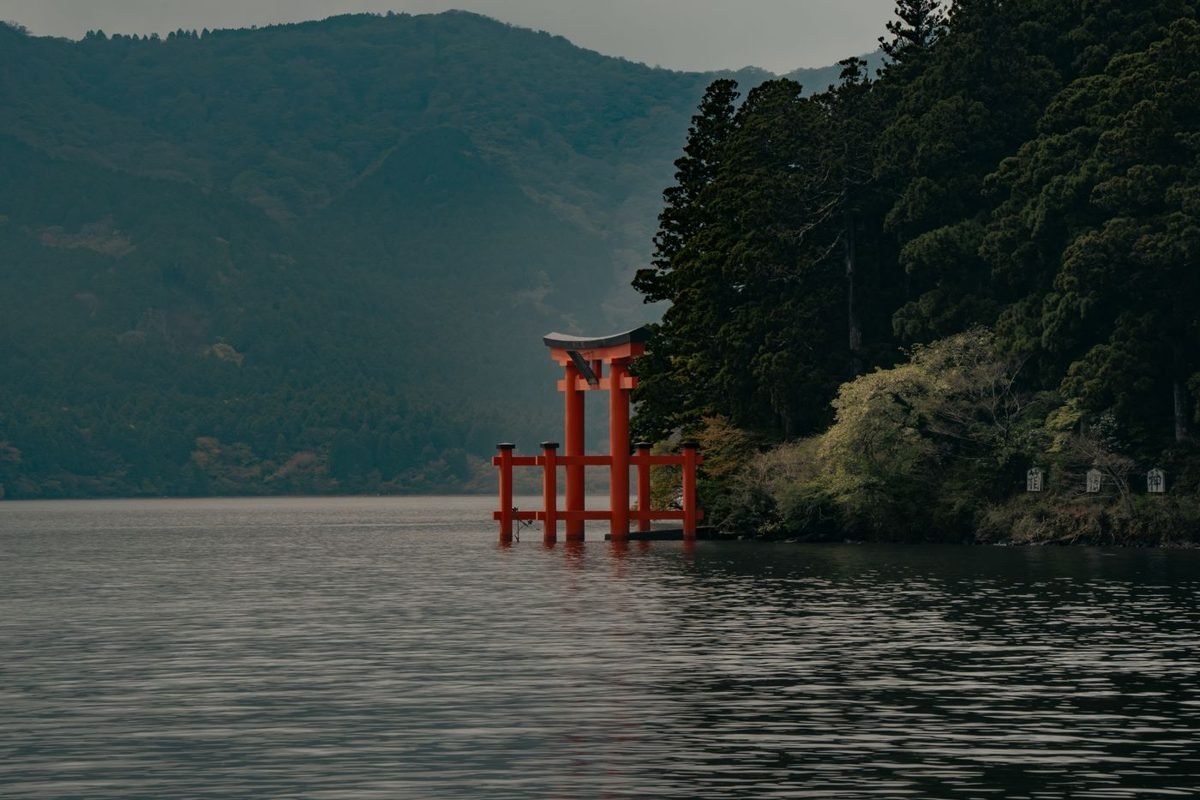
The lakeside torii of Hakone Shrine (free) stands in the shallows of Lake Ashi at Moto-Hakone, the vermilion gate reflected in calm water with mountains behind. The shrine itself is a 10-minute walk up through cedar forest from the lakeside gate. For the inner Mototsumiya shrine at the summit of Mount Kintoki, the walk is approximately 3 hours from Moto-Hakone - a serious hike. The lakeside torii and the lower shrine are free to visit.
5. Hakone Museum of Art Cedar Garden
The Hakone Museum of Art (¥900) has a garden that competes with any in Japan for seasonal beauty. The stone-paved path below the main building passes through a moss garden of extraordinary density, the moss carpeting rocks and soil in a consistent vivid green that seems almost artificial. In autumn, the surrounding maples turn the garden gold and red, and the combination of moss, stone, and autumn color is as good as anywhere in the country. The ceramics collection inside is secondary for most visitors; the garden is the reason to come.
6. Hakone Tozan Cog Railway Scenic Journey
The Hakone Tozan Railway (¥590 one-way from Hakone-Yumoto to Gora) is one of the steepest railways in Japan. The cog section begins above Hakone-Yumoto, the train switchbacking up through maple and cedar forest on gradients of up to 80 per mille. The journey takes about 40 minutes from bottom to top. In June, purple and blue hydrangeas planted along the embankments bloom between the tracks and the forest - one of the most photogenic railway journeys in Japan.
7. Outdoor Onsen at Day-Use Facilities
Several ryokan and standalone onsen facilities in Hakone offer day-use access to their baths. Hakone Yuryo near Hakone-Yumoto is the most popular - open-air rotenburo (outdoor baths) with forest views, day-use fee ¥1,500 (weekends require reservations). Kappa Tengoku at Gora is a more basic public onsen with rotenburo at ¥700. The experience of soaking in volcanic spring water outdoors in mountain air, particularly in cold weather, is the quintessential Hakone afternoon.
8. Hakone Venetian Glass Museum
The Hakone Venetian Glass Museum (¥1,500) in Sengokuhara is an unexpected collection of Murano glass from 16th through 20th centuries, housed in buildings designed to evoke a Venetian palazzo. The combination of European glasswork with the Hakone mountain setting is unusual, and the museum’s garden and cafe areas have good views toward the surrounding hills. A 30-minute detour if you are passing through Sengokuhara on the bus.
9. Pola Museum of Art
The Pola Museum of Art (¥1,800) in Sengokuhara is one of Japan’s best private museums, set in a circular glass-and-steel building integrated into the forested hillside. The collection includes Monet (Water Lilies series), Picasso, Renoir, and a strong selection of Western Impressionist and Post-Impressionist painting alongside significant holdings of Japanese modern art. The building itself - by architect Nikken Sekkei - is worth seeing. Allow 2 to 3 hours.
10. Hiking to Mototsumiya Inner Shrine
The Mototsumiya inner shrine of Hakone Shrine sits on the rim of the ancient caldera at 1,177 meters, reached by a 3-hour hike from Moto-Hakone. The trail climbs through dense forest, passing two smaller shrines on the way up. The summit view over Lake Ashi and (on clear days) to Mount Fuji is the reward. The hike is free and well-marked; bring water and appropriate footwear. Best done on a weekday morning when the trail is quiet.
11. Mount Kintoki Hike for Fuji Views
Mount Kintoki (1,212m) is the best standalone hiking peak in the Hakone area for Mount Fuji views. The standard trail from Kintoki-jinja shrine on the Sengokuhara plateau takes 1 hour 30 minutes to the summit. The summit view gives an unobstructed north-facing panorama toward Fuji - closer and more dramatic than the lake or ropeway views. The hike is free; the trail is clear and well-maintained. Best on a clear winter morning.
12. Cycling Around Lake Ashi
Bicycles rent from shops at Moto-Hakone and Hakone-en for around ¥500 per hour or ¥1,500 per half-day. The lakeside road is relatively flat on the western and southern shores, with views across the water and through the cedar trees. The full circuit of the lake is approximately 14 kilometers. The eastern shore road (the Hakone Skyline approach) has more traffic; the Moto-Hakone to Hakone-en western route is quieter.
13. Kayaking on Lake Ashi
Kayak rentals are available from operators at Hakone-en and Moto-Hakone lakeside, starting from around ¥3,000 for a 2-hour session. The lake is calm and sheltered, well-suited to beginners. Paddling toward the torii gate from the water gives a direct, low perspective on the structure that no boat cruise replicates. The far eastern shore, opposite the main tourist zone, is quieter and sometimes has views back toward Fuji between the tree canopies.
14. Morning Mist on the Lake
The window from 6:00am to 8:00am, particularly in autumn and spring, sometimes produces mist rising from the lake surface as the cold mountain air meets warmer water. The effect - particularly around the torii gate and the pine-forested southern shore - creates conditions for exceptional photography. No cost, just an early start. Staying at a lakeside ryokan makes this effortless.
15. Day Trip to Atami and MOA Museum
Atami, 30 minutes by JR from Odawara (connected to Hakone by bus and train), is a traditional hot spring resort town with the MOA Museum of Art (¥1,600), which holds an exceptional collection of Japanese and Asian art including National Treasures. The museum building cascades down a hillside above the sea with extraordinary views. Atami works well as a half-day addition to a Hakone visit, particularly for those interested in Japanese art history.
16. Mount Fuji Views from Ubako
The Ubako area on the Hakone Ropeway, between Owakudani and Togendai, offers open mountain views that are less crowded than the Owakudani observation area on busy days. The terrain here is more open - the ropeway passes over treeless volcanic ground - and the view angle toward Mount Fuji is slightly different from the main Owakudani platform. If Owakudani is crowded, staying on the ropeway through to Ubako gives a less pressured viewing experience.
Book ahead for popular experiences: Tours and activities in Hakone include guided options, skip-the-line tickets, and immersive cultural experiences.
Best Spots for Mount Fuji Views
| Location | Best Time | Conditions Needed | Alternative if Cloudy |
|---|---|---|---|
| Lake Ashi (boat or shore) | 7–9am | Clear, winter/spring morning | Enjoy mist on lake surface |
| Owakudani observation deck | 8–10am | Clear, low humidity | Focus on volcanic activity |
| Ubako ropeway segment | 8–11am | Clear day | Skip and go direct to Togendai |
| Mount Kintoki summit | 7–9am | Clear winter morning | Hike for forest scenery alone |
| Mototsumiya shrine trail | 7–10am | No cloud on ridgeline | Forest hike still worthwhile |
Where to stay: Search hotels in Hakone on Booking.com
See also: Hakone travel guide · Where to stay in Hakone · Best restaurants in Hakone · Day trips from Hakone · Hakone vs Nikko · Mount Fuji climb guide · Onsen guide Japan · Kanto region guide