Hakone’s dining scene splits into two distinct tiers. At the top sits ryokan kaiseki - refined, expensive, and deeply seasonal multi-course meals that are the main culinary reason to stay in a traditional inn. Below that is a functional landscape of soba shops, street food stalls, and convenience stores that handle breakfast, lunch, and quick snacks for day visitors. Knowing which areas serve which type of food saves both money and disappointment.
Kuro-Tamago at Owakudani
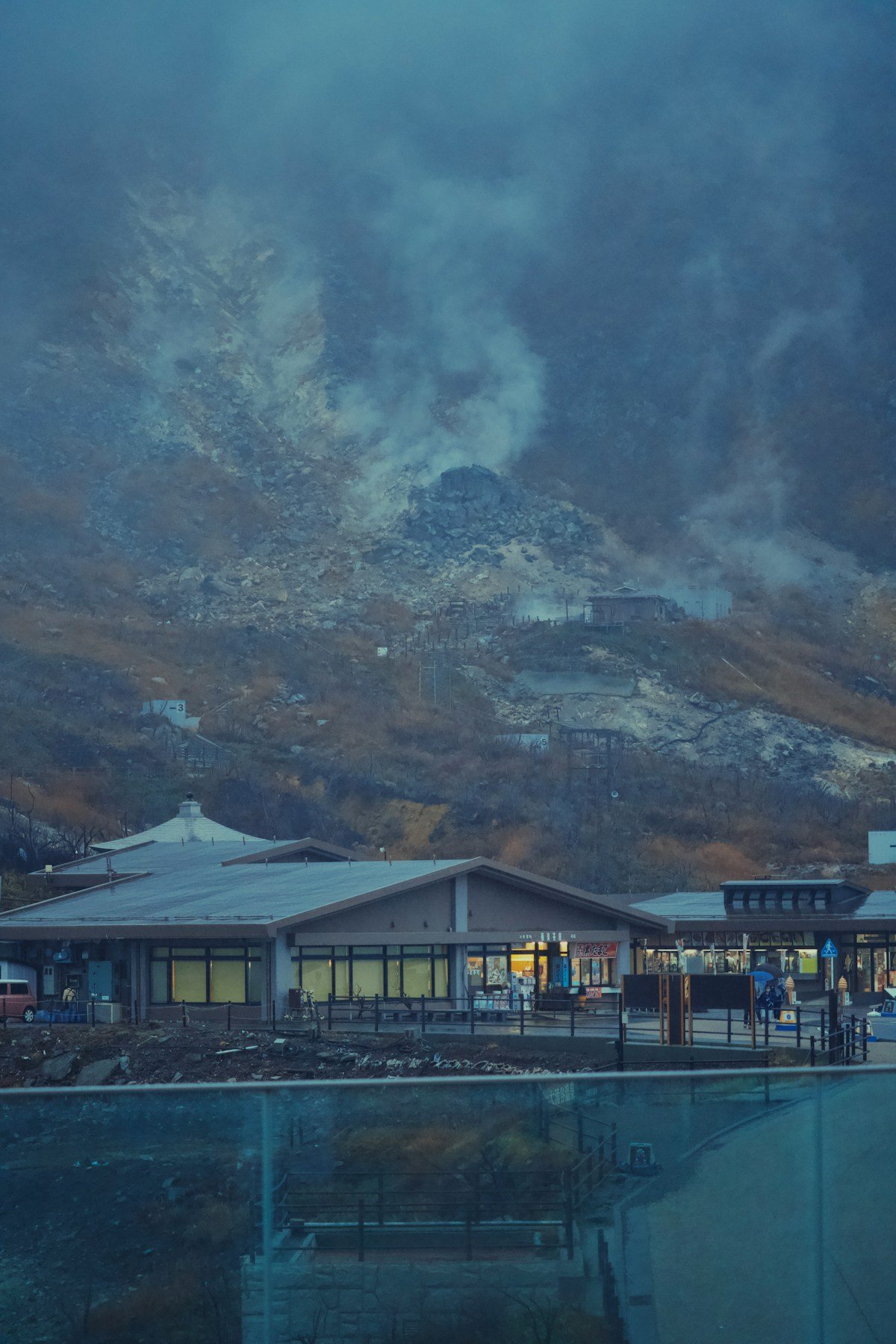
The most distinctive food experience in Hakone requires a short ropeway ride to Owakudani, the volcanic valley north of Hakone-en. At the visitor area, a single vendor sells kuro-tamago - black eggs hard-boiled in the sulfurous hot springs, which react with hydrogen sulfide and minerals in the water to turn the shells black through iron sulfide formation.
A bag of five eggs costs approximately ¥600 as of 2026. The eggs themselves taste exactly like regular hard-boiled eggs - the transformation is entirely in the shell. Local legend claims each egg adds 7 years to your lifespan, which has no scientific basis but is enthusiastically repeated on every sign. The vendor insists eggs be consumed on-site; the shells reportedly crack at lower hydrogen sulfide concentrations, so they genuinely don’t travel well.
The setting makes the experience worthwhile beyond the taste. Owakudani’s active sulfur vents release visible steam across the valley, and eating a hard-boiled egg among them on a wooden bench, looking south toward Lake Ashi, is a genuinely unusual meal regardless of what it tastes like. Arrive early - on busy weekends the queue for eggs is long and the ropeway from Sounzan can close without notice if wind speeds rise.
Ryokan Kaiseki Dining
Hakone’s traditional inns (ryokan) serve kaiseki as part of their half-board packages - the price of the room includes both dinner and breakfast, and the dinner kaiseki is the main culinary event. This is the most expensive and most rewarding way to eat in Hakone.
A kaiseki dinner moves through a set sequence: sakizuke (amuse-bouche), hassun (a seasonal platter that presents all five flavors simultaneously - sweet, sour, salty, bitter, umami), yakimono (grilled dish, often ayu sweetfish in summer or local mountain char), mushimono (steamed dish, frequently a chawanmushi egg custard set around seasonal vegetables), niku (a meat course using Kanagawa wagyu or Matsuzaka beef cooked tableside in shabu-shabu or sukiyaki style), shokuji (rice, pickles, and miso soup served together at the end), and mizumono (dessert, usually a wagashi sweet made from seasonal ingredients such as chestnut in autumn or cherry blossom in spring).
The specific ingredients rotate with the season, which is the point. A kaiseki dinner in early spring will feature bamboo shoot, mountain vegetables, and sakura-flavored elements; the same dinner structure in autumn will centre on mushroom, persimmon, and autumn leaf imagery in the plating.
Top-tier options in Hakone include Gora Kadan (Gora, from approximately ¥50,000 per person per night for two with half board as of 2026 - a former imperial villa), Fujiya Hotel (Miyagino, Japan’s oldest Western-style resort hotel established 1878, kaiseki dinner from approximately ¥8,000 per person), and Mikawaya Ryokan (Hakone Yumoto, from approximately ¥20,000 per person per night with kaiseki dinner and breakfast). Day visitors cannot access ryokan kaiseki; it is exclusively available to overnight guests as part of the stay package.
Soba in Gora
Hakone’s mountain water is particularly well-suited to soba production - the soft, mineral-balanced water from the volcanic geology draws out the buckwheat flavor cleanly without adding competing mineral tastes. The Gora area, accessible by the Hakone Tozan funicular from Hakone-Yumoto, has the most concentrated selection of quality soba restaurants.
Soba Mikuni (Gora, approximately 10 minutes walk from Gora Station) is the most consistently recommended mid-range option. Zaru soba (cold buckwheat noodles served on a bamboo tray with tsuyu dipping broth) starts from approximately ¥1,100 as of 2026. The kitchen uses regional buckwheat and stone-grinds a portion of its own flour - the noodles have more texture and earthiness than chain soba.
For a more casual option, Hakone Soba near Hakone Yumoto Station serves from approximately ¥900 for a basic zaru soba. The line at lunch on weekends is substantial; arrive before noon or after 13:30 to avoid the worst of the queue.
When eating soba correctly: dip only the lower third of each bundle of noodles into the tsuyu broth, never submerge the whole portion. Eat the noodles relatively quickly as they become soft in the broth. At the end of the meal, the kitchen typically brings soba-yu - the warm starchy water the noodles were cooked in - which is mixed into the remaining tsuyu and drunk as a finishing broth.
Lakeside Dining at Lake Ashi
Lake Ashi (Ashinoko) is the most photographed spot in Hakone, and the restaurants around its shores reflect that - prices are higher than in Gora or Yumoto, and the quality-to-cost ratio is not always favorable. That said, a few genuinely good options exist.
Ajiro in the Moto-Hakone area (accessible by bus from Hakone Yumoto, or on foot from the Moto-Hakone pier) serves Japanese set meals with lake views from approximately ¥2,500 for lunch. The location - in a quieter, less-touristy part of the lake’s eastern shore - makes it more pleasant than the busier Hakone-machi and Moto-Hakone pier cafés.
Naraya Cafe, near the Miyagino bus stop on the lake’s western shore, occupies a converted century-old public bath house. Outdoor seating faces the lake and toward Mount Fuji on clear days. Coffee runs ¥600–¥700, soft-serve matcha ice cream ¥500, and light lunch sets from ¥1,200. It is a reliable mid-afternoon stop between the ropeway and the lake cruise without the premium pricing of hotel restaurants.
The ferry piers at Moto-Hakone and Hakone-machi have small snack stalls selling onigiri, canned drinks, and takoyaki - acceptable for outdoor eating while waiting for the Hakone Sightseeing Cruise boat (day pass from approximately ¥1,200 as of 2026).
Hakone Yumoto Food Street
Hakone Yumoto, the gateway town at the base of the mountain and the main train terminus for the Romancecar from Shinjuku, has the most accessible and affordable food in the Hakone area. The pedestrian street leading from Yumoto Station toward the river concentrates most of the options.
Sweet shops line this street selling onsen manju (steamed buns with red bean paste, ¥100–200 each), soft-serve ice cream in matcha and seasonal flavors (¥400–600), yuba (tofu skin) products sold fresh and packaged, and Kanagawa regional crackers and snacks. Several shops allow tasting before purchase.
Sake shops in Yumoto stock selections from Kanagawa breweries - Izumi Bashi Brewery and Nozawa Shuzo are two regional producers with good representation. A regional junmai ginjo costs approximately ¥1,400–¥1,800 for a 720ml bottle as of 2026.
For sit-down meals in Yumoto: ramen shops serve from ¥900–¥1,200, and several family restaurants (Denny’s equivalent chains) around the station area serve breakfast from ¥500 and lunch sets from ¥800–¥1,400. These are considerably cheaper than equivalent meals in Gora or at the lake.
Mid-Range Restaurants
Kisoji (near Hakone Yumoto, from approximately ¥2,500 per person as of 2026) specialises in shabu-shabu hot pot using thinly sliced Kanagawa wagyu beef. Diners cook the beef at the table by swishing it briefly through a simmering kombu stock - the name “shabu-shabu” imitates the sound. The wagyu here is notably tender with good marbling and doesn’t require long cooking.
Café de Gora (Gora Station vicinity, lunch sets from approximately ¥1,400 as of 2026) serves Western-style lunch: salads, pasta, and sandwiches in a relaxed café setting. This is a useful option for visitors who find the museum cafeteria-style food at Hakone Open Air Museum (200 metres away) too crowded.
See Hakone through its food: Food and cultural tours in Hakone often include market visits, tastings, and dishes you’d never find independently.
Convenience Stores
7-Eleven and Lawson operate in Hakone Yumoto and Gora. Both accept IC cards (Suica, Pasmo) and sell hot food (onigiri from ¥140, nikuman steamed buns ¥150, oden from ¥100 per item), sandwiches, coffee (¥100–¥200 from the machine), and a full range of cold drinks. For visitors planning a picnic at the Sengokuhara pampas grass fields - a 30-minute bus ride from Yumoto - a convenience store lunch bought in Yumoto is a sensible and affordable approach.
For more on what to see and do around Hakone, see our guides to Hakone and things to do in Hakone.
Take a Guided Food Tour of Hakone
Hakone’s most memorable food experiences are tied to its ryokan culture - kaiseki dinners at a traditional inn, with courses running from mountain tofu through lacquer-service main dishes to matcha desserts, are the defining meal. But beyond the inns, Hakone’s soba restaurants, the kuro tamago (black eggs hard-boiled in volcanic hot spring water) at Owakudani, and the artisan shops along the old Tokaido highway offer a different angle on eating here. A guided food experience in the Hakone area covers both the street food circuit and explains the tradition behind kaiseki structure.
Guided food tours in Hakone take you beyond tourist-obvious spots - local guides know which stall has the freshest kuro tamago, where to find the best soba, and how to navigate an all-Japanese menu.
See also: Hakone travel guide · Food to try in Hakone · Things to do in Hakone · Where to stay in Hakone · Day trips from Hakone · Hakone vs Nikko · Onsen guide Japan
Search hotels in Hakone: browse stays in Hakone