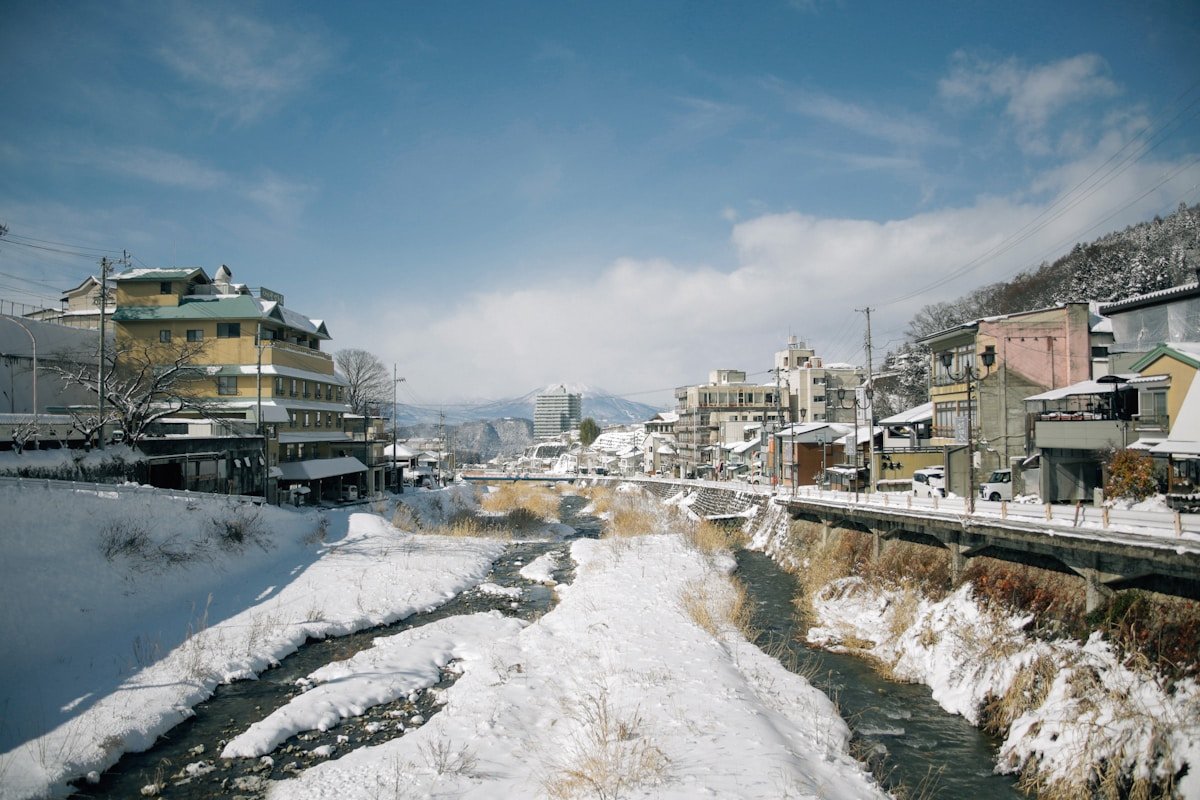
Japan’s onsen culture is one of the country’s most distinctive experiences. With more than 27,000 hot spring sources across the country, geothermal bathing is woven into everyday life - not just a tourist attraction but a genuine part of how Japanese people relax, socialise, and care for their health. This guide explains what onsen are, how to use them correctly, where to find the best, and everything you need to know before stripping down and lowering yourself into the water.
What Is an Onsen?
An onsen (温泉) is a naturally occurring hot spring bath. Japanese law defines it precisely: water must emerge from the ground at 25°C or above, or contain one of 19 specific minerals at set concentrations. These minerals - including sulphur, sodium chloride, iron, and bicarbonate - give each spring its distinct colour, smell, and therapeutic claims.
The mineral composition varies dramatically by location. Kusatsu’s springs are strongly acidic with a pH around 2, known for their antibacterial properties. Beppu’s springs range across eight distinct types including clear chloride, milky white sulphur, and red iron-rich water. Arima Onsen near Kobe produces rare “gold spring” (kinsen) and “silver spring” (ginsen) water. Part of what makes onsen travel compelling is that no two springs are the same.
Prices listed in this guide are approximate as of 2026 and subject to change.
Types of Onsen
Rotenburo (露天風呂) - Outdoor baths open to the sky. These are the most photogenic and sought-after. The experience of soaking in mineral-rich water while surrounded by snow, autumn forest, or mountain views is central to Japanese onsen culture. Rotenburo temperatures tend to be slightly lower than indoor baths to compensate for heat loss.
Sento (銭湯) - Public bathhouses that heat tap water rather than natural spring water. More common in cities than rural areas. Culturally similar to onsen and governed by the same etiquette, but without the mineral properties. Entry typically costs ¥500–¥600. Tokyo’s sento culture is distinct and worth exploring as a neighbourhood experience.
Konyoku (混浴) - Mixed-gender bathing is an older tradition that has become rarer in modern Japan. Some ryokan and rural facilities still maintain konyoku baths, typically outdoor rotenburo. Rules vary by facility - some require women to wear a special bathing wrap (yu-maki), others require full nudity, and some have designated women-only hours. Check the rules before assuming access.
Kashikiri (貸切) - Private baths booked by the hour, increasingly common at ryokan and resort facilities. Essential for those with tattoos or anyone preferring total privacy. Prices range from approximately ¥1,500 to ¥5,000 for 45–60 minutes.
Ashiyu (足湯) - Foot baths at street level, common in onsen towns. Free or low-cost (often ¥200–¥300), they let you experience the mineral water without undressing. A good option when visiting onsen towns on a tight schedule.
Onsen Etiquette: Step by Step
Getting the etiquette right matters. These rules are not bureaucratic formality - they reflect genuine hygiene considerations and social norms. Most facilities post illustrated guides in the changing rooms, but knowing what to expect in advance makes the experience far more comfortable.
1. Pay and collect your towel. Entry fees are paid at the front desk or a vending machine. Many facilities provide a small hand towel; a larger bath towel is often rented separately for ¥100–¥200. Remove your shoes at the entrance and store them in the lockers provided.
2. Undress completely in the changing room (datsuiba). Place your belongings in a locker. Bring only your hand towel and toiletries to the bath area. Do not bring your smartphone - photography is prohibited without exception.
3. Shower before entering the bath. This is non-negotiable. Sit at one of the individual shower stations (kake-yu) and wash your entire body thoroughly with soap. Rinse completely, including all soap residue from your hair. Entering the communal bath without showering is the single most serious breach of onsen etiquette.
4. Enter the bath slowly. The water temperature is often 40–44°C. Ease yourself in gradually. If the temperature seems very high, check if there is a cooler section or alternate bath - most facilities have multiple pools at different temperatures.
5. Keep your hand towel out of the water. The small towel is used for modesty while walking between areas, but should not enter the bath water. Either fold it and place it on the side of the bath, or balance it on top of your head - the latter is the traditional method.
6. Do not swim, splash, or make excessive noise. Onsen are for quiet soaking, not recreation. Voices are kept low. This applies to children as well, though facilities often have designated family bath areas.
7. Drain the bath at full capacity is considered bad form. If the bath is busy, be mindful of space and do not monopolise the area in front of the shower stations.
8. Rinse off after soaking - or don’t. Practices vary. At mineral-heavy springs, many Japanese bathers choose not to rinse after the final soak to retain the mineral residue on the skin. At sulphur springs, you may prefer to rinse. Both are acceptable.
9. Hydrate. Drink water before and after soaking. Most facility entrances have water dispensers. Beer vending machines are common in the changing room corridor - a cold beer or milk after a soak is a classic onsen experience.
The Tattoo Policy
The tattoo ban at most onsen dates to policies targeting yakuza members in the mid-20th century. In practice, many facilities still enforce a blanket ban regardless of intent, and staff may ask you to leave if you enter with visible tattoos.
The situation is changing, particularly in tourist areas. Some facilities now allow tattoos if covered with waterproof stickers or tape (provided free at some facilities), others have dropped the ban entirely, and a growing number advertise tattoo-friendly policies explicitly. Searching in Japanese for 刺青OK (tatoo OK) or tattoo-friendly (タトゥーOK) narrows down options in a given area.
Private baths (kashikiri) are the most reliable workaround. Book in advance at ryokan that offer them - this eliminates the issue entirely.
Ryokan Onsen vs Public Onsen
Ryokan onsen are for guests only. The baths are typically smaller and more carefully maintained than public facilities. Many ryokan rotate the hours to ensure women and men have access at different times, with some offering a free-swap system where guests can book either side exclusively. High-end ryokan provide in-room baths (duro) with the same spring water piped directly to your room - from approximately ¥30,000 per person per night including dinner and breakfast.
Public onsen (kōshū-yoku) are open to anyone for the price of entry. These range from simple no-frills facilities popular with locals (¥500–¥800) to elaborate resort complexes with multiple pools, restaurant, and gift shops (¥1,000–¥2,000). Public onsen are the way to experience bathing culture without committing to a full ryokan stay.
Day-use (higaeri) packages at ryokan offer a middle option - access to the ryokan’s private onsen plus a meal for approximately ¥5,000–¥15,000, booked in advance.
Best Onsen Towns in Japan
Beppu, Oita (別府)
Beppu is Japan’s most prolific hot spring city, producing more geothermal water than anywhere else in the country except Yellowstone. The city’s famous “Eight Hells” (Jigoku Meguri) are dramatic volcanic pools for viewing rather than bathing - including the Umi Jigoku (cobalt blue), Chi no Ike Jigoku (blood-red iron oxide), and Tatsumaki Jigoku (a geyser). Entry to all eight hells costs approximately ¥2,200 as of 2026. For actual bathing, the city has hundreds of public onsen ranging from the popular Takegawara Onsen (¥110, dating to 1879) to more elaborate resort baths.
Getting there: Beppu is served by the Sonic limited express from Hakata (Fukuoka), approximately 2 hours, from around ¥4,500.
Hakone, Kanagawa (箱根)
Hakone sits an hour from Tokyo by Romancecar express and offers some of the most accessible onsen in the country with views of Mount Fuji on clear days. The area has over 20 distinct spring types across different villages. The Yunessun onsen resort in Hakone offers both mixed-gender swimwear pools and separated traditional baths, making it a versatile option for groups. Entry to swimwear section from approximately ¥1,500; traditional baths from ¥700.
Hakone’s ryokan are among the most expensive in Japan - expect ¥30,000–¥80,000 per person per night at top properties including Gora Kadan and Hakone Ginyu. Budget options around ¥8,000–¥15,000 per person are available in the Tonosawa and Miyanoshita areas.
Getting there: Odakyu Romancecar from Shinjuku, approximately 85 minutes, from around ¥1,200.
Kusatsu, Gunma (草津)
Kusatsu is widely considered one of Japan’s premier onsen towns, famous for the yumomi tradition - wooden paddles used to cool the extremely hot spring water (50–60°C is standard here). The central Yubatake (hot water field) produces more than 4,000 litres of spring water per minute and is the visual centrepiece of the town. The Netsunoyu building hosts yumomi demonstrations (approximately ¥600 entry) several times daily.
The Otakinoyu public bath (approximately ¥800) is the main public facility with multiple pools at varying temperatures. Kusatsu is primarily a day-trip or overnight destination - accommodation in traditional onsen ryokan starts from around ¥12,000 per person per night.
Getting there: Bus from JR Naganohara-Kusatsuguchi station (via Shinkansen to Takasaki then local line), approximately 25 minutes from the station. Total from Tokyo approximately 2.5 hours.
Noboribetsu, Hokkaido (登別)
Hokkaido’s premier onsen resort town, Noboribetsu sits above a volcanic caldera called Jigokudani (not to be confused with the snow monkey valley of the same name in Nagano). The spring produces nine different water types emerging from the same source at different temperatures and mineral compositions. The Daiichi Takimotokan hotel is the most famous facility with over 35 individual baths available to day visitors (approximately ¥2,500) - one of the largest bathing complexes in Japan.
Noboribetsu pairs well with Sapporo (90 minutes by limited express) and makes a logical stop on any Hokkaido itinerary.
Kinosaki Onsen, Hyogo (城崎温泉)
Kinosaki is one of Japan’s most attractive onsen towns for visitors who want to immerse themselves in traditional bathing culture. The town has seven public bathhouses (sotoyu), each with a different design and spring character, and guests staying at local ryokan receive a free pass to all seven. The streets are designed for evening yukata-strolling between baths, clog-wearing and all - the atmosphere is distinctively pre-modern.
Entry to individual baths costs approximately ¥700–¥900 for non-ryokan guests. The most famous is Goshonoyu, a large facility in a classical building. Ryokan accommodation starts from approximately ¥15,000 per person including meals.
Getting there: Kinosaki Onsen has its own shinkansen-connected station (via Kyoto on the Kinoshachi limited express), approximately 2.5 hours from Kyoto.
Dogo Onsen, Matsuyama, Ehime (道後温泉)
Dogo Onsen is the oldest continuously operating hot spring resort in Japan, with recorded bathing history going back over 1,000 years. The main building (Honkan), constructed in 1894 in a layered castle style, is a National Important Cultural Property and the supposed architectural inspiration for the bathhouse in Hayao Miyazaki’s Spirited Away - though Studio Ghibli has never officially confirmed this.
Admission to the basic “Kami no Yu” (water of the gods) level costs approximately ¥700. Premium entry to the historic tatami rest rooms and specialty baths costs ¥2,000–¥2,500. The Honkan is currently undergoing partial renovation until 2024, with sections remaining open during works. The adjacent Asuka-no-Yu facility (opened 2019) offers a complementary experience with modern aesthetics.
Getting there: Tram from JR Matsuyama station, approximately 20 minutes.
Onsen in Tokyo
Tokyo has no natural hot springs within the city boundaries, but several facilities import spring water or offer convincing alternatives.
Oedo Onsen Monogatari, Odaiba - A large commercial onsen theme park with water transported from a source 1,400 metres below the bay, classified as genuine natural spring (sodium chloride type). The complex includes multiple indoor and outdoor baths, a yukata promenade, and restaurant area. Admission approximately ¥2,500–¥3,000 depending on time of day. Accessible from Telecom Center station (Yurikamome line).
Sento - neighbourhood public baths - Tokyo has around 500 working sento, neighbourhood bathhouses using heated tap water. Many are architecturally impressive and used by local residents. Daikoku-yu in Katsushika (¥530) and Sauna Ikebukuro are popular with first-time visitors. The Tokyo Sento Guide (available at tourist information centres) lists current facilities by ward.
Spa LaQua, Bunkyo - A commercial urban spa above the Tokyo Dome City complex, using deep underground spring water. Multiple sauna levels, outdoor bath, and restaurant. Day entry approximately ¥2,900 on weekdays. Accessible from Korakuen or Suidobashi stations.
Book Japan’s best experiences: Travel insurance for Japan is worth sorting before you book non-refundable accommodation.
Seasonal Tips
Winter (December–February) is peak onsen season. Soaking in outdoor rotenburo while surrounded by snow is the archetypal experience, and most onsen towns are less crowded than during autumn foliage. Noboribetsu and Kusatsu are particularly well-suited to winter visits. Book accommodation early - New Year holidays (Dec 29–Jan 3) fill up months in advance.
Spring (March–May) combines cherry blossom viewing with onsen, especially in Kinosaki and Hakone where the scenery is exceptional. Golden Week (late April to early May) brings the highest domestic travel volume of the year - book well ahead and expect crowds at popular facilities.
Summer (June–August) is the low season for onsen, when the outdoor appeal diminishes in heat. Indoor baths remain popular. Kusatsu’s altitude (1,200 m) makes it more bearable in summer than lower-elevation towns. Some facilities reduce entry prices during summer to attract visitors.
Autumn (September–November) rivals winter for onsen appeal. Red and orange foliage around rotenburo creates stunning views. Nikko, Hakone, and Kinosaki are particularly striking in November. Accommodation prices rise significantly during peak foliage weekends.
Onsen bathing is one of the more straightforward Japanese cultural experiences to participate in once you understand the entry process and etiquette - the basics take about five minutes to learn and then you are free to simply soak. The depth of the experience, from the chemistry of the water to the architecture of the facilities to the ritual of town-hopping in yukata, repays as much attention as you choose to give it.
See also: Ryokan guide Japan · Beppu travel guide · Things to do in Beppu · Hakone travel guide · Matsuyama travel guide · Snow monkeys at Jigokudani · Nikko travel guide · Japan in January · Japan in December
Plan Your Trip
Book your flights to Japan Get travel insurance Stay connected with an eSIM Rent a car Browse onsen town tours and experiences