Matsuyama Travel Guide: Dogo Onsen, Castle & Shikoku
Matsuyama travel guide: Dogo Onsen, Matsuyama Castle, Shikoku's largest city, and how to get there by ferry, plane, or train.
Guides for Matsuyama
Matsuyama is the largest city on Shikoku island, with a population of 508,000. It sits on the northern coast of Shikoku facing the Seto Inland Sea, roughly equidistant from the Shimanami Kaido bridges to the east and the southern Shikoku mountains to the south and west. The city has three claims to cultural distinction that are unusual in combination: Dogo Onsen (Japan’s oldest hot spring, operational for at least 1,400 recorded years), Matsuyama Castle (one of 12 surviving original feudal keeps), and a specific literary identity - the novelist Natsume Soseki’s 1906 novel Botchan was set here, and the city embraces the connection enthusiastically with a replica steam tram named in the novel’s honor.
Getting to Matsuyama
By ferry from Hiroshima: The most convenient access from the Hiroshima area. The high-speed jet ferry (Super Jet by Ishizuchi Ferry) from Hiroshima Ujina port to Matsuyama Kanko port takes 1 hour 10 minutes for ¥6,600. The standard passenger ferry takes 2 hours 40 minutes for ¥3,500. Ferries run multiple times daily; check schedules at setonaikaikisen.co.jp.
By train from Osaka: The Shinkansen from Osaka to Okayama (45 minutes, ¥5,390) connects to the JR Shiokaze Limited Express to Matsuyama (2 hours 30 minutes, ¥4,480). Total approximately 3 hours 15 minutes and ¥9,870. JR Pass covers both the Shinkansen and the limited express.
By plane: ANA and JAL fly from Tokyo Haneda to Matsuyama Airport, with flights from approximately ¥15,000 and a journey time of 75 minutes. The airport is 15 minutes from the city center by airport bus.
By train within Shikoku: Matsuyama connects by JR Yosan Line to Takamatsu (2h30m, ¥3,670), Kochi (2h30m by Anpanman express, ¥4,390), and Uwajima (1h40m, ¥2,970).
Once you are in town, our guide to getting around Matsuyama covers trams and the ropeway in more detail.
Dogo Onsen Honkan
Dogo Onsen has been used as a public bath for at least 1,400 years of documented history, with references to the spring in the 8th-century Manyoshu poetry collection. Crown Prince Shotoku is recorded as bathing here in 596 CE. The current Honkan main bathhouse was built in 1894 in a castle-like wooden style - three stories with a decorative tower, carved wooden railings, and a design that blends traditional Japanese craftsmanship with Meiji-era architectural ambition.
The Honkan was designated an Important Cultural Property of Japan in 2009 - one of the very few active public facilities to hold this designation. It serves as a functioning public bathhouse, not a museum.
The bathing options in the Honkan (currently under phased renovation, portions reopening from 2024):
- Basic admission (¥450, Kami-no-Yu ground floor bath): Public communal bath, shared facilities, no frills.
- Standard admission (¥840, includes yukata rental and rest room): Use of the main Tama-no-Yu bath on the second floor plus a brief rest in the communal tatami room.
- Premium admission (¥1,250, Botchan-no-Ma private rest room): Includes the Yushinden imperial bath room viewing, a private tatami rest room, and a serving of the local speciality - dango sweet dumplings on a stick.
Check the Dogo Onsen official website (dogo.jp) for current availability during renovation.
Tsubaki-no-Yu Annex
The Tsubaki-no-Yu (¥400) is the annex bathhouse operated by Dogo Onsen, located a short walk from the Honkan. It has remained open throughout the Honkan renovation and draws from the same underground spring water. The facilities are simpler than the Honkan - a single gender-divided communal bath without the historic architecture - but the water quality is identical. For visitors coming specifically for the onsen experience rather than the historic building, Tsubaki-no-Yu is a perfectly adequate alternative.
Matsuyama Castle
Matsuyama Castle sits on Shiroyama hill, 132 meters above the city center. The hilltop is reached by cable car (¥270 each way) or ropeway (¥280), with an additional walk of 10 minutes across the hilltop plateau. Castle admission is ¥520 (combined cable car + admission is sold as a package).
The castle was originally built in 1603 by Kato Yoshiakira. The main keep was struck by lightning and burned in 1784, rebuilt in its current form in 1854. Because the 1854 reconstruction predates the 1868 Meiji Restoration - after which most feudal castles were either demolished or abandoned - Matsuyama Castle’s keep is classed among the 12 “original” surviving feudal keeps in Japan.
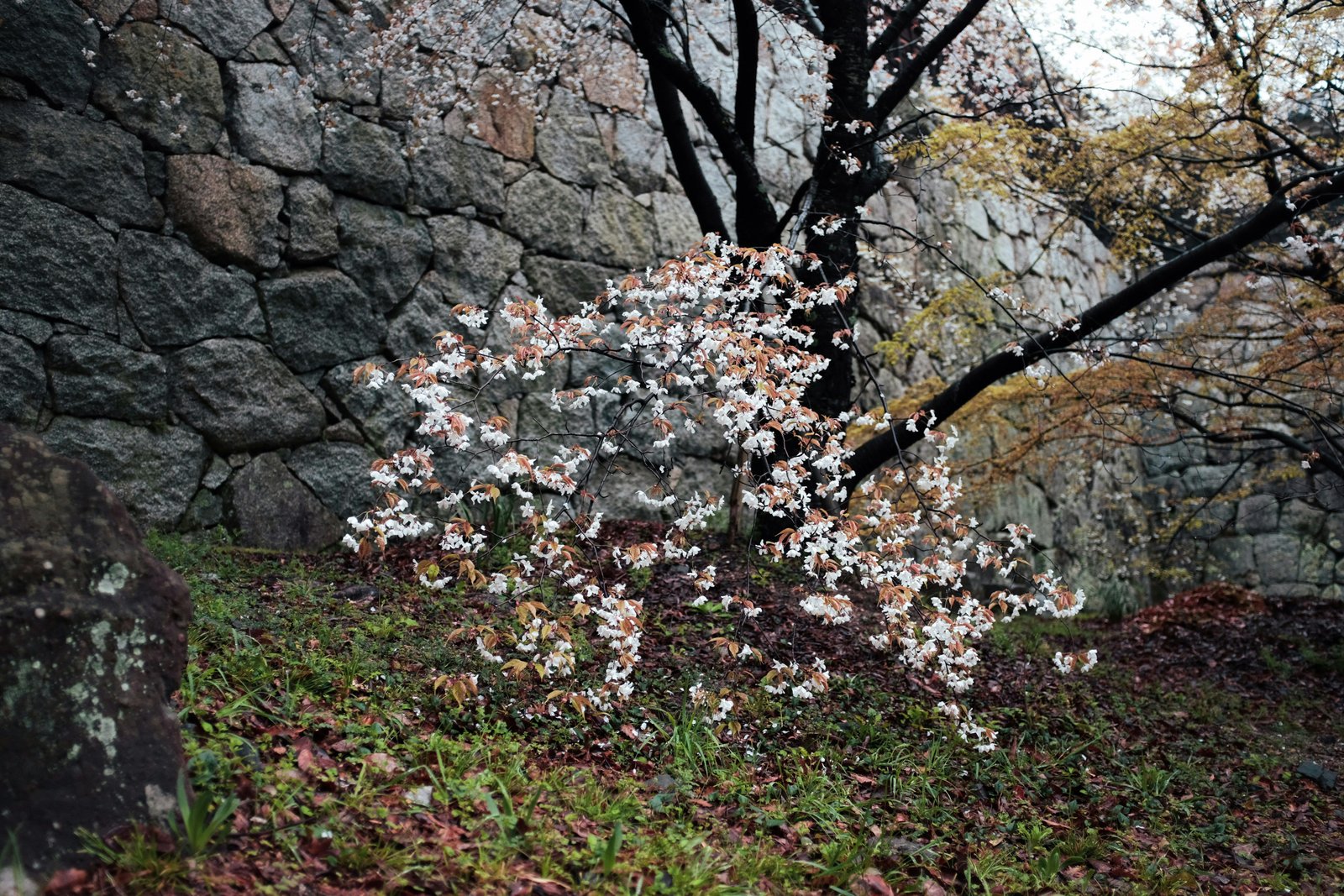
The interior houses a museum collection of samurai armor, weapons, and historical documents relating to the Matsuyama domain. The top floor of the keep gives a 360-degree panorama: the city grid below, the Seto Inland Sea to the north, and the forested mountains of central Shikoku to the south. The castle grounds include secondary turrets, earthworks, and cherry trees - one of Shikoku’s most popular cherry blossom spots in late March.
Guided Matsuyama tours covering Dogo Onsen, Matsuyama Castle, and the Shikoku pilgrimage trail around Ishite-ji can be arranged as a single-day circuit with English commentary on the castle’s status as one of Japan’s twelve original feudal keeps.
Ishite-ji Temple (Temple 51)
Ishite-ji is station 51 of the 88-temple Shikoku pilgrimage - the ancient circuit established by the Buddhist monk Kobo Daishi in the early 9th century. The temple is free to enter. The main approach passes through temple buildings of the Kamakura period (13th–14th century) before reaching a cave passage carved into the hillside, lined with stone figures and votive offerings from centuries of pilgrims. Walking the cave passage is considered equivalent to a portion of the full 88-temple circuit.
White-clad pilgrims (henro) are a constant presence at Ishite-ji, as the temple’s proximity to Matsuyama city makes it accessible even for pilgrims on tight schedules. The temple grounds are open at all hours; the main hall is accessible during daylight.
Masaoka Shiki Commemoration Museum
Masaoka Shiki (1867–1902) is the most celebrated poet in Matsuyama’s history - the figure who systematized and modernized the haiku form in the Meiji era, transforming it from a largely comic form into a vehicle for sincere observation. He died of tuberculosis at 34. The Masaoka Shiki Commemoration Museum (¥50) near Dogo Onsen Park presents his life and work, including original manuscripts and the room he used during his time in Matsuyama. The admission price is one of the most nominal in Japan.
The Botchan Train
The Botchan train (¥200 per ride) is a replica steam-locomotive-style tram running on the city’s electric tram network. It is named after the protagonist of Natsume Soseki’s 1906 novel, who refers to “the train made by a match company” - small, old-fashioned, and slightly underpowered. The replica runs between Dogo Onsen and the city center on the same tram tracks used by the regular trams, creating the curious visual of an Edwardian locomotive threading through modern Matsuyama traffic. Riding it once is worthwhile; it is popular enough that queues form at Dogo Onsen on weekends.
Mitsu-dango Sweet Skewers
Mitsu-dango - rice flour dumplings on a bamboo skewer, coated in sweet soy sauce syrup - are sold from stalls outside the Dogo Onsen bathhouse entrance for ¥100 each. Eating mitsu-dango while wearing yukata robes after a bath is a firmly established local custom. The dumplings are slightly chewy and sweet, more interesting in context than as a food in isolation.
Matsuyama is Shikoku’s largest city and the main starting point for Shikoku pilgrimage travel. For an overview of the island and its destinations, see our Shikoku region guide.
See also: Shikoku region guide · Hiroshima travel guide · Onsen guide Japan · Ryokan guide Japan · Japan Rail Pass guide · Japan in May
Planning your trip to Matsuyama? Tours and activities in Matsuyama cover guided experiences, cultural immersion, and the top sights with local expertise. Flights to Japan vary significantly by season - compare early to secure the best fares. Sort out travel insurance for Japan before you book, and pick up an Airalo eSIM for Japan to have mobile data the moment you land.
Search hotels in Matsuyama on Booking.com
Explore Matsuyama
Things to do in Matsuyama · Where to stay in Matsuyama · Best restaurants in Matsuyama · Matsuyama food guide · Day trips from Matsuyama · Getting around Matsuyama
Upcoming Events in Matsuyama
Hatsumode - New Year Shrine Visits
Hatsumode 2027, 1–3 January. Japan's most important annual tradition - millions visit shrines and temples in the first three days of the new year.
Nearby Cities
Frequently Asked Questions
- How do we get to Matsuyama from Hiroshima?
- The high-speed ferry (Super Jet) from Hiroshima port to Matsuyama Kanko Port takes 1 hour 10 minutes for ¥6,600. The slower passenger-car ferry takes 2 hours 40 minutes for ¥3,500. The ferry is the most convenient option from the Hiroshima area.
- What is Dogo Onsen and why is it famous?
- Dogo Onsen is Japan's oldest recorded hot spring bath, with documented use since at least 593 CE and references in the 8th-century poetry anthology Manyoshu. The Honkan main building (an Important Cultural Property) is a distinctive multi-story wooden bathhouse that served as partial inspiration for the bathhouse in the Studio Ghibli film Spirited Away.
- Is the Dogo Onsen Honkan still open during renovation?
- The Dogo Onsen Honkan is undergoing phased renovation. From 2024, sections have progressively reopened. The Tsubaki-no-yu annex bath (¥400) has remained open throughout the renovation and offers the same hot spring water. Check the Dogo Onsen official website for current access before visiting.
- What makes Matsuyama Castle special?
- Matsuyama Castle is one of only 12 original surviving feudal castle keeps in Japan - it was never destroyed and rebuilt. The hilltop location gives 360-degree views of the city, the Seto Inland Sea, and the surrounding mountains. The cable car to the summit costs ¥270, and the castle admission is ¥520 combined.
- Is Matsuyama worth visiting for more than one day?
- Yes. One day covers Dogo Onsen, Matsuyama Castle, and the Botchan tram. A second day allows the Ishite-ji pilgrimage temple, the Saka no Ue no Kumo Museum, and either a day trip to Ozu castle town or the start of the Shimanami Kaido cycling route. Three days suits those adding Ishizuchi-san hiking.
Book an experience
Top experiences in Matsuyama
Explore the best tours and activities in Matsuyama, with instant confirmation and free cancellation on most bookings.