Miyajima Travel Guide: The Floating Torii Gate & Itsukushima
Miyajima travel guide: the floating torii gate, Itsukushima Shrine, Mount Misen hiking, deer, oysters, and how to get there from Hiroshima.
Guides for Miyajima
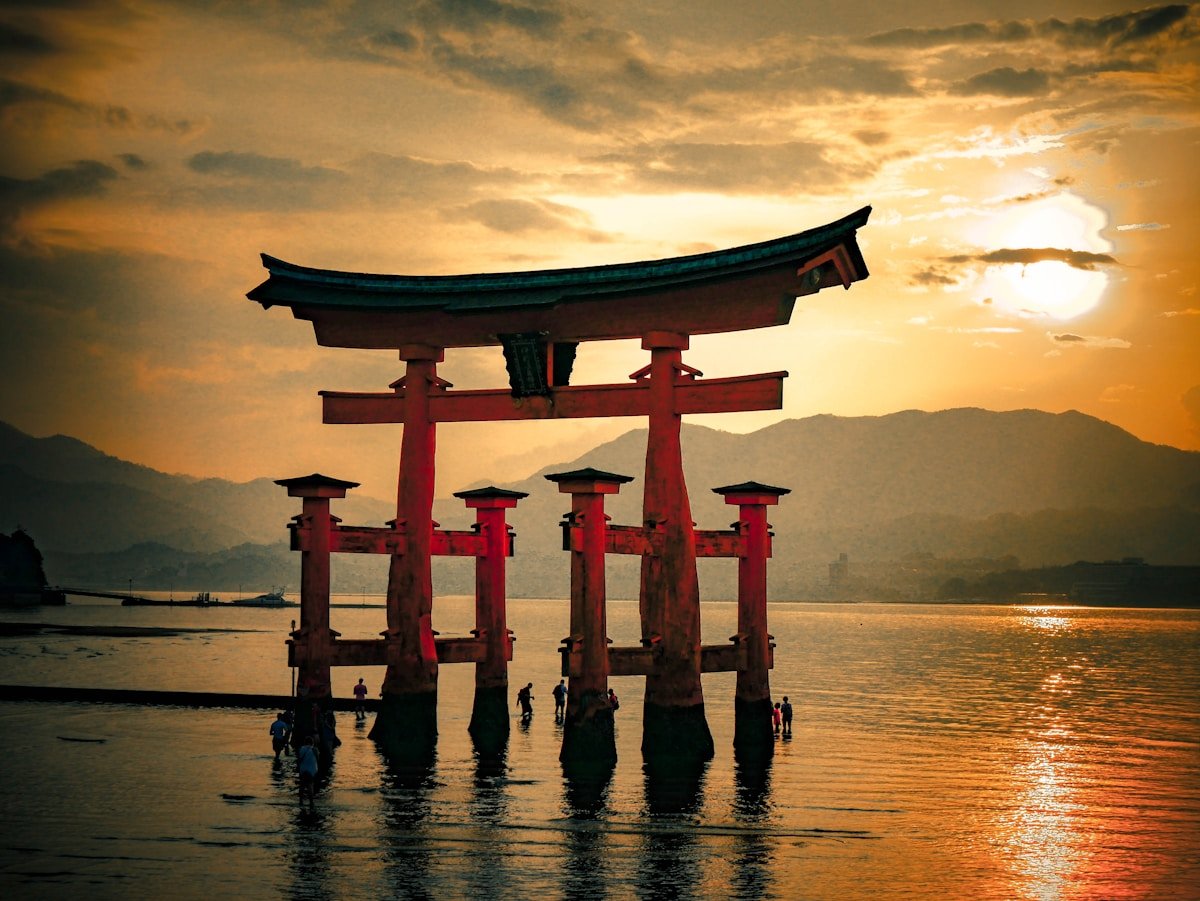
Miyajima - formally the island of Itsukushima - is one of the most recognized landscapes in Japan. The vermilion O-torii gate of Itsukushima Shrine stands in the tidal shallows of the Seto Inland Sea, appearing to float on the water at high tide, its reflection doubling in the calm surface. The island covers 30 square kilometers, has approximately 2,000 permanent residents, and receives around 4 million visitors per year - almost all as day-trippers from nearby Hiroshima.
The island was considered so sacred in its Shinto tradition that for centuries, births and deaths were not permitted there. Pregnant women and the terminally ill were required to cross to the mainland. Burials on the island are still prohibited; the dead are buried on the mainland at Ono. This restriction, combined with the island’s physical separation from the mainland, preserved a density of temples, shrines, and forested mountain that is rare in modern Japan.
Getting to Miyajima
From Hiroshima, take the JR San-yo Line from Hiroshima Station to Miyajimaguchi (26 minutes, ¥420). At the station, a short walk leads to the ferry terminal. The JR ferry (¥210 one-way, JR Pass holders free) crosses to the island in 10 minutes. The private Matsudai ferry runs the same route for ¥180 - slightly cheaper but not covered by the JR Pass, making it more expensive in practice for pass holders.
From the ferry terminal, the island’s main paths lead directly to the torii gate and shrine complex - the gate is visible from the boat on approach. Total journey time from central Hiroshima to stepping off the ferry is 50 to 60 minutes.
Once you are in town, our guide to getting around Miyajima covers the ferry and ropeway in more detail.
The island hosts a water fireworks festival in summer. See our Miyajima Water Fireworks Festival event guide for dates and viewing tips.
The O-torii Gate
The O-torii (“great gate”) of Itsukushima is 16 meters tall, the current structure built in 1875 from camphor wood - the eighth reconstruction since the original gate was erected in the 6th century. The four base pillars are not embedded in the seafloor but held upright by the weight of the crossbeams above - a deliberate engineering choice to allow the gate to be replaced without permanent damage to the seabed. The gate has been repainted in its characteristic vermilion approximately every 10 years; the last painting was completed in late 2022 after a 4-year restoration.
The gate is always free to view. The experience changes completely depending on the tide. At high tide, the gate stands in water that obscures the base pillars, creating the floating illusion - the most photographed version. The water at high tide can be 3 to 4 meters deep at the gate’s location. At low tide, the tidal flats are exposed and visitors can walk out across the sand and mud to stand at the gate’s base, touching the camphor-wood pillars directly. Both versions are worth experiencing; if you have a full day, time your arrival for high tide and your departure for low tide to see both.
The Japan Meteorological Agency publishes daily tide tables for Miyajima at jma.go.jp. Search for the Miyajima or Hiroshima tide table for your specific date.
Itsukushima Shrine
Itsukushima Shrine (¥300) is a UNESCO World Heritage site. The shrine complex extends over the tidal shallows on a series of raised wooden walkways and platforms, its corridors and halls connecting a series of pavilions and the primary worship hall. At high tide, the entire structure appears to float above the water. At low tide, it rests on exposed seabed.
The shrine’s origins are attributed to 593 CE, though the present structure dates primarily from the 12th century reconstruction by the warlord Taira no Kiyomori. The No drama stage - Japan’s oldest floating stage for No theater - extends from the shrine’s sea-facing side and is used for traditional performances during the shrine’s main festivals. The corridor to the right of the main worship hall has views through the lattice walls directly to the O-torii gate.
The Itsukushima Shrine Treasure Hall (¥300 additional) holds a collection of objects donated by successive rulers, including lacquerware, sutras written in gold, swords, and mirrors. The most famous objects are the Heike Nokyo - a set of 33 sutras decorated with paintings by the Taira clan in the 12th century, designated National Treasures.
Daisho-in Temple
Daisho-in (free) is a Buddhist temple of the Shingon sect, one of the most significant Shingon pilgrimage sites in western Japan, operating for over 1,000 years. The approach staircase passes between two rows of stone lanterns carpeted in moss, covered in the grey-green lichen that accumulates in the island’s humid climate. Miniature figures (jizo, the guardian of travelers) wearing hand-knitted caps and bibs are tucked between the lanterns along the entire staircase.
The upper courtyard contains a cave passage lined with 88 stone figures representing each of the temples on the Shikoku 88-temple pilgrimage. Completing the passage (a short walk) is considered equivalent to completing the full Shikoku pilgrimage. The main Maniden hall contains a gilded Thousand-Armed Kannon figure, and the surrounding buildings hold various sacred objects including a large, slowly rotating stone prayer wheel. Entry is free throughout.
Mount Misen
Mount Misen (509 meters) is the forested summit of Miyajima, sacred in Shinto and Buddhist traditions. The summit gives 360-degree views of the Seto Inland Sea and the mainland, with the islands of the inland sea layered in the distance on clear days.
The cable car from Momijidani Park Station rises in two stages to Shishi-iwa station (¥1,000 one-way, ¥1,800 return), from which the summit is a 30-minute walk along a rocky ridge path. Three hiking trails also ascend from the island’s lower areas:
- Momijidani Trail: 2.5 kilometers from Momijidani Park, 1 hour 30 minutes. The easiest and most popular trail.
- Daisho-in Trail: 2.3 kilometers from Daisho-in temple, approximately 2 hours. More varied terrain, passes several small shrines.
- Omoto-koen Trail: 3.1 kilometers from the western side of the island, 2 to 2.5 hours. Least crowded.
The summit area contains several shrine buildings, a “persistent flame” claimed to have burned continuously since the priest Kobo Daishi lit it 1,200 years ago, and a small shelter. The descent should be factored carefully - the last cable car typically runs around 5pm (check current timetable seasonally).
Guided Miyajima island tours include tide-timed visits to the O-torii gate and Itsukushima Shrine, with guides covering the shrine’s Heian-period origins and the engineering of the floating platform corridors.
Momijidani Park
Momijidani Park (Maple Valley Park, free) is a riverside park between the ferry terminal and the cable car station, planted with hundreds of Japanese maple trees. In November, the park is one of the best places on Miyajima for autumn foliage, the maples reflecting in the small river. A small population of Japanese macaque monkeys occasionally descends from the forested slopes into the park margins.
Food on Miyajima
Oysters Miyajima Bay is one of Japan’s most productive oyster aquaculture areas, and fresh oysters grilled directly over charcoal are sold from stalls along the main shopping street (Omotesando) for ¥300 to ¥500 per shell. The oysters are large, plump, and briny. They are genuinely among the best in Japan and worth eating here rather than as a restaurant meal.
Anago (saltwater eel) rice Conger eel from the Inland Sea is Miyajima’s other food identity - anago-meshi, a layered rice dish with soft-braised eel, is served at several restaurants. Ueno restaurant near the ferry terminal charges ¥2,000 to ¥2,300 for a set meal and has a local reputation for consistency.
Momiji manju Maple-leaf shaped cakes filled with red bean paste (or other fillings including chocolate, cream, and matcha) are ¥150 each, sold from all shops on the main street. They are baked fresh continuously and are best warm. The filling inside varies by shop - the traditional red bean is the standard; custard cream is the other reliably good version.
Planning your trip to Miyajima? Tours and activities in Miyajima cover guided experiences, cultural immersion, and the top sights with local expertise. Flights to Japan vary significantly by season - compare early to secure the best fares. Sort out travel insurance for Japan before you book, and pick up an Airalo eSIM for Japan to have mobile data the moment you land.
Search hotels in Miyajima on Booking.com
Explore Miyajima
Things to do in Miyajima · Where to stay in Miyajima · Best restaurants in Miyajima · Miyajima food guide · Day trips from Miyajima · Getting around Miyajima
Miyajima is part of the Chugoku region. For a broader overview including Hiroshima, see our Chugoku and Hiroshima region guide or the Hiroshima city guide.
Official sources worth checking before you go: Japan National Tourism Organization, UNESCO World Heritage listings for Japan.
See also: Hiroshima travel guide · Chugoku and Hiroshima region · Japan Golden Route itinerary · Japan in April · Japan in November · Onsen guide Japan
Upcoming Events in Miyajima
Hatsumode - New Year Shrine Visits
Hatsumode 2027, 1–3 January. Japan's most important annual tradition - millions visit shrines and temples in the first three days of the new year.
Nearby Cities
Frequently Asked Questions
- When does the O-torii gate at Miyajima appear to float?
- The gate appears to float at high tide, when the base pillars are submerged and only the crossbeams and top of the gate emerge from the water. Tide times change daily. Check the Japan Meteorological Agency tide table (jma.go.jp) for the specific date of your visit. High tide between 8am and 4pm gives the best photography light.
- Can we walk to the O-torii gate?
- Yes, at low tide the tidal flats around the gate are exposed and you can walk out to touch the base pillars. The flats are sandy mud - wear footwear you don't mind getting muddy. At high tide the gate is surrounded by water of varying depth depending on the tide cycle.
- How do we get to Miyajima from Hiroshima?
- Take the JR San-yo Line from Hiroshima Station to Miyajimaguchi (26 minutes, ¥420), then the JR ferry to the island (10 minutes, ¥210). JR Pass holders travel free on both. Total journey time from central Hiroshima is about 50 to 60 minutes including connections.
- Are the deer on Miyajima dangerous?
- The deer are accustomed to humans and are generally docile compared to the deer at Nara. They will approach for attention and occasionally attempt to eat maps, bags, or food packaging. They should not be fed - feeding is prohibited and affects their health. Biting is rare but possible if food is visible in a bag or pocket.
- Is it worth staying overnight on Miyajima?
- Staying overnight is expensive (ryokan from ¥20,000 per person including meals) but gives access to the island after the last ferry brings day-trippers back. The torii at high tide in evening light, the deer in the empty lanes at night, and the shrine at 7am before boats arrive are all distinctly different from the daytime experience.
Book an experience
Top experiences in Miyajima
Explore the best tours and activities in Miyajima, with instant confirmation and free cancellation on most bookings.