Hiroshima Travel Guide: Peace, History, and Okonomiyaki
Hiroshima travel guide: the Peace Memorial Museum, Atomic Bomb Dome, Hiroshima Castle, okonomiyaki, and Miyajima island day trip.
Guides for Hiroshima
Hiroshima is a city of 1.2 million people that was rebuilt from near-total destruction. On August 6, 1945, the United States dropped the first atomic bomb used in warfare directly over the city center, killing an estimated 70,000 to 80,000 people immediately and a further 90,000 to 140,000 by the end of 1945 from radiation and injuries. Today, Hiroshima is a modern, functioning city - evidence of a deliberate and ultimately successful reconstruction - with the Peace Memorial Park and Museum at its center serving both as a record of the bombing and as an ongoing argument for nuclear disarmament.
The city has more to offer than its history: Hiroshima-style okonomiyaki is one of Japan’s great regional dishes, the castle and traditional gardens are well-preserved, and Miyajima island - with the floating torii gate of Itsukushima Shrine - is among the most photographed places in Japan.
Getting to Hiroshima
The standard route from Tokyo is the Tokaido-Sanyo Shinkansen. The Hikari service takes approximately 4 hours from Tokyo Station for ¥18,340 and is covered by the JR Pass. The Nozomi - the fastest service at 3 hours 50 minutes for ¥19,080 - is not covered by the JR Pass. From Kyoto, the journey is 1 hour 40 minutes by Hikari for ¥10,490. From Osaka, 1 hour 30 minutes for ¥9,720. From Fukuoka (Hakata), 1 hour by Sakura for ¥5,940.
Within Hiroshima, the city tram network covers the main attractions, with a day pass (¥700) covering unlimited tram travel. The Peace Memorial Park is approximately 20 minutes by tram from Hiroshima Station.
Once you are in town, our guide to getting around Hiroshima covers trams and trains in more detail.
Timing changes the experience a lot here, so our best time to visit Hiroshima month-by-month guide is worth a look before you book.
Each 6 August the city holds a memorial ceremony. See our Hiroshima Peace Memorial Ceremony event guide for dates and viewing tips.
That evening lanterns are floated on the river. See our Toro Nagashi lantern floating event guide for dates and viewing tips.
Peace Memorial Park and Museum
The Peace Memorial Park occupies the area closest to the atomic bomb’s hypocenter - the point directly below the detonation. It is a 12-hectare green space containing a series of memorials, the museum, and the Atomic Bomb Dome.
The Peace Memorial Museum (¥200) is the most important museum in Japan for understanding the human consequences of nuclear weapons. The exhibits are organized chronologically: the city before the bombing, the bombing itself, the immediate aftermath, the medical effects of radiation exposure, and the ongoing advocacy for nuclear disarmament. Personal items belonging to victims - a child’s lunchbox, a wristwatch stopped at the moment of detonation, a burned school uniform - are displayed with individual stories. The museum does not editorialize heavily; it documents, and the documents are sufficient.
Allow 2 to 3 hours. Many visitors find the experience emotionally draining and benefit from time in the park afterward. The museum is open from 8:30am to 6:00pm (7:00pm July and August, 5:00pm December and January). Admission is ¥200 for adults.
Guided tours of Hiroshima’s Peace Memorial sites provide local context and survivor testimony connections that self-guided visits cannot replicate. Browse Hiroshima guided tours on GetYourGuide - options include Peace Park walks, Miyajima day trips, and combined one-day city circuits.
The Atomic Bomb Dome (Genbaku Dome)
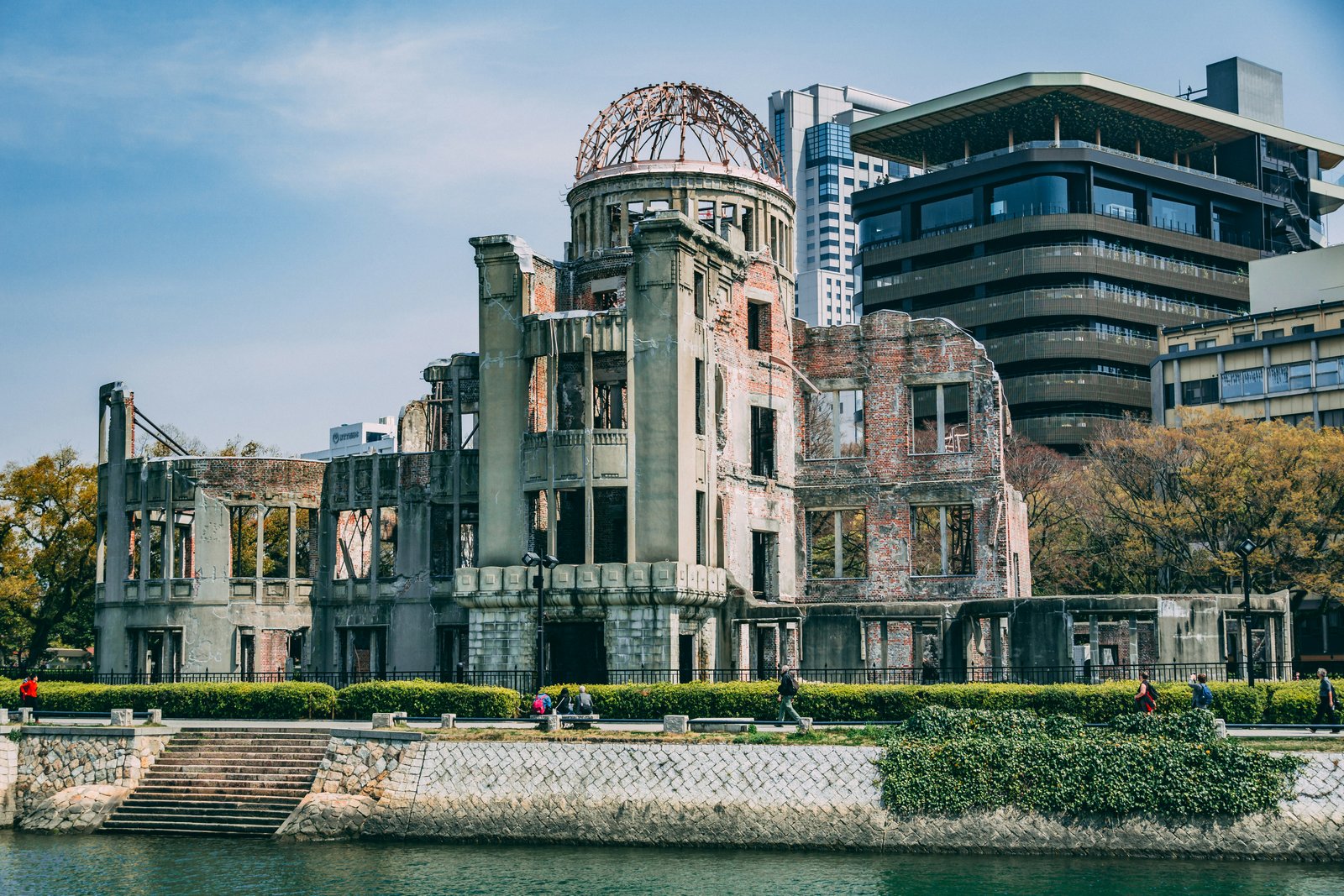
The Genbaku Dome - the ruin of the former Hiroshima Prefectural Industrial Promotion Hall - is the only structure near the hypocenter that remained standing after the bombing. Its steel-ribbed dome and exterior walls survived because the bomb detonated almost directly overhead, and the downward blast pressure was distributed rather than horizontal. The building was preserved deliberately as a monument. Entry to the exterior is free; the ruin is visible from the riverbank at all times.
Standing before the dome - the skeleton of the building visible through the gaps in the walls, the iron framework of the dome silhouetted against the sky - is an experience that no amount of photographs prepares you for. It is one of the most affecting places in Japan.
Hiroshima Castle
Hiroshima Castle (¥370) was built in 1589 by the warlord Mori Terumoto and served as the seat of Hiroshima’s feudal lords until the Meiji Restoration. The original castle was destroyed in the atomic bombing; the current five-story tenshu (keep) is a concrete reconstruction completed in 1958. The interior houses a museum covering the history of the castle, Hiroshima’s feudal period, and samurai equipment and armor. The castle grounds include reconstructed turrets and earthworks that give a good sense of the original scale.
Shukkei-en Traditional Garden
Shukkei-en (¥260) is a traditional Japanese landscape garden designed in 1620 by Ueda Soko, a disciple of the tea ceremony master Sen no Rikyu. The garden is organized around a central pond with islands, bridges, and miniature landscapes intended to evoke famous scenic spots of China in miniature. Koi swim in the pond, and the surrounding plantings are designed for year-round seasonal variation: cherry blossoms in spring, irises in June, autumn maples in November. The garden was severely damaged in 1945 and has been carefully restored.
Hiroshima Okonomiyaki
Hiroshima’s signature dish is okonomiyaki - a savory pancake that differs substantially from the Osaka version. In Hiroshima-style okonomiyaki, the ingredients (batter, mountains of shredded cabbage, bean sprouts, thinly sliced pork belly, a portion of cooked noodles, and a fried egg) are layered and cooked sequentially on a flat iron griddle rather than mixed into a batter and poured. The result is a taller, denser, more structurally complex pancake. It is finished with okonomiyaki sauce, mayonnaise, dried bonito flakes, and dried seaweed, and served directly on the griddle surface.
Okonomi-mura (“okonomiyaki village”) is a three-story converted commercial building near the main shopping street with 25 individual stalls, each operated by a single cook who will prepare your meal in front of you on a counter-mounted griddle. Prices average ¥800 to ¥1,200 per portion. No reservations; arrive before noon or after 2pm to avoid the lunch queue.
Miyajima Island - Essential Excursion
Miyajima (formally Itsukushima) is a 30-minute train and ferry journey from central Hiroshima. Take the JR Sanyo Line from Hiroshima Station to Miyajimaguchi (26 minutes, ¥420) and then the JR ferry to the island (10 minutes, ¥210 - JR Pass holders travel free on the ferry). The island’s floating torii gate, the historic shrine complex, and the hiking trails to Mount Misen make it one of Japan’s most complete single-day destinations. Guided Hiroshima and Miyajima day tours include the ferry crossing and a local guide for Itsukushima Shrine - a practical choice if you are combining both sites in a single day. See our dedicated Miyajima guide for the full detail.
Hiroshima vs Nagasaki
Both cities carry the weight of atomic bomb history. Our Hiroshima vs Nagasaki comparison covers which to visit if your itinerary can only accommodate one - or how to include both on a western Japan circuit.
Hiroshima is the largest city in the Chugoku region. For an overview of western Honshu travel beyond Kansai, see our Chugoku and Hiroshima region guide.
If you are weighing Hiroshima against a Kansai base, see our Osaka vs Hiroshima comparison.
Using the Hiroshima Pass
The Hiroshima Welcome Pass (¥900 for 1 day, ¥1,100 for 2 days) covers unlimited rides on the city tram network and the Ujina Port ferry to Miyajima. It is worth buying for a 2-day Hiroshima visit that includes Miyajima. Available at Hiroshima Station tourist information.
Search hotels in Hiroshima on Booking.com
Explore Hiroshima
Things to do in Hiroshima · Where to stay in Hiroshima · Best restaurants in Hiroshima · Hiroshima food guide · Day trips from Hiroshima · Getting around Hiroshima · Best time to visit Hiroshima
The nearby island of Miyajima - home to the iconic floating torii gate - is an easy day trip from Hiroshima.
Official sources worth checking before you go: Japan National Tourism Organization, UNESCO World Heritage listings for Japan.
See also: Miyajima travel guide · Best tours in Hiroshima · Chugoku and Hiroshima region · Japan Golden Route itinerary · Kansai and Kyushu itinerary · Japan in April · Japan in November · Long stay in Hiroshima
Upcoming Events in Hiroshima
Hatsumode - New Year Shrine Visits
Hatsumode 2027, 1–3 January. Japan's most important annual tradition - millions visit shrines and temples in the first three days of the new year.
Nearby Cities
Frequently Asked Questions
- How long does it take to get from Tokyo to Hiroshima by Shinkansen?
- The Nozomi Shinkansen takes 3 hours 50 minutes from Tokyo to Hiroshima for ¥19,080. The slower Hikari takes about 4 hours for ¥18,340. Note that Nozomi trains are not covered by the standard JR Pass - Pass holders must use Hikari or Sakura services.
- How much time should we allow for the Peace Memorial Museum?
- Allow 2 to 3 hours minimum. The museum is deeply detailed and emotionally demanding. The exhibits include personal belongings of atomic bomb victims, survivor testimonies, and historical documentation. Many visitors find they need to take breaks. The museum closes at 6pm (7pm in peak summer).
- Is Miyajima worth visiting from Hiroshima?
- Miyajima is one of the most iconic sights in Japan and is almost always worth including. The journey takes about 1 hour from central Hiroshima. JR Pass holders travel free on the JR ferry. Allow a full day if you plan to hike Mount Misen.
- What is Hiroshima-style okonomiyaki and how is it different from Osaka-style?
- Hiroshima-style okonomiyaki layers its ingredients - batter, cabbage, bean sprouts, noodles (yakisoba or udon), and egg - rather than mixing them together as in Osaka. The result is thicker and more filling. It is cooked on a flat iron griddle (teppan) and served directly from the griddle surface. Try it at Okonomi-mura, a 3-story building with 25 individual stalls.
- Do we need to book the Peace Memorial Museum in advance?
- Advance booking is not currently required for general admission (¥200). In peak season (March to May, late July to August), morning queues at the main entrance can be 20 to 30 minutes. Arriving at opening time (8:30am) avoids most queues.
Book an experience
Top experiences in Hiroshima
Explore the best tours and activities in Hiroshima, with instant confirmation and free cancellation on most bookings.