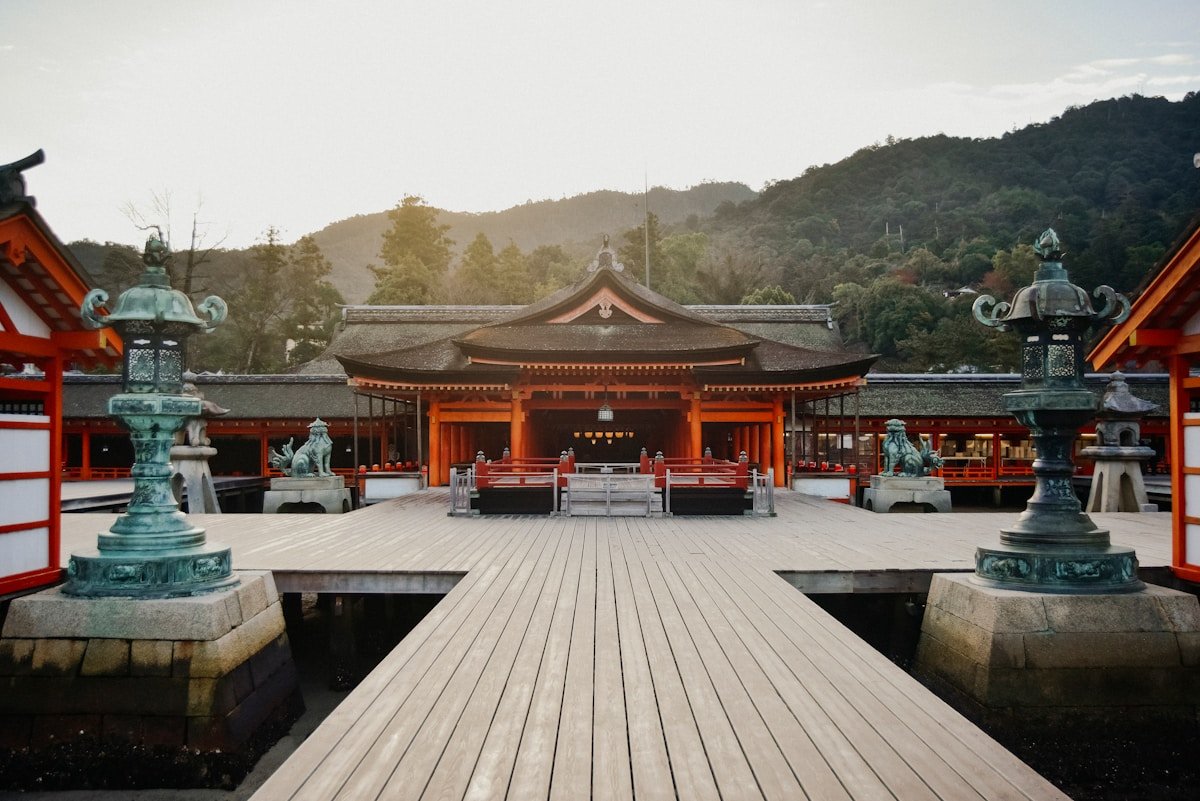
Hiroshima is one of the best-positioned cities in Japan for day trips. The Shinkansen, JR local lines, and ferry connections give easy access to a ring of destinations ranging from one of Japan’s most iconic island shrines to preserved Edo-period canal towns, cycling routes, and historic bridges. Below are 7 day trips from Hiroshima, ordered from the nearest to the farthest.
1. Miyajima (Itsukushima Island)
Journey time: approximately 1 hour. Cost: ¥630 one-way (JR train ¥420 + JR ferry ¥210), or free with JR Pass.
Miyajima is the essential Hiroshima day trip, usually listed among the three classic views of Japan (along with Matsushima and Amanohashidate). The island of Itsukushima (30 km²) is home to the O-torii gate of Itsukushima Shrine - a 16-meter vermilion torii standing in the tidal shallows of the Seto Inland Sea, appearing to float at high tide.
The floating torii The O-torii is most dramatically photographed at high tide when only the base pillars emerge from the water. At low tide, you can walk across the tidal flats to the gate itself. Tide times change daily - check the Japan Meteorological Agency website (jma.go.jp) before visiting to time your arrival.
Itsukushima Shrine (¥300) The main shrine complex extends over the water on raised walkways, its vermilion halls, corridors, and a No drama stage reflected in the tidal shallows. The shrine dates from the 6th century; the current buildings are from the 12th century reconstruction by the warlord Taira no Kiyomori.
Daisho-in Temple (free) The Buddhist temple at the island’s western edge is one of the most important Shingon Buddhist temples in the Chugoku region. The approach staircase lined with moss-covered stone lanterns leads to a courtyard with a cave passage containing 88 stone Buddhas representing the Shikoku pilgrimage sites. Free entry; allow 45 minutes.
Mount Misen (509m) The island’s summit is reachable by cable car (¥1,000 one-way to Shishi-iwa, then a 30-minute walk to the summit) or by hiking trail (1h30m to 2h30m depending on route, free). The summit views extend to the mainland and across the Seto Inland Sea islands. Three hiking trails descend from the summit - the Momijidani trail is the most used.
Oysters Miyajima Bay is one of Japan’s most productive oyster farming areas. Freshly grilled oysters are sold from stalls along the main street for ¥300 to ¥500 per shell. The anago (saltwater eel) rice box (¥2,000) at Ueno restaurant near the ferry terminal is Miyajima’s other food speciality. Momiji manju - maple-leaf shaped cakes filled with red bean paste or other fillings - are ¥150 each and sold from several shops.
Deer Approximately 700 semi-wild deer live on the island, descended from deer brought as sacred messengers. They are accustomed to humans, approaching for attention (and occasionally attempting to eat maps and food wrappers). They are more docile than the Nara deer.
Allow a full day for Miyajima, including cable car and shrine. A half-day covers the torii and shrine at a faster pace.
2. Onomichi
Journey time: 1 hour 40 minutes by JR San-yo Line (no Shinkansen needed). Cost: ¥1,940 return.
Onomichi is a hillside port town of 135,000 people overlooking the Seto Inland Sea, with a steep temple walk, famously narrow lanes, and a large population of free-roaming cats. The town has a lived-in, unselfconsciously local character that contrasts with more polished tourist destinations.
Temple Walk The Onomichi Sando temple walk links 25 temples and shrines on the steep hillside behind the town. The full course is 3.5 kilometers from Saikoku-ji to Jodo-ji and takes about 2 hours with stops. A ropeway (¥280 one-way) provides an easier ascent to the upper temple area.
Cat Alley The lane between the ropeway station and the waterfront is known locally as Neko-no-hosomichi (Cat’s Alley) - a series of narrow passages where 20 or more free-roaming cats typically lounge. The local cat association maintains water stations; the cats are not cared-for pets but free-ranging animals habituated to respectful human contact. The Cat Museum (¥500) nearby is small but enthusiastic.
Onomichi Ramen The local ramen style is a clear, slightly oily chicken-pork broth with flat noodles and back fat - distinctive and popular. Most ramen shops open from around 11am. Budget ¥900 per bowl.
Shimanami Kaido Cycling Onomichi is the mainland starting point of the Shimanami Kaido - a 70-kilometer cycling route connecting 6 islands via suspension bridges to Imabari in Ehime prefecture. Bicycle rental is available at the terminal (from ¥3,000 for a day bicycle, plus toll charges across the bridges totaling approximately ¥500). The full route takes 2 days; a half-day partial ride to the first island and back is achievable as a day trip.
3. Kurashiki
Journey time: approximately 1 hour (Shinkansen to Okayama 40 minutes, JR local to Kurashiki 15 minutes). Cost: approximately ¥6,000–¥7,000 return without JR Pass; free (JR portion) with pass.
Kurashiki’s Bikan Historical Quarter (Bizan Historical Quarter) is a 2-kilometer stretch of canal lined with preserved Edo-period warehouses (kura) converted into museums, craft shops, and cafes. The white-plaster warehouse walls, willow trees trailing in the water, and flat-bottomed punts carrying tourists create a deliberately composed historical district.
Ohara Museum of Art (¥1,300) Founded in 1930, it was Japan’s first Western art museum and holds works by El Greco, Cézanne, Monet, Matisse, and Picasso alongside strong holdings of Japanese modern art. The main building is a Greek Revival structure immediately beside the canal - anachronistic and somehow effective.
Canal Area Walking the 2-kilometer canal district is free. Rickshaw rides and punt tours are available at premium prices (¥1,500+). The district is most photogenic in the early morning before tour groups arrive, or in the evening when the warehouses are lit.
The journey from Hiroshima requires a Shinkansen transfer at Okayama - included in the JR Pass but requiring an additional local train ticket to Kurashiki (¥240, not covered by the pass).
4. Iwakuni
Journey time: 40 minutes by JR San-yo Line. Cost: ¥740 return.
Iwakuni is a small city known primarily for its Kintaikyo Bridge - a five-arched wooden arch bridge reconstructed in the Edo period design (no nails, using only wooden joinery) and considered one of the three most beautiful bridges in Japan. Entry to cross the bridge costs ¥310.
Iwakuni Castle sits on the mountain above the bridge, accessible by ropeway (¥270 each way) or a 40-minute hike. The castle is a 1962 reconstruction but the hilltop views over the river, the Kintaikyo Bridge, and the Seto Inland Sea are excellent.
White Snake Shrine (Shirohebi-jinja) Iwakuni has a naturally occurring population of albino Japanese rat snakes - white snakes considered sacred local deities - and the small shrine dedicated to them is genuinely unusual. The adjacent snake museum (¥200) houses live white snakes. Free to enter the shrine itself.
Iwakuni pairs well with Miyajima (both along the same JR line from Hiroshima) for a combined full-day trip using a JR Pass.
5. Tomonoura
Journey time: approximately 60 minutes by JR to Fukuyama then bus (¥1,100 total). Cost: approximately ¥1,100 return by bus from Fukuyama.
Tomonoura is a preserved Edo-period fishing port that served as the principal inspiration for the setting of Hayao Miyazaki’s 2008 animated film Ponyo. The port’s stone quays, traditional tile-roofed merchant houses, and working fishing boats create a remarkably intact picture of an early 19th-century Japanese harbour.
Ota Residence (¥200) A well-preserved Edo merchant house with garden, used as a location in the filming research for Ponyo. Taichoro historic inn (free exterior) was used in 1867 by the last shogun Yoshinobu - the room he occupied is viewable. The small Benten Island shrine is reachable by rowboat from the port. Tomonoura’s fugu (pufferfish) and fresh seafood restaurants are worth a meal here.
Allow 3 to 4 hours for Tomonoura. The last bus back to Fukuyama typically runs around 6pm; check the timetable carefully.
6. Fukuyama
Journey time: 30 minutes by Shinkansen. Cost: ¥3,550 return (free with JR Pass).
Fukuyama is often overlooked, but its reconstructed castle (¥200, garden free) has an unusually complete surviving castle garden with cherry trees. The city is also the nearest Shinkansen stop to Tomonoura (combine both in one day trip). The Fukuyama Museum of Art (¥300) has rotating exhibitions of reasonable quality. As a standalone destination it is a half-day at most, but the combination with Tomonoura makes a full day.
7. Onomichi to Imabari Shimanami Kaido Cycling
Journey time: 1h40m to Onomichi, then cycling. Full route 70km over 2 days; single-day partial rides possible.
The Shimanami Kaido cycling route crosses 6 islands between Onomichi and Imabari by bicycle, using dedicated cycling lanes on the bridges connecting the islands. It is consistently rated one of the most scenic cycling routes in Japan - each bridge offers elevated views across the Seto Inland Sea, the islands and mountains layered behind each other in the coastal haze.
Bicycle rental at Onomichi port from ¥3,000/day. Bridge tolls total approximately ¥500 for the full route. Accommodation is available on the islands for those doing the full 2-day route. For a day trip from Hiroshima, cycling to Innoshima (the first island, about 28km from Onomichi) and returning by ferry provides the core experience in 6 to 7 hours.
Make the most of your time around Hiroshima: Guided day trips from Hiroshima handle the logistics - transport, guide, and timing - so you can focus on the experience. For airport arrivals and departures, Kiwitaxi offers fixed-price airport transfers with no meter surprises.
Day Trip Quick Reference
| Destination | Travel Time | Return Cost | Highlight | Recommended Hours |
|---|---|---|---|---|
| Miyajima | ~60 mins | ¥1,260 (free JR Pass) | Floating torii, Itsukushima Shrine | Full day (6–8h) |
| Onomichi | ~100 mins | ¥1,940 | Cat Alley, temple walk, Shimanami Kaido | Full day (6–7h) |
| Kurashiki | ~60 mins | ¥7,000+ (Shinkansen) | Bikan canal district, Ohara Museum | Half to full day |
| Iwakuni | ~40 mins | ¥740 | Kintaikyo Bridge, white snake shrine | Half day (3–4h) |
| Tomonoura | ~60 mins | ~¥1,100 | Edo port, Ponyo location | Half day (3–4h) |
| Fukuyama | ~30 mins | ¥3,550 (free JR Pass) | Castle, base for Tomonoura | Half day |
| Shimanami Kaido | ~100 mins + cycling | ¥3,500+ | Island cycling, sea views | Full day or 2 days |
Where to stay: Search hotels in Hiroshima on Booking.com
See also: Hiroshima travel guide · Miyajima city guide · Things to do in Hiroshima · Chugoku region guide