Sapporo Travel Guide: Snow Festival, Beer & Ramen
Complete guide to Sapporo - Snow Festival, Sapporo beer, Hokkaido seafood, ramen, and the best day trips from Hokkaido's capital city.
Guides for Sapporo
Sapporo is the capital of Hokkaido, Japan’s northernmost main island, with a population of approximately 1.97 million - making it Japan’s fifth-largest city. Founded in 1869 as part of the Meiji government’s project to develop and settle Hokkaido, it is unusually young by Japanese urban standards. The grid-plan street layout - laid out by American advisor Horace Capron, reflecting his experience with US frontier city planning - is immediately obvious and makes navigation straightforward in a country where most cities evolved organically around castle or temple districts.
The city’s relative youth means it lacks the historical depth of Kyoto, Nara, or Kamakura, but compensates with a strong food culture, excellent access to Hokkaido’s natural attractions, and two annual events - the Snow Festival and ski season - that draw visitors specifically to Sapporo from across Japan and internationally.
Odori Park
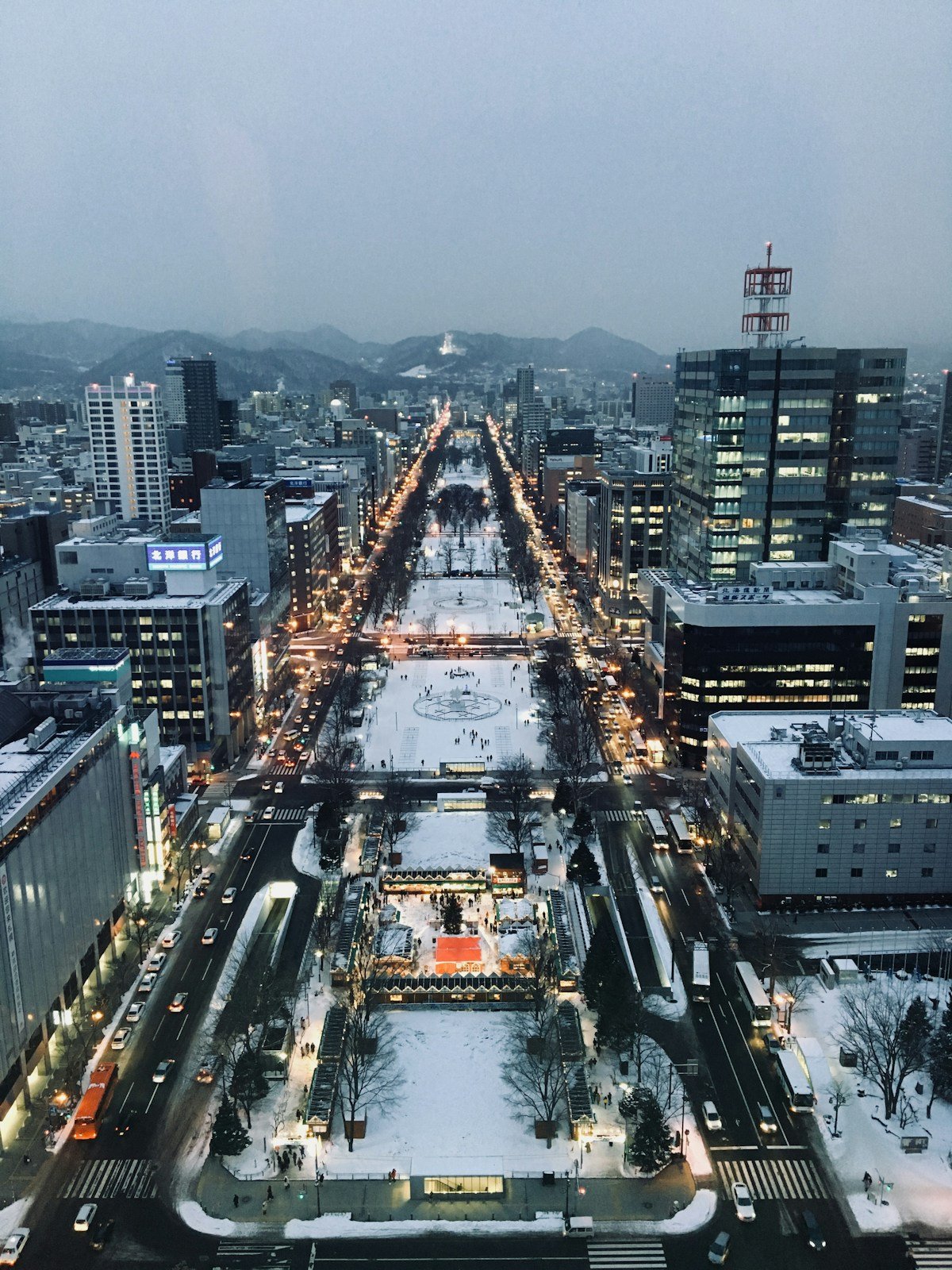
The 1.5-kilometre Odori Park bisects the city east-west, separating the “north” address numbering system from the “south” system. The park is the civic heart of Sapporo - a long strip of lawns, fountains, and flower beds flanked by the TV Tower at the east end and the Sapporo City Hall at the west. It serves as the main venue for seasonal events throughout the year: cherry blossom and flower festivals in spring, the Sapporo Summer Beer Garden (free entry, early July to mid-August, multiple beer brands’ stalls across different sections of the park), autumn food events, and most famously the Snow Festival in February.
Entry to the park is free. The adjacent streets are the city’s main commercial district.
Sapporo TV Tower
At the east end of Odori Park, the 147-metre TV Tower (observation deck at 90 metres, ¥720) provides the best aerial view of Sapporo’s grid street pattern - an effect you cannot fully appreciate at street level. The view extends to the mountains surrounding the city on clear days. The tower was built in 1957 and has become an inescapable part of Sapporo’s visual identity; the Snow Festival sculptures in Odori Park are best photographed from this elevation.
Opening hours: 9:00am–10:00pm (8:00am–10:00pm in summer).
Hokkaido University Campus
Hokkaido University, founded in 1876 as Sapporo Agricultural College under American agricultural scientist William S. Clark, maintains one of the most appealing university campuses in Japan. The main attraction for visitors is the ginkgo avenue (Icho Namiki) - a 380-metre corridor of mature ginkgo trees that turns uniformly golden in late October and early November, typically peaking in the last week of October. The effect of the yellow canopy above and the carpet of fallen leaves below is spectacular during peak colour.
Entry to the campus is free. The botanical garden on the southern edge of campus (¥420, closed Monday) has greenhouse collections and a small museum of Hokkaido natural history. Clark’s famous parting words - “Boys, be ambitious!” - are commemorated by a bronze bust near the main building.
Sapporo Beer Museum
Sapporo Beer was first brewed in 1876, making it Japan’s oldest beer brand, and the original red-brick brewery near Hokkaido University now operates as a museum documenting the brand’s 150-year history. Museum entry is free, though a tasting flight (¥200 per glass of draft) is worth adding. The museum traces the history of beer brewing in Hokkaido, the early export trade, and the growth of the Sapporo brand.
Adjacent to the museum is the Sapporo Beer Biergarten - a large, cheerful restaurant serving Genghis Khan (Jingisukan), the Sapporo specialty of mutton and vegetables cooked on a dome-shaped cast-iron grill over a central burner. The all-you-can-eat-and-drink course (¥3,900 for 90 minutes) includes unlimited draft beer alongside unlimited lamb, mutton, and vegetables. Loud, convivial, and very much a Sapporo institution.
Nijo Market
Nijo Market, a few minutes’ walk from the city centre, is the most accessible fresh seafood market in Sapporo. The covered stalls open from 6:00am and sell Hokkaido’s full seafood range: sea urchin (uni), salmon roe (ikura), snow crab (zuwaigani), scallops, king crab legs, squid, and fresh fish. Several stall restaurants serve seafood rice bowls (kaisendon) from early morning. Sea urchin don costs ¥2,000–¥4,000 depending on quality and quantity; a snow crab leg meal runs ¥3,000–¥6,000.
The market is at its busiest from 7:00am to 9:00am. Live snow crab is sold by weight at ¥3,000–¥8,000 per 100g (adult crabs weigh 400–800g). Stalls can cook and prepare crab for immediate consumption.
Sapporo Snow Festival
The Sapporo Snow Festival (Yuki Matsuri), held in early February, is one of the world’s most visited winter events, drawing approximately 2 million visitors from Japan and internationally. The main Odori Park site - 12 city blocks of snow and ice sculptures built by teams from around the world including military engineering units - is free to enter. Sculptures range from detailed miniature models of temples to life-size replicas of famous international buildings to abstract ice forms up to 15 metres tall.
The Tsudome community dome site (¥200) in the northern suburbs hosts snow activities including large snow slides, sculptures designed for physical interaction, and events for children. The Susukino site adds ice sculptures to the entertainment district.
Accommodation for the festival period (approximately February 4–11) books out 6 to 12 months in advance. Prices approximately double during festival week. If visiting without accommodation pre-booked, consider day-tripping from further-afield hotels in Otaru (40 minutes) or Niseko (2 hours).
Guided Sapporo city tours operate year-round beyond the Snow Festival season, covering Odori Park, Hokkaido University, and the Beer Museum as a compact half-day circuit for first-time visitors to Hokkaido.
Susukino and Ramen Yokocho
Susukino is Sapporo’s entertainment and nightlife district - the largest such district in Japan north of Tokyo - with hundreds of izakayas, bars, karaoke establishments, and restaurants compressed into a grid of streets immediately south of Odori Park.
Within Susukino, the Ganso Ramen Yokocho (Original Ramen Alley) is a narrow laneway of 17 tiny ramen shops, most with counter seating only, open from approximately 6:00pm to 3:00am. The alley dates from the 1950s and represents the older, intimate face of Sapporo ramen culture. Bowls cost ¥800–¥1,200. The Sapporo style is miso-based - thicker and richer than shoyu (soy) or shio (salt) broths - with yellow wavy noodles, corn, butter, and bamboo shoots as typical toppings. The butter melts into the hot miso broth as you eat, adding richness and a slight sweetness.
Hokkaido Shrine
The largest Shinto shrine in Hokkaido, Hokkaido Jingu sits in a forested area (Maruyama Park) in the western part of the city. The main buildings were rebuilt in 1953 and handle three million visitors per year across seasonal festivals. The most appealing time to visit is late April to early May when the surrounding park’s 1,400 cherry trees bloom - some of the last sakura in the country given Hokkaido’s northern latitude. The park area is free; the inner shrine precinct is free; the adjacent Maruyama Zoo charges ¥600.
Mt Moiwa
The ropeway to the summit of Mt Moiwa (531 metres) costs ¥2,100 return and terminates at an observation deck and restaurant with an unobstructed view over Sapporo’s grid and out to the mountains of Hokkaido on clear days. The night view from Mt Moiwa is designated one of Hokkaido’s three greatest night views - the grid pattern of lit streets with the mountains behind gives a distinctive panorama. The ropeway operates until 10:00pm, allowing for a proper night view experience.
Getting to Sapporo
From Tokyo by shinkansen: Hokkaido Shinkansen to Sapporo opened March 2024. Tokyo–Sapporo approximately 5 hours, ¥22,690 reserved. Faster services (Hayabusa) make the journey competitive with flying when airport transfer time is factored in.
From Tokyo by air: 1 hour 30 minutes to Shin-Chitose Airport from Haneda or Narita. Domestic fares from ¥8,000 (ANA/JAL) to ¥5,000 (budget carriers). From Shin-Chitose Airport to Sapporo Station: JR Rapid Airport train, 38 minutes, ¥1,150.
From Hakodate: JR Hokkaido Hakodate Limited Express, approximately 3 hours 30 minutes, ¥8,910.
Practical Information
Sapporo’s subway system covers the city’s main districts efficiently. The three lines intersect at Odori and Sapporo stations. A 1-day subway pass costs ¥830. Most major attractions are on or near the subway network. The city centre is extremely walkable in summer; in February during Snow Festival crowds, allow extra time for congestion on the Odori Park–Susukino corridor. Search hotels in Sapporo on Booking.com
Hokkaido vs Okinawa
Choosing between Japan’s northernmost and southernmost island regions? Our Hokkaido vs Okinawa comparison covers the key differences - skiing and snow versus tropical beaches - to help you decide.
Planning your trip to Sapporo? Tours and activities in Sapporo cover guided experiences, cultural immersion, and the top sights with local expertise. Flights to Japan vary significantly by season - compare early to secure the best fares. Sort out travel insurance for Japan before you book, and pick up an Airalo eSIM for Japan to have mobile data the moment you land.
Explore Sapporo
Things to do in Sapporo · Where to stay in Sapporo · Best restaurants in Sapporo · Sapporo food guide · Day trips from Sapporo
Sapporo is the main gateway to Hokkaido. For an overview of Japan’s northern island, see our Hokkaido region guide.
See also: Hokkaido region guide · Hakodate travel guide · Hokkaido itinerary · Japan in February · Japan in August · Hokkaido vs Okinawa · Long stay in Sapporo
Upcoming Events in Sapporo
Hatsumode - New Year Shrine Visits
Hatsumode 2027, 1–3 January. Japan's most important annual tradition - millions visit shrines and temples in the first three days of the new year.
- Sapporo Snow Festival
sapporo
Sapporo Snow Festival 2027, 5–11 February. Japan's most famous winter festival - ice and snow sculptures across three Sapporo sites. Free entry.
Nearby Cities
Frequently Asked Questions
- How do I get from Tokyo to Sapporo?
- The Hokkaido Shinkansen opened to Sapporo in March 2024, with the journey from Tokyo taking approximately 5 hours for ¥22,690 reserved. Flying from Tokyo (Haneda or Narita) to Shin-Chitose Airport is faster at around 1h30m, from ¥8,000 with budget carriers.
- When is the Sapporo Snow Festival?
- The Sapporo Snow Festival runs from approximately February 4 to 11 each year (exact dates vary). The main Odori Park site with large snow and ice sculptures is free. The Tsudome family site charges ¥200. Book accommodation 6 to 12 months in advance for festival period.
- What food is Sapporo famous for?
- Sapporo is famous for miso ramen (thicker, richer broth than Tokyo or Hakata styles), Genghis Khan mutton barbecue, fresh Hokkaido seafood (sea urchin, snow crab, salmon roe), and Sapporo beer. The Nijo morning market is the best place for fresh seafood.
- Is Sapporo worth visiting in summer?
- Yes. Summer (June to August) is excellent - temperatures are mild (20–25°C), beer gardens open in Odori Park, lavender blooms in Furano (2 hours south), and seafood quality remains high. It is the easiest time to visit Hokkaido outside of ski season.
- What is the best day trip from Sapporo?
- Otaru (40 minutes, ¥750) for the canal district and sushi is the most convenient. Niseko (2 hours by bus) for ski season (December to April). Noboribetsu (1h30m by JR) for hot springs. Jozankei Onsen (60 minutes by bus) for mountain hot springs year-round.
Book an experience
Top experiences in Sapporo
Explore the best tours and activities in Sapporo, with instant confirmation and free cancellation on most bookings.