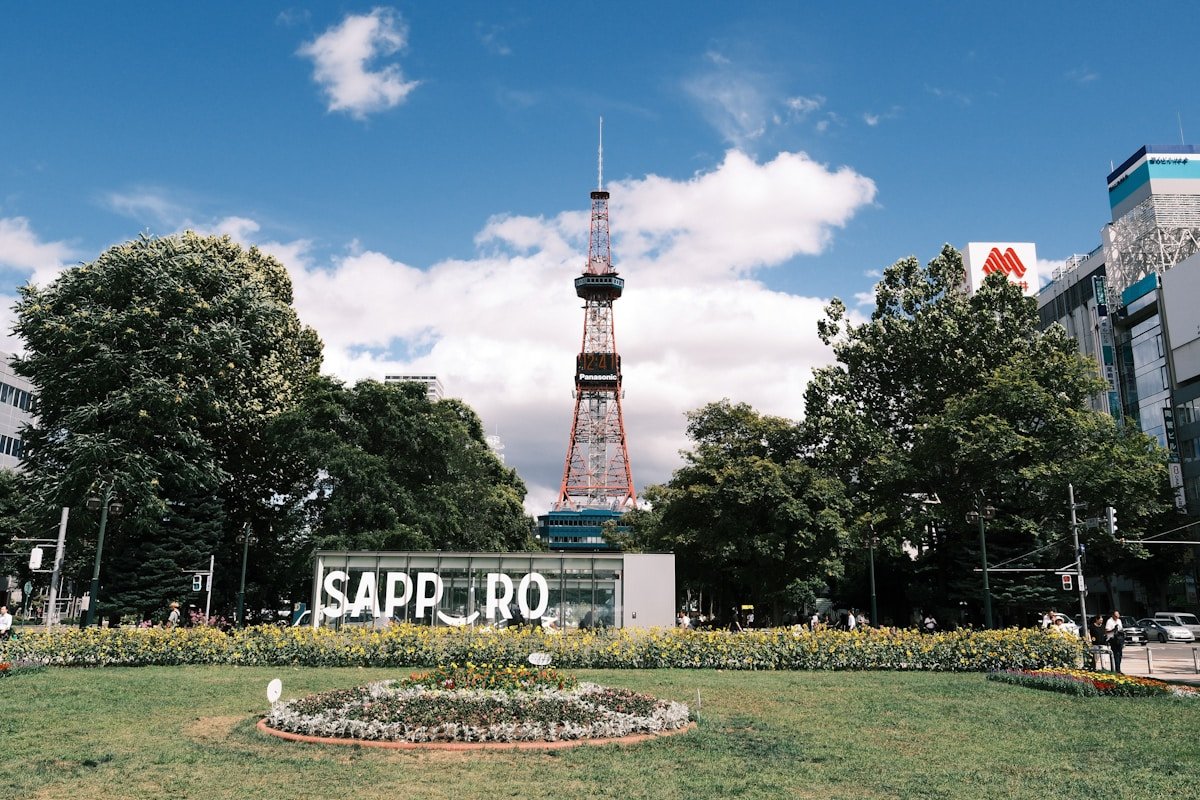
Sapporo offers more variety than most visitors expect from Japan’s fifth-largest city. The combination of excellent food culture, easy access to world-class skiing, outstanding Hokkaido produce, and the extraordinary scale of the Snow Festival make it a worthwhile destination in any season. These 18 activities represent the best the city and its surroundings offer.
1. Sapporo Beer Museum and Biergarten
The original Sapporo Beer brewery, built in 1890 from red Hokkaido brick, now houses a free museum tracing the brand’s history from its 1876 founding through to its current status as Japan’s oldest beer brand. The exhibits cover the history of German-style lager brewing in Hokkaido, the early Meiji-era export trade, and the brand’s evolution. Tasting drafts are ¥200 per glass.
The adjacent Biergarten is the more compelling destination: an all-you-can-eat-and-drink Genghis Khan course (¥3,900 for 90 minutes) combining unlimited lamb and mutton on dome grills with unlimited draft beer in a converted warehouse. Loud, convivial, and quintessentially Sapporo. The restaurant opens for lunch from 11:30am and evenings from 5:00pm; reservations are recommended for dinner in peak season.
2. Nijo Market Seafood Breakfast
Nijo Market opens at 6:00am and the freshest seafood arrives earliest. Counter restaurants within the market serve kaisendon (seafood over rice) from shortly after opening: uni (sea urchin) don costs ¥2,000–¥4,000 depending on quality and portion; ikura (salmon roe) don runs ¥1,500–¥2,500; combination bowls with both plus scallop reach ¥3,500–¥5,000.
The market is busiest from 7:00am to 9:00am when business is brisk and stalls are fully staffed. Arriving at 6:30am gives first pick. Snow crab legs are sold cooked at stalls for direct eating; a small claw (¥800–¥1,500) makes an excellent market snack. The market is a 10-minute walk from Sapporo Station or five minutes from the city centre.
3. Sapporo Snow Festival (Early February)
The Snow Festival’s main Odori Park site (free) comprises 12 city blocks of snow and ice sculptures built over approximately two weeks by professional teams, amateur groups, and military engineering units. Large-scale reproductions of international landmarks sit alongside abstract ice forms and character sculptures from Japanese pop culture. The sculptures are dramatically lit at night; the best photography window is from dusk (approximately 4:30pm in February) until the lights shut off at 10:00pm.
The Tsudome dome site (¥200) in Shinrin Park has interactive snow activities and a large snow slide. Book accommodation for festival week 6 to 12 months ahead; standard hotel rates double and availability collapses quickly.
4. Hokkaido University Ginkgo Avenue in November
The 380-metre Icho Namiki (ginkgo avenue) on the Hokkaido University campus turns uniformly golden in the last week of October and peaks through early November. The carpet of fallen yellow leaves beneath the bare-branched trees extends the colour display beyond peak canopy - visiting during the fall rather than at peak gives a different but equally striking composition for photography. Campus entry is free and open 24 hours.
5. Mt Moiwa Night View
The ropeway to Mt Moiwa (¥2,100 return) runs until 10:00pm, making it the best option for Sapporo’s night view. The observation deck at 531 metres looks over the complete grid of the city - the pattern of lit streets with the dark mountain horizon behind it is one of Hokkaido’s three designated great night views. The best approach is to take the last ropeway up around 9:30pm, spend 20 to 30 minutes at the deck, and return on the last gondola. Clear winter nights produce the most dramatic view.
6. Odori Park Seasonal Events
The park hosts major events in every season: Sapporo Lilac Festival (May), Sapporo Summer Festival beer garden (early July to mid-August, free entry with beer and food stalls from multiple Japanese breweries), Autumn Harvest Festival (September, Hokkaido produce market), and the Snow Festival in February. Even without major events, the park is the best place in the city for a lunch break or an evening walk, particularly the western sections near the Sapporo City Hall where crowds thin out.
7. Tanuki-koji Covered Arcade Shopping
Tanuki-koji, a 900-metre covered shopping arcade stretching south of the city centre, has operated since the 1870s and retains a retro atmosphere unusual among Japanese covered arcades, which tend toward the uniformly modern. Independent shops selling Hokkaido crafts, antiques, drugstore chains, izakayas, and specialty food retailers sit alongside each other. It is the best place in Sapporo for browsing without purchasing, and several good lunch restaurants operate within the arcade.
8. Ramen Yokocho at Night
The Ganso Ramen Yokocho (Original Ramen Alley) in Susukino opens at 6:00pm and operates to 3:00am - a narrow laneway of 17 competing ramen shops, each with counter seating of 8 to 12 people. Sapporo miso ramen (¥800–¥1,200) is the definitive local style: thick, opaque miso broth with wok-fried vegetables added, butter and corn on top, wavy egg noodles. Arriving between 7:00pm and 9:00pm gives the fullest experience, with all shops operating and the laneway buzzing. Late-night visits (after midnight) are quieter and occasionally involve conversation with chefs between customers.
9. Day Trip to Otaru
The 40-minute JR Rapid Airport train to Otaru (¥750) is the most rewarding day trip from Sapporo. The historic port town has a well-preserved canal district (Otaru Canal, free to walk), glass-blowing studios and music box workshops (demonstrations from ¥1,500), and Japan’s most celebrated sushi street - Otaru Sushiya-dori - where individual pieces start at ¥100 and a full meal of Hokkaido seafood sushi (tuna, sea urchin, scallop, salmon, crab) costs ¥2,000–¥5,000 per person. The canal district is atmospheric at dusk when the stone warehouses are lit.
10. Jozankei Onsen Day Trip
Jozankei hot spring resort sits in the mountains 30 kilometres south of Sapporo, accessible by bus from the city centre (60 minutes, ¥1,100 each way). The resort has approximately 15 ryokan and hotel complexes with onsen facilities; day-use access at the larger properties costs ¥1,000–¥1,500. The mountain stream valley setting is particularly good in autumn (late October for foliage) and in winter when the surrounding peaks hold snow.
11. Niseko Ski Resort (December–April)
Niseko, approximately 2 hours from Sapporo by direct bus (¥2,000–¥3,000 each way) or JR and bus connection, is widely considered one of the world’s best ski destinations for powder snow quality. The resort receives an average of 15 metres of snow per season - light, dry powder that accumulates in conditions rarely seen outside Hokkaido and northern Japan. Day lift passes cost ¥5,000–¥8,000 depending on which resort area (Grand Hirafu, Hanazono, An’nupuri, Niseko Village are the four linked zones). Ski and snowboard rental is available at the resort from approximately ¥4,500 per day.
12. Noboribetsu Onsen Day Trip
Noboribetsu, 1 hour 30 minutes by JR from Sapporo (limited express, ¥2,570), is Hokkaido’s most famous hot spring resort town. The Jigokudani (Hell Valley) volcanic landscape - boiling mud pools, sulphurous vents, and steaming rivulets from the hillside above town - is free to walk through. Day-use onsen at the large resort hotels (Dai-ichi Takimotokan, Grand Hotel) costs approximately ¥1,000 and gives access to dozens of pools with different mineral compositions on the same property. The combination of the hell valley walk and a 2-hour bath is a complete half-day.
13. Hokkaido Shrine Woodland Visit
Hokkaido Jingu, in the forested Maruyama area west of central Sapporo (subway to Maruyama-koen, 15 minutes from Odori), is the largest and most important shrine in Hokkaido. The forested approach through Maruyama Park is the most atmospheric in the city. Cherry blossom season (late April to early May) brings pink canopies over the approach paths - among the last sakura in Japan due to Hokkaido’s northern latitude. Entry is free.
14. Sapporo Art Park
The Sapporo Art Park (¥700) in the Jozankei foothills south of the city combines an indoor contemporary art museum with an outdoor sculpture park of approximately 60 works set in 40 hectares of forest. The outdoor collection includes works by international sculptors displayed among the trees with views over the surrounding hills. Best visited in summer or early autumn; snow covers much of the outdoor sculpture in winter. Access by bus from Sapporo Station (50 minutes, ¥480).
15. Blue Pond in Biei Day Trip
The Blue Pond (Aoike) in the Biei area of central Hokkaido - a body of water with an intense turquoise colour caused by aluminium hydroxide particles suspended from volcanic runoff - is one of the most-photographed natural phenomena in Japan. Day-trip access from Sapporo requires JR to Biei (2 hours, ¥2,590) and local bus or taxi to the pond. Entry is free; the pond is most vivid in summer and autumn. Winter access involves a snowshoe or ski tour across the frozen surface - a different but equally dramatic experience.
16. Furano Lavender Fields (July)
Furano, 2 hours from Sapporo by JR and bus (approximately ¥3,000 return), hosts Japan’s most celebrated lavender fields - primarily at Farm Tomita, where entry is free and the lavender peak typically falls in the first two weeks of July. In addition to lavender, the farm grows other coloured flowers (poppies, salvia, marigold) for a striped field effect visible on the hillside. The area also produces Hokkaido dairy products; soft ice cream in lavender flavour at the farm costs ¥400.
17. Historical Village of Hokkaido
The open-air Historical Village of Hokkaido (¥800) in Nopporo Forest Park, 30 minutes from central Sapporo, preserves approximately 60 original buildings from the Meiji and Taisho periods (1868–1926) relocated from across Hokkaido. Buildings include farmhouses, a herring fishing settlement, merchant townhouses, a railway station, and public buildings from the pioneer period. A horse-drawn cart tours the site in summer (included in admission). A good option for a half-day, particularly in winter when the buildings are snow-covered.
Book ahead for popular experiences: Tours and activities in Sapporo include guided options, skip-the-line tickets, and immersive cultural experiences.
18. Sapporo Day Trip Comparison Table
| Destination | JR/Bus Time | Approximate Cost | Best Season | Key Attraction |
|---|---|---|---|---|
| Otaru | 40 minutes JR | ¥1,500 total | Year-round | Canal + sushi |
| Jozankei | 60 minutes bus | ¥2,200 total | Oct–Mar | Mountain onsen |
| Noboribetsu | 90 minutes JR | ¥5,140 total | Year-round | Hell Valley + baths |
| Niseko | 2 hours bus | ¥8,000–¥12,000 | Dec–Apr | Powder skiing |
| Furano | 2 hours JR+bus | ¥6,000 total | July | Lavender fields |
| Biei Blue Pond | 2.5 hours JR+bus | ¥5,180 total | Jun–Oct | Azure pond |
| Sapporo Art Park | 50 minutes bus | ¥1,660 total | May–Oct | Forest sculpture |
| Historical Village | 30 minutes bus | ¥1,600 total | Year-round | Pioneer buildings |
Where to stay: Search hotels in Sapporo on Booking.com
See also: Sapporo travel guide · Where to stay in Sapporo · Best restaurants in Sapporo · Day trips from Sapporo · Hokkaido itinerary · Hokkaido region guide