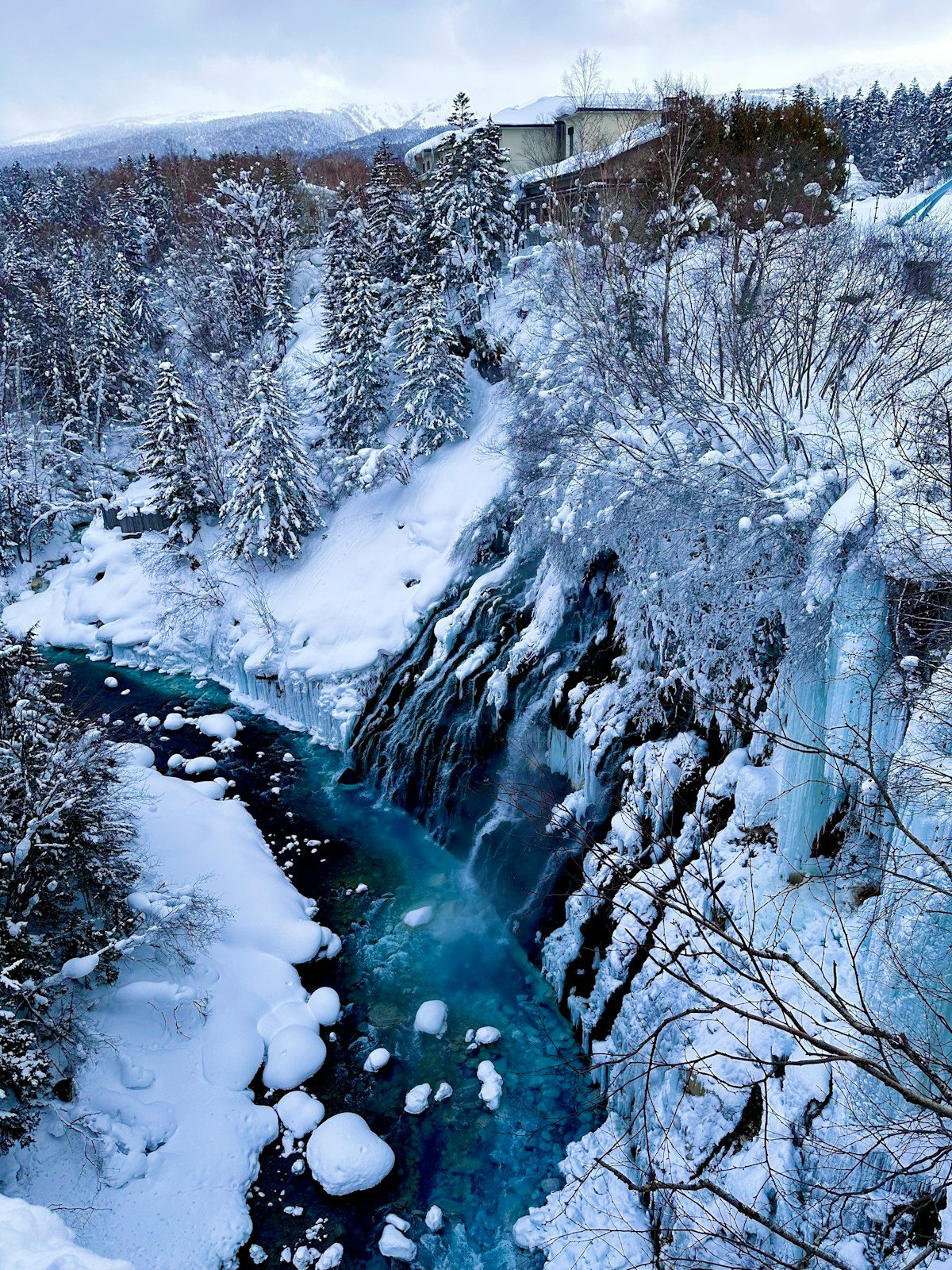
Hokkaido is Japan’s least crowded and most spatially generous island. Where the rest of the country layers history and density into every kilometre, Hokkaido gives you farmland rolling to the horizon, mountains with reliable powder snow, and coastlines where brown bears fish for salmon. Coming from Honshu it feels like a different country - which historically it was, as settled Japanese territory only from the 1870s.
This itinerary covers 9 days and is designed to move efficiently from Sapporo through the central highlands to Shiretoko, with flexibility to extend or cut based on season. Renting a car in Japan from Day 3 is strongly recommended for everything outside Sapporo.
Overview
| Days | Base | Highlights |
|---|---|---|
| 1–2 | Sapporo | Snow Festival / Ramen Alley / seafood market |
| 3–5 | Furano / Biei | Lavender fields, Blue Pond, Asahiyama Zoo |
| 6–7 | Shiretoko | Brown bears, drift ice, Shiretoko Five Lakes |
| 8–9 | Lake Akan / Kushiro | Marimo spheres, Ainu culture, crane reserve |
Daily budget per person (accommodation, food, transport, entry fees): Search hotels in Sapporo on Booking.com
Rental car costs: from approximately ¥6,000 per day for a compact car from Sapporo, not including fuel or expressway tolls.
Days 1–2: Sapporo
Fly direct from Tokyo Haneda or Narita to New Chitose Airport (1h30min, ¥5,000–¥15,000 on budget carriers as of 2026). The airport express train reaches Sapporo Station in 36 minutes (¥1,290 as of 2026).
Sapporo is a planned grid city and remarkably easy to navigate. The TV Tower at the east end of Odori Park is the geographic anchor; the subway covers the rest. Stay in the Odori or Susukino area for the most convenient access to food and nightlife.
Hotel picks: Mid-range - Dormy Inn Sapporo Annex (around ¥10,000/night, rooftop onsen included). Budget - Sapporoguesthouse Untapped Hostel (dorms from ¥3,500). Comfort - JR Tower Hotel Nikko Sapporo (from ¥25,000, connected directly to Sapporo Station).
Day 1 - Market morning, ramen evening. Nijo Market (Niijo Ichiba), open from 6am, is a covered seafood market two blocks from Odori. Crab sashimi plates from ¥2,000; sea urchin on rice from ¥1,500; fresh scallops grilled to order. More serious seafood shopping is at the Jōgai Market (Curb Market) nearby. Afternoon: Sapporo Beer Museum (free to walk, ¥500 for tasting, open 11am–6pm) for a history of Japan’s oldest brewery plus Genghis Khan (jingisukan) mutton at the attached beer hall. Evening: Ramen Yokocho in Susukino - six small shops in one alley, each with a regional ramen variation; bowls ¥950–¥1,400.
Day 2 - Snow Festival or city day. If visiting in early February, the Sapporo Yuki Matsuri (Snow Festival) fills Odori Park with sculptures up to 15 metres tall - some are illuminated until 10pm. The festival runs for one week (check exact dates each year; entries announce in January). At other times of year: Moerenuma Park (designed by Isamu Noguchi, free entry, large geometric landforms and a glass pyramid), and the Sapporo Art Museum (entry ¥800, as of 2026).
Days 3–5: Furano and Biei
Pick up a rental car at Sapporo Station or Chitose Airport on Day 3 morning. The drive to Furano takes about 2h via National Route 38. Alternatively, the JR Furano Line from Asahikawa to Furano takes 1h20min (¥1,290, JR Pass valid) - useful if you prefer to skip the car for the first two nights, though you will need one for Biei.
Furano lavender fields peak mid-July to early August. Farm Tomita (free entry, open late June to mid-August) is the most famous: rows of lavender, poppy, and salvia in blocks across sloping farmland. The farm shop sells lavender soft serve (¥500), lavender beer, and cosmetics. Even outside lavender season, Furano’s fields have rotating crops - sunflowers in August, cosmos in September. The Furano Cheese Factory (free) runs 20-minute tours and has a pizza restaurant (from ¥1,200) using local milk.
Stay two nights in Furano: Furano Natulux Hotel (from ¥14,000/night) is reliable mid-range; New Furano Prince Hotel (from ¥20,000/person with dinner) has a ski-in/ski-out location in winter. Search hotels in Furano on Booking.com
Biei is 30 minutes north of Furano. The rolling patchwork farmland - wheat, beet, soy, corn in geometric blocks - was photographed obsessively for 1980s beer and calendar campaigns, and the images are familiar even to people who’ve never been to Japan. The Blue Pond (Aoike) near Shirogane Onsen gets its turquoise colour from aluminium hydroxide particles; no public transport reaches it directly (taxi from Biei station ¥2,000 one way, or cycle the 12 km). Patchwork Road east of Biei town follows the ridge between farms with views toward the Tokachi mountain range.
Asahiyama Zoo in Asahikawa (40 minutes north of Biei) is Japan’s most successful regional zoo - it reversed near-closure in the 1990s by building transparent tunnels through penguin enclosures and allowing polar bears to plunge dive into glass-walled pools directly overhead. Entry ¥1,000 (as of 2026). Opens 9:30am daily.
Days 6–7: Shiretoko
Drive from Biei to Shiretoko: approximately 5h30min via Abashiri. Most visitors drive at least as far as Abashiri and fly or bus from there. Alternative: JR Limited Express Okhotsk from Asahikawa to Shiretoko-Shari Station (3h50min, ¥8,870 reserved, JR Pass valid) then bus to Utoro (50 minutes, ¥1,000 extra).
Shiretoko is UNESCO World Heritage listed for the convergence of its marine and terrestrial ecosystems. The Shiretoko Peninsula juts northeast into the Sea of Okhotsk, and the interaction between drift ice from Russia (January–March), nutrient-rich upwellings, and the salmon rivers creates a food chain that supports the highest density of brown bears in Japan.
Shiretoko Five Lakes (Shiretoko Goko): five glacial lakes connected by elevated wooden boardwalks through virgin forest. Entry ¥250 per person during bear season (May to June, as of 2026) when bear activity is high and guided walks are recommended. The trail system is free outside regulated periods. Allow 90 minutes for the full loop. Entrance is at the Shiretoko Goko Field House (30 minutes by car from Utoro).
Wildlife boat cruise: Tour boats from Utoro Harbour travel around the cape to the inaccessible northern part of the peninsula - waterfall cliffs, sea eagles, fur seals on rocks, and brown bears in summer visible from the water. Standard tours run 2h30min for approximately ¥8,000–¥10,000 per person; longer premium tours reach the very tip of the cape. Book at Utoro’s tourist information office or via Shiretoko Sightseeing Boats.
Drift ice (ryuhyo) accumulates from mid-January to mid-March. Walking on drift ice requires a guide (dry suit provided, approximately ¥8,000 for 2h). The Garinko Ship II icebreaker from Monbetsu (1h west of Abashiri) costs ¥4,000 for a 1h cruise.
Where to stay in Shiretoko: Hotel Chinohate in Utoro (from ¥18,000/person with dinner) has outdoor onsen with Sea of Okhotsk views. Shiretoko Grand Hotel Kitakobushi (from ¥25,000/person) is the largest resort in the area with multiple onsen floors. Search hotels in Shiretoko on Booking.com
Days 8–9: Lake Akan and Kushiro
Drive south from Shiretoko to Lake Akan: approximately 2h via Akan Mashu National Park. This leg passes Lake Mashu (one of the clearest lakes in the world; caldera lake with no visible inlet or outlet) and Lake Kussharo (Japan’s largest caldera lake, with accessible lakeside hot spring footbaths).
Lake Akan town (Akanko Onsen) is built around a traditional Ainu cultural village and the lake’s marimo - spherical algae balls unique to a few lakes worldwide. The Akan Marimo Exhibition Centre and Aquarium on the lakefront (¥480 entry, as of 2026) explains the biology; glass-bottomed boat tours show them in situ (¥1,650 for 30 minutes). The surrounding area is one of the best places in Japan to experience Ainu culture: the Ikor cultural performance (¥1,080, evening shows) and the Iku-Iku Ainu Craft shops sell authentic carved woodwork.
Kushiro Shitsugen (Kushiro Marsh): Japan’s largest wetland and one of the world’s largest concentrations of Japanese cranes (tancho). The Tancho Observation Centre (free, 9am–5pm) overlooks the marsh; winter (January–March) brings the largest flocks, when up to 600 cranes gather near feeding stations. The Red-Crowned Crane Natural Park in Tsurui village feeds cranes daily at 9am (¥500 entry). Search hotels in Kushiro on Booking.com
Return: Fly from Kushiro Airport to Tokyo Haneda (1h30min, from ¥7,000 on budget carriers) or drive back to Sapporo (4h) and fly from Chitose.
Book the essentials: Tours and activities in Hokkaido cover the island’s top experiences. Flights to Japan - Sapporo’s New Chitose Airport has connections from Tokyo and international routes. The Japan Rail Pass covers JR Hokkaido trains. Travel insurance for Japan is essential for winter travel.
Transport Summary
Estimated intercity costs for this itinerary, as of 2026:
- Tokyo–Sapporo flight: ¥7,000–¥15,000 each way
- Sapporo–Furano (JR): ¥4,810 (or car fuel, approx ¥2,500)
- Furano–Asahikawa (JR, for zoo): ¥650
- Asahikawa–Shiretoko-Shari (JR Limited Express): ¥8,870 reserved
- Utoro bus (round trip): ¥2,000
- Shiretoko–Kushiro (rental car, ~200km): fuel approximately ¥3,500
- Kushiro Airport–Tokyo: ¥7,000–¥15,000
Rental car for Days 3–9: approximately ¥42,000–¥50,000 including insurance and basic tolls.
For more on getting around Hokkaido, see our Hokkaido region guide. Planning a longer Japan trip? The two-week Japan itinerary pairs Hokkaido with the Honshu Golden Route. If you are arriving in Hokkaido via the Shinkansen from Tokyo, a night in Hakodate is worth adding - tours in Hakodate cover the morning market, Goryokaku star fort, and the famous night view from Mount Hakodate.
See also: Sapporo travel guide · Hakodate travel guide · Hokkaido region guide · Hokkaido vs Okinawa · Snow monkeys at Jigokudani · Japan Rail Pass guide · Two weeks in Japan
Book Your Trip
Flights — search and compare on Aviasales eSIM — stay connected with Airalo Travel insurance — get covered with EKTA Airport transfers — book with Kiwitaxi Car rental — compare with GetRentaCar Tours and activities — browse GetYourGuide