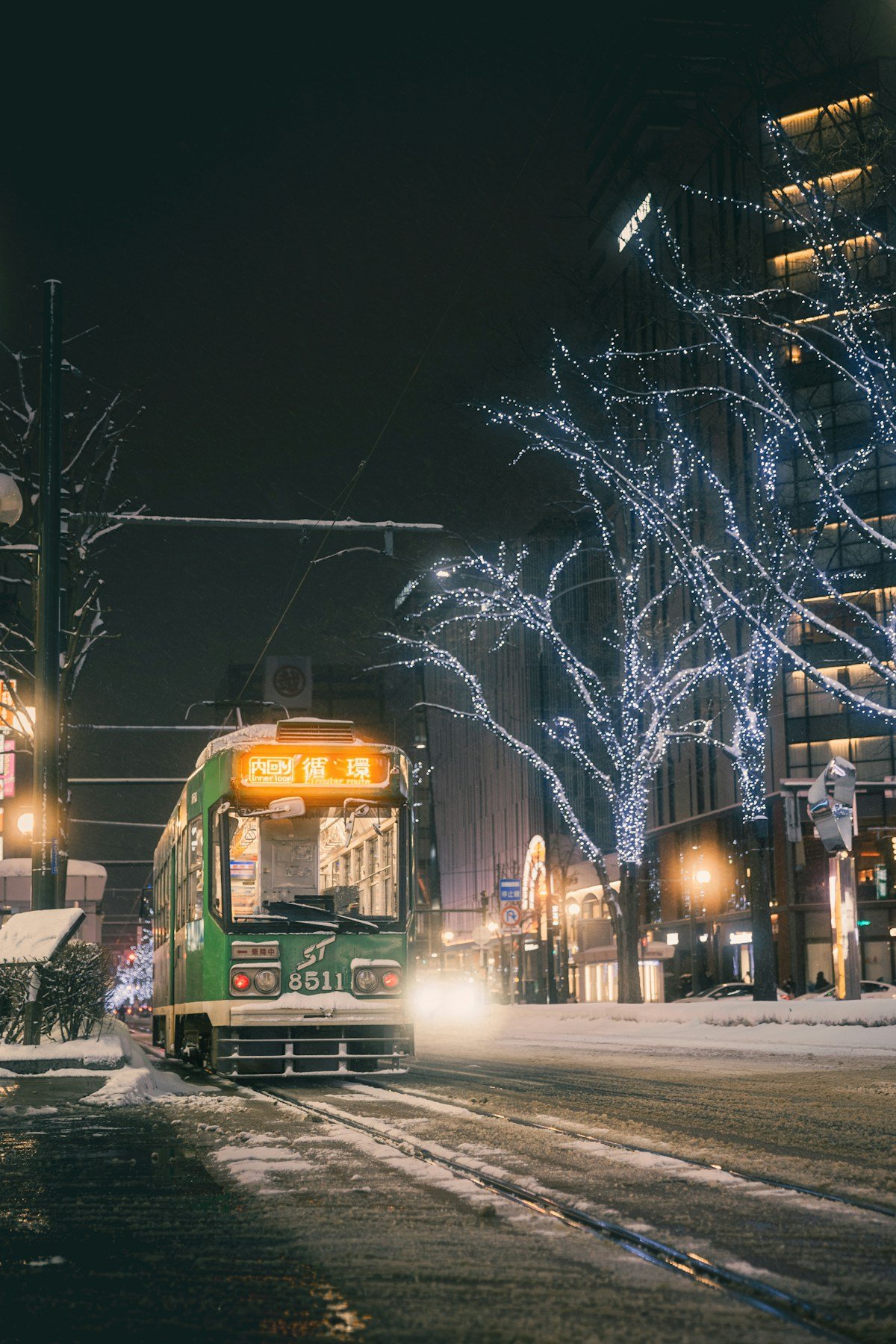
Hokkaido is Japan’s northernmost main island and its least densely populated. Where the rest of Japan runs on rail and dense urban clusters, Hokkaido runs on space. The island is roughly the size of Austria, with a population a quarter that of Tokyo. In summer it has Japan’s most open farmland landscapes, with lavender fields and blue skies that look nothing like the rest of the country. In winter it has the world’s deepest powder snow.
Sapporo is the regional hub - a proper city with an international airport, direct Shinkansen connection from Tokyo (opening 2030, currently serviced by a combination of Shinkansen and limited express), and a food culture built around seafood, miso ramen, and the island’s own dairy industry.
Sapporo
Sapporo was planned as a Western-style grid city in the 1870s, which makes it unusually easy to navigate by Japan’s standards. The city centre is walkable, the subway covers the main areas, and orientation is straightforward.
The Sapporo Snow Festival (Sapporo Yuki Matsuri) runs for a week in early February and fills Odori Park and the Susukino entertainment district with enormous snow and ice sculptures - some reaching 15 metres. The largest sculptures take weeks to build and are illuminated at night. Attendance runs to around 2 million visitors across the week; accommodation books out early.
Sapporo Brewery is Japan’s oldest beer brewery, operational since 1876. The brewery museum (free to walk through, ¥500/$3.30 for guided tour) covers the history of Japanese beer, and the attached beer hall serves Sapporo Black Label on draught with Genghis Khan (jingisukan) - mutton and vegetables grilled on a domed iron plate, the region’s signature dish.
Hokkaido miso ramen originated in Sapporo: the broth is richer and heavier than Tokyo shoyu ramen, with corn and butter added - a practical evolution for cold northern winters. Ramen Yokocho (“Ramen Alley”) in Susukino is the traditional place to try it; individual bowls cost ¥900–1,400 ($6–9.30).
Hokkaido seafood markets are worth a full morning: Nijo Market in Sapporo city centre and the Curb Market (Jōgai Ichiba) sell fresh crab, sea urchin (uni), salmon roe (ikura), and scallops at prices that undercut the rest of Japan.
From Tokyo: Currently requires Shinkansen to Shin-Hakodate-Hokuto (4h10min, JR Pass valid) then limited express to Sapporo (3h50min, JR Pass valid). Total journey 8h. The Hokkaido Shinkansen extension to Sapporo is under construction and scheduled for completion around 2030. Air from Tokyo (Haneda or Narita to Chitose) takes 1h30min; flights run frequently and fares are competitive.
Niseko
Niseko is one of the world’s top ski destinations, and its reputation rests entirely on snow quality. The annual snowfall averages around 15 metres of Siberian cold powder - dry, light, and deep. The resort covers four interconnected areas on the slopes of Mount Niseko-Annupuri, with runs from beginner to expert.
Ski season runs December to late March. Peak period (Christmas to February) brings significant international crowds and prices: lift passes cost around ¥8,500 ($57) per day; rental equipment ¥5,000–8,000 ($33–53) per day. The Hirafu village base has become international in character with a good range of restaurants, cafés, and bars - less traditionally Japanese than most ski resorts.
Off-season Niseko is quieter and cheaper. July and August see hikers and mountain bikers; rafting on the Shiribetsu River runs from May. The hot spring at Niseko Grand Hotel and several smaller onsen buildings operate year-round.
From Sapporo: 2h by bus (¥2,060/$14) or 2h30min on the JR line to Kutchan station then taxi (JR Pass valid for the train section). The bus is usually more convenient.
Furano and Biei
Furano sits in central Hokkaido in a wide agricultural valley. From mid-July to early August, the lavender fields at Farm Tomita are the most photographed landscape in Hokkaido - rows of purple lavender across rolling hills, with mountains behind. Entry is free. The farm also sells lavender products, soft serve ice cream, and fresh produce.
Farm Tomita opens late June and runs through August. Furano’s other attractions are more seasonal: cheese and wine factories (the local Furano Wine is produced from Hokkaido grapes and available for tasting free), a ski resort popular with locals in winter.
Biei is 30 minutes north of Furano by train and has a different landscape: rolling patchwork farmland with blue ponds and lone trees on hillcrests used in calendars and beer advertisements across Japan. The Blue Pond (Aoike) near Shirogane Onsen gets its vivid turquoise colour from aluminium hydroxide particles - the colour shifts with weather and season. Entry free, short walk from the car park. No public transport runs directly there; rent a bicycle in Biei or take a taxi.
From Sapporo: 2h by JR Limited Express Furano to Furano (¥4,810/$32; JR Pass valid).
Shiretoko Peninsula
Shiretoko is UNESCO World Heritage listed as one of the few places where the ocean ecosystem meets the land ecosystem in a single functioning system - drift ice brings nutrients from the Sea of Okhotsk in winter, feeding the marine food chain that supports brown bears, eagles, and sea mammals through summer.
Brown bears (Higuma) are genuinely common on the peninsula - visible from roads and hiking trails, particularly around salmon-spawning streams in autumn. Tour operators run wildlife boat trips around the cape (¥8,000–10,000/$53–67), which is the only way to access the remote northern sections. The Shiretoko Five Lakes trail (¥250/$1.70 permit during bear season, May–July) gives access to the crater lakes through the forest.
Drift ice (ryuhyo) accumulates off the coast from January to March and can be walked on (with a guide) or viewed from the Abashiri or Utoro harbours. Icebreaker cruises from Abashiri cost around ¥3,300 ($22).
From Sapporo: 6h by JR Limited Express to Shiretoko-Shari station, then bus to Utoro (JR Pass valid for train section, bus extra ¥1,000/$6.60). This is a long journey; most people fly to Memanbetsu Airport near Abashiri (1h from Sapporo, then 1.5h bus to Shiretoko).
Getting Around Hokkaido
Hokkaido’s distances require careful planning. Trains are slower and less frequent than in Honshu; some scenic areas require buses or rental cars.
The Hokkaido Rail Pass (5/7-day, ¥22,000–27,000/$147–180) covers JR trains throughout Hokkaido including limited express services to Furano and Shiretoko-Shari. Rental cars are the most flexible option for the central and eastern areas; Hokkaido’s roads are wide and uncrowded. Search hotels in Hokkaido on Booking.com
For routes, passes and airport links in more detail, see our guide to getting around Hokkaido.
Best Season
Winter (December–March): The priority season for skiing and Snow Festival. Niseko powder snow is best January–February. Temperatures in Sapporo drop to -10°C; Shiretoko coast has drift ice by late January.
Summer (June–August): Lavender and open farmland landscapes. Temperature 20–25°C in most of Hokkaido, significantly cooler than the rest of Japan. Mosquitoes are an issue in forested areas.
Autumn (September–October): Foliage is excellent across the entire island, particularly in Daisetsuzan National Park. Brown bear activity is high around salmon rivers.
Spring (April–May): Late cherry blossoms (Sapporo peaks around late April). Many mountain trails and roads reopen.
Plan your Hokkaido visit: Tours and activities across Hokkaido cover the region’s top experiences. Flights to Japan - compare early, especially for travel to regional airports outside Tokyo. Travel insurance for Japan and an Airalo eSIM are worth sorting before you fly.
City Guides for Hokkaido
Detailed city guides: Sapporo · Hakodate
Related guides: Hokkaido itinerary · Hokkaido vs Okinawa · Best time to visit Japan
See also: Sapporo travel guide · Hakodate travel guide · Things to do in Sapporo · Japan in February · Japan in August · Japan Rail Pass guide · Hakodate long-stay guide
To plan the rest of the trip, read our guides to the best things to do in Hokkaido and where to stay in Hokkaido.