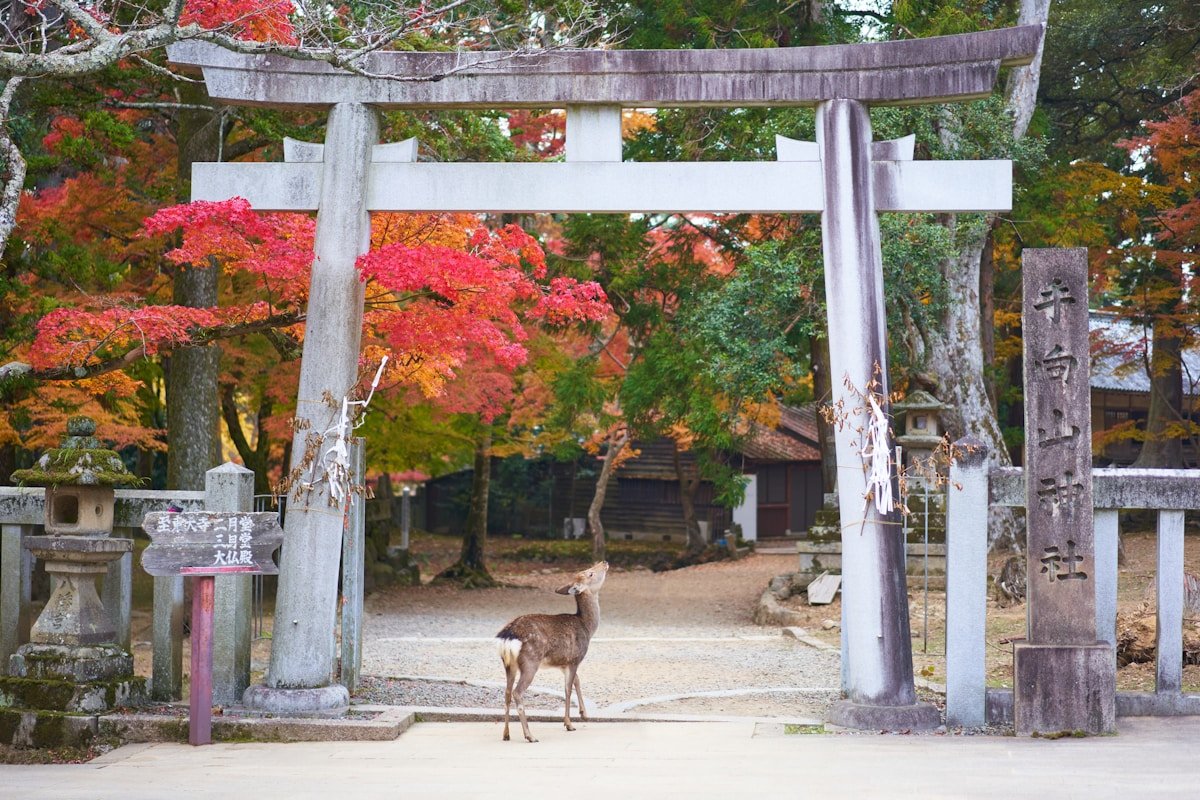
Nara and Kamakura are Japan’s two most popular ancient capital day trips - Nara from the Kyoto–Osaka axis, Kamakura from Tokyo. Both feature outsized Buddhist statues, sacred deer (though Kamakura’s are less interactive), and an atmosphere of genuine historical weight. Both can be done in a day but reward more time. Here’s how to choose - or combine - them.
Quick Verdict
| Category | Nara Wins | Kamakura Wins |
|---|---|---|
| Free-roaming deer | Yes (national treasure) | - |
| Giant Buddha | Todai-ji (indoor) | Kotoku-in (outdoor) |
| Variety of temples | - | Yes (19+ significant) |
| Forest walking trails | - | Yes (Hiking Trail) |
| UNESCO World Heritage | Yes (8 sites) | - |
| Coastline nearby | - | Yes (Enoshima) |
| Day trip from Kyoto/Osaka | Yes | - |
| Day trip from Tokyo | - | Yes |
| Half-day feasibility | Yes | - (better with full day) |
| Accessibility | Excellent | Excellent |
Nara wins for its unique deer park experience and UNESCO density. Kamakura wins for variety, trails, and coastal extension to Enoshima.
Getting There
Nara from Kyoto: 45 minutes by Kintetsu Limited Express (approximately ¥760 one way) or 45 minutes by JR Nara Line (covered by JR Pass, approximately ¥740). The Kintetsu express is slightly faster and runs more frequently; both arrive at Nara station, a 5-minute walk from the deer park edge.
Nara from Osaka: 40 minutes by Kintetsu Osaka-Namba to Kintetsu Nara (approximately ¥680 one way on the rapid express). A straightforward, very fast journey.
Kamakura from Tokyo: 55 minutes by JR Yokosuka Line from Tokyo Station (covered by JR Pass, approximately ¥940 one way). The JR Enoshima-Kamakura Free Pass (approximately ¥1,520 from Shinjuku) combines Odakyu Line travel and unlimited local train use - worth it if you plan to visit Enoshima too.
Nara’s Main Attractions
Nara was Japan’s capital from 710 to 784 CE - a brief but significant period when Buddhism became the official religion and the city’s great monuments were built. The core attractions cluster around Nara Park, a 502-hectare public park where approximately 1,200 sika deer roam.
Todai-ji (Great Eastern Temple) houses the world’s largest bronze Buddha - 15 metres tall, seated, dating to 752 CE. Entry to the Great Buddha Hall (Daibutsuden) costs ¥600 as of 2026. The hall itself is impressive in scale: even having been rebuilt in 1709 at two-thirds of the original size, it remains the world’s largest wooden building. Arrive before 10am to see it without tour group crowds.
Kasuga Grand Shrine (entry to inner precincts ¥500) is one of Japan’s most important Shinto shrines, established in 768 CE. The approach path through the deer park is lined with 3,000 stone lanterns; at the February Lantern Festival (Mantoro), all are lit simultaneously. The shrine complex is a UNESCO World Heritage Site.
Kofuku-ji - a five-storey pagoda visible from the station - is free to admire from outside; the National Treasure Museum (entry ¥700) holds the greatest concentration of Japanese Buddhist sculpture in a single location.
Naramachi is Nara’s preserved merchant district, a 10-minute walk south of Kofuku-ji - narrow lanes of traditional machiya townhouses converted into galleries, craft shops, and matcha cafés. Naramachi Koshi-no-ie is a well-preserved merchant house with free entry.
Kamakura’s Main Attractions
Kamakura served as Japan’s de facto political capital during the Kamakura shogunate (1185–1333 CE). The city’s geography - ringed by forested hills and open to Sagami Bay - gave it natural defensive value and now makes it one of Japan’s most pleasant walking cities.
Kotoku-in (the Great Buddha) is Kamakura’s most iconic sight: a 13.4-metre outdoor bronze Amida Buddha dating to 1252 CE. Entry ¥300 (the hollow interior can be entered for an additional ¥20). Arrive before 9am to photograph without crowds.
Engaku-ji and Kencho-ji are the two most significant Zen temples - both near Kita-Kamakura station (one stop north of Kamakura on the JR Yokosuka line). Engaku-ji (entry ¥500) has the most beautiful main gate; Kencho-ji (entry ¥500) is Japan’s oldest official Zen training monastery with an exceptional garden behind the main hall.
Tsurugaoka Hachimangu - Kamakura’s main shrine - sits at the top of Wakamiya-oji, the central boulevard from the station. Entry is free; the elevated main hall has views over the city and bay.
Hokoku-ji (entry ¥300) is Kamakura’s bamboo grove temple - less visited than Arashiyama’s famous grove in Kyoto, quieter, and arguably more atmospheric for it. The adjoining teahouse serves matcha (approximately ¥800 with sweet).
The Kamakura Hiking Trail connects the major temples through forested ridgelines - the Daibutsu trail from Kotoku-in to Kita-Kamakura takes approximately 2 hours and covers excellent spring and autumn foliage.
Enoshima - a tidal island connected by bridge to the mainland - is 30 minutes by Enoden tram from Kamakura station. The island’s Sea Candle lighthouse tower (entry approximately ¥500), cave sea caves (¥500), and numerous seafood restaurants make it a natural half-day extension.
Food
Nara’s food highlight is kakinoha-zushi - mackerel or salmon pressed sushi wrapped in persimmon leaves, a preservation technique from Nara’s landlocked mountain tradition. It’s available at takeaway stalls near Todai-ji from approximately ¥800 for five pieces. Matcha ice cream and kibidango (mochi-style dumplings coated in roasted barley flour) are the park snacks sold from carts throughout the deer area.
Kamakura’s location on the coast makes fresh seafood the standout. Shirasu (whitebait) is the city’s signature ingredient - served raw over rice (nama shirasu-don) or lightly cooked (kama-age shirasu-don), from approximately ¥1,200–1,600 at restaurants near the beach in Yuigahama. The Komachi-dori shopping street (pedestrian lane from Kamakura station to Tsurugaoka Hachimangu) has the best concentration of snack shops: cream puffs, croquettes, and matcha soft serve from ¥300–600.
Accommodation
Neither city is typically an overnight destination, but both reward staying.
Nara’s best accommodation is near the park: Nara Hotel (a 1909 Meiji-era building with imperial history, from approximately ¥35,000) is the classic choice. Guesthouse Nara Backpackers (from ¥3,200 dorm) is the budget pick, centrally located near Naramachi.
Kamakura overnight options are limited but atmospheric. The Kamakura Guesthouse (from approximately ¥4,500 dorm) is walking distance from the station. Hotel Metropolitan Kamakura (from approximately ¥20,000) opened in 2021 and offers the best mid-range option in the city centre.
Ready to book? Compare flights to Japan - prices and routes vary significantly depending on your departure city. Tours and activities across Japan cover both destinations covered in this comparison. Travel insurance for Japan is worth arranging before you commit to bookings.
Which to Visit?
If you’re based in Kyoto or Osaka: visit Nara - it’s the natural extension of your Kansai base and among the most distinctive half-day experiences in Japan.
If you’re based in Tokyo: visit Kamakura - it offers more variety and physical activity than most Tokyo day trips, and the Enoshima extension adds a coastal dimension.
If your Japan trip covers both Tokyo and Kyoto: visit both. They don’t overlap and each does something the other cannot.
See also: Nara travel guide · Things to do in Nara · Kamakura travel guide · Things to do in Kamakura · Kansai region guide · Kanto region guide · Japan Golden Route · Hakone vs Nikko · Osaka vs Kyoto · Tokyo vs Osaka
Plan Your Trip
- Flights - Find the best fares to Japan
- Hotels - Hotels in Nara · Hotels in Kamakura
- Travel Insurance - Get covered before you go
- eSIM - Stay connected from landing
- Car Rental - Compare prices across providers
- Tours and activities - Browse experiences on GetYourGuide