Nara’s food culture reflects the city’s dual identity: an ancient capital with surviving temple complexes, and a historically landlocked region that developed its own preservation and ingredient traditions distinct from the Osaka–Kyoto axis. The result is a food scene less fashionable than either neighbouring city but more distinctive in its specificity — kakinoha-zushi evolved here because salted fish had to survive a mountain crossing, mochi shops cluster near the deer park because pilgrims needed portable food, and Buddhist temple cuisine (shojin ryori) took root because Nara was one of Japan’s great monastery cities.
For individual restaurant details and dish histories, see our Nara best restaurants guide and what to eat in Nara. For context on Todaiji, Nara Park, and getting to the city from Osaka or Kyoto, see our Nara travel guide.
Kakinoha-zushi: Nara’s Signature Pressed Sushi
Kakinoha-zushi is Nara’s most distinctive food. Sushi rice is topped with thin-sliced salt-cured mackerel or salmon, wrapped tightly in a persimmon leaf (kaki no ha), and pressed overnight. The persimmon leaf is not eaten — it preserves the sushi through its tannins and releases a faint botanical fragrance into the fish. The result is firm, compact, and noticeably different from fresh nigiri: more acidic, more aromatic, with the clean intensity of properly cured fish.
The dish dates to the Edo period when salted fish was transported from the Sea of Japan coast through the Yoshino mountain range to inland Nara — a journey of several days that made active preservation necessary. It is now a regional specialty rather than a practical food, sold in dedicated shops and served as part of kaiseki courses.
Hiraso (Nakazawa-cho, near Kintetsu Nara Station) is considered one of the originating families of kakinoha-zushi and operates one of the city’s oldest specialist shops. A set of five sushi (mixed mackerel and salmon) costs approximately ¥1,500–¥2,200. Tanaka in the Higashimuki arcade area is a second reliable option at similar prices. Both shops also sell gift boxes for ¥1,500–¥3,000, which is how most visitors take the sushi home.
Mochi and Stall Food Near Nara Park
The main approach routes to Todaiji temple — particularly Sanjo-dori and the lanes branching from Kintetsu Nara Station — are lined with mochi stalls selling several varieties:
Kinako mochi: Soft pounded rice cake coated in roasted soybean flour (kinako) mixed with sugar. Served in a small dish of three to four pieces, ¥200–¥400. The coating is dusty and nutty; the mochi itself is chewy and neutral in flavour.
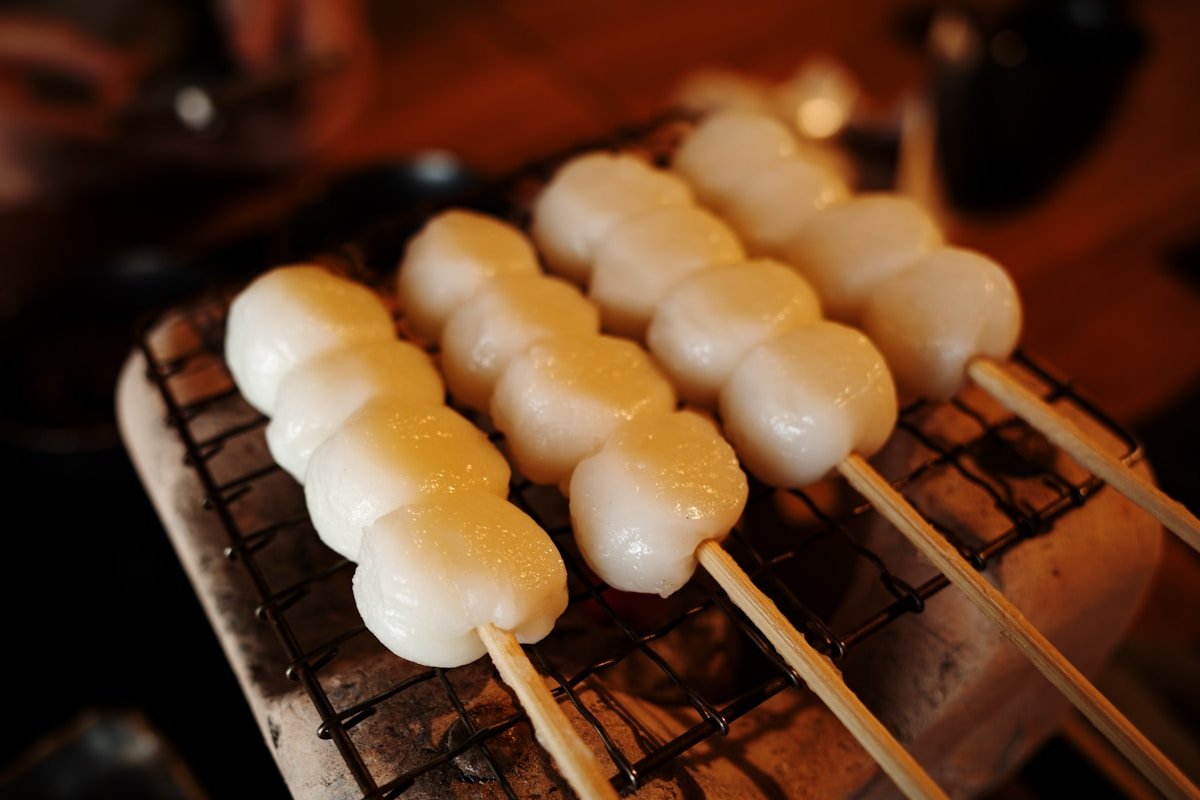
Mitarashi dango: Rice dumplings on a bamboo skewer, brushed with a sweet soy glaze and grilled briefly. ¥150–¥250 per skewer. The glaze caramelises slightly on the outside while the centre stays soft.
Yomogi mochi: Mochi made with Japanese mugwort (yomogi), giving it a green colour and faint herbal taste. Often filled with red bean paste (an). ¥200–¥350 per piece.
The stalls at the foot of the Nandai-mon Gate approach to Todaiji are the most concentrated cluster. Several shops also sell baked goods featuring matcha — a product of Nara Prefecture’s tea-growing Yamato Wase cultivar.
Shojin Ryori: Buddhist Vegetarian Cuisine
Shojin ryori is the vegetarian cuisine codified in Zen Buddhist temples from the 13th century. No meat, fish, or the five pungent vegetables (garlic, onion, leek, chive, asafoetida) appear. Flavour comes from kombu and mushroom dashi, miso, sesame, tofu preparations, and seasonal vegetables cooked with careful attention to texture and presentation. Eating shojin ryori in Nara connects the meal directly to the city’s temple history.
Harishin, housed in a traditional machiya townhouse near Kofukuji temple, offers shojin-style kaiseki courses starting at approximately ¥3,500–¥6,000 per person at lunch. The presentation is elaborate for the price. Reservation is strongly recommended, particularly for weekend lunch. Edogawa, in the Naramachi townhouse district south of Kofukuji, serves both shojin-influenced and conventional kaiseki — courses from ¥4,000 at lunch.
For a more casual and accessible Buddhist-adjacent meal, the Naramachi area has several vegetable-forward restaurants in converted machiya (traditional merchant houses) at ¥1,000–¥2,000 per person.
Where to Eat: Nara’s Food Districts
Sanjo-dori and Higashimuki arcade: The main eating corridor between the train stations and Nara Park. Mochi stalls, kakinoha-zushi shops, cafes, ramen, and casual restaurants. Practical for lunch and snacks between sightseeing.
Naramachi: The historic townhouse district south of Kofukuji temple. More quietly atmospheric, with tea rooms, shojin-influenced restaurants, and a slower pace than the main tourist corridor. Cafe Indépendants, a basement cafe in a Meiji-era building, is popular for coffee and light meals from ¥800.
Near Kintetsu Nara Station: The highest restaurant density in the city, including both kakinoha-zushi specialists and everyday options — ramen, udon, katsu curry — at ¥800–¥1,500 per person.
Best Time to Eat Out in Nara
Nara is a day-trip destination for many visitors from Osaka (35 minutes by Kintetsu Express) and Kyoto (45 minutes by Kintetsu Kyoto Line). This concentrates the lunch rush between noon and 1:30pm — the worst time to attempt popular restaurants without a reservation.
Arriving early (by 10am for a morning snack circuit) or late (lunch at 2pm, after the day-trip crowd has thinned) gives more relaxed access to the main food corridor. Kakinoha-zushi shops open from around 9–10am and serve through the afternoon; the best selections sell out by mid-afternoon.
The autumn season (mid-October to mid-November) is considered the best time for kakinoha-zushi when persimmon leaves are at their most fragrant, and coincides with Nara’s autumn deer rut and the landscape turning gold and red around Kasuga Grand Shrine.