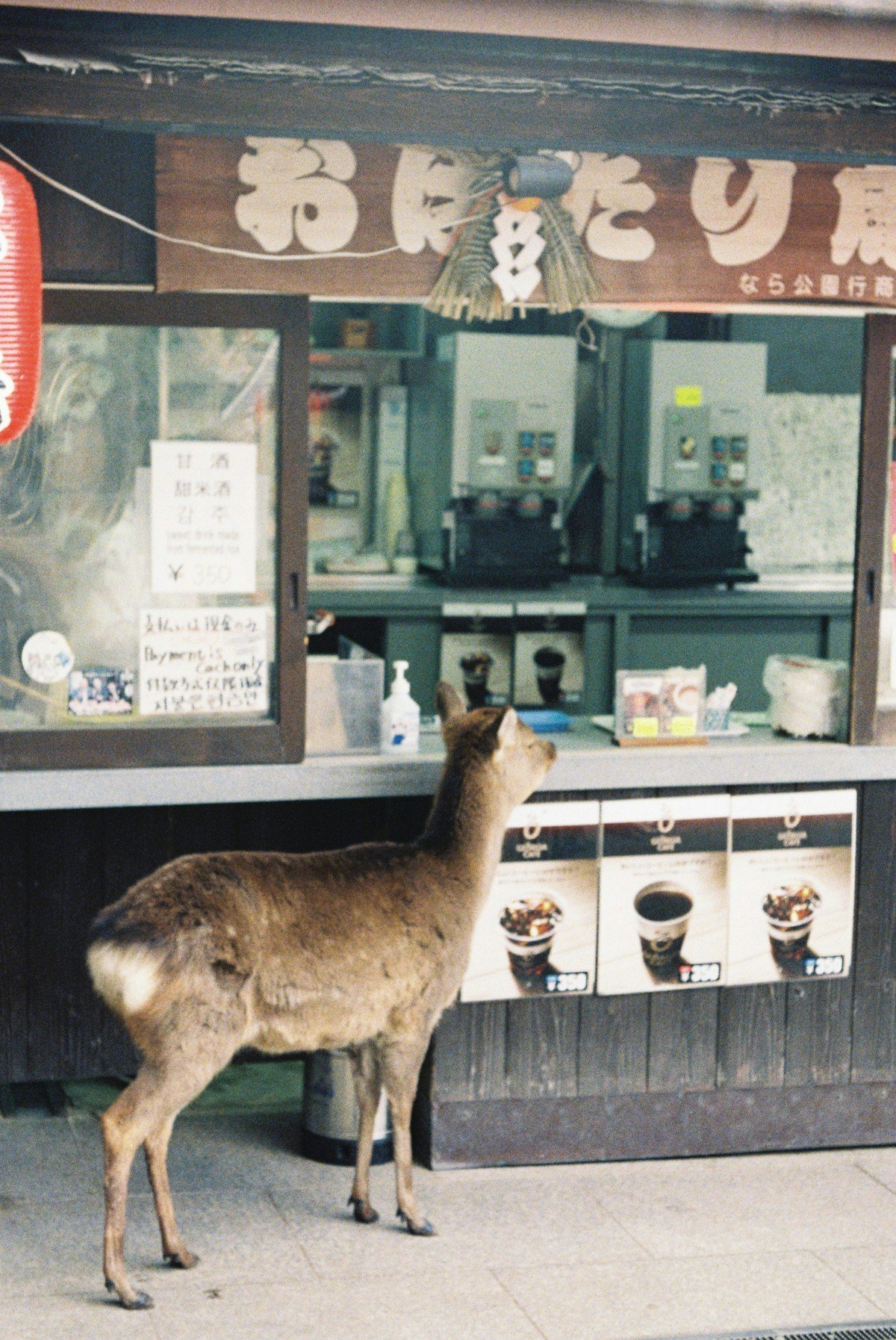
Nara is Japan’s oldest capital and one of the few Japanese cities where food has retained a direct connection to its 1,200-year Buddhist heritage. The cuisine here is shaped by proximity to the temples and shrines - vegetarian Buddhist cooking (shojin ryori), fermented and preserved foods developed by monks, and sake brewing techniques perfected in the temple kitchens of the Nara period. Add mountain vegetables from the Yoshino ranges to the south and river fish from the Yamato River, and Nara’s food culture is more distinct than its compact size suggests.
1. Kakinoha-Zushi (Persimmon Leaf Sushi)
Price: ¥200–¥250 per piece; sets from ¥1,200 | Season: Year-round; best in autumn when persimmon leaves are most aromatic
Kakinoha-zushi is the most uniquely Nara of all Japanese regional foods. The format is simple: vinegar-seasoned rice topped with either salt-cured salmon (sake) or mackerel (saba), wrapped in a persimmon leaf (kaki no ha), and left to mature for 24–48 hours. The persimmon leaf contains tannins that act as natural preservatives and impart a subtle, slightly astringent flavour to the rice.
The dish evolved as a practical solution to the problem of making sushi in a landlocked mountain prefecture. Fresh fish couldn’t reach Nara without spoiling - so salt-cured fish from Obama (on the Japan Sea coast, connected to Nara by the ancient Saba Kaido, or Mackerel Road) was the raw material, and the persimmon leaf was the preservation mechanism.
Best places to try it:
- Kakinoha-zushi Hiraso (near Kintetsu Nara Station): The most established specialist, with sit-down sets and take-away boxes.
- Hirasou (Naramachi): A second well-regarded specialist in the historic merchant district.
- Various souvenir shops near Todai-ji: Pre-packaged versions (less good, but convenient for eating in the park).
2. Yomogi Mochi (Mugwort Rice Cake)
Price: ¥200 per piece hot | Where: Nakatanidou and specialist mochi shops | Best time: Morning to midday, when they’re freshest
Yomogi is Japanese mugwort - a wild herb harvested in spring with a slightly bitter, grassy herbal character. Blended into glutinous rice dough (mochi), it produces a dark green cake with a distinctive flavour unlike the plain white mochi most visitors know.
Nakatanidou makes the most famous version, pounded fresh on the spot in a display of rapid synchronised teamwork - one worker pounds with a heavy wooden mallet, another rotates and shapes the dough between blows, working fast enough that the mallet and hands never meet. The resulting mochi is sold hot outside the shop, coated in kinako (roasted soybean flour) or anko (sweet red bean paste).
The flavour is mild by European standards but distinct within Japanese confectionery - the mugwort gives it character that plain white mochi lacks. Eat it within 20 minutes; mochi hardens quickly as it cools.
3. Ayu (Sweetfish)
Price: Grilled ayu approximately ¥600–¥1,200 | Season: May–September | Where: Traditional restaurants and riverside vendors
Ayu (Plecoglossus altivelis) is a small river fish - about 15 cm long - with a remarkably clean, slightly sweet flavour that has no hint of the muddy taste associated with other freshwater fish. It lives in clear, fast-moving mountain streams and feeds on algae, which gives the flesh an unusual aromatic quality.
In Nara, ayu from the Yoshino River and other mountain streams is served in three main ways:
- Shio-yaki (salt-grilled on a skewer, whole): The standard preparation - the fish is coiled around a long wooden skewer and grilled over charcoal until the skin crisps. Eaten whole, bones and all.
- Oshizushi (pressed sushi): The fish is cured in salt, pressed with vinegared rice, and sliced.
- Furai (breaded and deep-fried): A less traditional but accessible preparation where the whole fish is floured, egged, and fried.
The river restaurant culture in the Yoshino area (accessible by train from Nara) is the most atmospheric setting for ayu eating in the region - traditional restaurants with decks over the river, eating grilled fish caught that morning.
4. Shika Senbei (Deer Crackers)
Price: ¥200 per pack | Where: Park vendors throughout Nara Park
Shika senbei are the flat rice-bran and wheat crackers sold throughout Nara Park for feeding the deer. They’re technically edible but tasteless - the deer have no such complaints. Understanding the shika senbei economy matters for visiting Nara: the deer have developed Pavlovian responses to rustling plastic bags and will follow, nudge, and occasionally bow to anyone who might be holding them.
Buy one pack early in your visit to understand the dynamics (the deer can become aggressive in groups if they smell senbei in closed bags). Do not feed the deer your own food - this is prohibited and causes digestive problems in animals that have evolved to eat plants, not tourist snacks.
5. Yamato Vegetables and Mountain Produce
Nara Prefecture - known as Yamato - has a distinctive agricultural identity based on mountain vegetables cultivated in the highland valleys south of the city. These appear on menus in Nara restaurants as seasonal specialities:
Yamato Imo (mountain yam): A starchy tuber with a glutinous texture when grated. Used in sauces, as a side dish, and as a thickener in traditional Yamato cooking. Notably slippery texture when raw - eaten either raw (grated over rice) or cooked in soups.
Miyako Ime (Yamato chasuke): A Nara-specific dish of rice topped with pickled vegetables, seaweed, and sweet rice crackers, over which hot tea is poured. A filling, warming dish descended from ancient aristocratic cuisine. Available at traditional restaurants in Naramachi.
Soy products: The temple culture of Nara made soy central to the local diet (Buddhist monks cannot eat meat). Tofu, natto (fermented soy), yudofu (simmered tofu), and miso pastes from Yamato soy beans have a distinct character compared to the more commercial versions common elsewhere.
6. Harushika Sake and Nara Sake Culture
Nara is where Japanese sake was invented. The techniques for producing clear rice wine from fermented rice were developed by monks at Kasuga Taisha and Saidai-ji Temple in the 8th century - specifically the three-stage addition method (sandan shikomi) and the use of koji mould (Aspergillus oryzae) that remain the foundation of modern sake brewing.
Seven active breweries operate in Nara Prefecture today:
Harushika (Harushika Shuzo, 1884): The largest and most visited. The flagship Tokubetsu Junmai (from approximately ¥1,200) is a well-balanced, slightly sweet sake that pairs naturally with kakinoha-zushi and Yamato vegetables. The brewery shop near Nara Park sells exclusive seasonal bottles.
Imanishi Sake Brewery (Kasugano): A smaller producer with an excellent Junmai Ginjo using locally grown Yamadanishiki rice. Available at the brewery shop and select Nara restaurants.
Drinking sake in Nara: Several izakaya near Kintetsu Nara Station offer flights comparing three or four Nara breweries side by side (approximately ¥800–¥1,200 for three 30ml pours). This is the most efficient way to understand the differences within Nara’s sake style before deciding what to take home.
See Nara through its food: Food and cultural tours in Nara often include market visits, tastings, and dishes you’d never find independently.
7. Shojin Ryori (Buddhist Temple Cuisine)
Price: From approximately ¥3,000 for a set meal | Where: Specific restaurants near the major temples
Shojin ryori is vegetarian Buddhist temple cuisine - no meat, no fish, no strong-smelling vegetables (traditionally garlic, onions, chives, scallions, and leeks were prohibited as stimulants). The cooking philosophy emphasises seasonal ingredients, careful seasoning with soy and mirin, and an aesthetic presentation that makes the vegetables and tofu central rather than secondary.
In Nara, shojin ryori is served at a handful of restaurant-style establishments (not the temples themselves, which don’t serve food to tourists). The best options require advance reservation and run from approximately ¥3,000 for a basic set to ¥6,000 for a more elaborate seasonal course.
What to expect: Multiple small dishes (typically 8–12 items) of cooked and pickled vegetables, tofu preparations, sesame-dressed seasonal greens, rice, miso soup, and pickled daikon. The aesthetic presentation in lacquerware bowls makes eating shojin ryori a visual experience as much as a culinary one.
For where to eat in Nara, see our best restaurants guide. For day trips to Yoshino, Osaka, and Kyoto, see Nara day trips.
Where to stay: Search hotels in Nara on Booking.com
See also: Nara travel guide · Best restaurants in Nara · Things to do in Nara · Kansai region guide · Japanese food guide · Kyoto food guide