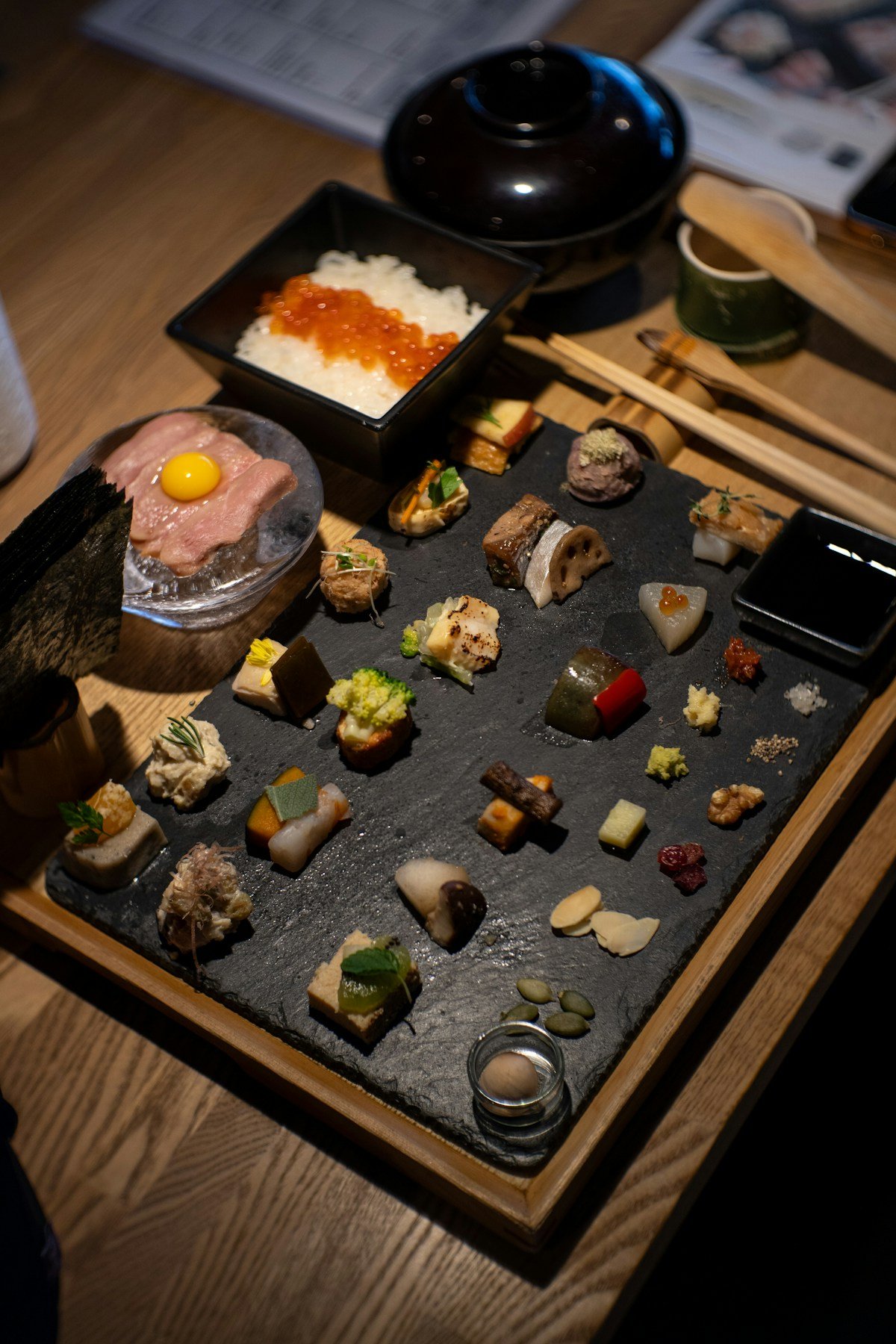
Kyoto’s food culture is built on restraint, seasonality, and a thousand-year tradition of cooking for an imperial court with precise aesthetic standards. The city gave Japan its most formally structured cuisine - kaiseki - and also has a living tradition of Buddhist temple cooking that influenced everything from how dashi is made to which vegetables are grown in the surrounding fields. The result is food that is less immediately punchy than Osaka’s street food, but more layered, more seasonal, and more embedded in the specific geography and history of this particular city.
The reputation for expense is real but partial. A three-Michelin-star kaiseki dinner is ¥30,000–¥50,000 per person. A teishoku lunch at a neighbourhood restaurant near Fushimi is ¥900–¥1,200. Both experiences exist in the same city, and knowing which to prioritise across the available budget is most of what this guide is for.
For individual restaurant recommendations and area-specific picks, see our Kyoto restaurants guide and what to eat in Kyoto. For comparison, see our Tokyo food guide and Osaka food guide. For a guided food walk through Kyoto’s markets and alleys, see our Kyoto food tours guide.
The Core Kyoto Food Experiences
Kaiseki
Kaiseki is Japan’s most refined multi-course dining format, and Kyoto is where it originated. The full sequence - derived from the tea ceremony tradition - runs 8–12 courses: sakizuke (amuse), hassun (seasonal platter), mukozuke (sashimi), takiawase (simmered dish), yakimono (grilled), mushimono (steamed), sunomono (vinegared palate cleanser), rice, pickles, miso soup, and wagashi sweet with matcha. Each course is calibrated to the season, the ceramics chosen to complement both the dish and the time of year.
A spring kaiseki will look completely different from an autumn one, even at the same restaurant. This is one of the reasons Kyoto regulars return across seasons rather than treating it as a single visit.
Entry points by price:
Nakamura-ro, Yasaka Shrine (¥6,000 lunch): One of Japan’s oldest operating restaurants, in business inside the Yasaka Shrine complex since 1716. The setting - a traditional wooden building within a working shrine - is as much the experience as the food. Lunch kaiseki sets from approximately ¥6,000. Bookable online; English reservations accepted.
Kikunoi, Higashiyama (from ¥8,800 lunch, ¥15,000 dinner): Three Michelin stars. Lunch kaiseki condensed from the dinner progression, genuinely excellent. Reservations typically two to four weeks ahead for lunch, longer for dinner. English online booking available.
Ryokan kaiseki (¥10,000–¥20,000 per person as part of an overnight stay): Many traditional inns (ryokan) include a kaiseki dinner as part of the room rate. Staying one night in a Higashiyama or Arashiyama ryokan and eating the included dinner is often the best-value way to experience a full kaiseki sequence.
For a dinner kaiseki above ¥20,000: Mizai in Higashiyama (two Michelin stars, dinner from ¥28,000) is among the most technically precise options accessible to visitors with advance planning.
Yudofu: Simmered Tofu
Kyoto produces some of Japan’s finest tofu - the city’s soft water creates an unusually delicate texture - and yudofu (tofu simmered in a light kombu broth, eaten with ponzu sauce and condiments) is one of its signature preparations.
The Nanzenji temple district in eastern Kyoto has a cluster of traditional yudofu restaurants that have operated alongside the temple for generations.
Okutan (near Nanzenji, since 1635): Yudofu set including tofu skin (yuba), sesame tofu, and simmered tofu runs approximately ¥3,000–¥4,500 per person. The tatami room overlooking the garden is exceptional in autumn. Open 11:00–16:30; closed Thursdays.
Junsei (Nanzenji): A more affordable alternative, yudofu sets from approximately ¥1,500. Large tatami rooms, garden views, English menu available.
Matcha
Kyoto’s matcha culture is centered on Uji - a city 20km south of central Kyoto and 17 minutes by the JR Nara Line from Kyoto Station (¥240 one-way). Uji has produced premium tencha (the ground tea leaf used to make matcha) for over 800 years and has a higher concentration of serious tea merchants, tea ceremony rooms, and matcha cafes than anywhere else in Japan.
In central Kyoto, the best matcha experiences:
- Matcha soft serve: ¥400–¥600 at stalls throughout Nishiki Market, near Kinkaku-ji, and along the Higashiyama tourist lane. Quality varies - the greener and more bitter the soft serve, the higher the matcha grade used.
- Matcha parfait: ¥900–¥1,500 at sit-down cafes in Gion and around Nishiki Market. Typically includes soft serve, matcha jelly, red bean paste, and mochi.
- Wagashi confectionery: ¥200–¥500 per piece at traditional confectionery shops (wagashiya). Kyoto’s wagashi - particularly namagashi (fresh sweets moulded to suggest the current season) - are the most celebrated in Japan.
- Tea ceremony: ¥1,500–¥3,000 at Urasenke or specialist venues near Daitoku-ji. Includes a bowl of thick matcha (koicha or usucha) prepared by a practitioner, and a wagashi sweet.
Nishiki Market
Nishiki Market runs 400 metres along a covered arcade north of Shijo-dori and is the most concentrated street-food walking experience in Kyoto. The 130 stalls include everything from premium pickled vegetables to fresh cooked food sold in portions designed for walking and tasting.
What to eat on a Nishiki walkthrough:
- Tsukemono (pickled vegetables): Kyoto is Japan’s pickle capital. Miso-pickled eggplant, salted kombu, and shibazuke (purple shiso and cucumber pickles) are available for tasting and purchase. Bags from ¥800–¥2,500. Murakami-ju (Fuyacho-dori, since 1900) is one of the finest tsukemono shops in the city.
- Yuba (tofu skin): A Kyoto specialty - the skin that forms when heating soy milk. Fresh yuba on a stick from ¥400 per serving.
- Dengaku (miso-glazed skewers): Tofu or konnyaku grilled with sweet miso. ¥200–¥350 per skewer.
- Tamagoyaki (rolled omelette): The Kyoto version is sweeter and more delicate than Tokyo style. Pieces from ¥200–¥400.
- Matcha sweets: Multiple stalls sell matcha daifuku, wagashi, and soft serve.
Budget ¥1,000–¥2,000 for a proper walkthrough tasting. Best visited on weekdays before 11:00 - weekend midday crowds are significant. Most stalls close by 17:00–18:00.
Eating by Budget Tier
Budget (under ¥2,000 per person per meal)
Teishoku sets (¥900–¥1,200): Available at neighbourhood restaurants throughout the city. The same restaurant serving ¥3,000 dinners often runs ¥1,000 lunch sets. Look around Kyoto Station, Fushimi, Karasuma-Oike, and the streets around Nijo Castle for the best concentrations.
Obanzai (¥1,500–¥2,000): Kyoto home-cooking - a collection of small seasonal dishes served together. Nishiki Warai inside Nishiki Market serves an obanzai lunch set (five or six rotating small dishes, rice, miso soup) for ¥1,500–¥2,000.
Ramen (¥850–¥1,100): Menya Inoichi in the Higashiyama area serves a clear, intense chicken tare ramen for ¥1,100, one of the most praised bowls in the city (small shop, queues at opening; closed Tuesday). Ramen Santouka (chain, central Kyoto) offers reliable miso and shio ramen at ¥1,100–¥1,400 with no queues.
Gyukatsu (from ¥1,500): Gyukatsu Motomura near Kyoto Station serves breaded beef cutlet - eaten slightly rare - in sets from approximately ¥1,500. A filling, mid-budget lunch that is considerably more interesting than a convenience store.
Mid-Range (¥2,000–¥8,000 per person)
Yudofu (¥1,500–¥4,500): The Junsei and Okutan options in the Nanzenji area described above. Garden settings, multi-item tofu set meals, substantial enough to serve as a proper lunch or dinner.
Obanzai restaurants (¥2,000–¥4,000): Omen in Higashiyama near Nanzen-ji has been a Kyoto favourite for three decades. The Omen noodle - thick udon with a platter of raw and cooked vegetable accompaniments - is ¥1,250 and functions as an obanzai-adjacent experience.
Soba (¥900–¥3,500): Honke Tagoto near Kawaramachi, in operation since 1868, serves multi-course soba sets from ¥2,200. The kaiseki-soba lunch course at ¥3,500 is particularly good value for the setting and quality.
Pontocho (¥3,000–¥8,000): The 500-metre lantern-lit lane parallel to the Kamo River is one of the most atmospheric eating streets in Japan. In summer, restaurants extend wooden platforms (kawayuka) over the river. Izakaya, French-Japanese fusion, and simplified kaiseki sit side by side. Pontocho Imai Honten - Kyoto-style udon and accessible kaiseki - is one of the more approachable price points in the alley at ¥2,000–¥4,000.
Splurge (¥8,000+ per person)
Kikunoi lunch kaiseki (from ¥8,800): The most accessible three-Michelin-star kaiseki experience in Kyoto for visitors without multi-week advance planning. The condensed lunch menu covers most of the kaiseki structure at significantly below dinner pricing.
Tenryu-ji Shigetsu, Arashiyama (¥5,500 lunch): Shojin ryori Buddhist temple cuisine served inside the Tenryu-ji garden compound. Reservation required; book through the temple website. One of the most atmospheric lunch experiences accessible to visitors.
Full dinner kaiseki (¥15,000–¥40,000+): Kikunoi, Mizai, and Kichisen represent progressively more formal and expensive kaiseki experiences. For first-time kaiseki: Kikunoi dinner from ¥15,000 is the best entry point. For the definitive kaiseki experience regardless of cost: Kichisen (three Michelin stars) requires months of advance booking and typically a Japanese-speaking intermediary.
The Fushimi Sake District
Fushimi, 15 minutes south of central Kyoto by subway (Kintetsu line from Kyoto Station, ¥280), is Japan’s second-most important sake brewing district after Nada in Kobe. Fushimi’s soft spring water produces a round, smooth style. Two practical options:
Gekkeikan Okura Sake Museum: Museum tracing 380 years of Fushimi brewing history, with one sake tasting included in the ¥600 entry. Open 09:30–16:30.
Kizakura Kappa Country: A brewery-restaurant complex with tasting flights from ¥500 for three varieties.
The Fushimi riverside area near Fushimi Inari Taisha is worth the walk for the sake warehouse (sakagura) streetscape of whitewashed walls - the aesthetic alone justifies the trip independent of the tasting.
Explore Kyoto’s food scene further: Guided food experiences in Kyoto - market walks, sake tastings, ramen tours, and hands-on cooking classes.
Practical Notes
Book ahead for serious restaurants. Casual restaurants and market stalls need no reservation. For Kikunoi and comparable kaiseki: two to four weeks for lunch, longer for dinner; book via official restaurant website or through your hotel concierge. Three-star restaurants (Kichisen) are by referral only.
Kyoto’s best eating is not in Gion’s main tourist lanes. The restaurants directly on Hanamikoji-dori in Gion are predominantly expensive with mediocre food-to-price ratios. The better eating is one or two streets away - Shirakawa-minami-dori, the Miyagawa-cho area, and the narrower lanes east of Kiyomizudera.
Nishiki Market is for tasting, not meals. It is a walk-and-eat experience, not a sit-down dining venue. Budget ¥1,000–¥2,000 for a walkthrough and plan a separate sit-down lunch elsewhere.
Seasonal produce changes the menu. A Kyoto restaurant meal in April (bamboo shoots, nanohana) is a different experience from October (matsutake mushroom, persimmon). If the season is right, ask the staff what is currently the most seasonal item on the menu.
For broader Kyoto trip planning, see our Kyoto city guide. For restaurant recommendations by neighbourhood, see our best restaurants in Kyoto guide. For food tours and tea ceremony experiences, see our Kyoto food tours guide.
See also: Kyoto travel guide · Best restaurants in Kyoto · Kyoto food tours · Tea ceremony Kyoto · Osaka food guide · Tokyo food guide · Japanese food guide
Plan Your Trip
- Flights - Find the best fares to Japan
- Travel Insurance - Get covered before you go
- eSIM - Stay connected from landing
- Car Rental - Compare prices across providers