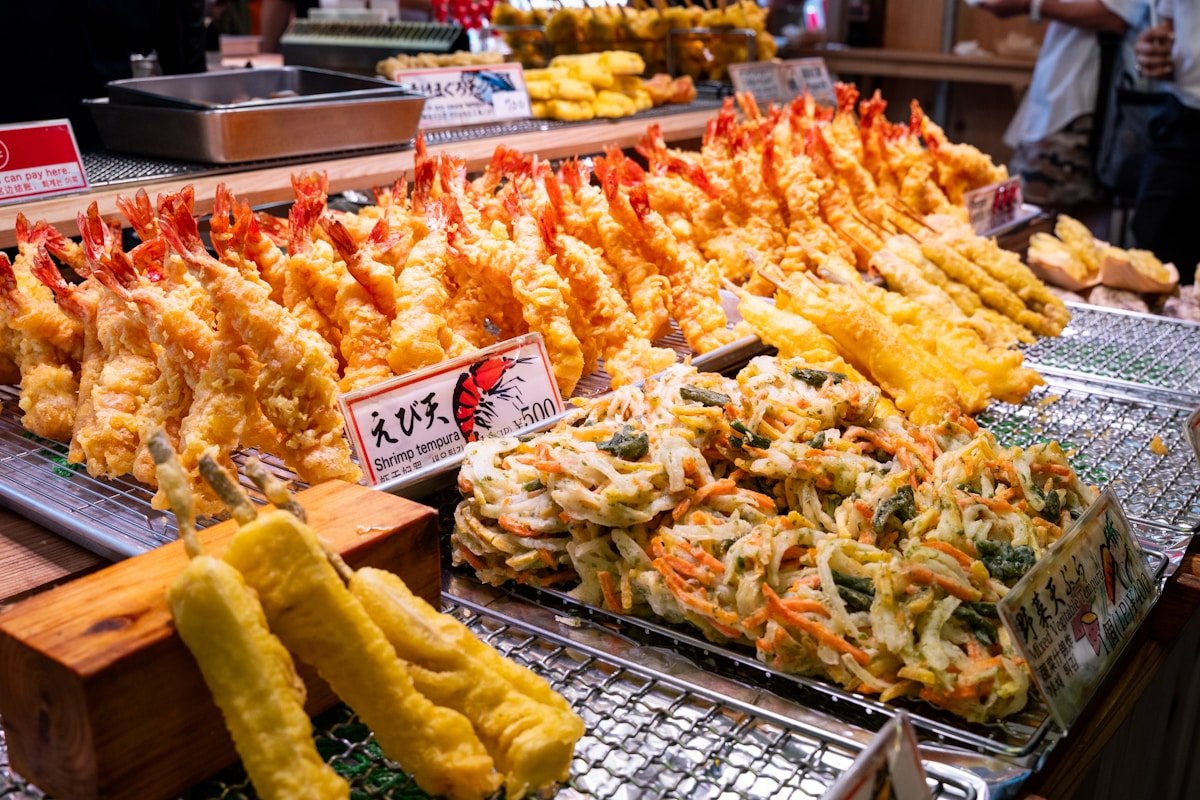
Kyoto’s food culture is the most distinctive in Japan - and the hardest to access independently. The city’s cuisine tradition (kyo-ryori) was shaped by centuries of Buddhist temple cooking and imperial court aesthetics: seasonal ingredients, refined technique, and presentation treated as inseparable from flavour. Many of the best experiences - Nishiki Market’s specialist vendors, sake brewery tasting rooms, tea ceremony venues with serious instruction - are navigable without help, but guided tours compress the discovery time and add context that transforms a tasting into an education.
This guide covers what’s available across Kyoto’s main tour types, what they include, and what to prioritise.
Prices listed are approximate as of 2026 and vary by operator and season.
Nishiki Market Tours
Nishiki Market - 390 metres of covered lanes in central Kyoto - has traded in food for 400 years. The current market has approximately 130 vendors: pickles (tsukemono) in a dozen styles, fresh Kyoto tofu, grilled skewers, seasonal wagashi sweets, dried fish, specialty condiments, and produce that is specific to the Kyoto region (Kyoto vegetables, or kyo-yasai, are a distinct category).
What a Nishiki tour covers: A guided circuit typically includes 6–10 tasting stops - pickled vegetables, yuba (tofu skin), grilled tako tamago (octopus with quail egg on a skewer, ¥250–¥350), fu (wheat gluten in various preparations), seasonal wagashi, and at least one vendor where the guide provides extended explanation of what Kyoto eating culture means. The market runs east-west and is easily covered in 90 minutes on foot, but a 2.5-hour guided tour with tastings covers substantially more.
When to go: Most tours run morning (09:00–11:30) or afternoon (13:00–15:30). The market is busiest mid-morning on weekends - early tours on weekdays have less crowd and more vendor conversation time.
Prices: Approximately ¥6,000–¥9,000 per person for a 2–2.5 hour guided tour with tastings. Tours that extend into Gion or add a temple visit run ¥9,500–¥13,000.
Combination tours: Several operators pair Nishiki Market with a matcha tea ceremony at a nearby tea house (Urasenke area or Gion) for ¥10,000–¥15,000 per person - a logical combination that adds approximately 60–75 minutes.
Tea Ceremony and Matcha Experiences
Matcha is Kyoto’s most distinctive food product. Uji, 20 kilometres south and 17 minutes by JR Nara Line (approximately ¥240), has produced high-grade matcha for over 800 years; central Kyoto has the highest density of ceremony venues.
Formal tea ceremony tours: Operator-guided tea ceremony experiences run 60–120 minutes and typically include instruction in the correct sitting posture, a demonstration of the whisking technique (chasen), preparation of your own bowl, a wagashi sweet, and explanation of the historical and aesthetic principles. Approximately ¥4,500–¥8,000 per person. Venues in Gion’s machiya townhouses and in temple gardens (En, Camellia Tea Experience, and similar) are the most atmospheric.
Uji matcha tours: Half-day tours from Kyoto to Uji cover a tea plantation walk (seasonal - best April to May), a tasting at a specialist tea merchant, and lunch at a matcha-focused restaurant. Uji has dedicated matcha kaiseki and matcha-themed meals at several restaurants. Full-day Uji tours with lunch: approximately ¥12,000–¥18,000 per person.
Matcha cooking classes: Some Kyoto operators run matcha-focused cooking classes - making matcha sweets (wagashi), matcha soba, or matcha-based desserts - as a 2-hour participatory experience. Approximately ¥6,000–¥9,000 per person.
Sake Brewery Tours and Tastings
Fushimi, Kyoto’s traditional sake-brewing district, lies 30 minutes south of central Kyoto by subway and Kintetsu line. It produces some of Japan’s most respected sake, using the Fushimi spring water that defines the region’s soft, slightly sweet style.
What a Fushimi tour covers: Most guided sake tours include 2–3 brewery visits, a guided tasting of 5–8 sake varieties across different types (junmai, daiginjo, ginjo, nigori, sparkling), and explanation of the production process, rice polishing ratios, and how to read a sake label. Some tours include a light lunch or snack pairing at a local restaurant.
Duration: 3–4 hours including transit from central Kyoto.
Prices: Approximately ¥7,000–¥12,000 per person with brewery entry and tastings included.
When to go: Fushimi is accessible year-round, but visiting in winter (January–March) coincides with the active brewing season - guides can explain the visible production process rather than just the finished product.
Kaiseki and Traditional Dinner Experiences
Kaiseki is the most demanding food experience in Kyoto - a multi-course format where each dish represents a precise seasonal ingredient, a cooking technique, and an aesthetic judgment. A full kaiseki dinner at a ryotei costs ¥15,000–¥40,000 per person.
Guided kaiseki experiences: Some food tour operators offer accompanying services for kaiseki dinners - they make the reservation, handle the Japanese conversation with the restaurant, introduce each course, and provide cultural context. The meal cost is separate from the guide fee (approximately ¥5,000–¥8,000 on top of the meal price). For visitors who want to experience kaiseki but find the idea of a Japanese-only environment without explanation daunting, this is the most practical approach.
Lunch kaiseki: The most cost-effective entry point to serious Kyoto dining. Nakamura-ro (inside Yasaka Shrine) offers kaiseki sets from approximately ¥6,000 at lunch. Kikunoi (three Michelin stars) runs lunch from approximately ¥8,800. Booking in advance is essential; most serious kaiseki restaurants are fully booked 2–4 weeks ahead for lunch, more for dinner.
Cooking Classes
Tofu and shojin ryori classes: Kyoto’s Buddhist temple cooking tradition makes it the best city in Japan for tofu and plant-based cooking classes. A class typically covers tofu preparation, dashi making using kombu and dried mushrooms (as opposed to the fish-based dashi standard elsewhere), and 3–4 dishes from the shojin ryori tradition. Approximately ¥9,000–¥14,000 per person.
Kyoto home cooking classes: Broader introduction to kyo-ryori principles - seasonal vegetables, high-quality dashi, restrained seasoning. Classes in home kitchens or machiya studios, 3–4 hours, 3–4 dishes. Approximately ¥9,000–¥14,000 per person.
Wagashi making: Japanese traditional confectionery classes focused on the nerikiri technique - sculpting sweet bean paste into seasonal forms (cherry blossom, maple leaf, bamboo). 90 minutes to 2 hours, approximately ¥5,000–¥8,000 per person. Good combination with a tea ceremony experience.
Book a food tour: Food and culinary tours in Kyoto on GetYourGuide - street food walks, sake tastings, ramen tours, and market visits with local guides.
For cultural depth: A tea ceremony experience, particularly one that explains the relationship between the ceremony and the food culture that developed around it (kaiseki was originally a simple meal served alongside tea).
For sake interest: The Fushimi brewery tour is specific enough to be genuinely educational rather than just a tasting sampler.
For active participation: A tofu and shojin ryori cooking class offers something unavailable in most other cities - instruction in a fully plant-based culinary tradition with 600 years of development behind it.
For the broader eating-in-Kyoto picture, see our Kyoto food guide. For Kyoto trip planning generally, see our Kyoto city guide.
See also: Things to do in Kyoto · Best restaurants in Kyoto · Tea ceremony guide Kyoto · Best tours in Kyoto · Kansai region guide
Plan Your Trip
- Flights - Find the best fares to Japan
- Travel Insurance - Get covered before you go
- eSIM - Stay connected from landing
- Car Rental - Compare prices across providers