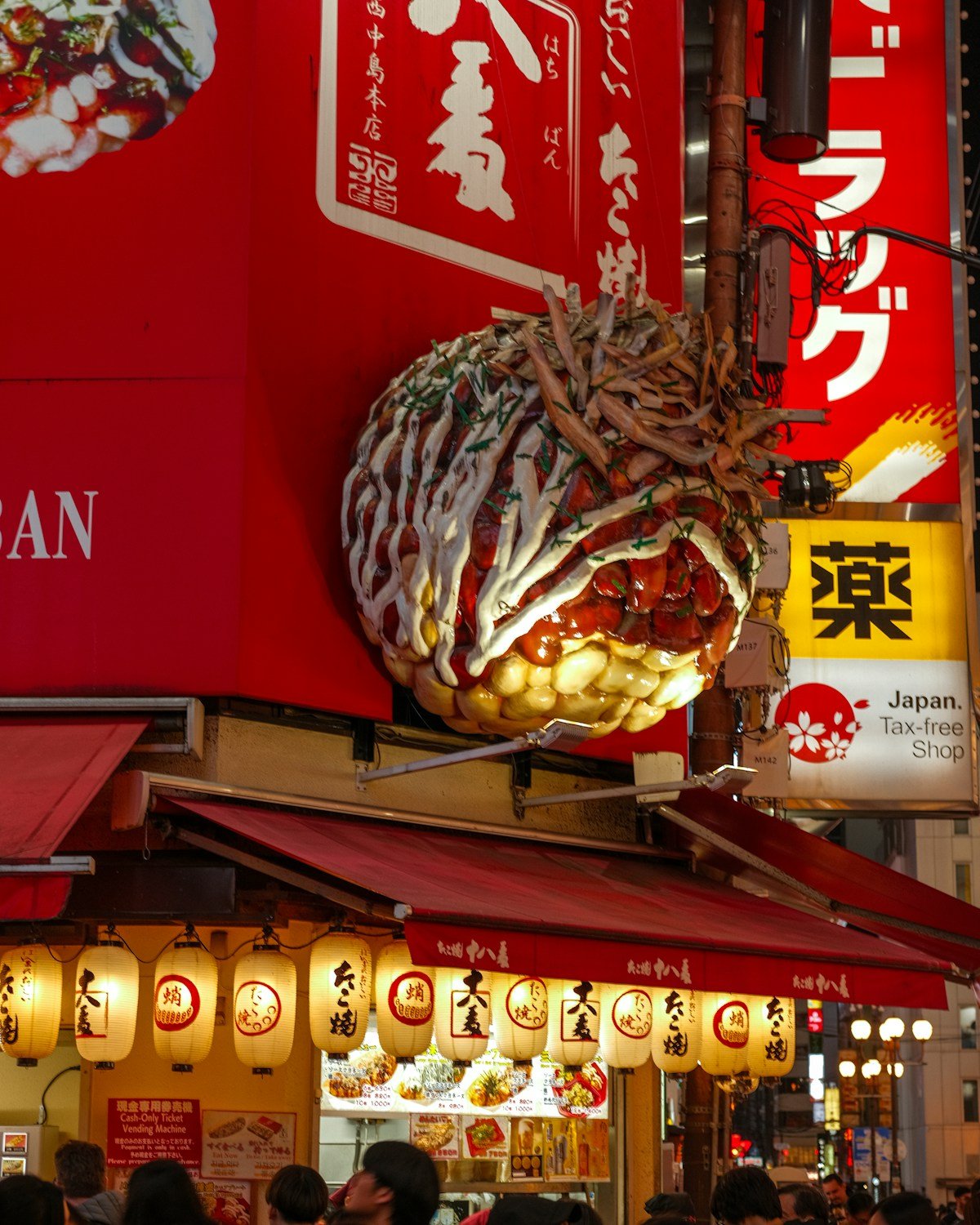
Osaka is where Japan eats freely. The city’s unofficial motto is “kuidaore” - eat until you drop - and the food culture reflects it: informal, abundant, price-conscious and excellent. Where Tokyo prizes refinement, Osaka prizes generosity. Portions are larger, prices are more forgiving, and the emphasis on bold flavour over austere presentation means that casual meals here are often better than formal ones elsewhere.
The areas where most visitors eat are Dotonbori and the surrounding Namba district. Beyond that, Shinsekai and Tennoji to the south, Fukushima to the north, and the quieter backstreets of Shinsaibashi reward a bit of exploration.
Dotonbori: The Heart of Osaka’s Food Culture
Dotonbori is one of the most visually saturated food districts in Japan. The canal-facing strip is lined with enormous illuminated signs - most famously the Glico running man and the giant crab of Kani Doraku - and the surrounding streets are packed with restaurants, stalls, and specialist shops.
Takoyaki is the essential starting point. The dish - golf ball-sized dumplings of wheat batter filled with octopus, spring onion and pickled ginger, topped with mayo and bonito flakes - originated in Osaka in the 1930s and the city takes it seriously. Aizuya (Dotonbori, near the canal) is widely considered one of the oldest takoyaki shops still operating, with a recipe said to date to the original 1933 method. A serving of six balls costs approximately JPY 680 to JPY 800. The balls are softer and more molten in the centre than many commercial versions. Cash only.
Creo-Ru (Namba) is another respected takoyaki option, slightly less touristed than the main Dotonbori strip spots. A serving of eight pieces runs approximately JPY 750.
For okonomiyaki, Osaka’s savoury cabbage pancake, Mizuno (Dotonbori, in operation since 1945) is the reference point. The standard Osaka-style okonomiyaki (everything mixed into the batter rather than layered as in Hiroshima style) costs approximately JPY 1,100 to JPY 1,800 depending on toppings. Queues are long but move steadily. The restaurant uses a self-cook format at some tables - staff demonstrate if needed.
Kani Doraku is worth mentioning not just as a landmark but as a restaurant. The giant mechanical crab sign on the main Dotonbori strip is the flagship of a crab specialist chain that has been operating since 1960. Set menus featuring snow crab, king crab and hairy crab in various preparations cost approximately JPY 5,000 to JPY 12,000 per person. It is tourist-adjacent but the quality is reliable and the theatre is genuine.
Shinsekai: Kushikatsu Country
Shinsekai is Osaka’s working-class entertainment district, built in the early twentieth century and retaining a dated, atmospheric charm that feels genuinely different from Dotonbori’s commercial gloss. The local specialty is kushikatsu - skewered and deep-fried meat, seafood and vegetables, eaten with a shared dipping sauce (the rule is strict: no double dipping).
Daruma is the most famous kushikatsu chain in the neighbourhood, identifiable by the Billiken statue outside most branches. Individual skewers cost approximately JPY 110 to JPY 250 each depending on the ingredient. A filling meal runs approximately JPY 1,500 to JPY 2,500 per person. The atmosphere is loud, informal and very much part of the experience.
Yaekatsu (Shinsekai, independent of the chains) is a smaller, family-run kushikatsu shop with slightly better ingredients and a more local crowd. Skewers from approximately JPY 130. Worth seeking out if you want to eat where Osaka residents eat rather than where tourists go.
Yakiniku: Grilled Meat in Tsuruhashi
Tsuruhashi is Osaka’s Koreatown, a dense market neighbourhood near the Tsuruhashi station on the Osaka Loop Line. It is the city’s best destination for yakiniku - Korean-style grilled meat, cooked at the table over charcoal.
Hanaroku (Tsuruhashi) is a well-regarded mid-range yakiniku restaurant with a focus on Wagyu beef. Sets with a selection of cuts - karubi (short rib), rosu (sirloin) and tongue - run approximately JPY 3,500 to JPY 6,000 per person. The charcoal grills and the quality of the marbling make this a significant step above chain yakiniku.
The streets immediately around Tsuruhashi station have dozens of smaller yakiniku options at lower prices, some with quality fresh-cut meat from the adjacent Korean market. Exploring the market during the day is worthwhile before choosing where to eat in the evening.
Local Izakaya: Fukushima and Nakazakicho
Fukushima, a short walk north of Osaka station, is where many of the city’s most interesting restaurants have opened in recent years. The area has a mix of natural wine bars, craft sake shops and small-plate izakaya that serve a more local crowd.
Bar Trench Osaka (Fukushima) is a narrow bar with an exceptional Japanese whisky list and a food menu strong in yakitori and seasonal small plates. The food is secondary to the drinks but good enough to eat as a full meal. Budget approximately JPY 4,000 to JPY 7,000 per person including drinks.
Yoshida (Nakazakicho, near Tenjinbashisuji shotengai) is a classic Osaka izakaya - grilled fish, tofu dishes, seasonal pickles and a decent sake list, all at prices that feel reasonable by any standard. Dinner with drinks runs approximately JPY 2,500 to JPY 4,000 per person. The clientele is mostly regulars from the neighbourhood, and the kitchen closes at 10pm.
Nakazakicho itself is a worthwhile wander before or after eating. The area has a collection of independent cafes, second-hand clothing shops and small galleries that give it a different character from the rest of central Osaka.
Practical Notes
Osaka restaurants generally open for lunch from 11am or 11:30am and run dinner service from 5pm or 6pm. Many Dotonbori establishments stay open later, some until midnight. Kushikatsu shops in Shinsekai often open from late morning and run continuously.
Queuing is expected at well-known lunch spots and popular dinner destinations on weekends. Arriving five to ten minutes before opening usually positions you near the front. Many restaurants use paper queuing systems or an app-based wait list.
Payment is mostly cash at smaller and traditional establishments. Larger chain restaurants and hotel-area venues generally accept credit cards. Carry JPY 5,000 to JPY 10,000 in notes for a day of eating in Osaka.
For a broader overview of how to eat across the whole city, our Osaka food guide covers areas and meal types in more detail. Structured food tours through Dotonbori and Kuromon Market start at around JPY 5,000 - see our Osaka food tours page for options.