Kyoto’s culinary identity is inseparable from its history. The city was Japan’s imperial capital for over a thousand years, and the food that developed here reflects the demands of court culture, Buddhist monasteries and the tea ceremony tradition. The result is a cuisine - kyo-ryori, Kyoto cuisine - that prizes subtlety, seasonal ingredients and presentation over richness or volume.
This creates a particular challenge for visitors: the food that defines Kyoto is extraordinary, but the highest expressions of it (kaiseki multi-course dining) are expensive and sometimes difficult to book. Good mid-range and budget options exist, and they are often overlooked in favour of the easy tourist options around Kinkakuji and Arashiyama. This guide covers both ends of the spectrum.
Kaiseki: Kyoto’s Defining Dining Experience
Kaiseki is a multi-course format that evolved from the tea ceremony, traditionally serving small seasonal dishes in a precise sequence. A full kaiseki dinner at a Kyoto ryotei (traditional restaurant) runs from approximately JPY 15,000 to JPY 40,000 per person and requires booking weeks or months in advance.
Kichisen (Kita Ward, north of central Kyoto) is considered by many Japanese food critics to be among the best kaiseki restaurants in the country. It holds three Michelin stars and has been operated by the Nishigawa family for several generations. Dinner kaiseki from approximately JPY 35,000 per person. Reservations are accepted via the website or telephone and should be made at least six weeks ahead. This is a serious, formal dining experience where kimono is appropriate but not required.
Nakamura (Nishiki Market area, in operation since 1716) is one of Kyoto’s oldest continuously operating restaurants. The kaiseki lunch set offers an accessible entry point at approximately JPY 8,000 to JPY 15,000. The service is formal but the staff are accustomed to non-Japanese guests, and the kitchen adjusts seasonally. An English-language menu is available.
Mizai (Higashiyama district) offers kaiseki in a renovated townhouse setting with views onto a small garden. The lunch course starts at approximately JPY 12,000, dinner from JPY 22,000. The head chef has a strong commitment to local Kyoto vegetables - Kyo-yasai, the city’s distinctive heritage produce - and the menu changes monthly. Reservations essential.
For those who want the kaiseki format without the full commitment of a formal dinner, many ryokan in Kyoto include a kaiseki breakfast or dinner in their room rate. This is often the most economical way to experience high-level Kyoto cuisine.
Tofu Cuisine: The Temple Tradition
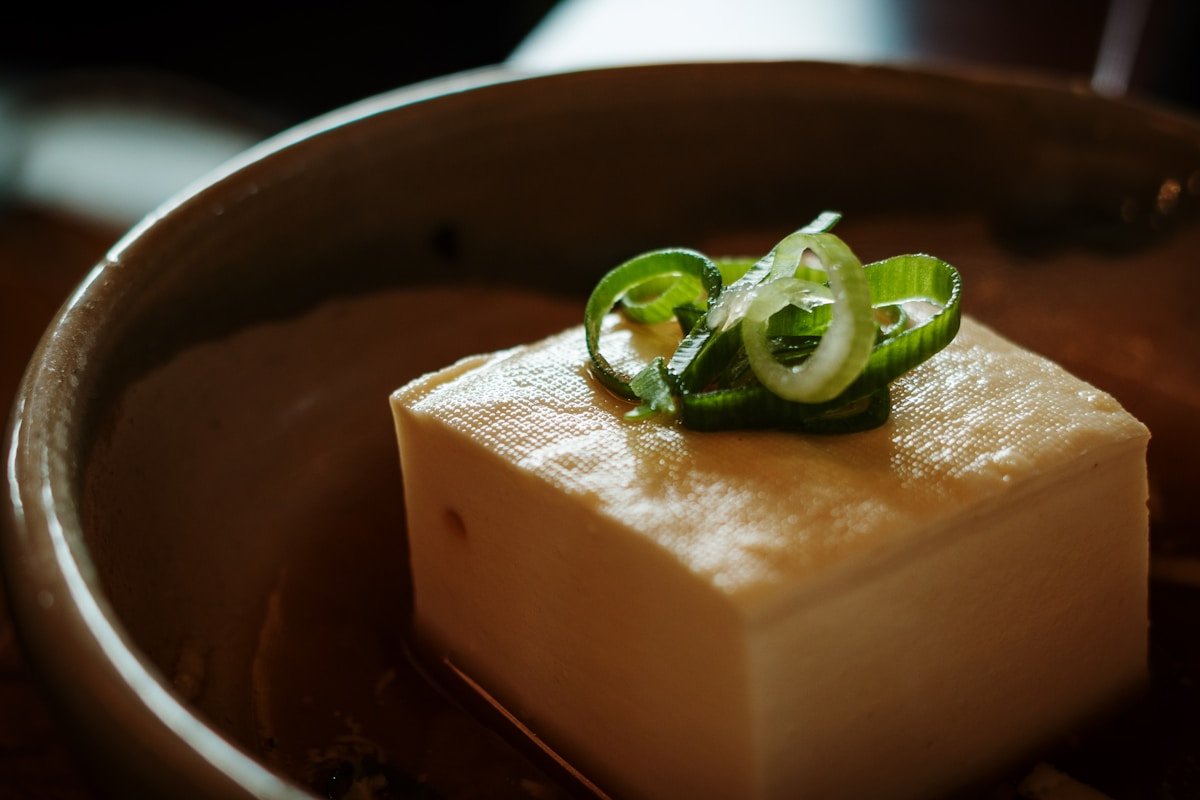
Kyoto’s Buddhist temples historically served shojin ryori (vegetarian temple cuisine), and the city developed a distinctive tradition of tofu-based cooking that continues today. The area around Nanzenji temple has the densest concentration of specialist tofu restaurants.
Okutan (Nanzenji, established 1635) is one of the oldest restaurants in Japan and serves exclusively yudofu - tofu simmered in a light kombu broth, served with seasonal accompaniments. The set course costs approximately JPY 4,180 per person (as of 2026). The building is a traditional machiya overlooking a garden, and the experience is as much about the setting as the food. Reservations are recommended for weekends and the autumn foliage season (mid-October to mid-November). Closed on Tuesdays.
Okabeya (near Kiyomizudera, Higashiyama) serves a range of tofu-based dishes including agedashi tofu (lightly fried, in dashi broth), hiya-yakko (chilled tofu with toppings) and a full tofu kaiseki set. Lunch sets from approximately JPY 2,200 to JPY 4,500. The restaurant is on the approach road to Kiyomizudera and can be busy with tourist traffic in the afternoon - lunch before noon or after 1:30pm is usually quieter.
Yudofu Sagano (Arashiyama) is the equivalent option for the western side of the city. The set course - yudofu with rice, pickles, sesame tofu and seasonal accompaniments - costs approximately JPY 3,500. The building is traditional and the garden is small but well maintained. Open daily, reservations not required.
Temple-Area Lunch Spots: Tourist vs Local Distinction
The areas immediately around Kinkakuji, Kiyomizudera and Arashiyama are heavily touristed, and the restaurants on the direct approach roads often reflect this with inflated prices, simplified menus and limited quality. Eating well in these areas requires stepping one or two streets back from the main pedestrian routes.
Near Kinkakuji: The temple’s immediate surroundings are mostly souvenir shops and overpriced set menu restaurants. Walk ten minutes north toward Ryoanji and the options improve markedly. Hyotei (Nanzenji vicinity, slightly further) is a celebrated kaiseki restaurant for serious visitors with budget. For a reasonable lunch near Kinkakuji specifically, Gozan (on the quieter north side of the temple approach) serves a satisfying soba lunch set for approximately JPY 1,500 to JPY 2,200.
Near Kiyomizudera: The Sannen-zaka and Ninen-zaka stone-paved lanes leading to the temple have a dense concentration of traditional snack shops, matcha cafes and small restaurants. The quality of the street snacks - grilled skewers of mitarashi dango (rice dumplings in sweet soy glaze), yatsuhashi (cinnamon rice crackers), matcha soft-serve ice cream - is generally good and prices are reasonable at JPY 200 to JPY 500 per item. For a proper lunch, Kyoto Cuisine Mori (just off the main Sannen-zaka strip) offers a teishoku set of seasonal Kyoto vegetables and small proteins for approximately JPY 2,500.
Nishiki Market, known as “Kyoto’s Kitchen,” is a covered arcade of around 100 shops and stalls between Karasuma and Teramachi. The market is more interesting as an experience than as a place to eat a sit-down meal - the walk-and-eat format is the point here. Good items to try include: tsukemono (pickled vegetables), tamago (Japanese egg omelette on a skewer), tofu doughnuts from Fushimi-ya at the eastern end, and fresh yuba (tofu skin) from specialist shops. Budget approximately JPY 1,000 to JPY 2,000 for a market walk with tastings.
Where Locals Eat in Kyoto
Away from the tourist circuit, Kyoto’s local eating life centres on a few distinct areas. Fuyacho-dori and Ponto-cho (the narrow lantern-lit alley running parallel to the Kamogawa river) have some of the city’s best atmospheric mid-range restaurants. Ponto-cho is partly touristed but the back kitchens are serious and the riverside seating in summer (May to September) is a genuine Kyoto experience. Budget JPY 4,000 to JPY 8,000 per person at a mid-range Ponto-cho restaurant.
Shijo-Kawaramachi - the intersection at the heart of central Kyoto - has a dense concentration of department store food halls and mid-range chain restaurants that serve Kyoto residents rather than tourists. The basement of Takashimaya department store on this corner has one of the best prepared food sections in the city. For a quick meal, the restaurant floors above have reliable soba, ramen and teishoku options from approximately JPY 1,000 to JPY 2,500.
Practical Notes
Kyoto restaurants are more conservative about opening hours than Tokyo or Osaka. Many kaiseki restaurants do not accept new dinner bookings after 7:30pm. Lunch services end promptly at 2pm at most traditional establishments. Plan around these windows.
Reservations matter more in Kyoto than elsewhere in Japan. The top kaiseki restaurants fill weeks in advance, and even mid-range popular places benefit from a booking on weekends. Use the restaurant’s own website, the Tableall platform (which handles English reservations for high-end venues) or the concierge at your accommodation.
Dress standards are informal at most Kyoto restaurants below kaiseki level. At formal ryotei, smart casual is appropriate - avoid beachwear or overly casual clothing. Your ryokan or hotel can advise on specific dress expectations when booking on your behalf.
For more on Kyoto food culture, seasonality and street food, our Kyoto food guide covers the full picture. Food experiences including market walks and tea ceremony tastings are available through our Kyoto food tours page.