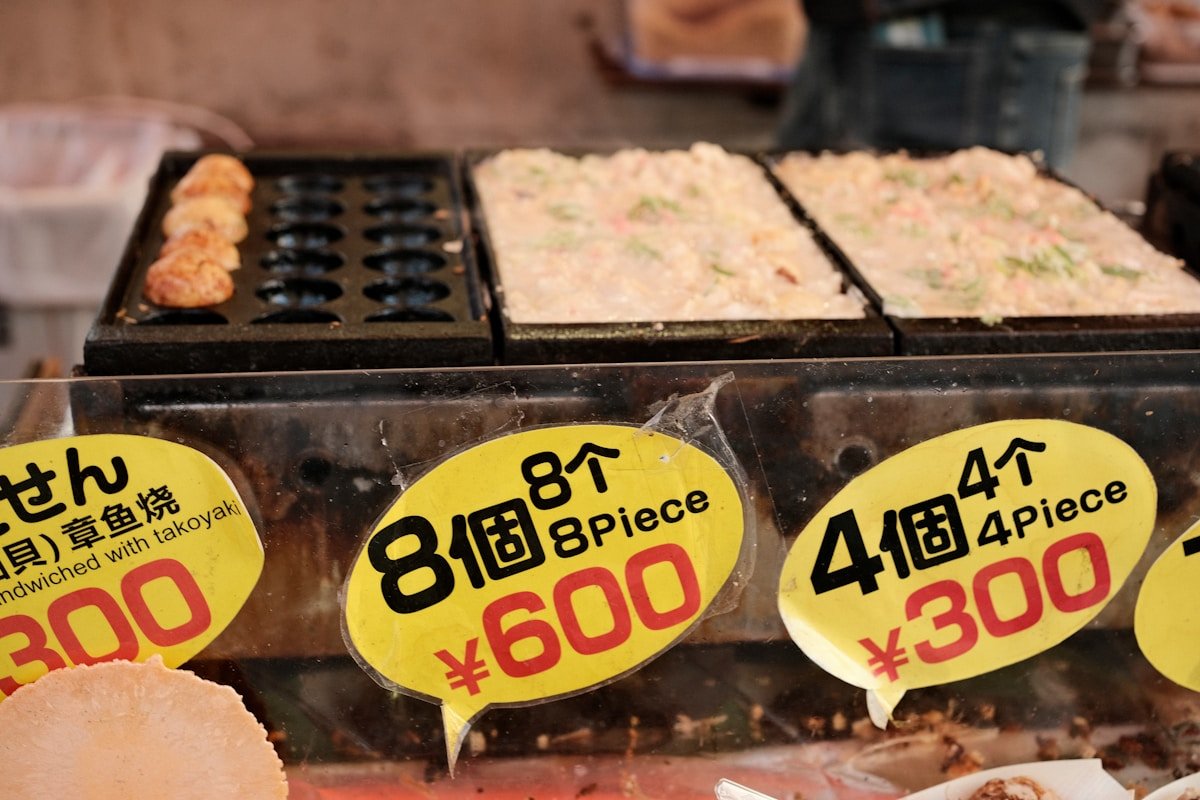
Osaka is Japan’s food capital. Not in the sense that it has the most Michelin stars (that is Tokyo), but in the sense that eating here carries genuine civic meaning. The concept of kuidaore - eating until you drop, spending freely on food as a primary pleasure - is not a marketing phrase invented for tourists. It describes a real cultural orientation rooted in the city’s history as Japan’s commercial hub: a merchant culture with money, appetite, and no interest in the reserved understatement of court cooking.
The practical result is a city where takoyaki stall operators take octopus sourcing seriously, where okonomiyaki restaurants have operated on the same Dotonbori corner for 70 years, and where eating out across two or three days means working through a succession of genuinely excellent food experiences. This guide organises that process: which areas to eat in, what to order, and when.
For detailed coverage of individual dishes and specific restaurant picks, see our Osaka restaurants guide and what to eat in Osaka. For comparison with other Japanese food cities, see our Tokyo food guide and Kyoto food guide. For structured food walks with a guide, see our Osaka food tours guide.
How to Approach Osaka Eating
Osaka rewards a circuit-based approach more than restaurant-by-restaurant dining. The city’s street food culture means that the most satisfying eating often involves moving between areas, grazing and tasting, rather than sitting for lengthy meals.
A practical structure over two or three days:
- Morning: Kuromon Market for fresh seafood and market tasting
- Afternoon: Namba/Dotonbori for takoyaki and okonomiyaki
- Evening: Shinsekai for kushikatsu, or Fukushima/Nakatsu for izakaya
Dotonbori: Where to Eat and Where to Skip
Dotonbori - the canal-side kilometre running from Nipponbashi to Ebisu-bashi bridge - is Osaka’s most photographed food district. The giant mechanical crab sign of Kani Doraku, the Glico running man neon, and dozens of restaurant facades are the visual face of Osaka’s food culture.
The canal-front restaurants are priced primarily for tourists. The food is not necessarily bad, but the markup over equivalent quality one block back is significant - typically 20–30 percent. The better strategy is to use the canal walk for atmosphere and snacking, and eat proper meals in the lanes north and south of the canal.
What to eat on the canal walk:
- Takoyaki from Aizuya (in operation since 1933, eight pieces from ¥600) or from street stalls along the canal (¥600–¥800 for eight pieces)
- Taiyaki (fish-shaped pancake filled with red bean paste, ¥200)
- Mochi ice cream (¥200–¥350 at several stalls)
Better eating one block away:
- Hozenji Yokocho - a stone-paved alley connecting Dotonbori to Namba with a handful of long-established small restaurants. More intimate, better value, and more atmospheric than the canal front.
- Namba’s side streets - Teishoku lunch sets ¥800–¥1,200 at neighbourhood restaurants away from the tourist core.
Kuromon Ichiba: Osaka’s Kitchen
Kuromon Ichiba is a 170-stall covered market running between Namba and Nipponbashi, historically the wholesale source for Osaka’s professional kitchens. The market has adapted to include a retail and walk-and-eat dimension that makes it one of Japan’s most rewarding food markets.
The best approach is to graze through on foot rather than sitting at a single stall. Items worth seeking:
- Tuna sashimi: Multiple stalls sell thick-cut hon-maguro (bluefin tuna) slices from approximately ¥500. Look for stalls with foot traffic from local shoppers, not just tour groups.
- Fresh oysters: Available year-round, peak November to March. Raw from ¥200 per piece; grilled with butter ¥300–¥400.
- Wagyu beef: Several stalls cook wagyu skewers and small cuts to order. ¥300–¥800 per piece.
- Tamago yaki: Osaka rolled omelette - typically sweeter than Tokyo style. Pieces from ¥200–¥400.
- Sea urchin (uni): From ¥500 per serving; quality varies by stall.
Budget ¥1,500–¥3,000 for a proper Kuromon tasting circuit. The market is most active between 10:00 and 13:00; most stalls close by 17:00.
Shinsekai: Kushikatsu Country
Shinsekai is the neighbourhood due south of the city centre, built in the early 20th century as an amusement district around the Tsutenkaku tower. It has the highest concentration of kushikatsu restaurants in Osaka.
Kushikatsu are battered and deep-fried skewers - chicken, pork, prawn, quail egg, asparagus, lotus root, cheese, beef, and dozens of other combinations - served with a communal Worcester-style dipping sauce. The rule: no double-dipping. Use the free cabbage to scoop sauce if needed.
Daruma (Shinsekai, multiple branches including the original on Tsutenkaku-dori): Skewers from approximately ¥100–¥200 each, depending on ingredient. A typical dinner of 10–15 skewers with a beer costs ¥2,000–¥3,000 per person. The original branch is the most atmospheric; expect queues on weekend evenings.
Yaekatsu (near Tsutenkaku): A smaller, more local alternative to Daruma. Slightly shorter queues, similar pricing, homemade sauce with a tangier profile.
Shinsekai is best visited for dinner, when the Tsutenkaku tower lights up and the neighbourhood has its full atmosphere.
Takoyaki: More Than a Snack
Osaka invented takoyaki in the 1930s and remains the best place in Japan to eat it. The dish - batter balls containing octopus, pickled ginger, and spring onion, cooked in a round iron mould and dressed with sauce, mayonnaise, and bonito flakes - requires genuine skill to make properly. The inside should be liquid-soft and near-molten; the exterior should yield a crisp shell.
Wanaka, Namba: More popular with local residents than tourists. From ¥550 for six pieces. Reliable texture and batter-to-octopus ratio.
Aizuya, Dotonbori: Open since 1933, considered among the more serious producers on the Dotonbori stretch. Eight pieces for approximately ¥600. Style is slightly firmer than some shops - a matter of preference.
One portion of takoyaki (8 pieces, ¥600–¥800) is a snack, not a meal. Budget ¥1,500–¥2,000 if treating it as a primary meal alongside other items.
Okonomiyaki: Osaka vs the Rest
Osaka-style okonomiyaki (Naniwa-style or kansai-style) mixes all ingredients into the batter before cooking - this is the version most commonly found across Japan and the one most people mean when they say “okonomiyaki.” Hiroshima-style layers the ingredients separately; the two styles are genuinely different dishes.
The Osaka version is softer, more integrated, with the cabbage fully worked into the batter structure.
Boteju (multiple locations in Namba and Umeda): One of Osaka’s best-known okonomiyaki groups. Okonomiyaki from ¥1,000–¥1,500. English menus available. Teppan tables let you cook your own or have staff do it.
Mizuno, Dotonbori (since 1945): The most celebrated independent okonomiyaki restaurant in the city. The mountain yam variety - which makes the batter unusually light - is ¥1,650–¥1,800. Queue begins before the 11:30 opening on weekends; 45–60 minutes’ wait is not unusual. Cash only.
Tsuruhashi: Korean Barbecue
Tsuruhashi, east of Namba, is Japan’s largest Korean quarter and the best area in Osaka for yakiniku (Korean-style table barbecue). The neighbourhood has several generations of Korean-Japanese residents, and the barbecue here is a different experience from the Japanese-only yakiniku chains found throughout the city.
A yakiniku dinner at a Tsuruhashi restaurant - beef short rib, tongue, offal cuts, and vegetables grilled over charcoal - typically costs ¥2,500–¥5,000 per person with beer. The market area around Tsuruhashi Station has Korean food stalls for cheaper daytime eating.
Eating Well on a Budget
Osaka’s best budget eating is often invisible from the main tourist streets.
Teishoku sets - Available at neighbourhood restaurants throughout the city for ¥800–¥1,200 at lunch. The presence of a laminated picture menu or a queue of office workers at 12:30 is the reliable indicator.
Standing ramen and soba - Tachikui (standing) restaurants near train stations serve bowls from ¥500–¥800. The underground passages at Namba and Shinsaibashi stations have the highest concentration.
Konbini - Japan’s convenience stores (7-Eleven, FamilyMart, Lawson) maintain high quality across the country. Onigiri ¥120–¥180, nikuman pork buns ¥130, sandwiches ¥220–¥350. Not the point of being in Osaka, but a practical option between meals.
Osaka Food District Summary
| District | What it’s known for | Average spend |
|---|---|---|
| Dotonbori (canal walk) | Takoyaki, street snacks | ¥600–¥2,000 |
| Dotonbori (side streets) | Okonomiyaki, teishoku | ¥1,000–¥3,000 |
| Kuromon Market | Seafood, wagyu, market grazing | ¥1,500–¥2,500 |
| Shinsekai | Kushikatsu | ¥1,500–¥3,000 per person |
| Tsuruhashi | Korean barbecue (yakiniku) | ¥2,500–¥5,000 per person |
| Fukushima/Nakatsu | Contemporary izakaya, craft beer | ¥3,000–¥5,000 per person |
| Kitashinchi | High-end fugu, kappo | ¥10,000–¥30,000 per person |
| Umeda depachika | Department store prepared food | ¥900–¥1,800 |
Explore Osaka’s food scene further: Guided food experiences in Osaka - market walks, sake tastings, ramen tours, and hands-on cooking classes.
Practical Notes
Osaka eats later than Tokyo. Dinner starts filling restaurants from 19:00 rather than 18:00. The Dotonbori area is most crowded from 20:00 to 22:00.
Fugu is worth trying in Osaka. The city is Japan’s leading consumer of fugu (blowfish) and has the highest density of licensed fugu restaurants. A mid-range fugu course - tessa (sashimi), tecchiri (hot pot), or kara-age (deep-fried) - runs ¥5,000–¥8,000 per person at establishments in Dotonbori, Kitashinchi, or Fukushima. Reservations recommended but usually available same-week.
Cash is necessary for street food. Most Dotonbori stalls, Kuromon Market vendors, and Shinsekai kushikatsu shops are cash-only. Cards are generally accepted at mid-range and above restaurants.
For broader Osaka travel planning, visit our Osaka city guide. For restaurant picks by area, see our best restaurants in Osaka guide. For food tours, see our Osaka food tours guide.
See also: Osaka travel guide · Best restaurants in Osaka · Osaka food tours · Kyoto food guide · Tokyo food guide · Japanese food guide · Osaka vs Kyoto
Plan Your Trip
- Flights - Find the best fares to Japan
- Travel Insurance - Get covered before you go
- eSIM - Stay connected from landing
- Car Rental - Compare prices across providers