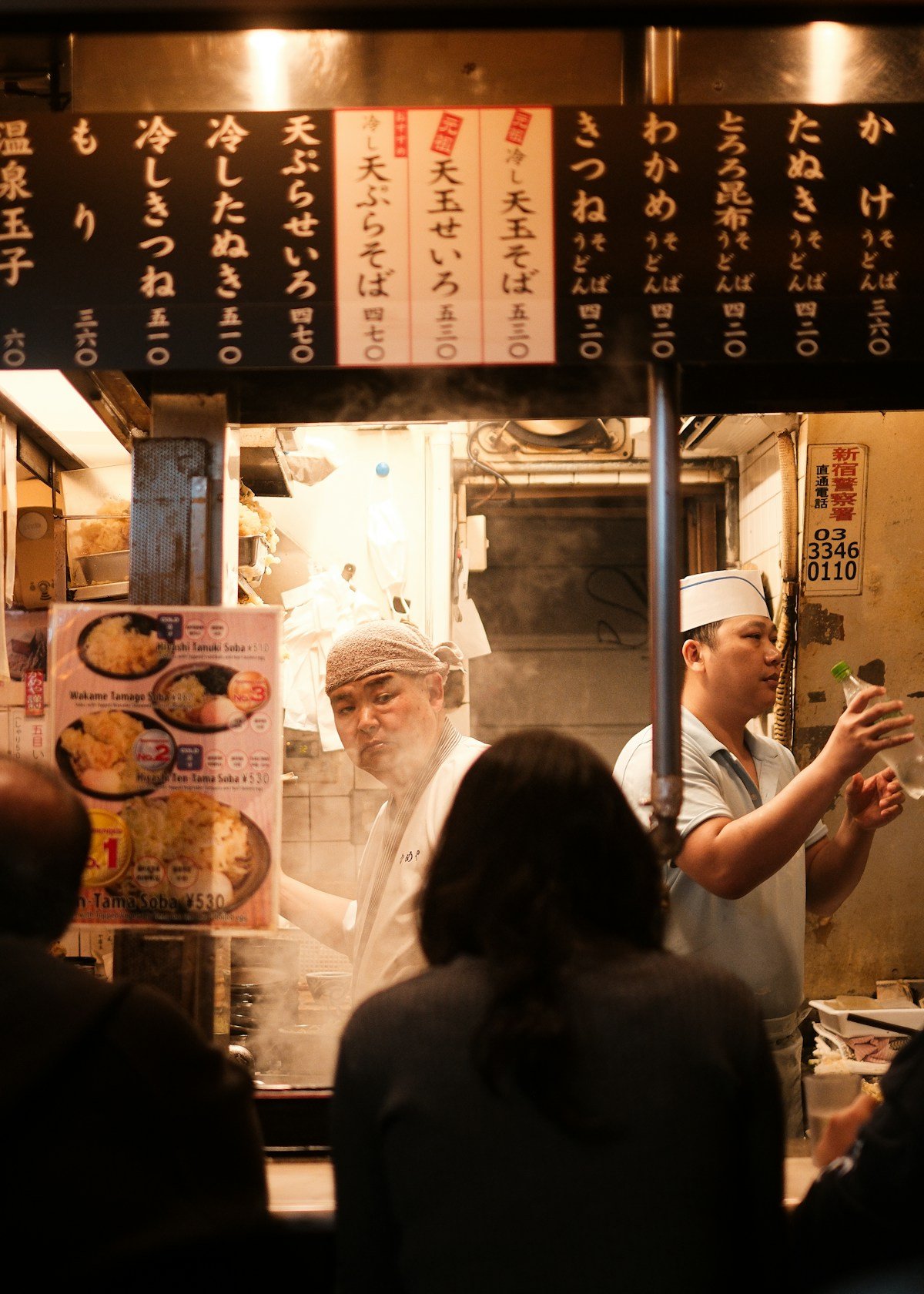
Tokyo holds more Michelin stars than any other city in the world. This is not because it is the most expensive place to eat - plenty of the starred establishments cost under ¥2,000 per person - but because the city treats food with an unusual degree of seriousness across every category and price point. A ramen shop run by a former banker who spent a decade developing a single broth competes for the same cultural respect as a kaiseki chef with a three-generation pedigree. Both are taken seriously. Both deliver.
Eating well in Tokyo requires understanding its food geography. The city is not uniform - each district has its own food identity, and knowing where to go for what saves time and leads to better meals. This guide covers how to eat in Tokyo over a multi-day visit: where to eat breakfast, how to approach lunch, what to do in the evenings, and what to spend.
For specific dish-by-dish recommendations, see our what to eat in Tokyo guide. For individual restaurant picks by category, see our Tokyo restaurants guide.
Tokyo’s Food Districts
Tsukiji Outer Market - The wholesale tuna auction moved to Toyosu in 2018, but the outer market continues as a dense cluster of sushi counters, sashimi specialists, and seafood stalls opening from 05:30–06:00. A tuna sashimi breakfast at a small counter restaurant costs ¥2,000–¥4,000 depending on cut. Individual sushi stalls sell single pieces from ¥200. Arrive before 08:00 to get the best options and avoid the longest queues. Access: 5-minute walk from Tsukiji Station (Tokyo Metro Hibiya Line).
Asakusa - Tokyo’s most historically grounded food neighbourhood. Daikokuya has served tempura tendon since 1887 (from approximately ¥1,800 for the set; queues on weekends). The Nakamise shopping arcade leading to Senso-ji sells traditional Edo-era snacks: ningyo-yaki (red bean cakes in pagoda moulds, ¥500 for 8–12), agemanjo (deep-fried pork buns, ¥200–¥250 each), and kaminari-okoshi (puffed rice confection, from ¥400). Less expensive for sit-down meals than Ginza or Shibuya.
Shinjuku - The city’s most varied food district. Three distinct zones worth knowing:
- Omoide Yokocho (Memory Lane): a 2-metre-wide alley running north from Shinjuku Station’s west exit with roughly 20 tiny yakitori and grilled skewer restaurants operating since the 1940s. Each shop seats 8–12 at a counter. Budget ¥1,500–¥2,500 per person with drinks. Cash-only. Arrive after 18:00 for full atmosphere.
- Golden Gai: a grid of six narrow alleys with approximately 200 tiny bars seating 5–8 people. Primarily a drinking destination with cover charges of ¥700–¥1,500. Not a food venue, but an irreplaceable Tokyo evening experience.
- Isetan Shinjuku depachika: the basement food halls at B1–B2 are widely considered the finest in Tokyo. Premium confectionery, prepared foods, sushi, pastry, and every category of specialist Japanese food product. Open 10:30–20:00.
Yurakucho - The cluster of yakitori and izakaya restaurants operating under and alongside the elevated JR Yamanote Line tracks between Yurakucho and Shimbashi stations. Dozens of establishments - some seating ten people - grill chicken skewers over charcoal with smoke drifting up to the concrete overhead. Budget ¥2,000–¥3,500 per person with drinks. Most are cash-only. One of Tokyo’s most atmospheric food experiences for a weekday evening.
Tsukishima - Tokyo’s monjayaki district. Monjayaki is the city’s own version of the savoury teppan pancake - more liquid than Osaka-style okonomiyaki, cooked directly on a flat iron grill, with a characteristic crispy crust forming around the edges. Tsukishima’s “Monja Street” has over 60 dedicated restaurants on one stretch. Portions from ¥1,200; seafood combinations ¥1,500–¥2,200. Access: Tsukishima Station (Tokyo Metro Yurakucho Line), exit 7.
Ginza - Tokyo’s highest concentration of mid-range to high-end sushi counters and upscale restaurants. The most practical approach: lunch omakase at a Ginza sushi counter costs ¥5,000–¥10,000, which is the most cost-effective entry point to serious Tokyo sushi. The same restaurants charge considerably more for dinner. The Mitsukoshi Ginza depachika (B1–B2) has a strong prepared food selection - box lunches for a Hibiya Park picnic are consistently excellent.
Eating by Meal
Breakfast
Convenience store (¥450–¥700): The fastest and most ubiquitous option. Onigiri ¥130–¥180, hot nikuman ¥130–¥170, sandwich ¥200–¥330. 7-Eleven, FamilyMart, and Lawson are on virtually every block. The quality significantly exceeds the convenience store standard of most countries - this is not a compromise.
Depachika (¥400–¥1,500 per item): Most department stores open at 10:00–10:30. Isetan Shinjuku (B1–B2), Takashimaya Times Square (Shinjuku, B1–B2), and Mitsukoshi Ginza (B1–B2) all have pastries, egg dishes, and prepared food at reasonable prices given the quality. Best visited at opening when the freshest items are available.
Tsukiji Outer Market (¥2,000–¥4,000): The destination breakfast for seafood. Best for visitors willing to rise early (05:30–06:00 opening) for the most atmospheric and fresh experience.
Lunch
Lunch is the highest-value meal of the day in Tokyo. Restaurants that charge ¥3,000–¥5,000 per person for dinner frequently serve the same kitchen at lunch for ¥900–¥1,500 as a teishoku set.
Teishoku set lunch (¥800–¥1,500): A complete set meal - rice, miso soup, main dish (grilled fish, fried pork, simmered vegetables), and pickles. Available at neighbourhood restaurants throughout the city. Identifiable by a laminated picture menu in the window or a queue of office workers at 12:30. Most serve lunch from 11:30 to 14:00 only.
Ramen (¥850–¥1,100): Fuunji in Shinjuku for tsukemen - the noodle-dipping style - from ¥950, with a 20–45-minute queue at peak lunch. Ichiran for tonkotsu in individual private booths from ¥980. Fuji-ya near Yurakucho for classic Tokyo shoyu at around ¥850.
Kaiten sushi (¥1,200–¥2,000 per person): Sushiro for reliable quality conveyor-belt sushi from ¥100 per plate; Uobei in Shibuya for rapid-lane ordering from ¥110. No reservation needed at either chain.
Tempura (¥750–¥1,800): Tendon Tenya chain nationwide for tendon sets at ¥750–¥950 - one of the best-value lunches in the city. For a sit-down experience, Tsunahachi in Shinjuku (since 1924) from ¥1,800.
Dinner
Izakaya (¥2,500–¥5,000 per person with drinks): The standard Tokyo evening meal structure - multiple small shared plates with beer, sake, or shochu. Shibuya, Nakameguro, and Shimokitazawa have design-conscious modern izakaya with English menus and online reservations. Shinjuku’s Omoide Yokocho offers older, less English-accessible, more atmospheric alternatives.
Tonkatsu (¥2,000–¥2,500): Tonki in Meguro has operated since 1939 - hire katsu set ¥2,200, queue expected, cash only, counter seating around an open kitchen. Maisen in Omotesando serves katsu in a converted bathhouse building from ¥2,200, with katsu sandwiches to-go from ¥800.
Wagyu (¥5,000–¥20,000+): Entry-level wagyu yakiniku (grilled at table) from ¥5,000–¥8,000 per person at mid-range restaurants. Wagyu katsu sandwiches from specialist shops in Ginza and Omotesando: ¥2,000–¥5,000.
High-end omakase sushi (¥5,000–¥60,000+): Ginza-area counters offer lunch omakase from ¥5,000 with same-week booking possible through Tabelog or SAVOR Japan. Three-Michelin-star counters like Sushi Saito require referrals and months of advance booking; they are reference points, not accessible recommendations.
Price Tiers
| Budget | Daily spend | What this covers |
|---|---|---|
| Budget | ¥2,500–¥4,000 | Konbini meals, ramen, teishoku lunches |
| Mid-range | ¥5,000–¥10,000 | Mix of teishoku, izakaya dinners, occasional kaiten sushi |
| Comfortable | ¥10,000–¥20,000 | Sit-down restaurants, one omakase lunch |
| Fine dining | ¥20,000+ | Kaiseki, high-end sushi, wagyu at Ginza restaurants |
Explore Tokyo’s food scene further: Guided food experiences in Tokyo - market walks, sake tastings, ramen tours, and hands-on cooking classes.
Practical Notes
Cash is essential. Most small restaurants, yakitori alleys, market stalls, and neighbourhood izakaya are cash-only. Keep ¥5,000–¥10,000 in cash available per day.
Opening hours. Lunch service typically runs 11:30–14:00; last orders are at 14:00, not closing time. Dinner starts 17:30–18:00, last orders 21:00–22:00. Some popular ramen shops close when sold out - typically by 14:00–15:00 at busy locations.
Queues. Expected and orderly. A 20–40-minute queue at a well-regarded ramen shop is normal practice, not a deterrent. Arrive at the door at opening time to minimise waiting.
Language. English menus are common in tourist-concentrated areas. In neighbourhood restaurants without English menus, pointing at picture menus or other diners’ dishes works well. The phrase “kore wo kudasai” (I’ll have this one) while pointing is universally understood.
For wider Tokyo trip planning, see our Tokyo city guide. For Osaka, see our Osaka food guide, and for Kyoto, see our Kyoto food guide. For structured food walks with a guide, see our Tokyo food tours guide.
See also: Tokyo travel guide · Best restaurants in Tokyo · Tokyo food tours · Osaka food guide · Kyoto food guide · Japanese food guide · Best tours in Tokyo
Plan Your Trip
- Flights - Find the best fares to Japan
- Travel Insurance - Get covered before you go
- eSIM - Stay connected from landing
- Car Rental - Compare prices across providers