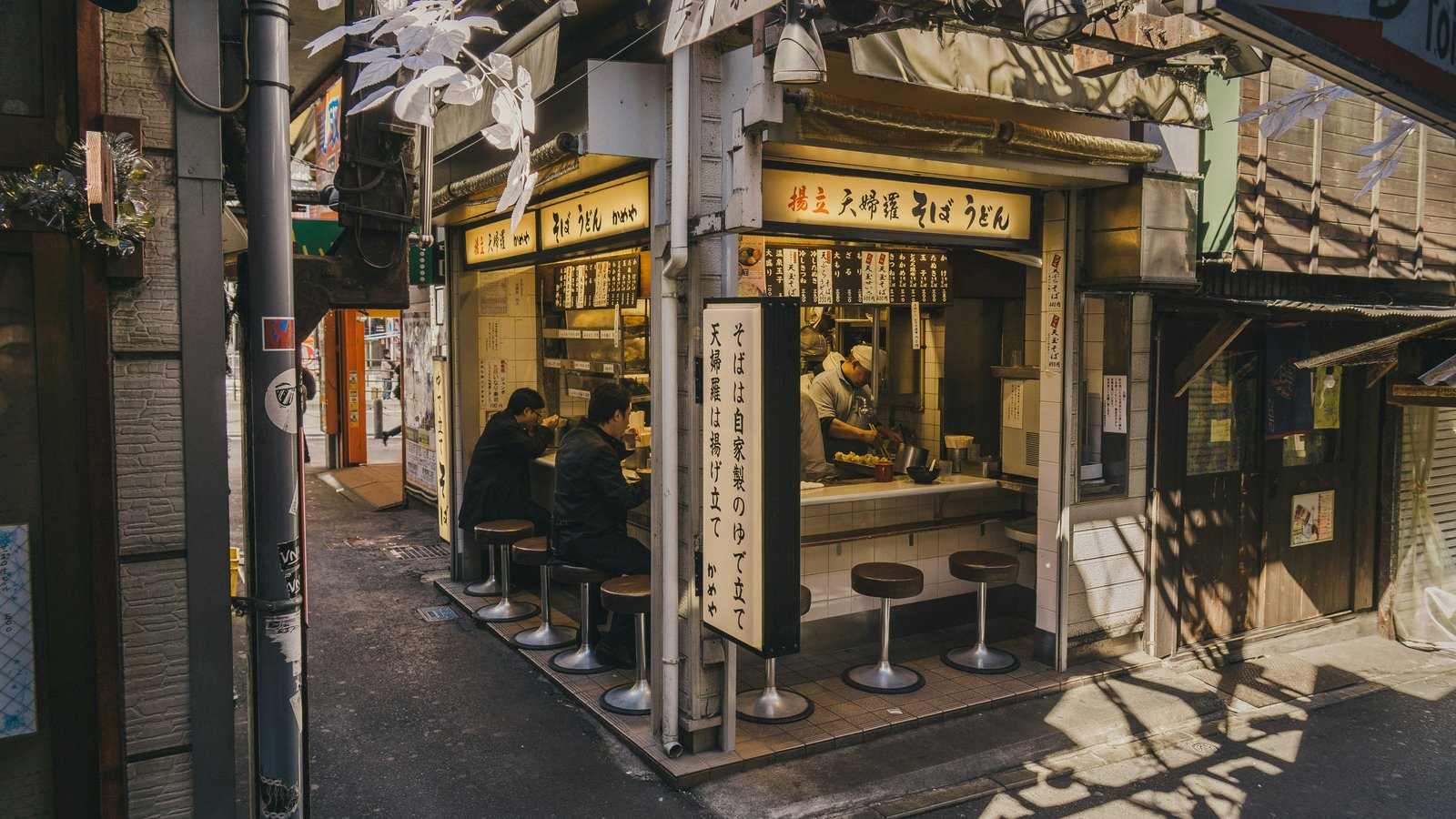
Tokyo holds more Michelin stars than any other city on earth - and some of the best meals here cost under ¥2,000. Food tours make that diversity accessible: a good guide can move you through half a dozen tastings in three hours, explain what you’re eating, navigate the ordering (often in Japanese only), and take you to venues you wouldn’t find independently. This guide covers what’s available across the main tour types, what to expect, and how to choose.
Prices listed are approximate as of 2026 and vary by operator and season.
Tsukiji Outer Market Tours
The inner wholesale market moved to Toyosu, but Tsukiji Outer Market remains Tokyo’s most visited food destination. The grid of narrow lanes holds over 400 shops and restaurants - sushi counters opening before dawn, sashimi specialists, dried seafood vendors, pickles, kitchen tools, and specialist condiment shops.
What a Tsukiji tour covers: Most guided tours run 2–3 hours and include 5–8 tastings - fresh tuna, sea urchin (uni), grilled scallops, tamagoyaki (thick rolled omelette), fresh oysters, and seasonal items. Guides explain the provenance of fish, the history of the market, and how to identify quality at the stalls. Some tours include a sit-down sushi breakfast at a small counter restaurant.
Timing: Tours typically depart 07:00–09:00. By 10:00 the market is at its busiest and most photogenic; by noon the best stalls have sold out. Early morning slots are worth the early start.
Prices: Approximately ¥6,500–¥9,500 per person for a 2–3 hour guided tasting tour. Premium tours including a sushi counter breakfast run ¥10,000–¥14,000.
Group size: Most operators cap at 8–12 participants. Smaller groups (4–6) offer more flexibility at individual stalls and a higher ratio of guide time.
Asakusa Street Food and History Tours
Asakusa is Tokyo’s most historically layered neighbourhood - the area around Senso-ji temple has been a commercial food street since the Edo period (1603–1868). A guided food tour here covers a different register from Tsukiji: traditional confectionery, century-old tempura restaurants, seasonal snacks, and melon bread from long-running bakeries.
What an Asakusa tour covers: Typical stops include ningyo-yaki (red bean cakes in pagoda moulds, from ¥500 for 8–12 pieces), agemanjo (deep-fried pork buns, ¥200–¥250 each), kaminari-okoshi (puffed rice confection), tempura at Daikokuya (which has served tempura tendon since 1887), and matcha soft serve. The Nakamise shopping arcade and the smaller back streets behind the temple are both covered on good tours.
Duration: 2–3 hours. Some operators combine Asakusa with a Ueno neighbourhood extension.
Prices: Approximately ¥5,500–¥8,500 per person. Tours that include a sit-down tempura lunch run ¥9,000–¥12,000.
Best for: First-time visitors wanting cultural context alongside the food, and anyone interested in Edo-era food history. Less suited to visitors primarily looking for izakaya or modern Japanese dining.
Evening Izakaya Crawls
Tokyo’s izakaya culture is best experienced with a guide who knows where to go and can handle the ordering in Japanese. A crawl typically covers 3–5 venues over 3–4 hours: a neighbourhood yakitori counter, a traditional izakaya with a long sake list, possibly a small bar in Golden Gai or one of the Shinjuku alleys.
What an izakaya tour covers: Food across multiple stops - grilled skewers (yakitori), edamame, dashimaki tamago (rolled omelette), chicken karaage, sashimi, assorted okazu (small dishes). Drinks are usually covered within the tour price or available for purchase. A guide explains the ordering etiquette, how to approach the sake list, and the difference between the venues.
Best areas: Shinjuku (Omoide Yokocho and Golden Gai), Yurakucho (yakitori under the train tracks), Shimokitazawa for a younger, neighbourhood-bar-heavy circuit. Some operators offer a mix of all three.
Duration: 3–4 hours. Most evening tours depart 18:00–19:00.
Prices: Approximately ¥9,000–¥14,000 per person with food included. Tours with premium sake pairing run ¥12,000–¥18,000.
Ramen and Noodle-Focused Tours
Ramen tours focus on two or three bowls over an afternoon - covering different regional styles across separate shops. Tokyo shoyu ramen, Hokkaido-style miso ramen, and tsukemen (dipping-style noodles) are common inclusions. Some tours incorporate ramen history, an explanation of broth styles, and visits to shops with English-inaccessible menus.
What a ramen tour covers: 2–3 shops over 2–3 hours, with a partial bowl at each (rather than a full bowl, to keep the pace manageable). Guide explains the broth composition, regional variation, and how to order using the vending machines common at independent ramen shops.
Prices: Approximately ¥6,500–¥9,000 per person.
When to go: Afternoon tours (14:00–17:00) avoid the peak lunchtime queues at popular shops. Evening tours allow a full bowl rather than a tasting portion.
Cooking Classes
Tokyo cooking classes run 2.5–4 hours and cover a single cuisine type: ramen from scratch, sushi rolling, gyoza making, or a broader washoku (traditional Japanese cuisine) introduction.
Ramen classes: Learn broth preparation, noodle style selection, and assembly. Approximately ¥8,000–¥11,000 per person. Most include the completed bowl as your meal.
Sushi-making classes: Cover fish slicing, vinegared rice preparation, and nigiri forming. Usually 10–15 pieces per participant. Approximately ¥8,000–¥12,000 per person. Classes near Tsukiji often include a morning market visit first.
Washoku/home cooking classes: Broader introduction - miso soup, rice, a main (teriyaki, tempura, or similar), and pickles. Apartment or kitchen studio settings. Approximately ¥8,000–¥14,000 per person. Good for visitors wanting to recreate dishes at home.
Book a food tour: Food and culinary tours in Tokyo on GetYourGuide - street food walks, sake tastings, ramen tours, and market visits with local guides.
For evenings: An izakaya crawl in Shinjuku or Yurakucho. The experience is significantly better with a guide than independently in the smaller, non-English-menu venues.
For active participation: A cooking class. Most classes suit all skill levels and end with eating what you’ve made.
For quiet neighbourhood discovery: An Asakusa or Yanaka walking tour - lower density, more conversation, more cultural history alongside the food.
For the broader eating-in-Tokyo picture, see our Tokyo food guide. For general Tokyo trip planning, see our Tokyo city guide.
See also: Things to do in Tokyo · Best restaurants in Tokyo · Best tours in Tokyo · teamLab Tokyo guide · Kanto region guide
Plan Your Trip
- Flights - Find the best fares to Japan
- Travel Insurance - Get covered before you go
- eSIM - Stay connected from landing
- Car Rental - Compare prices across providers