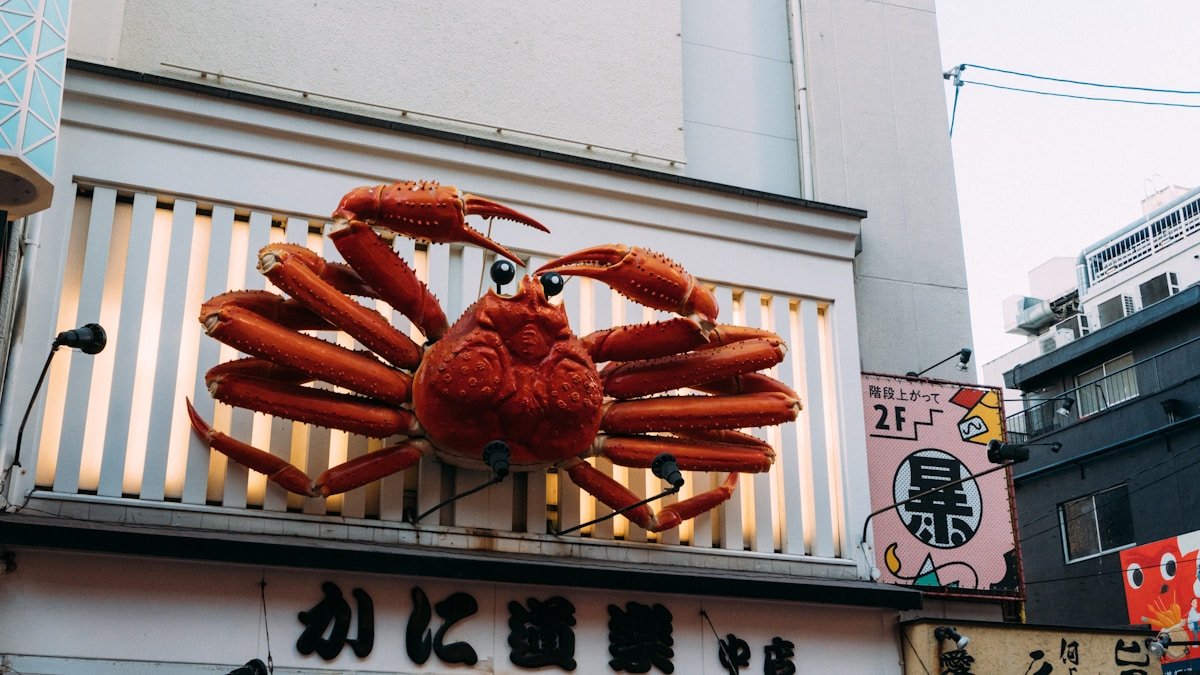
Osaka earns its reputation as Japan’s food capital with street-level seriousness - a city where residents track which takoyaki stall changed suppliers and debate okonomiyaki topping sequences with genuine conviction. For visitors, the density is both an advantage and a challenge: Dotonbori alone has over 100 food options in 400 metres, and knowing which stalls are genuinely good requires either local knowledge or return visits. A food tour solves the problem by compressing the discovery into two or three hours.
This guide covers what’s available across Osaka’s main tour types, the areas they cover, and what to look for when choosing.
Prices listed are approximate as of 2026 and vary by operator and season.
Dotonbori and Namba Street Food Tours
Dotonbori is Osaka’s most iconic food street - the canal-front strip with the giant Glico running man sign, crab claws rotating on restaurant facades, and a concentration of street food vendors that makes it one of the most photographed dining areas in Japan.
What a Dotonbori tour covers: Takoyaki (octopus balls, ¥500–¥600 per cup from street stalls), kushikatsu (breaded fried skewers), okonomiyaki, fresh crab legs at street counters, and taiyaki (fish-shaped red bean waffle). A good guide moves you away from the tourist-facing canal-front prices to the back streets where the same quality costs 20–30 percent less. Hozenji Yokocho - a stone-paved alley connecting Dotonbori to Namba - is a regular stop on tours for its traditional izakaya atmosphere and long-established restaurants.
Duration: 2–3 hours. Most tours operate daytime and evening slots, with evening recommended for the full Dotonbori neon atmosphere.
Prices: Approximately ¥6,500–¥9,500 per person with 5–8 tastings included. Evening tours with izakaya stops run ¥9,000–¥13,500.
Group sizes: Most operators run groups of 4–10. Smaller groups move faster through narrow alleys.
Kuromon Ichiba Market Tours
Kuromon Market - 580 metres of covered stalls running parallel to the Sennichimae shopping area - has been Osaka’s wholesale kitchen market since the 1920s. It trades in everything from fresh tuna and Matsusaka wagyu beef to seasonal vegetables, pickled plums, and specialty produce. Cooked-to-order vendors are scattered throughout: grilled scallops on skewers (¥200–¥300), fugu (pufferfish) sashimi (¥1,500–¥2,000), fresh oysters with lemon (¥200–¥350), wagyu beef skewers (¥800–¥1,500).
What a Kuromon tour covers: A guided circuit identifies the best vendors in each category, explains seasonal availability, and handles ordering at stalls where there is no English. A good tour typically covers 6–10 stops over 2 hours.
When to go: The market opens from approximately 09:00; most vendors wind down by 14:00–15:00. Morning tours from 09:30 have the freshest stock and shortest queues.
Prices: Approximately ¥5,500–¥8,500 per person for a guided 2-hour circuit with 6–8 tasting samples.
Best for: Visitors interested in fresh produce and Japanese market culture as much as the finished dishes. Less suited to those who want fully cooked, sit-down dining stops.
Shinsekai and Kushikatsu Tours
Shinsekai is Osaka’s retro entertainment district - built in 1912 as a copy of Paris and New York, it now trades on its mid-20th-century atmosphere and is home to the highest concentration of kushikatsu restaurants in Japan.
Kushikatsu: Breaded and deep-fried skewers - pork, seafood, vegetables, quail eggs - served with a communal dipping sauce and free unlimited cabbage. The single inviolable rule: never dip a skewer twice. Once you’ve bitten into it, it does not go back in the sauce. Use the cabbage as a ladle.
What a Shinsekai tour covers: Multiple kushikatsu restaurants, local Osaka snacks, fugu, and some of the retro surroundings including the Tsutenkaku tower area. Some tours combine Shinsekai with a Namba evening street food extension.
Duration: 2–3 hours, typically evening.
Prices: Approximately ¥7,500–¥11,000 per person with kushikatsu and snacks included.
Evening Izakaya Crawls
Osaka’s izakaya scene is denser and cheaper than Tokyo’s. A guided evening crawl typically covers 3–5 venues - a standing izakaya (tachinomi) for drinks and quick skewers, a sit-down izakaya with a full food menu, and one or two specialist spots (sake bar, craft beer, robatayaki grill).
What an izakaya tour covers: Food and at least one drink per venue included in the price. Dishes across the evening: edamame, karaage, yakitori, sashimi, tofu, pickles. The guide explains sake categories, handles ordering at cash-heavy small venues, and provides context on the neighbourhood.
Best areas: Namba and Shinsaibashi for a mix of traditional and modern. Hozenji Yokocho for the most atmospheric traditional crawl. Tsuruhashi for those who want a Korean-influenced extension.
Duration: 3.5–4 hours. Departure times usually 18:00–19:30.
Prices: Approximately ¥9,000–¥14,000 per person with food and one drink per venue included.
Cooking Classes
Okonomiyaki classes: Osaka’s signature savoury pancake. Classes run 2.5–3.5 hours and teach batter preparation, ingredient selection (seafood, pork, corn, cheese are common additions), the two-spatula cooking method, and topping application. Approximately ¥7,500–¥11,000 per person.
Takoyaki classes: Osaka is the home of takoyaki - the round cast-iron pan, the filling technique, the timing. Classes run 1.5–2.5 hours and cost approximately ¥4,500–¥8,000 per person.
Ramen and dumpling classes: Some operators combine gyoza folding with ramen broth preparation - a 3–4 hour class covering both. Approximately ¥9,000–¥13,000 per person.
Home-hosted classes: Some Osaka cooking classes operate out of private homes or traditional machiya townhouses. These tend to offer more personal instruction and cultural conversation than commercial studio environments, and are particularly popular with visitors interested in everyday Osaka home cooking rather than restaurant-standard dishes.
Book a food tour: Food and culinary tours in Osaka on GetYourGuide - street food walks, sake tastings, ramen tours, and market visits with local guides.
For something more distinctive: Shinsekai kushikatsu or a Tsuruhashi Koreatown walk covers neighbourhoods that don’t make it onto every itinerary.
For hands-on participation: An okonomiyaki class is the classic Osaka cooking experience - participatory, social, and you eat the result.
For the broader eating-in-Osaka picture, see our Osaka food guide. For Osaka trip planning generally, see our Osaka city guide.
See also: Things to do in Osaka · Best restaurants in Osaka · Best tours in Osaka · Universal Studios Japan guide · Kansai region guide
Plan Your Trip
- Flights - Find the best fares to Japan
- Travel Insurance - Get covered before you go
- eSIM - Stay connected from landing
- Car Rental - Compare prices across providers