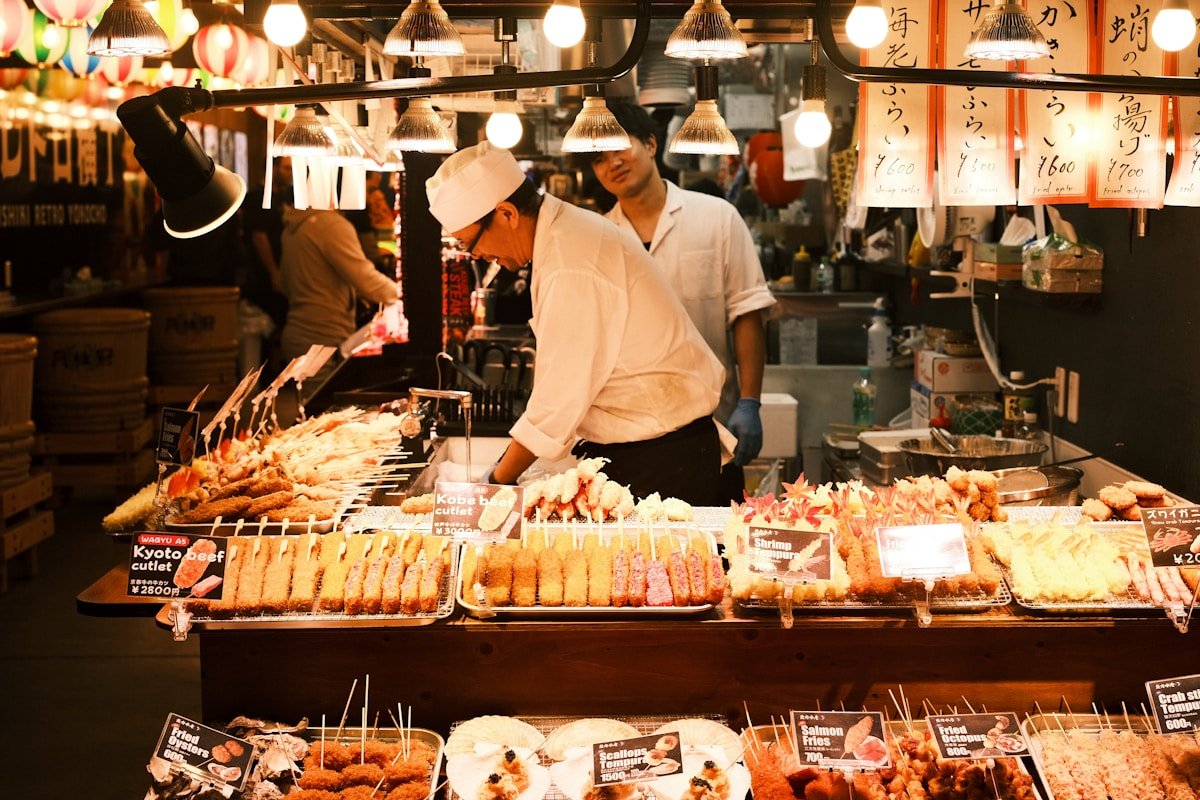
Kyoto’s food culture is built around restraint, seasonality, and the integration of Buddhist vegetarian traditions into a broader cooking philosophy. The city gave Japan kaiseki - the most formally structured expression of Japanese haute cuisine - and it also has a strong tradition of everyday vegetable and tofu cooking rooted in Zen Buddhist practice. Eating well here does not require spending large sums, but it does reward paying attention to what you order and where you eat it.
The Kyoto Food Landscape
Kaiseki
Kaiseki is Kyoto’s most significant culinary contribution to Japan. It originated in the tea ceremony tradition - a series of small dishes served before tea - and evolved into Japan’s most elaborate form of restaurant dining. A full kaiseki progression typically runs eight to twelve courses: sakizuke (amuse), hassun (seasonal platter), mukozuke (sashimi), takiawase (simmered dish), yakimono (grilled dish), mushimono (steamed dish), rice, pickles, miso soup, and a sweet.
Every element is seasonal. In October, matsutake mushrooms appear; in spring, bamboo shoots; in summer, hamo (pike conger eel, a Kyoto specialty). The presentation is as deliberate as the flavour - lacquerware, ceramic, and glassware are chosen to complement the season and the dish.
Dinner kaiseki at a respected restaurant runs ¥15,000–¥40,000 per person. Lunch kaiseki at the same establishments - typically a condensed version of the dinner menu - costs ¥8,000–¥15,000 and is the most sensible entry point.
Tofu Cuisine (Yudofu)
Kyoto produces some of Japan’s finest tofu, made with the notably soft Kyoto water. Yudofu - tofu simmered in a kombu kelp broth and served with ponzu sauce and condiments - is one of the city’s signature dishes. Temple-adjacent restaurants in Sagano and Nanzen-ji specialise in it.
Tousuiro (Gion area): Morning tofu breakfast set at ¥2,750, which is extraordinary value for a beautifully presented multi-item yudofu meal. Their evening tofu course (¥7,700–¥9,900) uses organic Kyoto tofu across a full progression of preparations. Reservation recommended.
Okutan (near Nanzen-ji): One of Kyoto’s oldest tofu restaurants, operating since 1635. The yudofu set is ¥3,850 and includes tofu skin (yuba), simmered tofu, and sesame tofu. The tatami room overlooking the garden is exceptional. Closed Thursday.
Soba
Kyoto has a strong soba culture distinct from the Edo-style (Tokyo) tradition. Kyoto soba tends to be lighter on the dashi - the broth here leans sweet - and the aesthetic presentation is typically more refined.
Mizuki (near Nishiki Market, Nakagyo-ku): Cold seiro soba ¥900, duck soba ¥1,400. Small, quiet, and consistently good. No reservation needed for lunch.
Honke Tagoto (near Kawaramachi): A Kyoto institution operating since 1868. Multi-course soba sets from ¥2,200. The kaiseki-soba lunch course (¥3,500) is particularly good value.
Obanzai
Obanzai is Kyoto home-cooking: a collection of small seasonal dishes - pickled or simmered vegetables, tofu preparations, egg dishes, fish - arranged and served together. It is the opposite of kaiseki in its informality and the opposite of yudofu in its variety.
Omen (Higashiyama, near Nanzen-ji): A Kyoto favourite for three decades. The Omen noodle (thick udon with a platter of raw and cooked vegetable accompaniments) is ¥1,250 and effectively functions as an obanzai set. The vegetable toppings change daily. Expect a short queue at peak lunch.
Nishiki Warai (inside Nishiki Market): An obanzai lunch set - five or six rotating small dishes, rice, miso soup - for ¥1,500–¥2,000. Good quality for the price and the location.
Ramen
Menya Inoichi (Higashiyama area): Serves a clear, intense chicken tare ramen for ¥1,100 that has developed a cult following. Small shop, queues form by opening. Closed Tuesday.
Ramen Santouka (multiple central Kyoto locations): Part of the Hokkaido chain, consistently good miso and shio ramen at ¥1,100–¥1,400. No queues, no fuss, reliable.
Where to Eat by Area
Nishiki Market
Nishiki Market runs 400 metres along a covered arcade north of Shijo-dori and is the most concentrated street-food experience in Kyoto. The 130 stalls sell everything from premium pickled vegetables (tsukemono, ¥300–¥600 for a small pack to take home) to fresh hot food.
What to eat walking through Nishiki:
- Tofu donut at Murakami-ju: ¥200 each, surprisingly good
- Skewered octopus (tako): ¥200–¥400 per skewer at several stalls
- Yuba (tofu skin) on a stick: ¥300, rich and savoury
- Kyoto tsukemono samples: free tasting at several stalls; buy ¥300–¥800 packs
- Tamago yaki (sweet rolled omelette): ¥200–¥400
Budget ¥1,000–¥2,000 for a proper walkthrough tasting. Go before 11am on weekdays; the weekend midday crowds make it unpleasant.
Pontocho Alley
Pontocho is a narrow 500-metre lane running parallel to the Kamo River between Shijo and Sanjo. At night, lit by paper lanterns, it is one of the most atmospheric eating streets in Japan. In summer, restaurants extend wooden platforms (kawayuka) over the river.
The price range here runs ¥3,000–¥8,000 per person for a meal, putting it in the mid to upper-mid bracket. Izakaya, French-Japanese fusion restaurants, and a few kaiseki-style restaurants sit side by side. Reservation recommended for weekend evenings.
Pontocho Imai Honten: Kyoto-style udon and light kaiseki, ¥2,000–¥4,000 per person. One of the few accessible price points in the alley.
Gion - High-End Kaiseki
Gion is the centre of Kyoto’s formal kaiseki culture, with the highest concentration of Michelin-starred restaurants in the city. This is not the area for casual eating; the establishments here are serious, expensive, and require advance reservation.
Kikunoi (Higashiyama, adjacent to Gion): Three Michelin stars. Dinner kaiseki from ¥30,000 per person. Lunch kaiseki from ¥8,800. Reservations essential; the hotel concierge route is easiest for non-Japanese-speaking visitors.
Mizai (Higashiyama): Two Michelin stars, dinner from ¥28,000. Among the most technically rigorous kaiseki in the city.
For a more accessible Gion meal, several smaller restaurants and izakaya in the lanes around Gion Shijo Station serve dishes in the ¥1,500–¥4,000 range.
Kaiseki Breakdown
What to expect from a kaiseki dinner:
| Course | Name | Description |
|---|---|---|
| 1 | Sakizuke | Amuse-bouche, often tofu or seasonal vegetable |
| 2 | Hassun | Seasonal platter establishing the theme |
| 3 | Mukozuke | Sashimi, typically two to three varieties |
| 4 | Takiawase | Simmered vegetables and protein, separated |
| 5 | Futamono | Lidded soup dish (often egg or tofu custard) |
| 6 | Yakimono | Grilled seafood or meat |
| 7 | Su-zakana | Vinegared palate cleanser |
| 8 | Mushimono | Steamed dish (chawanmushi egg custard common) |
| 9 | Shokuji | Rice, pickles, miso soup |
| 10 | Mizugashi | Fresh fruit or sorbet |
| 11 | Kashi | Wagashi sweet with matcha |
The number of courses varies by establishment and price point. Dietary restrictions must be communicated at booking.
Restaurant Type Guide
| Type | Price/person | Best area | Reservation? |
|---|---|---|---|
| Kaiseki (dinner) | ¥15,000–¥50,000 | Gion, Higashiyama | Essential, weeks ahead |
| Kaiseki (lunch) | ¥8,000–¥15,000 | Gion, Higashiyama | Recommended |
| Yudofu tofu set | ¥2,750–¥5,000 | Sagano, Nanzen-ji | Recommended |
| Obanzai set | ¥1,500–¥3,000 | Nishiki, Downtown | Not needed |
| Soba | ¥900–¥2,500 | Downtown, Higashiyama | Not needed |
| Ramen | ¥900–¥1,400 | Various | Not needed |
| Pontocho dinner | ¥3,000–¥8,000 | Pontocho | Recommended weekends |
| Nishiki Market stalls | ¥100–¥500/item | Nishiki | Not needed |
See Kyoto through its food: Food and cultural tours in Kyoto often include market visits, tastings, and dishes you’d never find independently.
Vegetarian and Buddhist Cuisine
Kyoto’s Buddhist temple tradition produced shojin ryori - a strictly plant-based multi-course meal developed by Zen monks to avoid killing any living thing. Many temple restaurants and a handful of independent establishments serve it.
Tenryu-ji Shigetsu (Arashiyama, inside Tenryu-ji gardens): Shojin ryori lunch set ¥5,500, served in a room overlooking the garden. Reservation required; call or book via the temple website. This is the most atmospheric shojin ryori experience accessible to visitors in Kyoto.
Ajiro (Nishiki area): Shojin ryori sets from ¥4,500 at lunch. Less formal setting than Tenryu-ji but excellent quality.
The tofu restaurants listed above (Tousuiro, Okutan) are effectively vegetarian, though fish-based dashi may appear in some preparations - confirm with staff.
For convenience eating, Kyoto’s convenience stores (Seven-Eleven, FamilyMart, Lawson) maintain the same high standards as elsewhere in Japan. Onigiri (rice balls, ¥120–¥180), nikuman (pork buns, ¥130), and hot noodle cups are consistent and good. Not the point of coming to Kyoto, but useful between temples.
Take a Guided Food Tour of Kyoto
Kyoto’s food culture is arguably Japan’s deepest - kaiseki haute cuisine developed here over centuries, the tofu and Buddhist temple cuisine tradition is unique to Kyoto’s monastic communities, and Nishiki Market (the ‘Kyoto kitchen’) has been supplying the city’s restaurants with pickles, yuba, and fresh tofu since the 14th century. A guided food tour navigates Nishiki’s 126 stalls with context - explaining which vendors are operating on the same family recipe they had in the Edo period, and which are tourist-focused reproductions. The Pontocho evening guided circuit adds the hidden lantern-lit alley restaurants to the picture.
Guided food tours in Kyoto take you beyond tourist-obvious spots - local guides know which stall has the freshest yuba, where to find the best kaiseki, and how to navigate an all-Japanese menu.
See also: Kyoto travel guide · Kyoto food guide · Kyoto food tours · Things to do in Kyoto · Tea ceremony in Kyoto
Search hotels in Kyoto: browse stays in Kyoto