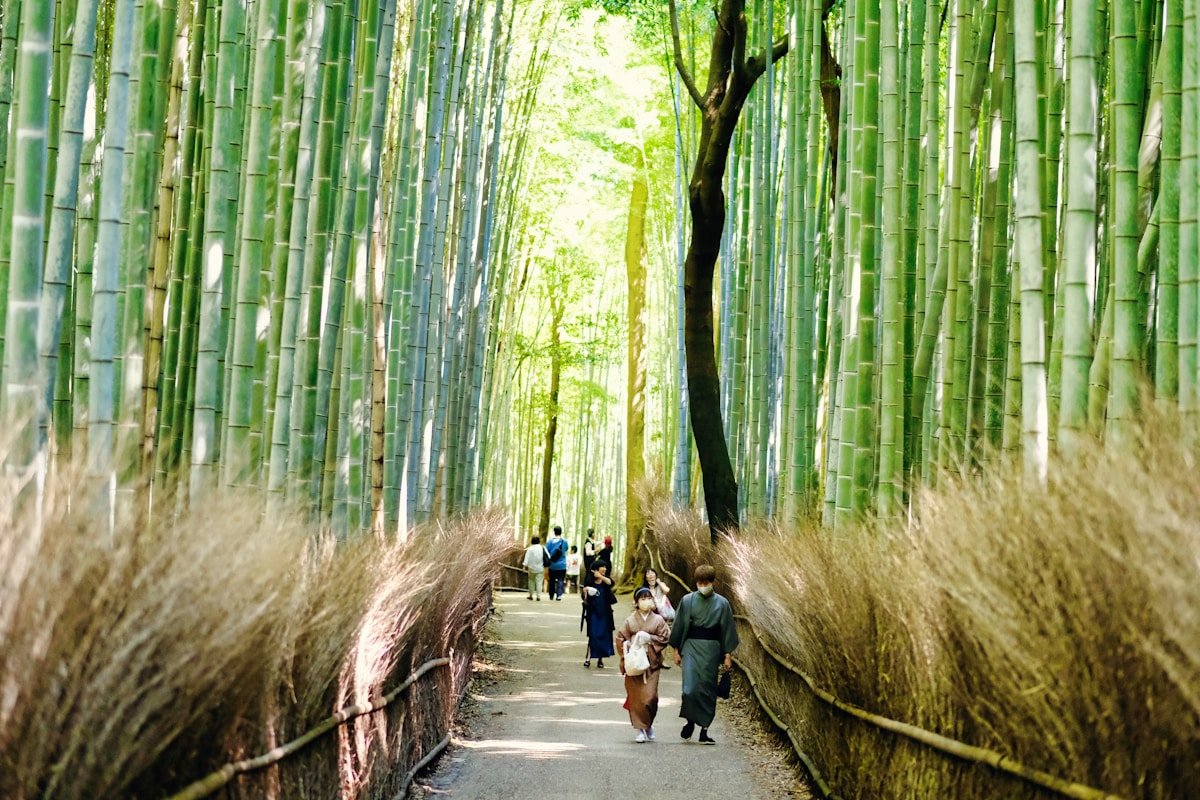
Kyoto sits at the geographic and transport centre of the Kansai region, making it one of the best-positioned cities in Japan for day trips. Within two hours you can reach Nara’s sacred deer, Hiroshima’s Peace Memorial, or Arima Onsen’s gold and carbon-dioxide waters. Below are seven of the best options, with realistic timing, costs, and advice on what to prioritise.
1. Nara - Deer, Temples, and Japan’s First Capital
Journey: JR Nara Line from Kyoto Station, 45 minutes, ¥760 each way (or Kintetsu Limited Express from Kintetsu Kyoto Station, 35 minutes, ¥760) Best for: Families, first-time Japan visitors, architecture enthusiasts Budget for the day: ¥3,000–¥6,000 per person excluding transport
Nara served as Japan’s first permanent capital from 710 to 784, and the city’s main sights are extraordinarily well-preserved. The 660-hectare Nara Park is home to approximately 1,200 sika deer - considered sacred messengers of the gods - who roam freely among visitors. Deer senbei (cracker packets, ¥200) are sold at stands throughout the park and trigger an immediate and enthusiastic response from the deer. They bow to request them.
Todai-ji (¥1,000) houses the Daibutsu - a 15-metre bronze Buddha seated in the world’s largest wooden building. The scale is genuinely affecting; few people are prepared for how large the statue actually is. The surrounding Nandaimon gate, with its two enormous guardian statues, is architecturally exceptional. Arrive before 9am to beat the school groups.
Kasuga Taisha (grounds free, Treasure Hall ¥500): One of Japan’s most important Shinto shrines, founded in 768. The approach through the primeval kasugayama forest - one of Japan’s oldest protected forests - is lined with over 3,000 stone lanterns. The inner sanctuary lanterns are lit twice a year (February and August) for the Mantoro lantern festival.
Naramachi (free): The historic machiya townhouse district south of Nara Park is largely overlooked by visitors rushing between the major sites. The narrow streets and preserved merchant houses give a sense of Nara’s pre-modern urban fabric. The free Naramachi Mechanical Toy Museum and several textile workshops (from ¥1,500 for a dyeing session) are here.
Kofuku-ji (individual halls ¥300–¥800, grounds free): The five-storey pagoda rising above Sarusawa Pond is one of the most photogenic structures in Japan. The eastern golden hall and the national treasure museum are worth the entry fee.
Practical notes: Nara is easily done in half a day and can be combined with an afternoon in Osaka (35 minutes from Nara on JR or Kintetsu). The JR Nara Line from Kyoto runs frequently and is covered by JR Pass.
2. Osaka - Food, Energy, and Urban Japan
Journey: JR Biwako/Kyoto Line from Kyoto Station, 29 minutes, ¥560 each way (or Shinkansen, 14 minutes, ¥1,420) Best for: Food enthusiasts, nightlife, urban exploration Budget for the day: ¥5,000–¥10,000 per person excluding transport
Osaka is the most different city from Kyoto in character, which is what makes it a worthwhile contrast. Where Kyoto is restrained and traditional, Osaka is loud, generous, and focused on eating. The locals’ pride in their city’s food is not rhetorical - surveys consistently show Osaka residents spend more per capita on food than anywhere else in Japan.
Dotonbori is the neon commercial strip running along the canal, anchored by the Glico Running Man billboard. The canal walk is free and best at night when the light shows on the water. The neighbouring lanes contain most of Osaka’s iconic street food - takoyaki, okonomiyaki, kushikatsu.
Osaka Castle (¥600 for the tower museum, surrounding park free): The current keep is a 1931 concrete reconstruction of the 16th-century original. The exhibits are reasonable but the exterior and parkland are what most people come for. The cherry blossoms in Nishimaru Garden (free) are among the best in Osaka.
Kuromon Ichiba Market (free entry): Osaka’s covered food market has around 170 stalls selling fresh seafood, meat, and produce. The tasting options - grilled sea urchin, oysters, wagyu skewers - run ¥500–¥2,000 per item and are uniformly good.
Shinsekai: The 1950s retro district in southern Osaka, centred on the Tsutenkaku Tower (¥900), specialises in kushikatsu (deep-fried skewered food). Budget ¥1,500–¥2,000 for a kushikatsu lunch at one of the Daruma chain restaurants.
Practical note: Osaka’s subway and JR systems both operate efficiently. A day return from Kyoto to Osaka by local JR is ¥1,120 - extremely affordable. If you have the JR Pass, JR covers the route.
3. Hiroshima and Miyajima Island
Journey: JR Tokaido/Sanyo Shinkansen from Kyoto Station, approximately 1 hour 45 minutes, ¥11,000 each way (or slower JR trains via Osaka and Kobe, around 3 hours, ¥5,940) Best for: History-focused travellers, those wanting a meaningful travel day Budget for the day: ¥6,000–¥10,000 per person excluding transport
Hiroshima requires a longer journey than the other day trips on this list but stands apart in significance. The Peace Memorial Park and Museum occupy the ground near the hypocenter of the August 6, 1945 atomic bombing and serve as both historical record and active memorial.
Hiroshima Peace Memorial Museum (¥200): One of the most sobering museum experiences in Japan. The exhibition covers the events of August 6 in detail - the morning, the detonation, the immediate aftermath, the long-term health effects. Allow 2–3 hours. Photography is permitted in most areas.
Atomic Bomb Dome (A-Bomb Dome, free to view): The partially standing skeletal ruins of the Prefectural Industrial Promotion Hall - preserved as it stood after the bombing - sit at the edge of the Peace Memorial Park. Designated a UNESCO World Heritage Site in 1996.
Miyajima Island (ferry ¥210 each way from Miyajimaguchi, included with JR Pass from the JR ferry): The island is home to Itsukushima Shrine and its famous “floating” torii gate, which appears to rise from the water at high tide. The island also has free-roaming deer (like Nara’s), several hiking trails including Mount Misen (535m, ropeway ¥1,000 one way), and excellent fresh oysters from stalls along the approach street (¥300–¥600 per oyster).
Practical logistics: Leave Kyoto Station by 7:30–8am, spend the morning at the Peace Memorial (Museum opens 8:30am), take the tram to Miyajimaguchi (25 minutes, ¥180), cross to Miyajima for the afternoon, and return to Kyoto by 7–8pm. The JR Pass covers the Shinkansen and the JR ferry to Miyajima.
4. Uji - Matcha, a Phoenix Temple, and UNESCO Shrines
Journey: JR Nara Line from Kyoto Station, 20 minutes, ¥240 each way Best for: Day visitors wanting culture without crowds; matcha tea enthusiasts Budget for the day: ¥2,000–¥4,000 per person excluding transport
Uji is a small city 15km south of Kyoto, famous for producing Japan’s finest matcha green tea and for two UNESCO World Heritage sites. It is one of the best-value half-days from Kyoto.
Byodoin Temple (¥600): Built in 1053 as a nobleman’s villa and converted to a temple, Byodoin’s Phoenix Hall - a perfectly symmetrical red-lacquered structure reflected in a pond - is one of the most beautiful buildings in Japan. Its image appears on the Japanese ten-yen coin. The museum (included in entry) displays original Buddhist sculptures from the hall in climate-controlled conditions.
Ujigami Shrine (free): The oldest surviving Shinto shrine building in Japan, dating to around 1060. It’s a 10-minute walk from Byodoin across the river. The scale is intimate rather than grand, which is part of its significance.
Matcha experience in Uji: The approach street from Uji Station to Byodoin is lined with tea shops. Tsuenehisa (matcha soft serve ¥350, matcha tea set ¥850) and Nakamura Tokichi (established 1854, matcha course from ¥1,500) are the most regarded. A visit to one or two shops adds real texture to the day.
5. Kurama and Kibune - Mountain Hiking and Onsen
Journey: Keifuku Eizan Railway from Demachiyanagi Station (north Kyoto), 30 minutes to Kurama, ¥430 Best for: Walkers, nature enthusiasts, anyone wanting to leave the city behind Budget for the day: ¥3,000–¥5,000 per person excluding transport
Kurama and Kibune are two small mountain villages in the hills north of Kyoto, connected by a hiking trail through dense cedar and maple forest. The standard route runs from Kurama Station up through Kurama-dera temple and over the ridge to Kibune, taking about 2 hours at a moderate pace.
Kurama-dera temple (¥500): A mountain temple complex spread across the forested slope, with a strong mystical tradition. The trail up through the forest to the central hall is part of the attraction.
Kurama Onsen (¥700 for outdoor bath, ¥1,200 for indoor and outdoor): A public hot spring at the base of the mountain, genuinely useful after the hike down. Not a luxury spa - a functional public bath.
Kibune village: The small cluster of traditional restaurants at the top of the valley are known for kawadoko dining in summer - wooden platforms erected over the cold stream, with the sound of water as a backdrop. River dining set menus run ¥6,000–¥15,000 per person and require booking several weeks ahead in July and August.
Practical note: Take the Eizan Railway from Demachiyanagi (not Kyoto Station), hike from Kurama to Kibune, and take the connecting bus back to Demachiyanagi. The IC card works on the Eizan Railway.
6. Fushimi - Sake Breweries and Riverside Canals
Journey: Kintetsu Kyoto Line to Kintetsu-Fushimi, 15 minutes, ¥200; or JR Nara Line to Momoyama, 10 minutes, ¥200 Best for: Food and drink enthusiasts; those who want to see Kyoto’s industrial heritage Budget for the day: ¥2,000–¥4,000 per person excluding transport
Fushimi, in southern Kyoto, is home to the Fushimi Inari Taisha shrine (already covered above) and to one of Japan’s most important sake-producing districts. The canal-lined streets around Fushimi-Momoyama Station feel genuinely different from central Kyoto - less polished, more local.
Gekkeikan Okura Sake Museum (¥600 including three tasting vouchers): The clearest introduction to sake brewing in Kyoto, covering the history of the Gekkeikan brewery (founded 1637) and the production process. The attached shop sells aged sake unavailable elsewhere, including 10-year-aged junmai daiginjo.
Kizakura Kappa Country (free entry, tastings from ¥100/glass): The Kizakura brewery complex includes a beer garden, restaurant, and tasting room. A 3-glass sake tasting set is ¥900.
Teradaya (¥400): The inn where Sakamoto Ryoma - one of the key figures of the Meiji Restoration movement - was attacked by Shogunate forces in 1866. The bullet holes in the wooden walls and the bath where Ryoma received the warning are preserved.
The canal area around the Fushimi Port History Museum is photogenic in the late afternoon light, particularly when the weeping willows trail into the water.
7. Lake Biwa - Japan’s Largest Lake
Journey: JR Biwako Line from Kyoto Station, 30–40 minutes to Otsu or Biwako-Hama, ¥230–¥400 each way Best for: Summer swimming, cycling, lake scenery; a change of pace from temples Budget for the day: ¥2,000–¥5,000 per person excluding transport
Lake Biwa covers 670 square kilometres in neighbouring Shiga Prefecture and has been a significant feature of the Kansai landscape - and of Japanese literature, painting, and poetry - for a thousand years. The “Eight Views of Omi” (Omi Hakkei), first celebrated in the 15th century, documented the lake’s distinctive scenery.
Otsu (JR Biwako Line, 9 minutes from Kyoto, ¥200): The prefectural capital of Shiga sits on the southwestern shore. Miidera (Onjo-ji) temple (¥600) has one of the finest five-storey pagodas in Japan and views over the southern lake.
Karasaki Pine (free): A massive ancient pine tree on the lakeside, one of the eight classical views and still standing.
Biwako Terrace (ropeway ¥2,900 return, open late April–November): A gondola ride to the 1,100m Biwako Valley summit, with panoramic lake views and a café. Popular on clear summer days.
In summer (June–September), the lake beaches around Shiga prefectural parks are accessible from Kyoto and offer swimming in a non-crowded environment. The JR Biwako Line runs to several lakeside stations.
Make the most of your time around Kyoto: Guided day trips from Kyoto handle the logistics - transport, guide, and timing - so you can focus on the experience. For airport arrivals and departures, Kiwitaxi offers fixed-price airport transfers with no meter surprises.
Day Trip Comparison
| Destination | Transport | Journey time | Return transport cost | Best for |
|---|---|---|---|---|
| Nara | JR Nara Line | 45 min | ¥1,520 | Deer, temples, families |
| Osaka | JR Kyoto Line | 29 min | ¥1,120 | Food, energy, nightlife |
| Hiroshima + Miyajima | Shinkansen | 1h 45m | ¥22,000 | History, culture |
| Uji | JR Nara Line | 20 min | ¥480 | Matcha, architecture |
| Kurama/Kibune | Eizan Railway | 30 min | ¥860 | Hiking, onsen |
| Fushimi | JR/Kintetsu | 10–15 min | ¥400 | Sake, local character |
| Lake Biwa | JR Biwako Line | 30–40 min | ¥460–¥800 | Nature, summer swimming |
Where to stay: Search hotels in Kyoto on Booking.com
See also: Kyoto travel guide · Nara city guide · Osaka city guide · Hiroshima travel guide · Best tours in Kyoto · Kansai region guide · Things to do in Kyoto