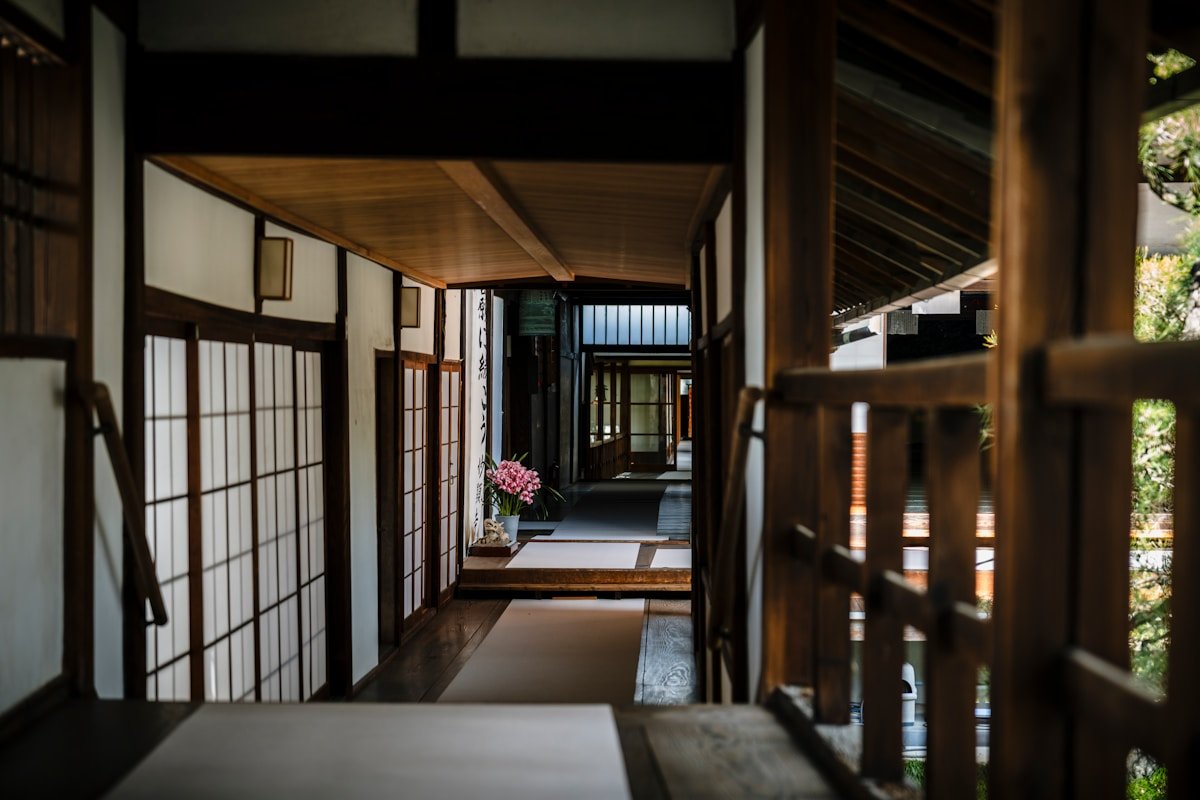
Kyoto’s accommodation landscape is unusually varied - it encompasses traditional machiya townhouse rentals, historic ryokan that have been operating for centuries, international business hotel chains, and capsule hotels. Where you stay affects what you experience; the atmospheric neighbourhoods carry a meaningful premium over the more practical ones, and that premium has a genuine payoff. Search hotels in Kyoto on Booking.com
Neighbourhood Guide
Gion - The Most Atmospheric Choice
Gion is the neighbourhood that most people picture when they think of Kyoto - narrow lanes, wooden machiya townhouses, stone lanterns, and the occasional glimpse of geiko walking to an evening engagement. Accommodation here ranges from converted machiya townhouse rentals (often the entire property, sleeping four to eight people) to high-end ryokan and boutique hotels.
Average price range: ¥20,000–¥60,000 per night (mid to luxury)
The trade-off is price. Gion is Kyoto’s most expensive neighbourhood for accommodation, and budget options simply don’t exist. What you get in return is extraordinary: the ability to walk through the Hanamikoji and Shimbashi lanes in the early morning or late evening when the day-trip crowds are gone, with the district looking and feeling exactly as it is supposed to.
Gion is well-connected to Higashiyama’s temple trail on foot, and the Keihan Line at Gion-Shijo Station connects to central Kyoto, Fushimi Inari, and Osaka. Walking to Kiyomizudera takes about 20 minutes on flat ground.
Best for: Couples celebrating a special occasion; travellers for whom traditional atmosphere is the primary goal; anyone willing to prioritise experience over budget.
Higashiyama - Walking Distance to the Best Temples
The Higashiyama district runs along the base of the eastern hills from Chion-in in the north to Kiyomizudera in the south. Staying here means waking up a short walk from some of Kyoto’s finest temples - you can reach the Ninenzaka and Sannenzaka stone-paved alleys, Kiyomizudera, Kodai-ji, and Maruyama Park on foot in 5–15 minutes.
Average price range: ¥15,000–¥40,000 per night
Options include traditional inns, small boutique hotels, and guesthouses on the quieter residential streets behind the main tourist lanes. Bus access to the rest of Kyoto is good, and the neighbourhood itself is walkable in a meaningful sense.
Best for: Travellers focused on the temple and historic architecture experience; those who want atmosphere without quite the price of Gion.
Downtown Kyoto (Kawaramachi and Shijo) - Best Transport Links
The Kawaramachi and Shijo area is Kyoto’s commercial and transport centre, with the widest range of accommodation at the most varied price points. Nishiki Market, the Kamo River, and dozens of restaurants and bars are walkable. The Hankyu Kyoto Line from Kawaramachi connects to Osaka in 42 minutes for around ¥400.
Average price range: ¥10,000–¥25,000 per night
This is where you find the mid-range business hotels from brands like APA, Dormy Inn, and Daiwa Roynet - reliable, clean, breakfast sometimes included, and well-priced. It lacks the atmosphere of Gion or Higashiyama but compensates with convenience.
Best for: Travellers balancing Kyoto with Osaka or Nara day trips; first-time Japan visitors who want predictable infrastructure; anyone watching their daily accommodation budget.
Arashiyama - Scenic and Quieter
Arashiyama sits at the western edge of the city where the Oi River meets the forested Arashiyama hills. A handful of upmarket ryokan and boutique hotels are located here, most with river or mountain views and gardens. The pace is slower than the central city.
Average price range: ¥15,000–¥50,000+ per night
The key benefit of staying in Arashiyama is access to the bamboo grove at dawn - a 5-minute walk from most accommodation - before the crowds arrive. The key limitation is that getting to the rest of Kyoto requires the Sagano Scenic Railway (¥880, 25 minutes to Nijojo) or the Hankyu Arashiyama Line, which adds time to temple visits elsewhere.
Best for: Travellers who want a quieter, scenic base; those who specifically want early bamboo grove access; honeymooners or special occasion trips.
Kyoto Station Area - Most Convenient, Least Atmospheric
The immediate area around Kyoto Station (particularly the south/Hachijo exit side) has the largest concentration of mid-range and budget hotels in the city, well-placed for Shinkansen access to/from Tokyo and easy access to Fushimi Inari. The neighbourhood itself is unremarkable.
Average price range: ¥8,000–¥20,000 per night
The JR Kyoto Station is one of the most impressive station buildings in Japan - a vast modernist structure with rooftop garden, multiple shopping levels, and the excellent Isetan department store. Buses to all major temple areas depart from the station forecourt.
Best for: Travellers arriving late or departing early; those using Kyoto as a base for day trips; budget-conscious travellers who plan to spend most of the day at sights rather than in the neighbourhood.
Neighbourhood Comparison Table
| Area | Best for | Budget (¥/night) | Mid-range (¥/night) | Luxury (¥/night) |
|---|---|---|---|---|
| Gion | Atmosphere, traditional experience | Not available | ¥20,000–¥35,000 | ¥40,000–¥100,000+ |
| Higashiyama | Temple access, walkability | ¥8,000–¥12,000 | ¥15,000–¥30,000 | ¥35,000–¥60,000 |
| Downtown/Kawaramachi | Transport links, variety | ¥6,000–¥10,000 | ¥10,000–¥20,000 | ¥22,000–¥45,000 |
| Arashiyama | Scenery, quiet, bamboo access | Not available | ¥15,000–¥30,000 | ¥35,000–¥80,000+ |
| Kyoto Station area | Convenience, budget value | ¥5,000–¥9,000 | ¥9,000–¥18,000 | ¥20,000–¥35,000 |
Accommodation Types Explained
Machiya Townhouse Rental
Traditional wooden machiya townhouses - narrow, two-storey, with an interior courtyard - are a unique feature of Kyoto’s accommodation landscape. Many have been sympathetically restored and are available as entire-property rentals through platforms like Airbnb or specialist agencies. A well-restored machiya sleeps four to eight people and costs ¥20,000–¥60,000 per night for the property.
The experience is genuinely different from a hotel: you cook in a traditional kitchen, soak in an ofuro (deep bathtub), sleep on futon in tatami rooms, and wake up to the sounds of the neighbourhood rather than a hotel corridor. Check carefully that the property has modern insulation and heating - older machiya can be cold in winter.
Ryokan with Kaiseki Dinner
A full ryokan stay - tatami room with futon, yukata robe, communal or private onsen bath, kaiseki dinner served in your room, and Japanese breakfast - is one of the most considered hospitality experiences in the world. Prices are quoted per person including dinner and breakfast.
Hiiragiya (Nakahoji-cho, Fuyacho-dori, Oike area) is one of Kyoto’s oldest and most celebrated ryokan, operating since 1818. Rooms from approximately ¥50,000 per person per night with meals. The kaiseki served here follows strict seasonal Kyoto traditions.
Tawaraya (closed to new guests unless introduced) is considered the finest ryokan in the city and has hosted a remarkable list of guests over its 300-year history. Rooms start above ¥80,000 per person.
For a more accessible ryokan experience, several smaller establishments in Higashiyama and Arashiyama charge ¥18,000–¥30,000 per person including meals, which represents reasonable value given what is included. Our Japan ryokan guide covers how the meals, baths, and booking process work in detail.
Business Hotels
The Japanese business hotel is a precise and efficient product: rooms are small but thoughtfully designed, cleanliness is exceptional, and breakfast (often a Japanese-Western mix buffet) is typically offered for an additional ¥1,000–¥1,500. Brands common in Kyoto include:
Mitsui Garden Hotels operate two properties in central Kyoto. Rooms run ¥12,000–¥20,000 per night for a double, with modern design and excellent location. The chain’s public baths (some properties) are a worthwhile addition.
APA Hotel Kyoto Gion (near Gion-Shijo station) offers double rooms from ¥9,000–¥16,000, acceptable rooms, and a rooftop onsen. It’s a sensible practical choice for the location.
Dormy Inn Kyoto-Ekimae (near Kyoto Station south exit) has rooms from ¥8,500 and a free late-night ramen service - a genuine perk that regulars appreciate.
Getting to Kyoto? Compare flights to Japan to find the best international connection. Travel insurance for Japan covers delays, cancellations, and medical costs - worth sorting before you finalise accommodation bookings. An Airalo eSIM for Japan means you have mobile data and maps from the moment you land.
Booking Timing and Seasonal Demand
Kyoto has the most pronounced seasonal demand variation of any Japanese city. Autumn - specifically the two to three weeks when the temple maples are at peak colour, typically early to mid-November - is the single hardest period to book accommodation. Prices in Gion and Higashiyama can triple compared to low season.
Cherry blossom season (roughly late March to mid-April, though the exact dates vary each year) runs it close. The gap between late March and mid-April when blossoms peak sees accommodation sell out months in advance.
Outside these two periods, Kyoto has reasonable availability. May, October (pre-autumn colour), and January-February are the easiest periods for last-minute booking and best-value pricing.
If your dates fall in peak season, book accommodation first - before flights, activities, or restaurants - and treat flexibility in accommodation as a budget and planning tool. A ryokan with non-refundable autumn availability in August is not unusual.
See also: Kyoto travel guide · Things to do in Kyoto · Best restaurants in Kyoto · Day trips from Kyoto · Ryokan guide Japan · Kyoto long-stay guide