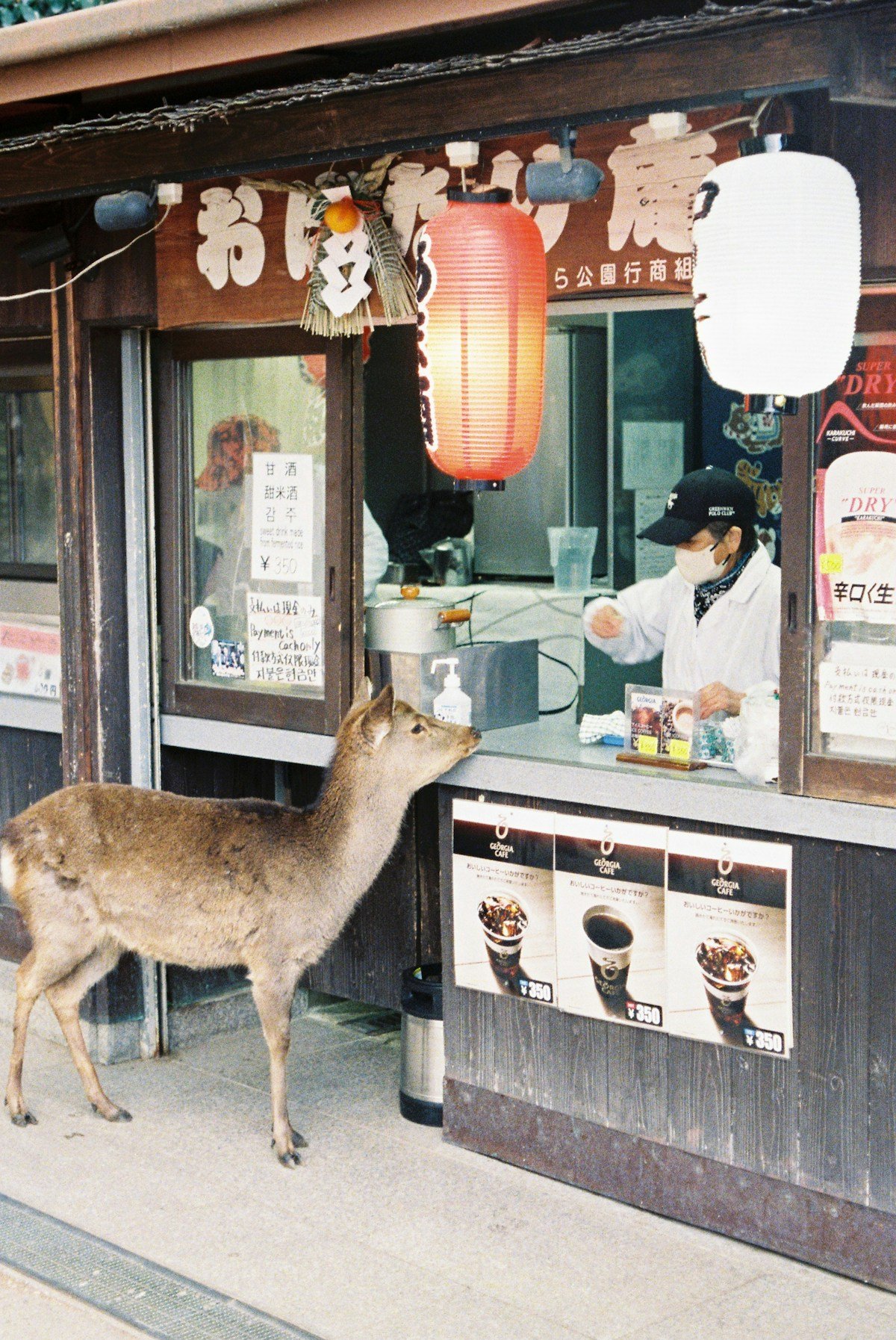
Nara’s restaurant scene is compact and well-suited to its nature as a half-day to full-day destination. The food here is resolutely local and practical - kakinoha-zushi, freshly pounded mochi, grilled rice cakes, and Buddhist-influenced vegetarian dishes - rather than refined kaiseki. The best eating is done around the Naramachi district and the approach road to Todai-ji, with the deer occasionally approaching your table at the more open-air spots.
1. Nakatanidou - Yomogi Mochi
Price: ¥200 per mochi | Hours: 10am–7pm (closed Tues) | Location: Main approach road to Todai-ji, near Kintetsu Nara Station
Nakatanidou is Nara’s most famous food stop - less for the mochi itself (though it’s genuinely excellent) and more for the spectacle of two men pounding the rice dough at breakneck speed while a third shapes and coats the mochi in rapid succession. The performance draws a crowd and runs approximately every 20–30 minutes during peak hours.
The fresh yomogi (Japanese mugwort) mochi are sold hot outside the shop at ¥200 each. The mugwort gives the mochi a dark green colour and a subtle herbal flavour - this variety is distinct from the sweet red bean mochi sold elsewhere. Eat it immediately; it hardens within 30 minutes.
Box sets (approximately ¥1,000 for 8 pieces, suitable for gifts) are sold inside the shop in both plain and mugwort varieties.
2. Kakinoha-zushi Hiraso
Price: Set meal approximately ¥1,200–¥1,800 | Hours: 11am–9pm | Location: Near Kintetsu Nara Station, Noborioji-cho
Kakinoha-zushi is Nara’s most celebrated local dish: vinegar-marinated sushi rice wrapped in a persimmon (kaki) leaf, topped with salted salmon or mackerel (saba). The persimmon leaf is not eaten - it acts as a wrapping that both preserves the sushi and imparts a subtle tannin flavour to the rice over time. The longer it sits (2–3 days), the more integrated the flavour becomes.
Hiraso is the best-established kakinoha-zushi specialist in Nara, serving both à la carte pieces (¥200–¥250 each) and set meals with soup, pickles, and tea. The set meal at approximately ¥1,200–¥1,800 is the most comfortable way to eat here - it gives you 5–6 pieces with the supporting dishes that make the experience complete.
The restaurant also sells boxed sets for take-away - ideal for eating in Nara Park with the deer attempting to investigate.
3. Izasa Sushi (Yoshino-gawa Fish Restaurant)
Price: Lunch sets from approximately ¥1,500 | Hours: 11:30am–2pm, 5pm–9pm | Location: Central Nara near Sanjo-dori
Izasa combines traditional Nara sushi-making (using locally caught river fish - ayu sweetfish, trout, and catfish) with more contemporary sushi techniques. The lunch set (¥1,500–¥2,000) covers both kakinoha-zushi and a selection of seasonal fresh-fish nigiri, with miso soup and pickles.
The restaurant’s particular strength is ayu (sweetfish) in season (May–September) - the small fish are grilled whole or served as pressed sushi (oshizushi) with a simple salt seasoning.
4. Naramachi Restaurants
The Naramachi district - the well-preserved merchant town south of the central park - is the best area for a sit-down lunch in a relaxed setting. Several renovated machiya (townhouse) buildings now operate as cafés and restaurants.
Cha-cha Nara (Naramachi): A traditional townhouse café serving tea ceremony-style matcha with seasonal wagashi (Japanese sweets, approximately ¥900 per set). The tatami room and garden courtyard make this the most atmospheric café in central Nara. Reserve for weekend afternoons.
Grill Ichibankan (Naramachi): A Western-style grill restaurant operating since 1967 serving Nara’s answer to yoshoku (Western-style Japanese food) - omurice, beef stew, and Nara-style curry from approximately ¥1,200. This kind of old-fashioned Western restaurant is part of the cityscape in historic Japanese cities and Grill Ichibankan is one of the better examples.
Machiya Café: Several unnamed small cafés operating in restored merchant houses serve coffee (¥500–¥650), matcha latte, and light meals. The interiors - exposed beams, earthen walls, stone floors - are worth seeking for the architecture as much as the food.
5. Nara Park Restaurant Row
The approach roads through Nara Park leading to Todai-ji, Kasuga Taisha, and Kofuku-ji have a strip of tourist restaurants catering to day-trippers. Standards vary considerably - some serve excellent traditional Japanese food, others are solidly average tourist traps. Practical guide:
Yoshinoya (park approach): A local sweet shop (not the beef bowl chain) serving mitarashi dango (grilled rice dumplings with sweet soy glaze, approximately ¥300 per skewer). Quick, authentic, and good with the free-roaming deer context around you.
Edogawa (near Nara Park): Traditional soba noodles (tenzaru, cold soba with tempura, approximately ¥1,400) in a traditional building with a courtyard. Reliable quality at the mid-range price point.
Deer Café (outdoor seating near the park): Multiple cafés with outdoor seating where deer occasionally wander in. The food is secondary to the experience - coffee and cake (¥600–¥900) while deer approach your table is more memorable than technically impressive.
6. Sake from Nara
Nara is Japan’s original sake region - the techniques used to produce sake were developed here by Buddhist monks at Kasuga Taisha and Saidai-ji in the Nara period (8th century CE). The prefecture still has seven active sake breweries.
Harushika (Harushika Shuzo, near the park): Nara’s largest sake brewery, producing several lines including the flagship Harushika Tokubetsu Junmai (from approximately ¥1,200 at the brewery shop). The rich, slightly sweet style suits the umami-heavy Nara cuisine better than the drier Nada (Kobe) style.
Kasugayama Sake (small production): A premium Nara sake using locally grown rice. Available in select restaurant wine lists rather than shops - ask your restaurant what Nara sake they carry.
Several izakaya around Kintetsu Nara Station offer sake flights comparing Nara’s local breweries alongside standard Japanese varieties - a worthwhile 90-minute stop before the evening train if you’re not day-tripping.
See Nara through its food: Food and cultural tours in Nara often include market visits, tastings, and dishes you’d never find independently.
7. Convenience Store Strategy for Nara
Nara is a compact walking city and many visitors spend hours outdoors between meals. Convenience stores (7-Eleven near Kintetsu Nara Station, Lawson near the park entrance) provide good quick food: onigiri from ¥140, heated nikuman ¥150, karaage chicken, and decent instant ramen for the hotel kitchen if needed.
For deer crackers (shika senbei, ¥200) - these are sold by dedicated vendors in the park, not convenience stores. Don’t run out: the deer will tell you when you have.
For what to do in Nara, see our Nara sightseeing guide. For day trips to Osaka, Kyoto, and Yoshino, see Nara day trips.
Take a Guided Food Tour of Nara
Nara’s signature dish is kakinoha-zushi - pressed sushi wrapped in persimmon leaves, a preservation technique developed when Yoshino’s fishermen needed to transport fish inland. The dish is specific to the Yoshino-Nara region and genuinely difficult to find at the right quality outside of specialist shops in Naramachi, the preserved merchant quarter. The town also produces some of Japan’s finest sake (Nara was the birthplace of sake brewing) and seasonal wagashi sweets tied to the ceremonies at Todai-ji. A guided food walk through Naramachi and the market streets gives you both the history and the best current sources.
Guided food tours in Nara take you beyond tourist-obvious spots - local guides know which stall has the freshest kakinoha-zushi, where to find the best sake, and how to navigate an all-Japanese menu.
See also: Nara travel guide · Food to try in Nara · Things to do in Nara · Day trips from Nara · Nara vs Kamakura · Kansai region guide · Kyoto travel guide
Search hotels in Nara: browse stays in Nara