Kamakura rewards slow exploration. The city’s 65 temples and 19 shrines are spread across a compact area bisected by forested hills, and the best approach is to thread between them on foot - or on one of the hiking trails that cross the ridges separating the valleys. Below are 18 things to do in Kamakura, from the famous to the barely-visited.
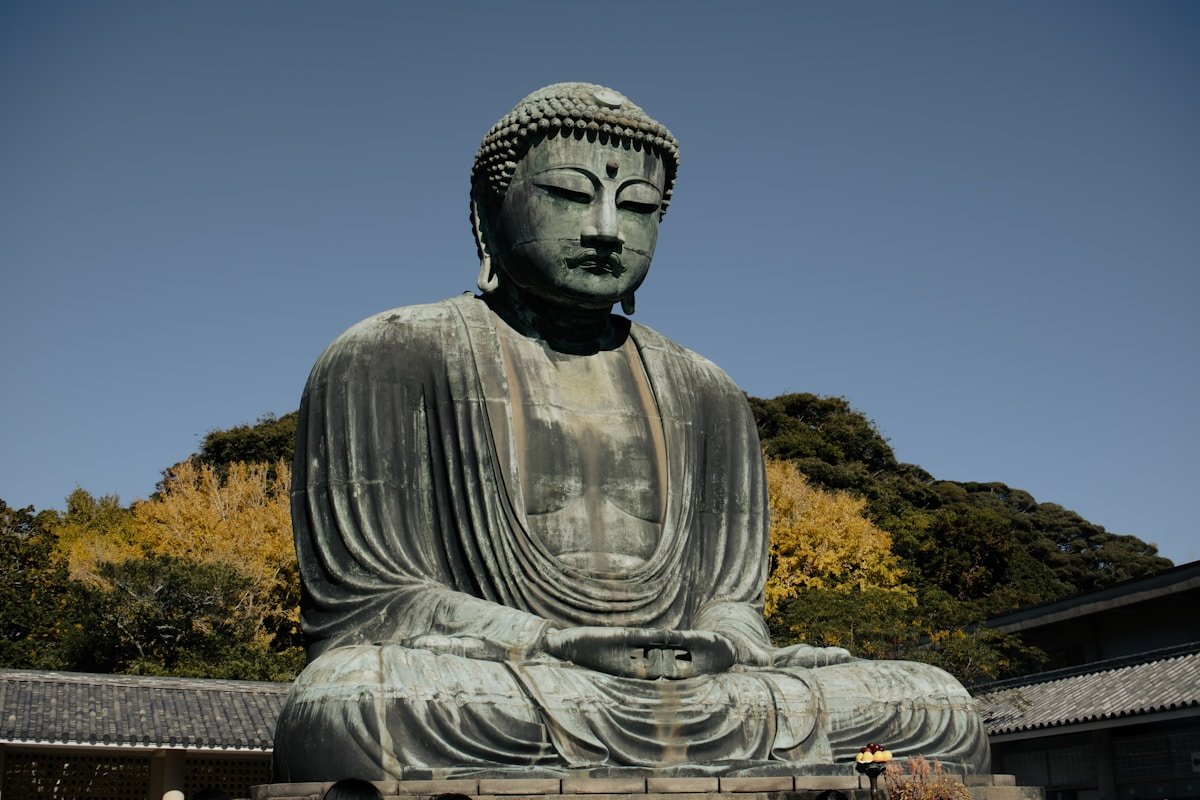
1. The Great Buddha at Kotoku-in
The 13.35-meter bronze Great Buddha is Kamakura’s most iconic sight and justifies the journey from Tokyo on its own. Cast in 1252, the statue has sat outdoors for over 600 years since its hall was destroyed by storms. Admission is ¥300. Opening hours are 8:00am to 5:30pm (5:00pm in winter). For an extra ¥20, you can enter the hollow interior of the statue through windows on each side - a small but worthwhile addition.
The site is busiest between 10am and 2pm. Arriving at opening time gives you the statue in quieter morning light, with fewer visitors in the frame.
2. Hase-dera’s Kannon Statue and Sea-View Gardens
Hase-dera (¥400) is one of the most complete temple visits in Kamakura, combining a major religious artifact with a genuinely beautiful hillside garden and sea views. The 9.18-meter gilded wooden Kannon statue is the tallest wooden figure in Japan. The tiered gardens above the main hall include a cave complex with lantern-lit alcoves, a lotus pond at the base, and a viewing platform from which you can see across the city to Sagami Bay on clear days.
3. Tsurugaoka Hachimangu Shrine
Entry to the main shrine is free. The approach along Wakamiya Oji - a 1.8-kilometer avenue of cherry and ginkgo trees flanked by torii gates - is as impressive as the shrine complex itself. The main hall sits at the top of a long stone staircase, and the two Genpei ponds flanking the approach each contain a small island shrine. The spring Kamakura Matsuri (April) and autumn Reitaisai (September) both include yabusame - horseback archery - which is spectacular to watch.
4. Kencho-ji Zen Temple Complex
Kencho-ji (¥500) is the oldest surviving Zen training monastery in Japan, founded in 1253. The approach through 700-year-old juniper trees to the Sanmon gate sets the atmosphere immediately. Beyond the main halls, the path climbs through forest to Hansobo shrine and connects to the Ten-en Hiking Course. The Zen garden behind the Hojo abbot’s quarters is raked gravel with a small pond - worth the extra minutes to sit and observe.
5. Engaku-ji Temple and Graveyard
Founded in 1282 and ranked second of the five great Kamakura Zen temples, Engaku-ji (¥500) sits immediately behind Kita-Kamakura Station. The forested valley behind the entrance gates contains the main temple buildings, a bell tower housing one of Kamakura’s great bells (cast in 1301), and a network of quiet paths through a wooded graveyard where Kamakura-period notables are buried. The Shariden reliquary hall is a National Treasure and among the oldest surviving structures in the region.
6. Hokoku-ji Bamboo Grove with Matcha
Hokoku-ji (¥300 entry to the bamboo garden) is the most atmospheric 45 minutes in Kamakura. The grove of approximately 2,000 moso bamboo behind the main hall rises 20 meters overhead, the stems filtering light into a green half-dark. At the end of the path, a teahouse serves matcha and a wagashi sweet for ¥600. Go early - by late morning the space is crowded enough to compromise the experience. The temple is about 15 minutes’ walk or a short bus ride from Kamakura Station.
7. Meigetsuin - The Hydrangea Temple
Meigetsuin (¥500 in June hydrangea season, ¥300 otherwise) is known for its thousands of ajisai hydrangeas that bloom in mid-June, covering the hillside approach and garden in blue and purple. The circular window in the main hall’s rear garden, through which you see a clipped lawn, is one of the most photographed compositions in Kamakura. Outside June, the temple is lovely but quieter - the garden behind the circular window gate only opens to visitors in June and in autumn.
8. Jomyo-ji Moss Garden
Jomyo-ji (¥200) is one of Kamakura’s five great Zen temples but receives a fraction of the visitors that Kencho-ji and Engaku-ji attract. The moss-covered approach and the small garden behind the main hall have a stillness that the busier temples sometimes lack. The attached teahouse serves matcha in the garden for ¥500. Located on the eastern side of Kamakura, it pairs well with a walk along the Ten-en Hiking Course from Kencho-ji.
9. Kamakura Hiking Trails
Two main hiking courses cross the hills surrounding Kamakura, both free and well-marked. The Daibutsu Hiking Course runs 2.5 kilometers from near Jochi-ji temple to the Great Buddha, through cedar and bamboo forest with views over the valleys. The Ten-en Hiking Course runs 4 kilometers from Kencho-ji to Zuisen-ji temple on the eastern side of the city, crossing the main ridge through mixed forest. Both trails have good English signage and can be combined for a full day’s walking of 6–8 kilometers.
10. Zeniarai Benten Ugafuku Shrine
This cave shrine dedicated to Benzaiten sits inside a natural rock hollow reached through a narrow tunnel in the hillside. Entry is free. The ritual involves washing money in the spring water that seeps through the cave walls - according to tradition, money washed here multiplies. The cave is always lit with candles and lanterns, the smoke and steam from incense burners creating a genuinely atmospheric space unlike any other shrine in Kamakura. Located 20 minutes’ walk from Kamakura Station via the Daibutsu Hiking Course approach path.
11. Sasuke Inari Shrine’s Hillside Torii
Sasuke Inari Shrine is a minor fox shrine reached by a steep stone staircase lined with vermilion torii gates climbing through a forested hillside. Entry is free. It is smaller and less polished than Fushimi Inari in Kyoto, but is rarely crowded and has a raw, slightly overgrown quality that makes it feel genuinely old. The view through the torii chains down the forested slope is striking. It connects well with the Daibutsu Hiking Course.
12. Enoshima Island Day Extension
The island of Enoshima, 30 minutes from Kamakura by Enoden train (¥260), adds a coastal dimension to a Kamakura day. The main shopping street runs up to the island’s shrine complex and gardens. The Iwaya Caves (¥500) at the island’s far end were carved by wave action and extend 152 meters into the cliff. The Sea Candle observation lighthouse (¥500) at the summit gives views south over the Pacific and north to the mountains. Shirasu (whitebait) is the island’s food speciality - try shirasu don (whitebait rice bowls, ¥1,000–¥1,500) at any of the harbour restaurants.
13. Kamakura Museum of Art
The Kamakura Museum of Art (¥200 base admission, temporary exhibitions vary) occupies a mid-century modern building by the architect Sakakura Junzo beside Tsurugaoka Hachimangu. The permanent collection covers 20th-century Japanese painting and sculpture, with frequent temporary exhibitions. It is a reasonable 45-minute stop to combine with a visit to the shrine.
14. Komachi-dori Food Street
The shopping street running from Kamakura Station to Tsurugaoka Hachimangu is lined with souvenir shops, tea houses, and snack vendors. Prices are tourist-oriented but reasonable - grilled squid on a stick (¥400), tamago senbei crackers (¥200), matcha soft serve (¥450), and various rice-based snacks (¥200–¥500). The street is busiest on weekend afternoons.
15. Yuigahama Beach in Summer
Yuigahama and Zaimokuza beaches flank Kamakura’s southern edge and are open for swimming in July and August. Entry is free. Surf rental and beach parasol hire are available from stalls along the beach. The beaches are packed on summer weekends but pleasant on weekday mornings. The combination of beach and temple in one day is one of Kamakura’s more unusual pleasures.
16. Cycling the Back Lanes
Kamakura’s flat areas around the station and down to the beach are well-suited to cycling. Bicycles rent from shops near the station for around ¥500 per hour or ¥1,500 per day. The back lanes connecting minor temples and shrines - particularly in the Hase and Yukinoshita areas - are quieter and more rewarding by bike than on foot.
17. Craft Matcha Making at a Teahouse
Several teahouses in Kamakura offer short matcha-making workshops (¥1,500 for a 30-minute experience with instruction) where you whisk your own bowl of matcha using a bamboo chasen. Wa no Okeiko near Tsurugaoka Hachimangu is one option that takes walk-ins when available. Hokoku-ji’s teahouse provides a simpler version - you just drink matcha in the bamboo grove - which is often more satisfying.
18. Autumn Foliage Walk in November
November transforms Kamakura. The maple and ginkgo trees at Engaku-ji, Kencho-ji, Eishoji, and Tokei-ji turn yellow, gold, and red from mid-November onward. The hiking trails through the hills are at their most beautiful, the light low and gold through the canopy. Crowds are significant on fine weekends but the scale of Kamakura means there is always space on the trails between the main temple gates.
Book ahead for popular experiences: Tours and activities in Kamakura include guided options, skip-the-line tickets, and immersive cultural experiences.
Top Temples by Price, Crowds, and Atmosphere
| Temple | Admission | Crowd Level | Atmosphere |
|---|---|---|---|
| Kotoku-in (Great Buddha) | ¥300 | High | Iconic, open-air |
| Hase-dera | ¥400 | High | Garden + sea views |
| Kencho-ji | ¥500 | Medium | Monastic, forested |
| Engaku-ji | ¥500 | Medium | Forested, historic |
| Hokoku-ji | ¥300 | Low–Medium | Bamboo, intimate |
| Meigetsuin | ¥300–¥500 | Medium–High (June) | Garden, circular window |
| Jomyo-ji | ¥200 | Low | Moss, quiet |
| Zeniarai Benten | Free | Low–Medium | Cave shrine, candlelit |
| Tsurugaoka Hachimangu | Free | High | Grand avenue, festivals |
Where to stay: Search hotels in Kamakura on Booking.com
See also: Kamakura travel guide · Where to stay in Kamakura · Best restaurants in Kamakura · Day trips from Kamakura · Nara vs Kamakura · Kanto region guide