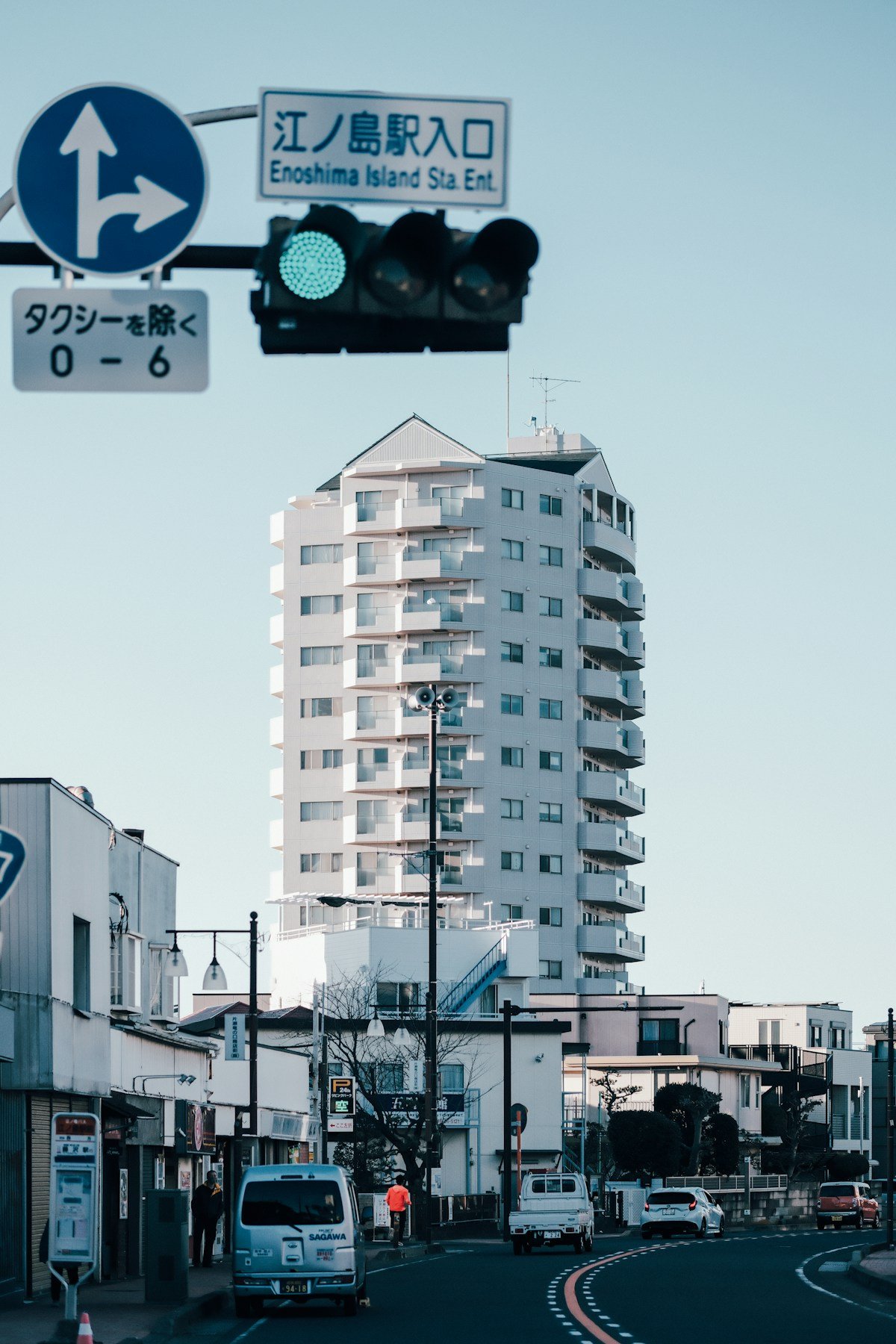
Kamakura is 57 minutes from Tokyo Station by train, which means it functions comfortably as a day trip from the capital. But staying overnight opens up a different version of the city: temples at first light, the beach without the crowds, and the streets after the tour groups have gone. Accommodation options are more limited than Tokyo’s, and prices reflect this - book ahead on weekends and during the main blossom and foliage seasons. Search hotels in Kamakura on Booking.com
The Case for Staying Overnight
The day-trippers who fill Kamakura’s temple paths from 10am to 4pm are not there before 9am. Arriving the night before and walking to Engaku-ji at 8:15am, or to Hokoku-ji as the bamboo grove opens, is a qualitatively different experience from the mid-afternoon rush. The same applies to sunsets from Hase-dera’s viewing platform - after 4pm in autumn and winter, the light over Sagami Bay is extraordinary, and nearly everyone who arrived by day trip is already heading home.
The Enoden line, which connects Kamakura with Hase and Enoshima, becomes a different experience in the early morning - the narrow-gauge cars threading between residential houses with the sea flashing between rooftops, with a handful of commuters rather than a carriage full of tourists.
Accommodation Areas
Kamakura Station Area
The area within 10 minutes’ walk of Kamakura Station has the widest range of accommodation: guesthouses, business hotels, and a few larger properties. It is well-connected to both Tsurugaoka Hachimangu (15 minutes on foot) and the Enoden line for the temples to the west. Expect to pay ¥8,000–¥20,000 per room per night for a private room, and from ¥3,500 for a dorm bed.
This area is the most practical base if you want to cover a lot of ground. Komachi-dori shopping street and the main restaurants are within easy walking distance.
Kita-Kamakura Station Area
Kita-Kamakura, one stop north of Kamakura on the JR Yokosuka Line, is a quieter village with a different atmosphere from the more tourist-heavy main station area. It is the natural base if your priorities are Engaku-ji and Kencho-ji, both of which are within a few minutes’ walk of the station. Accommodation here tends toward traditional guesthouses and small ryokan, priced from ¥12,000 to ¥25,000 per room per night.
The area is residential and subdued in the evenings. There are a handful of small restaurants near the station, but you will be heading to central Kamakura for broader dining options.
Hase and Beach Area
The Hase area, served by Hase Station on the Enoden line, is the closest accommodation zone to both the Great Buddha at Kotoku-in and Hase-dera temple. The beach at Yuigahama is 10 minutes’ walk south. Hotels and guesthouses here are priced from ¥10,000 to ¥30,000 per night for a private room, with a small number of ryokan at the upper end of that range.
Staying here means you can walk to the Great Buddha in under 15 minutes before it opens at 8am, which is the quietest and most atmospheric time to visit. Sunsets from the beach in this area can be spectacular in autumn and winter.
Accommodation Types
Guesthouses
Budget guesthouses in Kamakura offer a mix of dormitory beds and private rooms, usually in converted residential buildings. Kamakura Guesthouse near the station is a well-regarded example, with dorm beds from ¥3,500 and private rooms from ¥9,000. Shared bathrooms are standard at this price point. Most guesthouses have a kitchen or common area and are useful for connecting with other travellers.
Ryokan
Ryokan in Kamakura are fewer in number than in the more established hot spring resort areas, but several quality properties exist. A ryokan stay in Kamakura typically includes dinner (kaiseki or Japanese multi-course meals), breakfast, and yukata robes. Prices start from around ¥18,000 per person per night with two meals. Some properties have garden views or private garden spaces, and the evening meal is often a highlight in itself.
Western-Style Hotels
Western-style business hotels in Kamakura tend toward mid-range pricing of ¥12,000–¥25,000 per room per night. These suit travellers who want private bathrooms, reliable WiFi, and a straightforward check-in/out without the ritual elements of a ryokan stay. Most are clustered near Kamakura Station.
Accommodation Comparison
| Type | Area | Price Range (per room/night) | Notes |
|---|---|---|---|
| Guesthouse dorm | Kamakura Station | ¥3,500–¥5,500 | Shared bathroom, kitchen access |
| Guesthouse private | Kamakura Station | ¥9,000–¥14,000 | En-suite or shared, good value |
| Business hotel | Kamakura Station | ¥12,000–¥22,000 | Western-style, reliable |
| Guesthouse | Kita-Kamakura | ¥12,000–¥18,000 | Traditional feel, near Zen temples |
| Ryokan | Kita-Kamakura | ¥18,000–¥25,000 | Includes dinner/breakfast typically |
| Guesthouse / hotel | Hase area | ¥10,000–¥20,000 | Closest to Great Buddha |
| Ryokan | Hase area | ¥22,000–¥30,000 | Garden or sea views, meals included |
Getting to Kamakura? Compare flights to Japan to find the best international connection. Travel insurance for Japan covers delays, cancellations, and medical costs - worth sorting before you finalise accommodation bookings. An Airalo eSIM for Japan means you have mobile data and maps from the moment you land.
Day Trip Logistics
If you are doing Kamakura as a day trip from Tokyo, the main practical considerations are timing and luggage. The first trains from Tokyo reach Kamakura from around 6:30am - useful if you want to arrive before the main temples open at 8:00am. Coin lockers are available at Kamakura Station (¥400–¥800 depending on size), which means you can store luggage and travel light. The last trains back to Tokyo depart around 23:45, so a full day or an extended evening is entirely feasible without accommodation.
The single biggest advantage of staying is arrival time: being inside the temple grounds in the first 30 minutes after opening, before the day-trip trains disgorge their passengers, transforms the experience of almost every site in Kamakura.
See also: Kamakura travel guide · Things to do in Kamakura · Best restaurants in Kamakura · Ryokan guide Japan · Kanto region guide