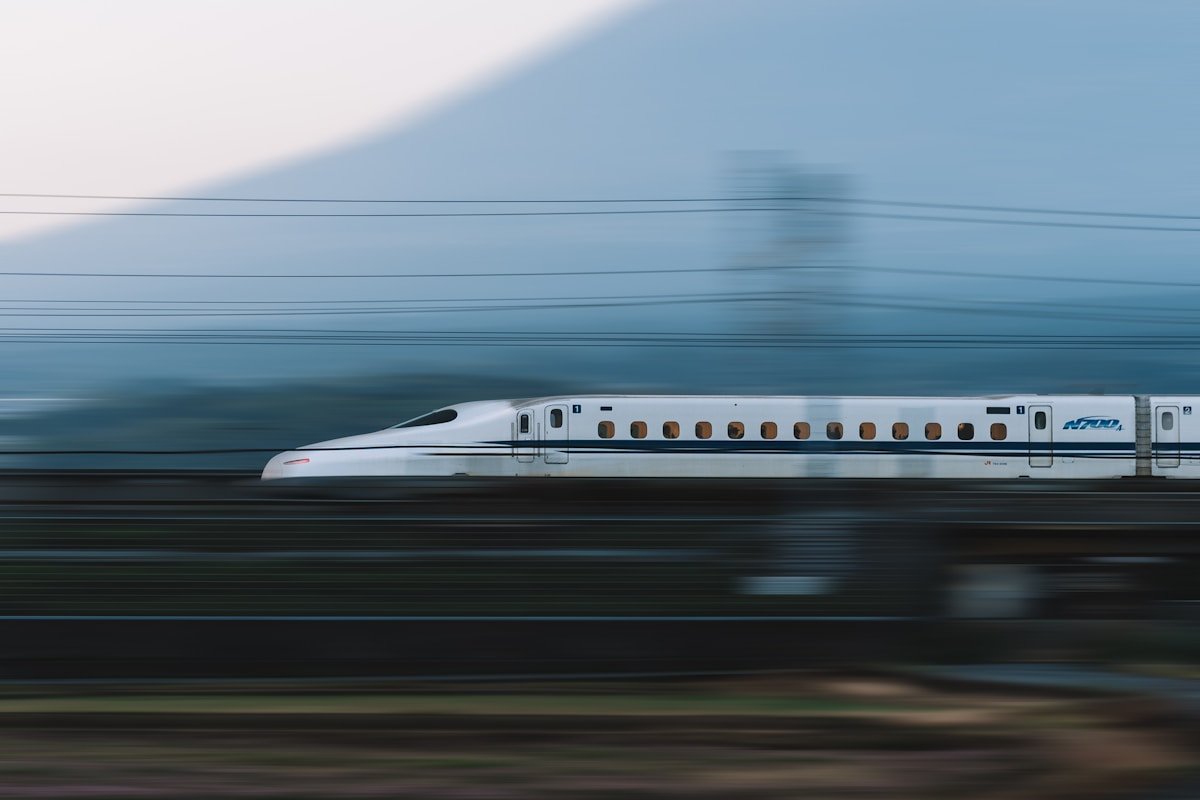
The Golden Route - connecting Tokyo, Hakone (with Mt Fuji views), Kyoto, and Osaka - is the most visited travel circuit in Japan. It is popular for good reasons: it concentrates the country’s most distinctive temples, gardens, mountains, and cities into a structure that works efficiently with Japan’s rail network. This 10-day version includes both Nara and Hiroshima, rounding out the historical picture beyond Kyoto’s temple circuit.
Before departure, it is worth sorting travel insurance - a 10-day Japan trip is a significant investment and flight cancellations or medical situations are the most common disruptions. We use VisitorsCoverage, which covers both eventualities. For mobile data, activate an Airalo eSIM for Japan in advance so you have connectivity on landing without queuing at airport SIM kiosks.
Why the Golden Route Works
The route runs along Japan’s most developed infrastructure corridor. The Tokaido Shinkansen (Tokyo–Osaka) is the world’s busiest high-speed rail line, with trains departing roughly every 6 minutes during peak hours. Accommodation in every city ranges from ¥3,000 hostel dorms to ¥100,000+ ryokan suites. Every sight on the route has English signage, English-speaking staff, and extensive documentation.
For first-time visitors, the Golden Route is the correct choice. For return visitors, consider the alternatives at the end of this guide.
Overview
Days 1–2: Tokyo
Two days is the minimum for Tokyo. It covers the city’s highlights without attempting comprehensive coverage.
Day 1 - Core Tokyo: Senso-ji temple in Asakusa (free, most atmospheric at 6–8am). Meiji Jingu shrine and Harajuku in the afternoon (shrine free, 10 minutes through forest approach from Harajuku Station on the Yamanote line). Shibuya crossing at dusk - position at the Starbucks corner window or the free rooftop Mag’s Park. Dinner in Shinjuku: yakitori in Omoide Yokocho (¥2,000–¥3,000) or izakaya in the east exit area.
Day 2 - Tokyo detail: Choose based on interests. Options: Akihabara electronics culture and retro gaming (free to browse, budget ¥0–¥5,000 shopping). Yanaka old neighbourhood (free). Tokyo National Museum in Ueno (¥1,000). Ginza shopping district (free to walk). teamLab Borderless (¥3,200, advance booking essential). Deciding on the day? Our last-minute tours page lists Japan tours with confirmed availability in the next 72 hours. For guided half-day and full-day tours covering Tokyo’s essential sights, browse Tokyo tours on GetYourGuide.
Tokyo accommodation: Budget hostel dorm ¥3,000/night; mid-range Shinjuku or Asakusa ¥10,000–¥15,000/night; comfortable ¥18,000–¥30,000+. Search hotels in Tokyo on Booking.com
Day 3: Travel Tokyo to Hakone
From Shinjuku, the Odakyu Romancecar (¥2,570, 85 minutes, reservation required) delivers to Hakone-Yumoto without changing trains. Alternatively, take JR Shonan-Shinjuku Line to Odawara (80 minutes, ¥1,580, JR Pass valid) and connect to Hakone Tozan Railway (¥780 to Gora, 40 minutes, not on JR Pass).
Hakone Free Pass (¥5,000 from Shinjuku including round trip by Romancecar): covers all transport within Hakone - Tozan Railway, ropeway, Lake Ashi pirate ship ferries, and local buses - for 2 days. If you are making multiple transport connections, this pass is better value than individual tickets. Buy on Klook before arriving.
Afternoon arrival allows time for Hakone-Yumoto’s riverside onsen street (several free-foot onsen, paid day baths from ¥700) and orientation.
Day 4: Hakone - Mt Fuji Views and the Ropeway
Mt Fuji is visible from Hakone on clear days - the view from Lake Ashi (best from Hakone-en or the Komaga-take ropeway) shows the peak reflected in the lake when conditions are right. Fuji visibility is unpredictable and best in winter mornings and autumn. If Fuji is obscured (common in summer), Hakone has excellent alternatives.
Owakudani volcanic zone: The Hakone Ropeway passes over an active volcanic area with sulphur vents (Owakudani, ¥2,600 for ropeway round trip or covered by Hakone Free Pass). Black eggs boiled in the thermal water (¥600 for 5) are the local speciality - the sulphur turns the shell black. The ropeway views of the surrounding caldera are impressive regardless of Fuji visibility.
Hakone Open Air Museum (¥1,600): A sculpture park on a hillside containing works by Rodin, Henry Moore, and Niki de Saint Phalle alongside a Picasso pavilion with 200 ceramics and paintings. One of Japan’s best museums for art in landscape, open in any weather.
Overnight: Hakone accommodation ranges from budget guesthouses (¥6,000–¥10,000 per room) to traditional ryokan with kaiseki dinner and outdoor onsen baths overlooking the mountains (¥30,000–¥80,000 per person). A mid-range ryokan with two meals costs ¥18,000–¥30,000 per person and is worth the splurge for a first ryokan experience. Search hotels in Hakone on Booking.com
Day 5: Travel Hakone to Kyoto
From Odawara (30 minutes from Hakone-Yumoto by local train), the Tokaido Shinkansen Hikari to Kyoto takes approximately 1 hour 40 minutes (¥12,710 - JR Pass valid). Check in to Kyoto accommodation; afternoon allows a first walk through Gion and Pontocho. The Pontocho alley (free to walk, restaurant dinner ¥3,000–¥6,000) is one of Kyoto’s most atmospheric streets in the early evening.
Days 6–7: Kyoto
Kyoto has 17 UNESCO World Heritage Sites and hundreds of temples and shrines. Two days allows coverage of the essential sights at a reasonable pace.
Day 6 - Eastern Kyoto and Fushimi Inari: Fushimi Inari Taisha (free, open 24 hours) - the mountain path through thousands of orange torii gates. The full circuit to the summit and back takes 2 to 3 hours; even the first 30 minutes of the lower path is worthwhile. Arrive before 7:30am on weekends to avoid crowds. A guided walking tour of Kyoto’s temples can cover Fushimi Inari along with Kinkaku-ji and the bamboo grove in a single efficient day. Afternoon: Kinkaku-ji Golden Pavilion (¥500, best in morning light), Ryoan-ji rock garden (¥600). Evening in Pontocho or Gion.
Day 7 - Arashiyama and Central Kyoto: Arashiyama Bamboo Grove (free, arrive before 8am). Tenryu-ji Garden (¥500, UNESCO, karesansui garden and pond garden with Arashiyama hills as borrowed scenery). Nijo Castle (¥800, UNESCO) in the afternoon - the nightingale floor corridors that squeak to announce approaching visitors are the primary draw. Nishiki Market food hall (free to walk; budget ¥1,000–¥2,000 for tastings of pickles, tofu skins, and yakitori).
Kyoto accommodation: Book 2 to 3 months ahead for peak periods (late March to mid-April cherry blossoms, mid-November foliage). Mid-range: ¥10,000–¥18,000 per night. Machiya guesthouse: ¥15,000–¥30,000 for a private room with traditional character. Search hotels in Kyoto on Booking.com
Day 8: Nara Day Trip
JR Miyakoji Express from Kyoto to Nara (45 minutes, ¥740, JR Pass valid). Nara was Japan’s first permanent capital (710–794 AD). The Todai-ji temple (¥600) houses a 15-metre bronze Buddha in the largest wooden building in the world by floor area - the scale requires being inside to fully appreciate. Approximately 1,200 wild deer roam the surrounding Nara Park (free), consuming senbei deer crackers (¥200/bundle) from visitors’ hands. Kasuga Taisha shrine (outer precincts free, inner treasure hall ¥500) is the most significant Shinto shrine in the area, with hundreds of bronze lanterns donated by worshippers over centuries.
Return to Kyoto by late afternoon or early evening. If departing from Osaka the following evening, consider moving accommodation to Osaka rather than returning to Kyoto.
Day 9: Hiroshima and Miyajima
Shinkansen from Kyoto or Osaka to Hiroshima (Hikari: approximately 1 hour from Shin-Osaka, ¥9,950 from Osaka; ¥16,910 from Kyoto - JR Pass valid).
Miyajima morning: JR line from Hiroshima to Miyajimaguchi (30 minutes, ¥420) then JR ferry (10 minutes, ¥200 - ferry included in JR Pass). The Itsukushima Shrine torii gate rising from the sea is most photogenic at high tide when it appears to float (check tide times before visiting). At low tide, visitors can walk to the base of the gate across the sand. Entry to the shrine itself: ¥300.
Return to Hiroshima by noon for the Peace Memorial Museum (¥200) and Peace Memorial Park (free). The museum takes 2 hours and documents the events of August 6, 1945 in precise, personal, and scientific detail. The Atomic Bomb Dome (A-Bomb Dome, UNESCO, free - visible from outside at all hours) is the only structure near the hypocenter left standing in ruined form as a permanent monument.
Hiroshima-style okonomiyaki for dinner at Okonomi-mura (¥1,000–¥1,500). Guided tours in Hiroshima - Peace Memorial combined visits and Miyajima full-day tours - are worth booking if you want expert context for the memorial sites. Search hotels in Hiroshima on Booking.com
Day 10: Osaka and Departure
Travel to Osaka from Hiroshima by Shinkansen (1 hour 10 minutes to Shin-Osaka by Hikari, ¥9,950 - JR Pass valid). Half-day in Osaka before departure: Dotonbori for street food (takoyaki ¥600, okonomiyaki ¥900–¥1,400), Osaka Castle outer park (free) or Shinsekai neighbourhood (budget lunch ¥1,500–¥2,500). Search hotels in Osaka on Booking.com
Kansai International Airport: Haruka Express from Shin-Osaka (75 minutes, ¥3,090, JR Pass valid) or Nankai Rapid from Namba (45 minutes, ¥930 - not JR Pass). For a direct private transfer, Kiwitaxi operates fixed-price cars from central Osaka to KIX. Allow 3 hours before international departure. If you booked an open-jaw itinerary - flying into Tokyo and out of Osaka - see our flights to Japan guide for airline options and fare search advice.
Transport Cost Analysis
| Journey | Individual Fare | JR Pass? |
|---|---|---|
| Tokyo → Hakone (Odakyu) | ¥2,570 | No (private rail) |
| Hakone → Kyoto (Shinkansen from Odawara) | ¥12,710 | Yes |
| Kyoto → Nara return (JR) | ¥1,480 | Yes |
| Kyoto/Osaka → Hiroshima (Shinkansen) | ¥9,950–¥16,910 | Yes |
| Hiroshima → Miyajima (JR + ferry) | ¥620 | Yes (ferry free) |
| Hiroshima → Osaka (Shinkansen) | ¥9,950 | Yes |
| Osaka → Kansai Airport (Haruka) | ¥3,090 | Yes |
| JR-eligible total | ~¥48,000–¥55,000 | - |
| 7-day JR Pass | ¥50,000 | - |
The 7-day JR Pass breaks roughly even on this route. It offers value if you activate it strategically - start on the day you leave for Hakone so all Shinkansen days fall within the 7-day window.
Alternatives to the Standard Golden Route
Add Kanazawa: Insert 2 nights in Kanazawa between Tokyo and Kyoto via the Hokuriku Shinkansen (2h30m from Tokyo, ¥14,120). Adds gold leaf culture, geisha districts, and Kenroku-en garden - a very different character from the Kansai cities.
Extend to Kyushu: After Osaka, take the Shinkansen to Fukuoka/Hakata (2h15m, ¥15,100) and continue to Nagasaki (2h by JR, ¥4,070) or Kagoshima (1h30m further, ¥8,200). A 14-day JR Pass covers this extended circuit and is clearly worthwhile.
Skip Hakone, add Hiroshima focus: If Mt Fuji is not a priority, remove the Hakone nights and replace with a full day in Hiroshima and a half-day in Himeji (1h30m from Hiroshima by Shinkansen, Himeji Castle is Japan’s best-preserved original castle, ¥1,000) before reaching Kyoto.
Accommodation Budget by City
| City | Budget Option | Mid-Range | Comfortable |
|---|---|---|---|
| Tokyo (2 nights) | ¥6,000 total (dorm) | ¥20,000–¥30,000 | ¥40,000–¥60,000 |
| Hakone (2 nights) | - | ¥36,000–¥60,000/person (ryokan w/ meals) | ¥80,000+/person |
| Kyoto (3 nights) | ¥10,500 (dorm) | ¥30,000–¥54,000 | ¥60,000–¥90,000 |
| Hiroshima (1 night) | ¥3,000 (dorm) | ¥9,000–¥14,000 | ¥18,000–¥30,000 |
| Osaka (1 night) | ¥3,000 (dorm) | ¥9,000–¥16,000 | ¥18,000–¥35,000 |
See also: Tokyo travel guide · Kyoto travel guide · Osaka travel guide · Hiroshima travel guide · Hakone travel guide · Best tours in Tokyo · Best tours in Kyoto · Best tours in Osaka · Japan Rail Pass guide · Ryokan guide Japan · Two weeks in Japan
Tours & Activities
Book ahead on the Golden Route, particularly during cherry blossom season (late March to mid-April) and autumn foliage (November) - popular experiences sell out weeks in advance.
Three worth booking before you arrive: tea ceremony in a Kyoto machiya townhouse (matcha preparation with a kimono fitting, from approximately ¥3,000); guided Peace Memorial tours in Hiroshima that pair the A-Bomb Dome with expert context at the museum (from approximately ¥4,000); and Hakone day tours from Tokyo combining Mt Fuji views, the Owakudani ropeway, and the Open-Air Museum without the logistics of a self-guided trip.
Browse Japan Golden Route tours on GetYourGuide
Book Your Trip
Flights - search and compare on Flights to Japan guide · Aviasales eSIM - stay connected with Japan eSIM guide · Airalo Travel insurance - get covered with Japan travel insurance guide · VisitorsCoverage Airport transfers - book with Kiwitaxi Car rental - compare with Car hire in Japan guide · GetRentaCar Tours and activities - browse GetYourGuide