Tokyo to Kyoto is the busiest tourist journey in Japan, and the good news is that it is also the easiest. The Tokaido Shinkansen runs every few minutes from early morning to late evening, the trip is just over two hours, and for most travellers it is the only option worth considering. This page lays out the trains, the cheaper bus alternative, what it costs as of 2026, and when a JR Pass makes sense. For the wider rail picture, see our Japan shinkansen guide and the getting around Japan guide.
Quick Comparison
| Option | Time | Approx. cost (one way) | Best for |
|---|---|---|---|
| Nozomi shinkansen | 2h15 | ¥14,170 reserved | Most travellers |
| Hikari shinkansen | 2h40 | ¥13,850 reserved | JR Pass holders |
| Kodama shinkansen | 3h45 | ¥13,850 reserved | Not recommended |
| Daytime highway bus | 8h | ¥3,500-6,500 | Tight budgets |
| Overnight bus | 7.5-8.5h | ¥4,000-7,000 | Saving a hotel night |
Fares are approximate and based on ordinary-car reserved seats outside peak season. Sources disagree by a few hundred yen depending on season and ticket type, so confirm the live price on SmartEX or the JR Central English site before you buy.
Nozomi, Hikari and Kodama Explained
All three run on the same track from Tokyo Station to Kyoto Station. The difference is how many stops they make.
Nozomi is the fastest and the default choice. It stops only at Shinagawa, Shin-Yokohama, Nagoya and Kyoto, taking about 2 hours 15 minutes, and departs up to ten times an hour at peak times. Every Nozomi has reserved cars plus a block of unreserved seats, so you can turn up without a booking outside busy periods.
Hikari adds a handful of stops such as Shizuoka and Hamamatsu on some services, taking about 2 hours 40 minutes. It matters mainly because it is covered by the Japan Rail Pass. Only a few Hikari per hour run, so check the timetable.
Kodama stops at every station and takes about 3 hours 45 minutes. It exists mainly for the small stations between big cities. Avoid it unless nothing else is leaving.
Departures are from Tokyo Station (Yaesu side, Tokaido Shinkansen platforms 14-19). Shinagawa and Shin-Yokohama are also good boarding points if you are staying in the south of Tokyo or Yokohama; Nozomi stop at both.
Buying Tickets
You have three practical routes. SmartEX lets foreign visitors book online with an international card, and you can then tap in with a registered IC card or QR code. Ticket machines and Midori no Madoguchi counters at Tokyo Station accept cash or card and have English menus. Either way, a reserved seat is worth the extra few hundred yen at weekends, public holidays and Golden Week, when unreserved cars fill up in Tokyo before the train reaches you. We cover seat classes and the Green Car in the shinkansen guide.
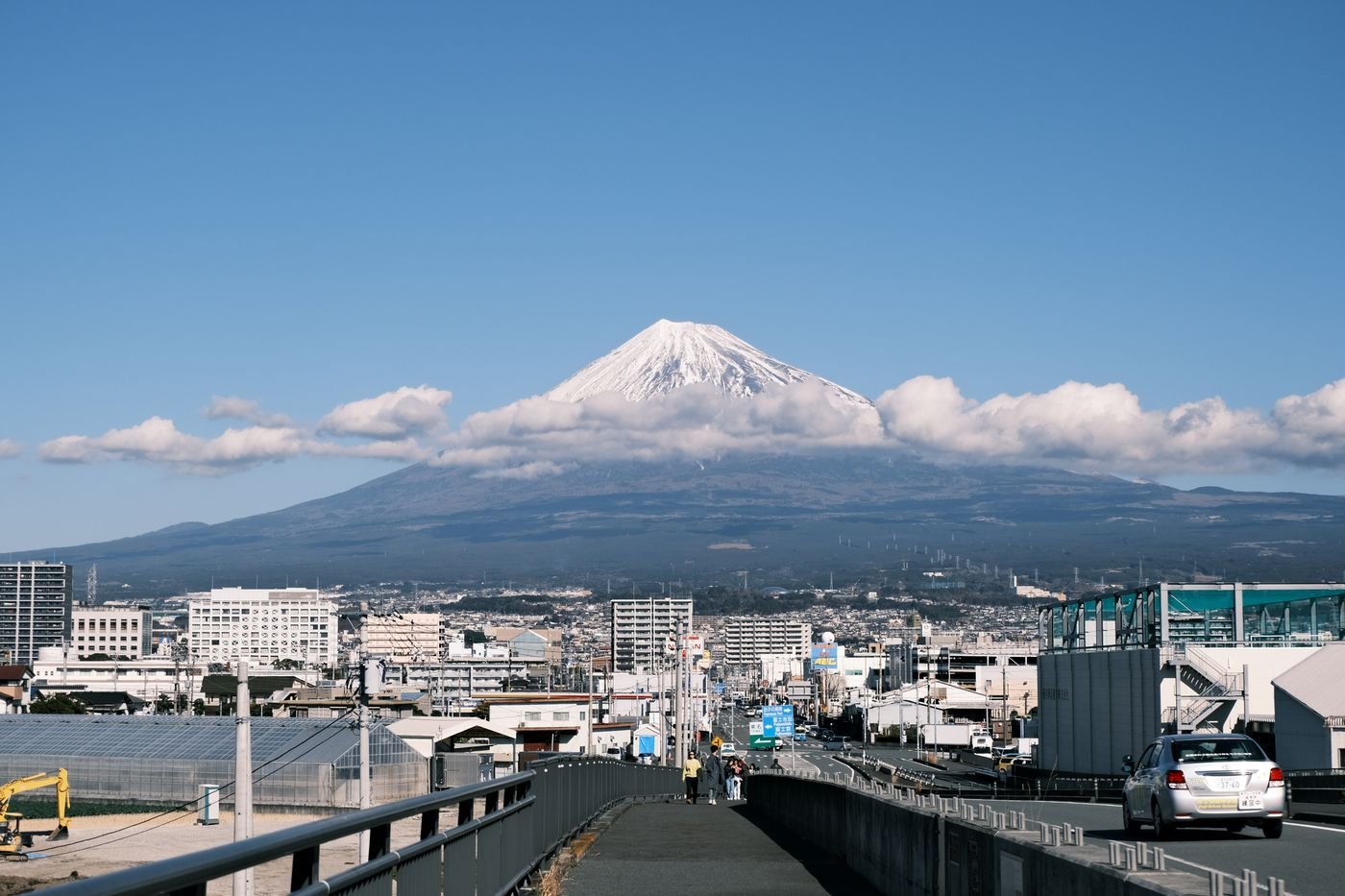
Window seat tip: take the E seat on the right-hand side from Tokyo to Kyoto for a view of Mount Fuji, which appears roughly 40 minutes into the trip on a clear day. Large luggage over 160 cm total dimensions needs a reservation for an oversize baggage space, so plan ahead or use luggage forwarding to send bags ahead to your Kyoto hotel.
Highway Bus: Tokyo to Kyoto
Overnight and daytime highway buses leave from Busta Shinjuku and Tokyo Station, arriving at Kyoto Station or nearby stops. The overnight bus costs approximately ¥4,000-7,000 depending on seat type, and the daytime service is similar or cheaper. The saving against the shinkansen is real, about ¥7,000-10,000 each way, and an overnight bus doubles as accommodation. The trade-off is 7.5-8.5 hours of travel, limited legroom on standard seats and a rough first morning in Kyoto. Premium three-abreast seats with more recline are worth the extra ¥1,000-2,000. Book through an operator such as Willer Express or an aggregator such as Kosoku Bus and check departure and drop-off points carefully, since some Kyoto buses stop at the Hachijo exit, not the main station.
Flying Tokyo to Kyoto
Kyoto has no airport. Flying means Haneda to Osaka Itami (about 1 hour 15 minutes) or Kansai, then a 50-75 minute train or bus into Kyoto. Door to door that is slower than the shinkansen, and with airport transfers it is rarely cheaper. The exception is a long-haul arrival: if you land at Kansai from overseas, skip Tokyo entirely, see our Kansai airport transfer guide.
When Does the JR Pass Pay Off?
On its own, almost never. The 7-day pass costs ¥50,000, and a Tokyo-Kyoto return on the Hikari is around ¥27,700. You would need to add roughly ¥22,000 of other JR rides within seven days, for example a Hiroshima day trip or a Kanazawa overnight, before the pass breaks even. Remember too that the Nozomi is excluded, so you are on the slower Hikari or Kodama. For the full maths see our Japan Rail Pass guide, JR Pass alternatives and the Golden Route without a JR Pass route plan.
Practical Tips for the Journey
Eat on the train: ekiben (station bento) from Tokyo Station’s Ekibenya Matsuri shop are a classic and sold before boarding. Eating is normal on the shinkansen, though avoid strong-smelling food. If you arrive in Kyoto in the afternoon, drop bags at a coin locker or forward them, then head straight out. A guided Kyoto tour on day one is a good way to cover Fushimi Inari, Gion and Higashiyama without planning buses. Kyoto Station is also an easy hub for Kyoto getting around by bus, subway and the Haruka airport express.
If you are choosing where to base yourself, see where to stay in Kyoto. Still planning Tokyo itself? Start with our Tokyo city guide and getting around Tokyo. Heading on to Osaka after Kyoto? See Tokyo to Osaka.
Our Verdict
Take the Nozomi, reserve a seat on the right side, and treat the bus as a budget fallback. Flights make no sense for this route, and the JR Pass only works if Tokyo-Kyoto is one leg of a much bigger rail trip. Timetables and fares change, so verify them on official sources before you travel.