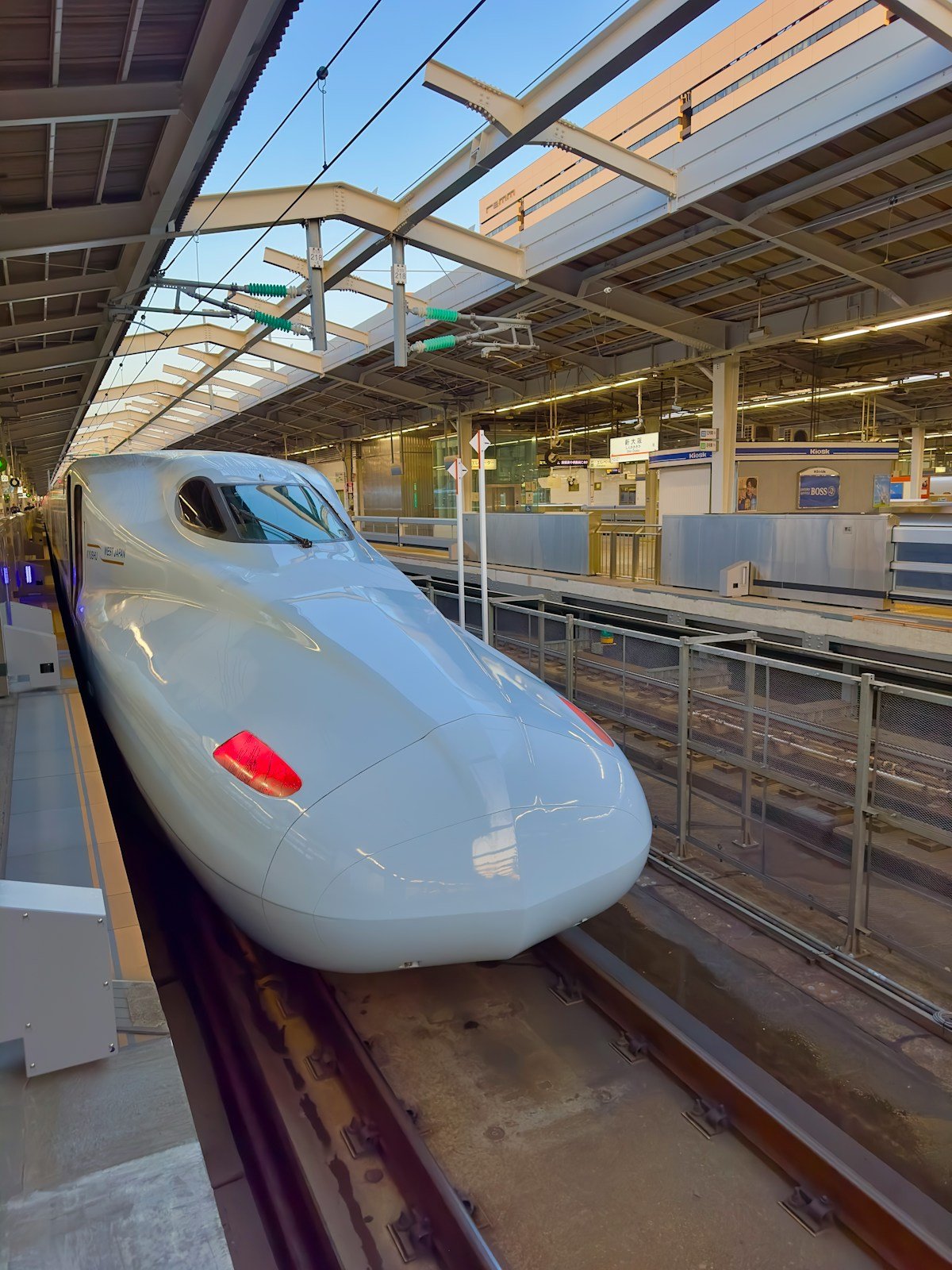
The JR Pass has long been marketed as the essential purchase for any Japan trip. The reality in 2026 is more complicated. After a significant price increase in October 2023, a 7-day pass costs approximately ¥50,000 (around USD 340 as of 2026). That is not bad value if you are moving between cities every day — but for the majority of itineraries, combination approaches work out cheaper.
This guide breaks down exactly when the JR Pass pays off, when it does not, and which alternatives to use instead.
What the JR Pass Actually Covers
The national JR Pass covers nearly all JR-operated trains across Japan: Shinkansen (except Nozomi and Mizuho, the fastest services), limited express trains, local JR lines, and some JR ferries and buses. It does not cover Tokyo Metro, Osaka Metro, private railways, or non-JR buses.
Current prices (2026):
| Pass duration | Ordinary class | Green (first) class |
|---|---|---|
| 7 days | approx. ¥50,000 | approx. ¥70,000 |
| 14 days | approx. ¥80,000 | approx. ¥113,000 |
| 21 days | approx. ¥100,000 | approx. ¥143,000 |
These prices are as of 2026 and may change — verify at jrpass.com or major travel agents before purchase.
The Break-Even Calculation
To justify the 7-day pass, you need to use approximately ¥50,000 in JR fares within 7 consecutive days. Here are the key one-way Shinkansen fares on the Hikari (the fastest service covered by JR Pass) as of 2026:
| Route | One-way fare (approx.) |
|---|---|
| Tokyo → Kyoto (Hikari) | ¥14,170 |
| Tokyo → Osaka | ¥14,720 |
| Tokyo → Hiroshima | ¥19,300 |
| Kyoto → Hiroshima | ¥11,300 |
| Osaka → Hakata (Fukuoka) | ¥11,080 |
| Tokyo → Hakata | ¥23,390 |
A simple Tokyo–Kyoto–Hiroshima–Osaka–Tokyo loop comes to approximately ¥58,940 in individual tickets — comfortably above the ¥50,000 pass threshold. Add Hakata (Fukuoka), and you are well into 14-day pass territory.
But most travellers do not move that fast.
When Individual Tickets Beat the JR Pass
The Tokyo–Kyoto–Osaka golden route only
A return trip Tokyo–Kyoto costs approximately ¥28,340. Adding a side trip to Osaka adds very little. The 7-day pass at ¥50,000 costs nearly double. Individual tickets win by approximately ¥21,000. Read our golden route without JR Pass cost guide for a full breakdown.
Trips under 7 days
The JR Pass is sold in minimum 7-day blocks. If your trip is 5 days and focused on one city cluster, you are paying for 2 days you will not use.
Slow travel and multi-day stays
If you spend 4 days in Kyoto, 3 days in Tokyo, and a day in Hiroshima, you are using the Shinkansen roughly twice. Two one-way tickets to Hiroshima cost around ¥38,600 — still less than the ¥50,000 pass.
Nozomi access matters
JR Pass holders cannot board Nozomi or Mizuho Shinkansen — the fastest Tokyo–Osaka services (2 hours 30 minutes). Individual ticket holders can. If schedule and speed matter, individual tickets are actually better.
IC Cards: The Essential Complement
Whether you buy a JR Pass or individual tickets, you need an IC card for every trip to Japan. IC cards (Suica, Pasmo, Icoca) are rechargeable contactless cards that work on:
- Tokyo Metro, Osaka Metro, and most subway systems
- JR local and rapid trains within cities
- City buses across Japan
- Convenience stores (7-Eleven, Lawson, FamilyMart), vending machines, lockers, and many restaurants
They do not replace Shinkansen tickets, but they handle everything the JR Pass does not cover — and the latter covers almost nothing once you are inside a city.
Get a Suica at Narita or Haneda airport (or the Suica app on iPhone), add ¥2,000–¥3,000 in credit, and tap in and out everywhere. The IC card fare is often cheaper than buying individual paper tickets.
For a full guide including digital wallet setup, see our Suica and IC card guide.
Regional Passes: The Middle Ground
If your itinerary concentrates in one part of Japan, a regional JR pass usually beats both the national pass and individual tickets.
Quick decision table:
| Your itinerary | Best option |
|---|---|
| Tokyo only or day trips in Kanto | IC card + individual tickets if needed |
| Kyoto, Osaka, Nara, Kobe | Kansai Area Pass (from approx. ¥4,000 for 3 days) |
| Kyushu island (Fukuoka, Nagasaki, Kumamoto, Kagoshima) | JR Kyushu Pass (from approx. ¥8,500 for 3 days) |
| Hokkaido (Sapporo, Hakodate, Asahikawa) | JR Hokkaido Pass (from approx. ¥11,000 for 5 days) |
| Tohoku region (Sendai, Aomori, Morioka) | JR East Pass Tohoku (from approx. ¥20,000 for 5 days) |
| Tokyo + Kyoto + Hiroshima return | National JR Pass (7-day approx. ¥50,000) |
| Tokyo + Kyoto + Hiroshima + Kyushu | National JR Pass (14-day approx. ¥80,000) |
For detailed coverage maps and pricing on each regional option, see our Japan regional rail pass guide.
How to Buy Without a JR Pass
Shinkansen individual tickets
Buy at any major JR station ticket office, from JR vending machines (English menus available), or in advance through:
- Smart EX (JR Central app) — Tokyo–Osaka Tokaido Shinkansen; requires a credit card registered to a Japanese address, but accepts many overseas cards at the machine
- JR East Shinkansen e-ticket — for routes from Tokyo north towards Tohoku and Hokkaido
- JR West online — routes west of Osaka including Hiroshima
You can also buy at station offices on the day, though reserved seats fill up quickly during Golden Week (late April–early May) and Obon (mid-August).
Seat reservation vs unreserved
All Shinkansen have both unreserved (Jiyuuseki) cars and reserved cars. Unreserved is cheaper by approximately ¥530 per trip and perfectly fine outside peak periods. During holidays, unreserved cars can be standing-room-only — pay the extra and reserve a seat.
The Honest Summary
The JR Pass makes sense for about one in four travellers visiting Japan. If you are covering a lot of ground in 7 days — Tokyo to Hiroshima and back, or looping through Kyushu — it pays off. For a focused two-city trip or a slow-paced two-week itinerary, individual tickets or regional passes save you ¥10,000–¥30,000.
The best approach for most visitors: buy an IC card on arrival, calculate your specific Shinkansen legs using Google Maps or Hyperdia, add up the individual fares, and compare against the pass price. The maths takes five minutes and saves real money.
Plan Your Trip
With your rail strategy settled, the next step is mapping your actual route. Our two-week Japan itinerary shows a realistic schedule across Tokyo, Kyoto, Osaka, and Hiroshima with transport costs calculated per leg — useful for comparing against any pass price. If you’re focusing on the western region, our Kansai and Kyushu itinerary covers the routes best served by regional passes.
Plan Your Trip
- Flights - Find the best fares to Japan
- Travel Insurance - Get covered before you go
- eSIM - Stay connected from landing
- Car Rental - Compare prices across providers
- Tours and activities - Browse experiences on GetYourGuide
See also: Japan Rail Pass guide · Japan regional rail passes · Getting around Japan · Suica IC card guide