This itinerary skips Tokyo entirely and focuses on western and southern Japan - the temple-dense Kansai region and the volcanic, onsen-rich island of Kyushu. It is designed for return visitors who have already done the Golden Route, or for first-timers who prefer cultural depth and natural landscapes over Tokyo’s urban density.
Sort travel insurance through VisitorsCoverage before departure, and activate an Airalo eSIM for Japan in advance - mobile data is essential for navigating Kyushu’s less English-friendly transport network.
Overview
Days 1–2: Osaka
Fly into Kansai International Airport and take the JR Haruka Express to Tennoji or Shin-Osaka (approximately 50 minutes, ¥2,380 / USD 16).
Osaka is a food city above all else. On day one, head straight to Dotonbori - the neon-lit canal street lined with restaurants. Start at Takoyaki Wanaka for takoyaki (approximately ¥500 / USD 3 for eight pieces), then walk to Kushikatsu Daruma for deep-fried skewers (approximately ¥150–300 / USD 1–2 per skewer, no double-dipping in the communal sauce). For a sit-down dinner, Ajinoya in Namba serves okonomiyaki from approximately ¥850 / USD 6.
Day two, visit Osaka Castle (approximately ¥600 / USD 4, open 9:00–17:00) in the morning. The castle tower is a concrete reconstruction, but the grounds and moat are the real draw. After the castle, walk to Kuromon Market - Osaka’s “kitchen” - for grilled seafood, fresh sashimi, and tamagoyaki. Lunch here costs approximately ¥1,500–3,000 / USD 10–20 depending on how many stalls you sample.
In the afternoon, explore the Shinsekai district south of Tennoji. The retro arcade atmosphere and Tsutenkaku Tower (approximately ¥900 / USD 6, open 10:00–20:00) give a different feel from polished Dotonbori.
Where to stay: The Dorm Hostel Osaka in Namba has beds from approximately ¥2,800 / USD 19. Cross Hotel Osaka near Shinsaibashi offers rooms from approximately ¥12,000 / USD 80. Namba Oriental Hotel has business rooms from approximately ¥9,000 / USD 60. Search hotels in Osaka on Booking.com
Days 3–5: Kyoto
Take the JR Special Rapid from Osaka Station to Kyoto Station (approximately 30 minutes, ¥570 / USD 4).
Day 3 - Eastern Kyoto: Start at Fushimi Inari Shrine (free, open 24 hours, arrive by 7:00 for empty torii gate tunnels). Walk north through Higashiyama to Kiyomizu-dera (approximately ¥400 / USD 3, open 6:00–18:00). The wooden terrace overlooks the city. Continue north through the preserved lanes of Sannen-zaka and Ninen-zaka to Maruyama Park and Yasaka Shrine (free). Lunch at Gion Kappa near Yasaka for obanzai (Kyoto home-cooking) sets from approximately ¥1,200 / USD 8.
Day 4 - Western Kyoto: Morning at Arashiyama Bamboo Grove (free, best before 8:00 to avoid crowds). Walk through to Tenryu-ji Temple (approximately ¥500 / USD 3 for the garden, open 8:30–17:00). Cross the Togetsukyo Bridge and take the Iwatayama Monkey Park trail (approximately ¥550 / USD 4, 20-minute uphill walk) for views over Kyoto and free-roaming macaques. Afternoon at Kinkaku-ji, the Golden Pavilion (approximately ¥400 / USD 3). For dinner, eat at Ippudo Ramen near Kyoto Station (tonkotsu ramen from approximately ¥900 / USD 6) or walk to Nishiki Market for street-food grazing before it closes at 17:00–18:00.
Day 5 - Northern Kyoto and Temples: Visit Ryoan-ji rock garden (approximately ¥500 / USD 3, open 8:00–17:00), then Daitoku-ji temple complex (sub-temples charge ¥400–600 each). Afternoon at the Philosopher’s Path - a 2 km canal-side walk connecting Ginkaku-ji (Silver Pavilion, approximately ¥500 / USD 3) to Nanzen-ji (grounds free, subtemple Nanzen-in ¥400). This walk is spectacular during cherry blossom (late March–early April) and autumn foliage (mid-November).
Where to stay: Piece Hostel Sanjo has dorms from approximately ¥3,000 / USD 20 in a central location near Kawaramachi. Hotel Mystays Kyoto Shijo offers rooms from approximately ¥10,000 / USD 67. For a traditional stay, Guesthouse Bon in Higashiyama has tatami rooms from approximately ¥7,000 / USD 47. Search hotels in Kyoto on Booking.com
Day 6: Nara
JR Nara Line from Kyoto (approximately 45 minutes, ¥720 / USD 5). Nara was Japan’s first permanent capital (710–784 AD) and retains a scale and atmosphere quite different from Kyoto.
Walk from the station through Nara Park - approximately 1,200 deer roam freely (shika senbei deer crackers ¥200 / USD 1.30 from vendors throughout the park). Visit Todai-ji to see the Great Buddha, a 15-metre bronze statue inside the world’s largest wooden building (approximately ¥600 / USD 4, open 7:30–17:30 April–October). Walk south to Kasuga Taisha shrine (approximately ¥500 / USD 3), famous for its 3,000 stone and bronze lanterns.
For lunch, Kamaiki near Todai-ji serves kakinoha-zushi (persimmon leaf sushi), a Nara specialty, from approximately ¥1,200 / USD 8.
Where to stay: Nara Ugaya Guesthouse has dorms from approximately ¥3,000 / USD 20 and is a 10-minute walk from the deer park. Alternatively, return to Kyoto (last train approximately 22:30) if you prefer to keep your Kyoto hotel.
Day 7: Koyasan
From Nara, take the JR Yamatoji Line to Tennoji (approximately 35 minutes, ¥480), then the Nankai Line to Gokurakubashi (approximately 90 minutes, ¥1,680 / USD 11), followed by the cable car to the summit (5 minutes, included in the Koyasan World Heritage ticket, approximately ¥3,400 / USD 23 from Namba).
Koyasan is the headquarters of Shingon Buddhism, founded by Kobo Daishi in 816 AD. The mountaintop settlement has over 100 temples. Walk the Okunoin cemetery path - 2 km through ancient cedar forest lined with 200,000 moss-covered tombstones leading to the mausoleum of Kobo Daishi. The path is atmospheric at any time but particularly powerful at dusk. Visit the Kongobu-ji head temple (approximately ¥1,000 / USD 7, open 8:30–17:00) and the Danjo Garan sacred precinct (Konpon Daito pagoda ¥500 / USD 3).
Temple lodging (shukubo): Staying overnight in a temple is the defining Koyasan experience. Eko-in offers rooms from approximately ¥12,000 / USD 80 per person including shojin ryori (Buddhist vegetarian dinner and breakfast) and morning prayer at 6:00. Fukuchi-in runs from approximately ¥15,000 / USD 100 per person with private garden views. Book at least 2–3 weeks ahead during peak seasons. Search hotels in Koyasan on Booking.com
Day 8: Hiroshima and Miyajima
Early cable car down from Koyasan, then train via Osaka to Hiroshima (Shin-Osaka to Hiroshima Shinkansen approximately 90 minutes, ¥10,440 / USD 70). This is the day to activate your 7-day JR Pass if using one - the Shinkansen legs from Hiroshima to Hakata and Beppu are covered.
Morning at the Peace Memorial Museum (approximately ¥200 / USD 1.30, open 8:30–18:00 March–November). The redesigned exhibits are direct and unflinching. Walk through the park to the Atomic Bomb Dome (exterior viewing, free).
Afternoon ferry to Miyajima Island from Miyajimaguchi (JR ferry approximately 10 minutes, free with JR Pass, otherwise ¥200 / USD 1.30). Itsukushima Shrine and its floating torii gate (approximately ¥300 / USD 2). Try grilled oysters and momiji manju from the stalls along the approach to the shrine.
For dinner back in Hiroshima, Nagata-ya serves Hiroshima-style layered okonomiyaki from approximately ¥1,000 / USD 7.
Where to stay: J-Hoppers Hiroshima has dorms from approximately ¥3,000 / USD 20. Sheraton Grand Hiroshima at the station offers rooms from approximately ¥14,000 / USD 93. Search hotels in Hiroshima on Booking.com
Day 9: Beppu
Shinkansen from Hiroshima to Kokura (approximately 60 minutes, ¥7,000 / USD 47), then JR Sonic limited express to Beppu (approximately 70 minutes, ¥3,300 / USD 22).
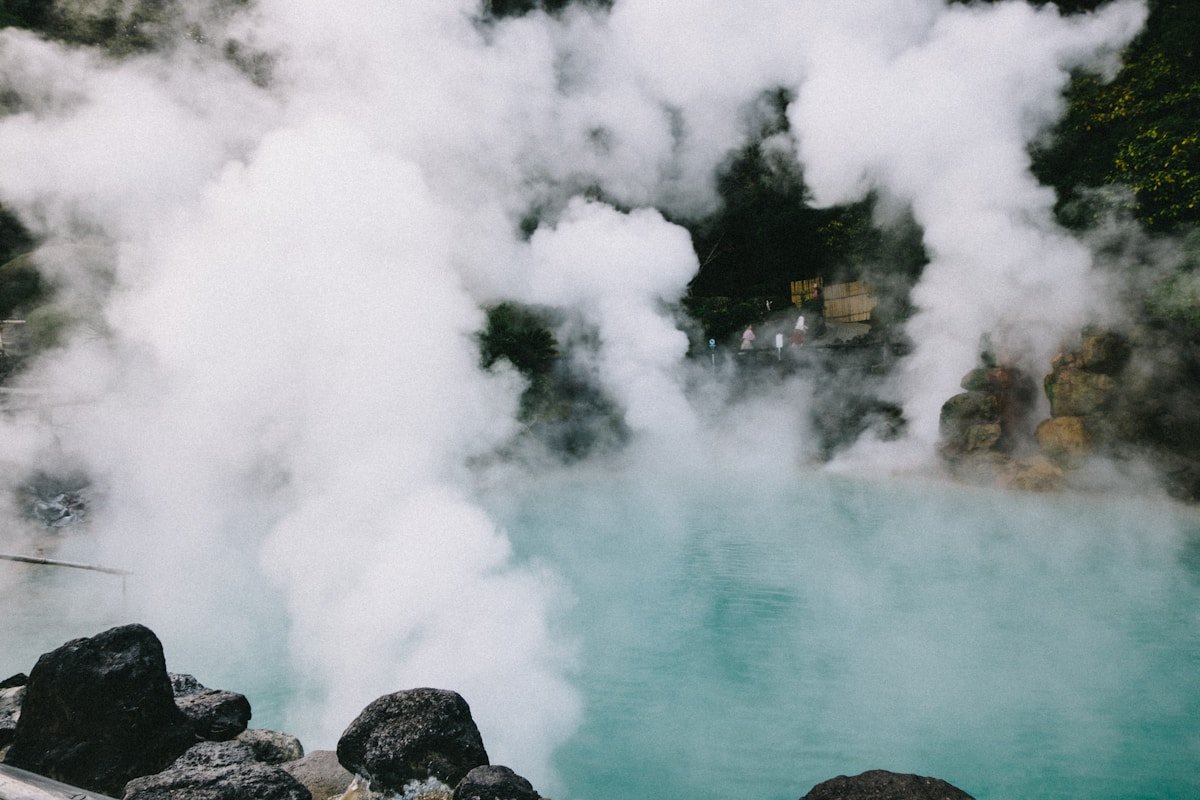
Beppu produces more hot spring water than any other city in Japan - roughly 130,000 kilolitres per day. Start with the Jigoku Meguri (Hell Tour) - seven geothermal hot springs with water too hot for bathing. A combination ticket covers all seven (approximately ¥2,200 / USD 15, open 8:00–17:00). The Blood Pond Hell (Chinoike Jigoku) and Sea Hell (Umi Jigoku) are the most striking.
In the afternoon, actually bathe. Takegawara Onsen is a public bathhouse built in 1879 with sand baths - you lie on heated volcanic sand while attendants bury you to the neck (approximately ¥1,500 / USD 10 for sand bath, ¥300 / USD 2 for regular bath, open 8:00–22:30). Hyotan Onsen offers multiple bath types including outdoor rotenburo with mountain views (approximately ¥800 / USD 5, open 9:00–25:00).
Where to eat: Beppu’s specialty is toriten (chicken tempura). Toyoken near the station serves toriten sets from approximately ¥900 / USD 6. For dinner, walk to the Beppu Ekimae area for jigoku-mushi - food steamed in natural hot spring vapour at places like Jigoku Mushi Kobo Kannawa (approximately ¥1,500–2,500 / USD 10–17).
Where to stay: Beppu Guest House has dorms from approximately ¥2,800 / USD 19. Suginoi Hotel is a large onsen resort with rooms from approximately ¥10,000 / USD 67 including access to rooftop baths overlooking the bay. Search hotels in Beppu on Booking.com
Day 10: Kumamoto and Mt Aso
JR Sonic back to Kokura (approximately 70 minutes), then Shinkansen to Kumamoto (approximately 40 minutes, approximately ¥5,500 / USD 37 combined).
Kumamoto Castle was severely damaged in the 2016 earthquakes and restoration continues through 2030+. The exterior is now visible from the reconstructed observation areas, and the main tower reopened in 2021 (approximately ¥800 / USD 5, open 9:00–17:00). The scale of the stone walls alone justifies the visit.
If time allows, take the JR Hohi Line to Aso Station (approximately 70 minutes, ¥1,320 / USD 9) for views of Mt Aso’s caldera - one of the world’s largest at 25 km diameter. The Aso Volcano Museum (approximately ¥860 / USD 6) and the Kusasenri grasslands are accessible from the station by bus. Access to the crater itself depends on volcanic activity levels - check the Aso Volcano Disaster Prevention Council status before going.
For lunch in Kumamoto, Ganso Kumamoto Ramen Kozatsuru serves Kumamoto-style tonkotsu ramen with garlic chips (approximately ¥750 / USD 5). Kumamoto is also famous for basashi (raw horse meat) - Suganoya near the castle serves basashi platters from approximately ¥1,500 / USD 10.
From Kumamoto, the Shinkansen runs to Hakata/Fukuoka (approximately 35 minutes, ¥5,130 / USD 34) for flights home, or back to Shin-Osaka (approximately 3 hours, ¥18,180 / USD 121) for departure from Kansai International Airport. Shinkansen seats can be reserved in advance through any JR ticket office or the JR West Warp online booking service. If you have an extra night in Fukuoka before your flight, tours and activities in Fukuoka - yatai food tours, Dazaifu shrine visits, and Hakata craft workshops - are a worthwhile addition. Search hotels in Fukuoka on Booking.com
Transport Strategy
| Leg | Mode | Time | Cost (approx.) |
|---|---|---|---|
| KIX → Osaka | JR Haruka | 50 min | ¥2,380 / USD 16 |
| Osaka → Kyoto | JR Special Rapid | 30 min | ¥570 / USD 4 |
| Kyoto → Nara | JR Nara Line | 45 min | ¥720 / USD 5 |
| Nara → Koyasan | Nankai via Tennoji | 2.5 hrs | ¥3,400 / USD 23 |
| Koyasan → Hiroshima | Cable car + Shinkansen | 3 hrs | ¥12,000 / USD 80 |
| Hiroshima → Beppu | Shinkansen + Sonic | 2.5 hrs | ¥10,300 / USD 69 |
| Beppu → Kumamoto | Sonic + Shinkansen | 2 hrs | ¥5,500 / USD 37 |
All prices approximate as of 2026.
Daily Budget Summary
| Category | Budget | Mid-Range |
|---|---|---|
| Accommodation | ¥3,000–5,000 | ¥10,000–15,000 |
| Food | ¥2,500–3,500 | ¥5,000–8,000 |
| Transport | ¥1,500–3,000 | ¥2,000–5,000 |
| Activities | ¥500–1,500 | ¥2,000–4,000 |
| Daily total | ¥7,500–13,000 | ¥19,000–32,000 |
All prices in JPY, approximate as of 2026. The Koyasan temple stay night will be higher (¥12,000–15,000 per person including meals) regardless of budget tier - consider it part of the experience rather than an accommodation cost.
See also: Osaka travel guide · Kyoto travel guide · Hiroshima travel guide · Fukuoka travel guide · Nagasaki travel guide · Beppu travel guide · Kansai region guide · Kyushu region guide · Ryokan guide Japan · Japan Rail Pass guide · Onsen guide Japan
Book Your Trip
Flights — search and compare on Aviasales eSIM — stay connected with Airalo Travel insurance — get covered with EKTA Airport transfers — book with Kiwitaxi Car rental — compare with GetRentaCar Tours and activities — browse GetYourGuide