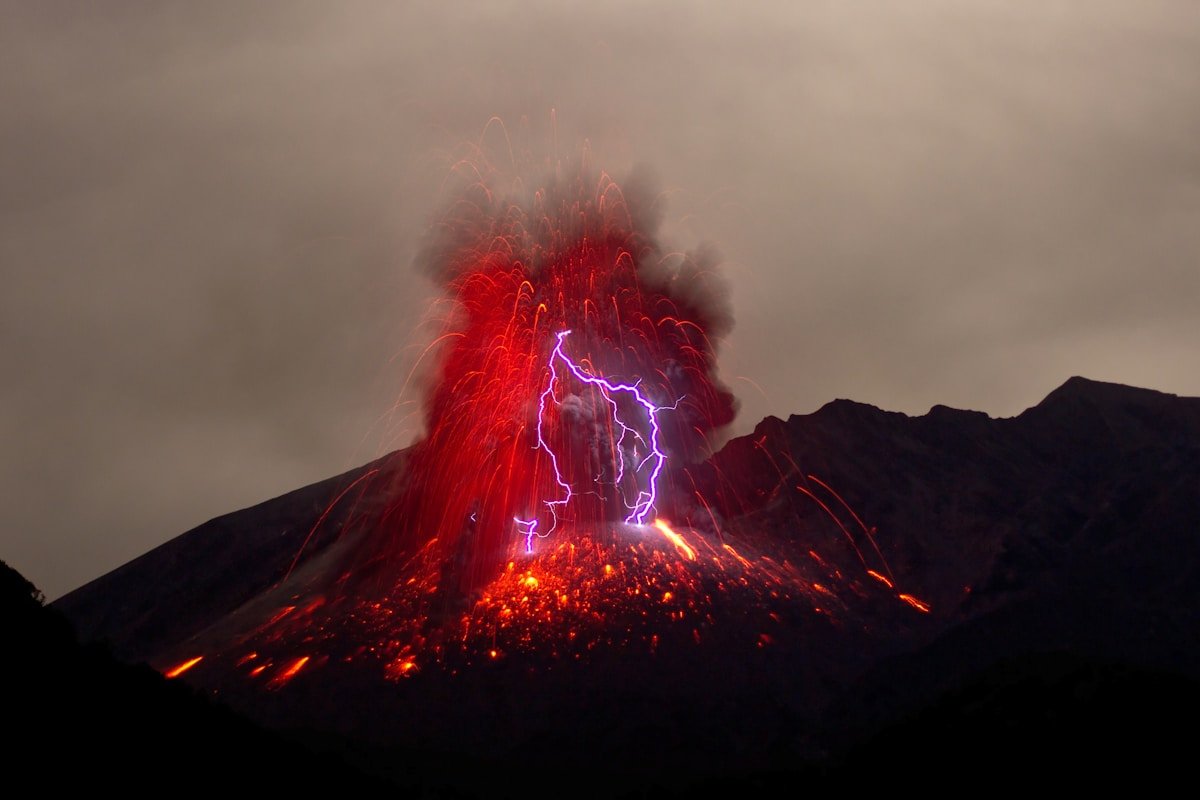
Kyushu is Japan’s third largest island and its most geologically active. Four of Japan’s most active volcanoes are here. The hot spring density is the highest in the country. The climate is warmer and the pace is slower than the main Honshu corridor. People are noticeably more approachable.
Fukuoka is the entry point for most travellers - it has an international airport, a bullet train connection to Osaka (2h20min), and a food scene serious enough to justify the flight on its own. From Fukuoka, the rest of Kyushu fans out by train and bus: coastal resorts, volcanic highlands, and the cities of Nagasaki and Kagoshima in the south.
Fukuoka
Fukuoka is one of Japan’s most liveable cities and has been growing faster than any other major Japanese city for the past decade. The food is the main draw: tonkotsu ramen was invented here (the pork-bone broth is thick, slightly cloudy, and served with thin noodles), and Hakata - the historic merchant district - gives the local style its name (Hakata ramen).
The yatai are Fukuoka’s outdoor food stalls - open-sided temporary restaurants set up along the Naka River and around Tenjin each evening from around 6pm. There are around 100 operating at any given time. A bowl of ramen at a yatai costs ¥800–1,200 ($5.30–8). Sitting at a yatai is one of the more direct ways to eat alongside local regulars.
Ohori Park is a large lakeside park in the city’s west - free, popular with joggers and families, good for a morning walk. Fukuoka Castle ruins are nearby. Dazaifu, 30 minutes by private Nishitetsu rail from Fukuoka’s Tenjin station, has one of Japan’s most important Shinto shrines (Dazaifu Tenmangu, dedicated to the god of learning) and a decent garden.
From Osaka: 2h20min Shinkansen (¥15,000/$100; JR Pass valid). From Tokyo: 5h Shinkansen or 1h35min by air.
Mount Aso
Mount Aso holds the world’s largest inhabited volcanic caldera - the outer rim is 128km in circumference, and around 50,000 people live inside it. The active cone (Nakadake) can be viewed from the crater rim when sulphur emissions are low enough to permit access; the site opens and closes based on volcanic activity. Entry to the crater area ¥1,000 ($6.60). The ropeway was damaged in a 2021 eruption and had not fully reopened as of early 2026 - bus access to the crater rim was available in its place.
The Aso Caldera floor is worth driving or cycling across: green pastures, the Kusasenri grassland (good in autumn), and the small onsen town of Aso provides accommodation. From Fukuoka: 2h by Kyushu Shinkansen to Kumamoto, then 1h local train to Aso (JR Pass valid on both legs).
Nagasaki
Nagasaki has two distinct identities: the city that carried Japan’s longest contact with the outside world (Portuguese traders, Dutch merchants, Chinese traders all had footholds here during Japan’s centuries of isolation) and the city where the second atomic bomb was dropped on August 9, 1945.
The Peace Park and Atomic Bomb Museum are essential visits - the museum (¥200/$1.30) is understated and precise, and the hypocenter park marks the exact point of detonation. Allow at least 2 hours at the museum.
Glover Garden (¥620/$4.10) is the preserved Western-style mansion district on the hillside above the harbour, built by 19th-century foreign residents. The view of the harbour from the garden terrace is one of the best in the city. Dejima, the artificial island where Dutch traders were confined during Japan’s isolationist period, has been partially reconstructed as a museum (¥520/$3.40).
Nagasaki champon noodles - thick wheat noodles in a milky broth with seafood, pork, and vegetables - originated here as a meal adapted for Chinese students at the turn of the 20th century. Try Shikairou restaurant, where the dish was invented, or any of the local alternatives.
From Fukuoka: 2h by JR limited express to Nagasaki (¥4,940/$33; JR Pass valid). From 2023, the Nagasaki Shinkansen shortens this to around 1h20min from Hakata, though a transfer is required at Shin-Tosu (JR Pass valid).
Beppu
Beppu on Kyushu’s east coast produces more hot spring water than anywhere else in Japan: 83 million litres daily from around 2,800 springs. The city is visually unusual - steam rises from drains and street corners throughout.
The eight “Jigoku” (hell springs) are the main attraction: natural pools in colours ranging from vivid blue (Umi Jigoku, the most famous, where the temperature is 98°C) to blood-red (Chi no Ike Jigoku), with boiling mud and spouting geysers among the others. A combined ticket covers all eight hells (¥2,200/$14.60). Sand baths, where you’re buried up to your neck in naturally heated sand, are available at Takegawara (¥700/$4.60) or the more modern beachside facility (¥1,500/$10).
From Fukuoka: 2h by Sonic limited express to Beppu (¥5,990/$40; JR Pass valid).
Kagoshima
Kagoshima sits at Kyushu’s southern tip and has an active volcano - Sakurajima - across the bay visible from the city centre. Sakurajima erupts hundreds of times a year, mostly minor ash ejections, and the city normalises this: there are ash collection points on street corners and shelters for volcanic debris. A ferry from Kagoshima port to Sakurajima takes 15 minutes (¥200/$1.30) and a bus circles the island past lava fields from the 1914 eruption.
Sengan-en is a 17th-century clan garden built to frame Sakurajima as a landscape feature in the background (¥1,000/$6.60). The garden belongs to the Shimadzu clan, who ruled Satsuma domain and played a major role in the Meiji Restoration. The adjacent museum covers Satsuma history.
Kagoshima’s food specialties: Kurobuta (Berkshire black pig) pork, used in everything from tonkatsu to shabu-shabu; shochu distilled from sweet potato (imo jochu), which is the dominant spirit here rather than sake. The shochu distillery tours along the Isa River offer tastings.
From Fukuoka: 1h20min on the Kyushu Shinkansen to Kagoshima-Chuo (¥11,710/$78; JR Pass valid).
Yufuin
Yufuin is a small onsen resort town in Oita Prefecture, 80km south of Beppu. It has developed a craft-shop and gallery culture alongside the hot springs, and the approach from Yufuin station along Yufuin no Mori street toward Lake Kinrin is pleasant. The lake steams in the early morning as the warmer spring-water meets the cool air.
More upscale and self-consciously curated than Beppu, Yufuin suits an overnight ryokan stay rather than a day trip. Mid-range ryokan with dinner and breakfast costs ¥20,000–30,000 ($133–200) per person. Day visitors can use public baths (Shitanyu, an outdoor riverside bath, is free) without staying.
From Beppu: 45min by JR Yufuin no Mori scenic train (¥1,880/$12.50; JR Pass valid).
Getting Around Kyushu
The Kyushu Shinkansen runs from Hakata (Fukuoka) south to Kagoshima-Chuo. The JR Kyushu Pass (3/5-day, ¥11,000–15,000/$73–100) covers all JR trains on Kyushu, including Shinkansen - good value if you’re covering multiple cities. Ferry connections from Fukuoka reach South Korea (Busan, 3h by jetfoil, ¥14,000/$93). Search hotels in Kyushu on Booking.com
For routes, passes and airport links in more detail, see our guide to getting around Kyushu.
City Guides for Kyushu
Detailed city guides: Fukuoka · Nagasaki · Beppu · Kagoshima
To plan the rest of the trip, read our guides to the best things to do in Kyushu and where to stay in Kyushu.
Best Season
Kyushu’s warmer climate means spring arrives early - cherry blossoms appear in Kagoshima around mid-March, a week before Tokyo. Summers are very hot and humid (July–September, 30–35°C, high humidity); typhoon season runs July–October with Kyushu more exposed than Honshu. Autumn (October–November) is comfortable. Winter is mild compared to northern Japan - no snow in the coastal cities, though mountain areas like Aso get cold.
Plan your Kyushu visit: Tours and activities across Kyushu cover the region’s top experiences. Flights to Japan - compare early, especially for travel to regional airports outside Tokyo. Travel insurance for Japan and an Airalo eSIM are worth sorting before you fly.
City Guides for Kyushu
Detailed city guides: Fukuoka · Beppu · Nagasaki · Kagoshima
Related guides: Kansai and Kyushu itinerary · Fukuoka vs Osaka · Onsen guide Japan · Ryokan guide Japan · Japan Rail Pass guide
See also: Fukuoka travel guide · Beppu travel guide · Nagasaki travel guide · Kagoshima travel guide · Things to do in Fukuoka · Snow monkeys at Jigokudani · Beppu long-stay guide · Kagoshima long-stay guide