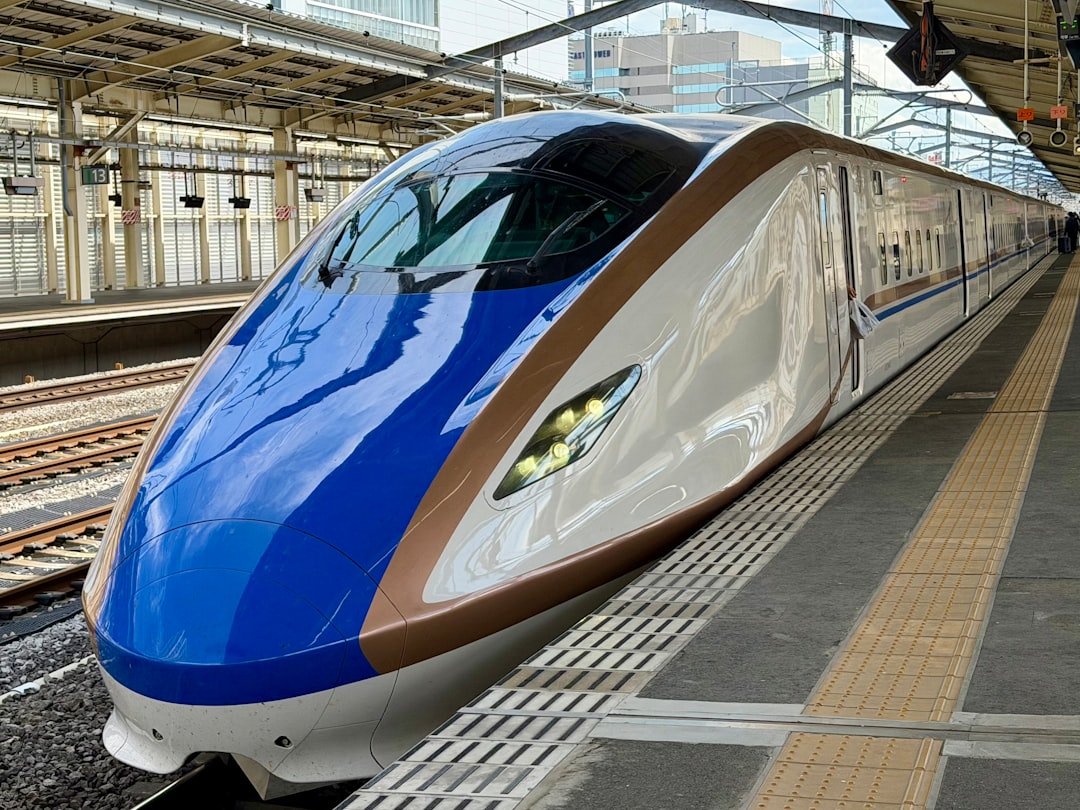
Japan’s shinkansen network is one of the most reliable, punctual and well-organised rail systems in the world. Since the Tokaido Shinkansen opened for the 1964 Tokyo Olympics, the bullet train has reshaped how Japan moves - connecting cities that once took all day in a few hours, always on time to the minute. This guide covers every line, the key routes and journey times, how to buy tickets, when a JR Pass makes sense, and what to expect on board.
See also: our Japan Rail Pass guide for a detailed look at pass options, and our getting around Japan guide for how shinkansen fits into the wider transport picture.
The Main Shinkansen Lines
Japan operates several distinct shinkansen lines, mostly run by JR Group companies. Understanding which line serves your route tells you what type of train to look for at the station.
Tokaido Shinkansen runs between Tokyo and Osaka via Nagoya, Kyoto and Shin-Yokohama. This is the busiest high-speed rail corridor in the world. Operated by JR Central.
Sanyo Shinkansen continues west from Osaka to Hiroshima, then on to Hakata (Fukuoka) - effectively an extension of the Tokaido. Operated by JR West.
Tohoku Shinkansen heads north from Tokyo toward Sendai, Morioka and beyond. Branches extend to Akita (Akita Shinkansen) and Yamagata (Yamagata Shinkansen). Operated by JR East.
Hokuriku Shinkansen connects Tokyo to Kanazawa via Nagano and Toyama, with a 2024 extension to Tsuruga. This is the route for the Japan Alps and the historic Kanazawa–Kyoto corridor. Operated by JR East and JR West.
Joetsu Shinkansen links Tokyo with Niigata on the Sea of Japan coast. Operated by JR East.
Kyushu Shinkansen connects Hakata (Fukuoka) southward to Kumamoto and Kagoshima-Chuo, the southernmost terminus on the network. Operated by JR Kyushu. The Nishikyushu Shinkansen opened in 2022 and serves Nagasaki separately.
Hokkaido Shinkansen runs from Shin-Aomori through the Seikan Tunnel to Shin-Hakodate-Hokuto, with an extension to Sapporo expected by the early 2030s. Operated by JR Hokkaido.
Key Routes and Journey Times
The times below are for the fastest trains on each route (Nozomi or Hayabusa class). Journey times can vary by 10–20 minutes depending on the service type.
| Route | Line | Fastest time |
|---|---|---|
| Tokyo → Kyoto | Tokaido | approximately 2 hr 15 min |
| Tokyo → Osaka (Shin-Osaka) | Tokaido | approximately 2 hr 15 min |
| Tokyo → Nagoya | Tokaido | approximately 1 hr 40 min |
| Tokyo → Hiroshima | Tokaido/Sanyo | approximately 4 hr |
| Tokyo → Hakata (Fukuoka) | Tokaido/Sanyo | approximately 5 hr |
| Tokyo → Sendai | Tohoku | approximately 1 hr 30 min |
| Tokyo → Kanazawa | Hokuriku | approximately 2 hr 30 min |
| Tokyo → Niigata | Joetsu | approximately 1 hr 35 min |
| Osaka → Hakata | Sanyo | approximately 2 hr 15 min |
| Hakata → Kagoshima-Chuo | Kyushu | approximately 1 hr 20 min |
Nozomi, Hikari and Kodama - Which to Take
On the Tokaido and Sanyo lines, three service grades run on the same track. Understanding the difference saves time and, in some cases, money.
Nozomi is the fastest. It stops only at major stations (Tokyo, Shinagawa, Shin-Yokohama, Nagoya, Kyoto, Shin-Osaka, then selected stops to Hakata). If you’re doing Tokyo–Kyoto or Tokyo–Osaka, Nozomi is what you want. Important caveat: Nozomi trains are not covered by the standard JR Pass - you pay a supplement or buy a separate ticket.
Hikari stops at all the Nozomi stations plus a handful more. Journey time to Kyoto or Osaka is roughly 20–30 minutes longer than Nozomi. Hikari is fully covered by the JR Pass and is often the best choice for pass holders doing the main corridor.
Kodama is the slow one - stops at every station along the route. Tokyo to Osaka takes around 4 hours. Use it only if you’re visiting a smaller shinkansen station (Mishima, Kakegawa, Shin-Kobe, etc.) or want to break the journey deliberately.
On the Tohoku and Hokuriku lines, equivalent service grades exist: Hayabusa/Komachi (fastest, Tohoku/Akita), Kagayaki (fastest, Hokuriku), and slower Yamabiko or Asama services. These are all covered by the relevant JR Passes.
How to Buy Shinkansen Tickets
Smartex and the JR App
JR Central’s Smartex (Smart EX) app lets you buy Tokaido and Sanyo shinkansen tickets online with an international credit card. You board using a contactless IC card (Suica or ICOCA) linked to your reservation - no paper ticket needed. This is the easiest method for the main Tokyo–Osaka–Hiroshima corridor.
JR East’s Ekinet covers Tohoku, Hokuriku (JR East section), Joetsu and Hokkaido routes with online reservations for foreign visitors.
Station Ticket Machines
Every shinkansen station has green-screen JR ticket machines with an English interface. You can buy same-day tickets and reserve seats here. Have your destination in mind before you start - the interface is logical but slow if you’re unfamiliar with it. Credit cards are accepted at most machines.
JR Ticket Office (Midori-no-Madoguchi)
The staffed JR ticket office handles more complex requests: multi-leg reservations, group bookings, Green Car, and JR Pass reservations. Queues can be long at Tokyo Station and Kyoto Station during peak periods. Arrive with 30 minutes to spare if you need assistance.
At the Station on the Day
Unreserved cars have a standby queue marked on the platform. For popular trains (especially Friday evenings or Golden Week), you can join the queue and board the next available unreserved service.
Reserved vs Unreserved Seats
Shinkansen trains have three sections: reserved cars (指定席, shiteiseki), unreserved cars (自由席, jiyūseki), and Green Car (グリーン車).
Unreserved seats are first-come, first-served. If a seat is empty, it’s yours. On quiet weekday trains this works fine. On Fridays, Sundays, public holidays and during Golden Week or Obon, unreserved cars fill up - you may end up standing for the entire journey. Nozomi trains do not have unreserved cars on some configurations during peak periods.
Reserved seats cost a small supplement (approximately ¥530–¥1,600 as of 2026 depending on route and time) but guarantee you a seat. If you’re travelling with luggage or a group, reserved is almost always worth it. Reservations can be made right up to train departure.
When to book reserved seats: Any Friday afternoon or evening, Sunday afternoon, eve of a public holiday, during Golden Week (late April–early May), Obon (mid-August), and the New Year period (late December–early January). For all other times, unreserved is usually fine on non-peak Nozomi or Hikari services.
Green Car (First Class)
Green Car is Japan’s equivalent of first class. Seats are wider (typically 2+2 configuration vs 2+3 in standard), with more legroom and a quieter carriage. Each seat has a power outlet. On some services, light refreshments are available from a trolley.
The premium over a reserved standard seat is approximately ¥2,500–¥5,000 as of 2026 depending on route length. For a 2-hour Tokyo–Osaka journey, the upgrade is relatively modest if you value the extra space. Green Car is included in some higher-tier JR Pass options (the Green Car JR Pass) but not the standard pass.
Luggage Rules and Oversized Bag Reservations
Since May 2020, JR Central introduced a compulsory reservation system for large luggage on Tokaido, Sanyo and Kyushu shinkansen.
Large luggage is defined as items with a total of three sides exceeding 160 cm (but under 250 cm). Think large suitcases, golf bags and surfboards. If your bag falls into this category, you must make a designated luggage area reservation (oversized luggage reservation) when booking your ticket. The designated space is behind the last row of each car. There is no extra charge, but the reservation is required.
Bags under 160 cm total go in the overhead rack. There’s no dedicated luggage van - everything travels in the same car as passengers. For long trips with multiple large bags, travelling in a Green Car or reserving the rear-row seats (which have more floor space) makes loading easier.
Smaller items, backpacks and day bags have no restrictions.
JR Pass vs Individual Tickets: Cost Comparison
The JR Pass covers all Hikari, Kodama and most regional shinkansen, but not Nozomi or Mizuho on the main Tokaido–Sanyo corridor. Whether a pass saves money depends entirely on your itinerary.
Key route individual ticket prices (approximately, as of 2026):
| Route | Individual ticket (reserved) |
|---|---|
| Tokyo → Kyoto (Nozomi) | approximately ¥14,170 |
| Tokyo → Osaka (Nozomi) | approximately ¥14,720 |
| Tokyo → Hiroshima (Nozomi) | approximately ¥19,440 |
| Tokyo → Hakata (Nozomi) | approximately ¥23,390 |
| Tokyo → Sendai (Hayabusa) | approximately ¥11,410 |
| Tokyo → Kanazawa (Kagayaki) | approximately ¥14,380 |
The 14-day JR Pass costs approximately ¥50,000 as of 2026 (adult, ordinary). If your itinerary includes Tokyo → Kyoto/Osaka → Hiroshima → Hakata round trip, the pass pays for itself. If you’re spending most of your time in Tokyo or just doing one long-distance leg, individual tickets are likely cheaper.
One important note: you lose the fastest Nozomi option with the pass and must use Hikari for the Tokaido–Sanyo corridor. For Tokyo–Osaka, the time difference is 20–30 minutes - usually not a problem. For Tokyo–Hakata, the Hikari takes significantly longer. Factor this into your planning.
Station Tips
Ekiben (Station Bento Boxes)
Shinkansen stations are famous for ekiben - high-quality bento boxes sold on the platform and in the station’s ecute food hall. Tokyo Station has one of the largest ekiben selections in the country, with regional specialties from across Japan. Buying before boarding is smart: eating quietly at your seat is completely normal and expected.
Platform Numbering
Tokyo Station’s shinkansen platforms are separate from the regular JR and subway platforms - follow signs for the bullet train gate (新幹線, shinkansen). Platform numbers for shinkansen at Tokyo typically start at 14 or higher. At Shin-Osaka and Kyoto, look for the shinkansen-only concourse. Your ticket or booking confirmation shows the platform and car number.
Where to Stand
Each platform has marked queue positions indicating where each car will stop. Find your car number on the platform floor markings and queue there. Trains stop to within centimetres of the marks every single time.
Arrival Preparation
Japanese shinkansen departures and arrivals run to the second. Prepare your ticket or IC card before the gate. For reserved seats, your ticket shows car number (号車, gōsha) and seat number (座席, zaseki) - find your car marker on the platform before the train arrives.
On-Board Etiquette
Shinkansen carriages are quiet spaces. A few firm rules:
- No phone calls in your seat. Step to the inter-car space (vestibule) between carriages to take a call.
- Silence your phone. Use vibrate or silent mode throughout the journey.
- Eating is fine. Eating quietly at your seat is normal and widely practised, particularly on longer journeys.
- Keep the seat pocket tidy. Dispose of your ekiben box in the bins near the toilets or take it with you - never leave it in the seat pocket.
- Recline considerately. On shorter services, many passengers don’t recline. On longer routes (2+ hours), reclining is standard but a brief glance behind you is courteous.
- Noise from children is accepted graciously - shinkansen carriages are forgiving of family travel.
The overall atmosphere is calm and efficient. Follow what the people around you are doing and you’ll be fine.
Getting to the Platform
Most shinkansen stations require passing through a separate fare gate. Feed your paper ticket into the gate or tap your IC card if your reservation is linked to it. Keep your ticket - you’ll need it at the exit gate at your destination.
At major interchanges (Tokyo, Shin-Osaka, Hakata), allow 10–15 minutes to transfer between shinkansen lines or to connect to local trains. The stations are large and well-signposted in English but can feel overwhelming during your first visit. JR staff at the gates are helpful if you’re lost.
Transport essentials: The Japan Rail Pass covers Shinkansen and most JR lines in a single purchase - worth comparing against point-to-point fares for your specific route. Kiwitaxi offers fixed-price airport transfers to kick off your trip without meter anxiety. Compare flights to Japan to find the best fares before booking.
A Note on Reliability
Japan’s shinkansen has operated since 1964 without a single passenger fatality due to collision or derailment. Average annual delay per train across the network runs under one minute. If a shinkansen is late by more than five minutes, it makes the news. This level of reliability means you can book tight connections and plan closely - the train will be there.
For more on building your transport plan around the shinkansen, see our full getting around Japan guide.
Plan Your Trip
- Flights - Find the best fares to Japan
- Travel Insurance - Get covered before you go
- eSIM - Stay connected from landing
- Car Rental - Compare prices across providers
See also: Japan Rail Pass guide · Getting around Japan · Japan Golden Route itinerary · Two weeks in Japan · Tokyo travel guide · Kyoto travel guide · Osaka travel guide