Five underrated Japanese cities worth adding to a trip are Kanazawa, Matsuyama, Takayama, Hakodate and Nagasaki. Each has a distinctive landmark, a food speciality and fees of roughly ¥200 to ¥840 per sight as of 2026. All are reachable by Shinkansen, limited express or ferry, and none needs more than two nights.
Most first itineraries stop at Tokyo, Kyoto and Osaka. These five cities show different sides of Japan: a garden city, a hot-spring town on Shikoku, an Edo-era mountain town, a port with a night view and a harbour city with an unusual history. We chose them because they have enough to fill a day or two, yet get far fewer visitors than the golden route. If you want to place them in a longer plan, see our 10 days in Japan itinerary.
1. Kanazawa, Ishikawa
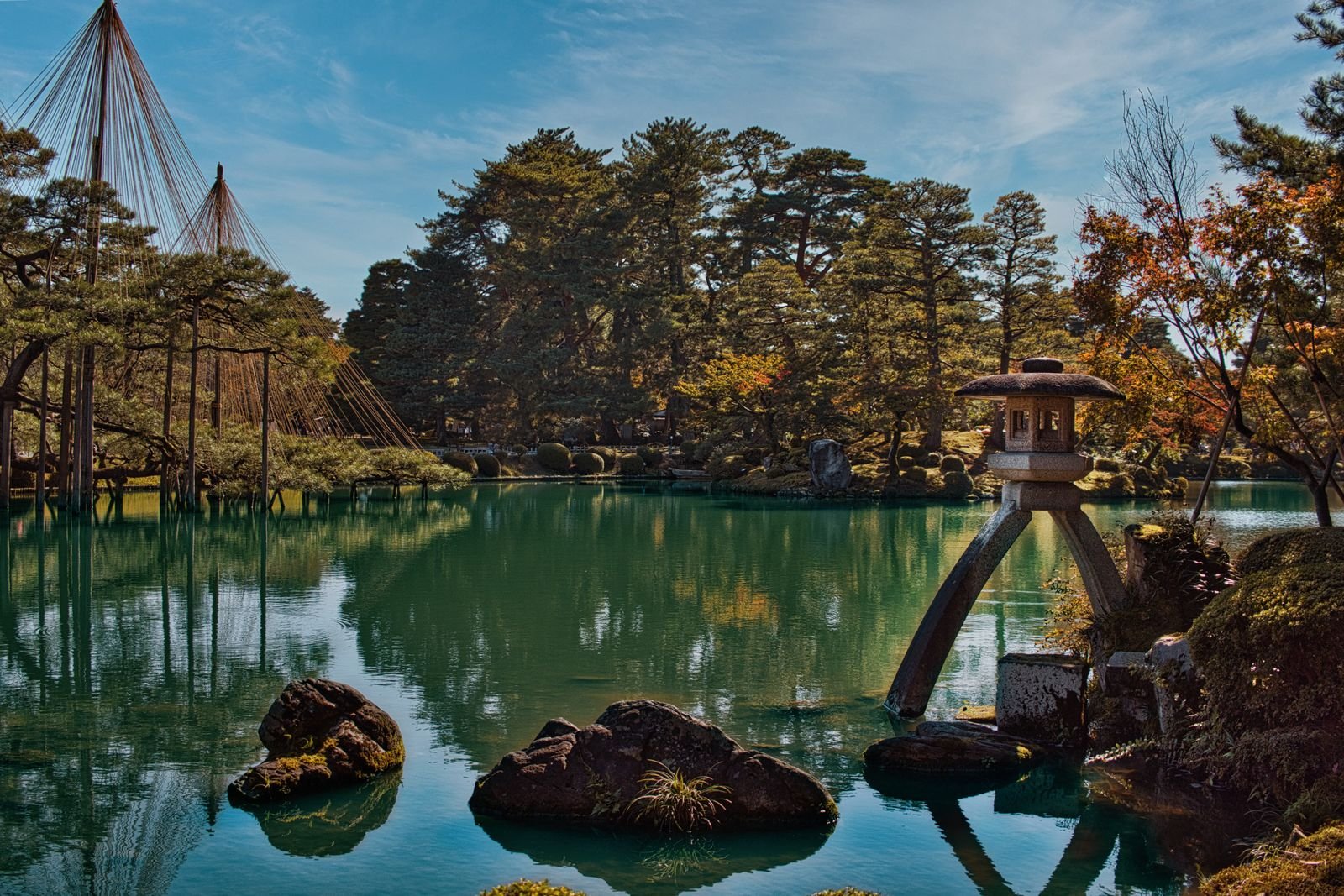
Kanazawa is the best all-round pick on the list. Kenroku-en, ranked among Japan’s top three landscape gardens, costs ¥320 to enter, and the neighbouring castle park is free, with the reconstructed turret priced at ¥320. The Higashi Chaya district still has around 30 active geiko and maiko. The Shima teahouse museum costs ¥500, and a tea ceremony at Kaikaro costs ¥1,500. The D.T. Suzuki Museum (¥310), designed by Yoshio Taniguchi, is a quiet Zen-themed museum. Travel is simple: the Hokuriku Shinkansen from Tokyo takes about 2 hours 30 minutes (¥14,120 one way). Read our Kanazawa guide and the things to do in Kanazawa, or book Kanazawa tours.
Local tip: Enter Kenroku-en early in the day, before tour groups arrive, and finish at Kazuemachi at dusk, when the canal-side teahouses are lit.
2. Matsuyama, Ehime
Matsuyama is the largest city on Shikoku island and combines a castle with one of Japan’s oldest hot-spring bathhouses. Dogo Onsen Honkan offers basic admission from ¥450, standard admission at ¥840 with a yukata and rest room, and premium admission at ¥1,250. The Honkan has been under phased renovation, so check the official site before you go; the Tsubaki-no-Yu annex (¥400) has stayed open. The castle keep dates from 1854 and is one of 12 originals (admission ¥520, cable car ¥270). Reach it by Shinkansen to Okayama then limited express (about 3 hours 15 minutes from Osaka, approximately ¥9,870), by Super Jet ferry from Hiroshima (1 hour 10 minutes, ¥6,600), or by plane from Haneda. See our Matsuyama guide and what to eat in Matsuyama.
Local tip: Buy a tram day pass if you do Dogo, the castle and Okaido in one day. The pass covers roughly four tram rides and pays for itself on that route.
3. Takayama, Gifu
Takayama’s Sanmachi Suji streets are lined with sake breweries marked by cedar-ball sugidama above the doors. The Takayama Jinya (¥440) is the only surviving Edo-period regional government building in Japan, built in 1615. The Hida Folk Village (¥700) moves 30 farmhouses into an open-air museum, and Hida beef kushiage skewers at the stalls cost around ¥500. Shirakawa-go is a 40-minute bus ride (¥1,600 each way). From Tokyo, take the Shinkansen to Nagoya and the Wide View Hida express, about 4 hours 10 minutes in total. Our Takayama guide has a plan, and Takayama tours cover Shirakawa-go.
Local tip: The morning markets run early, so go before the day-trippers arrive from the Shirakawa-go buses.
4. Hakodate, Hokkaido
Hakodate suits travellers who want a port town with an evening payoff. The Mt Hakodate ropeway (¥1,500 return) runs until 22:00, and the night view is the main draw. Goryokaku Tower (¥840) shows the full star shape of the 19th-century fort, which cannot be seen from the ground. At the Morning Market, ikura-don costs ¥1,500 to ¥2,000 and uni-don runs ¥2,500 to ¥4,000. From Tokyo, the Hokkaido Shinkansen reaches Shin-Hakodate-Hokuto in about 4 hours 15 minutes (¥22,690 reserved), then a local train takes 17 minutes (¥1,150). See our Hakodate guide and book Hakodate tours.
Local tip: Reach the ropeway 30 to 40 minutes before sunset to watch the city shift from daylight to full illumination. Summer sunset is around 19:30, winter around 16:00.
5. Nagasaki, Nagasaki
Nagasaki rewards history-minded visitors. The Atomic Bomb Museum (¥200, open 8:30 to 17:30) is restrained and moving, and the Peace Park and hypocenter park beside it are free. Dejima (¥520) recreates the Dutch trading post, Glover Garden covers the Scottish merchant Thomas Glover, and Sofukuji, founded in 1629, has gates designated National Treasures. Try champon, the noodle dish created in 1899. From Hakata, take the Shinkansen via Shin-Tosu for about 1 hour 10 minutes in total. Our Nagasaki guide has the route, and Nagasaki tours include Hashima (Gunkanjima).
Local tip: Allow at least 90 minutes at the museum and do the free Peace Park afterwards rather than the reverse.
How to choose
The five cities sit in different regions, so pairing is the practical question. Kanazawa and Takayama link naturally on the Hokuriku and Hida routes, which suits a loop between Tokyo and Osaka. Nagasaki slots in after Fukuoka on Kyushu, Matsuyama works after Hiroshima by ferry, and Hakodate is best as the start or end of a Hokkaido trip. Each fits a one- or two-night stay, so you can add one without dropping a headline city.
Pick Kanazawa for gardens and crafts, Matsuyama for hot springs, Takayama for sake and old streets, Hakodate for seafood and views, and Nagasaki for history. Plan your base with our Kanazawa hotel guide, or compare rooms on Booking.com.
Prices above are approximate, as of 2026, and bathhouse and museum access can change. For wider trip planning and official updates, see JNTO.