Kamakura’s coastal Kanagawa location makes it one of the best-positioned bases in the Tokyo region for short excursions. The Shonan coastline stretches west toward Enoshima and Fujisawa; Yokohama sits 30 minutes north; and quieter resort towns like Zushi and Hayama are minutes away by train or bus. Most of the following can be done and back in under three hours, making them easy additions to a multi-day Kamakura stay.
Enoshima Island
The single most popular excursion from Kamakura, Enoshima is a rocky island connected to the mainland by a 600-metre causeway, topped with a hilltop shrine complex and offering sea views across Sagami Bay toward Mount Fuji on clear days. The island is small enough to walk across in 30 minutes, but the stairway up through the Enoshima Shrine gates, the sea candles observation tower, and the sea caves at the far end fill two to three hours comfortably.
Getting there: Enoden from Kamakura Station to Enoshima Station (25 min, ¥310 as of 2026), then 10 minutes on foot across the causeway. Alternatively, JR to Fujisawa, then Odakyu or Enoden to Enoshima.
What to see: Enoshima Shrine is a three-shrine complex dedicated to Benten, the goddess of music and fortune, built up the hillside in stages. Entry to the shrines themselves is free; the inner shrine (Okutsumiya) is accessed through a small botanical garden (¥200 entry). The Sea Candle observation tower charges ¥500 for the elevator and ¥500 for tower access - the panorama across the bay and the Shonan coastline is best on clear winter mornings. The Iwaya Caves at the island’s far end (entry approximately ¥500 as of 2026) are sea-carved tunnels with Buddhist statues placed at intervals - atmospheric and unusual.
Practical: The approach street (Benzaiten-Nakamise-dori) is packed with restaurants and shops selling fresh grilled giant squid (about ¥800–¥1,200), shirasuboshi (dried whitebait), and Enoshima-don. Weekends and public holidays are very busy; arriving early in the morning or on a weekday is noticeably more comfortable.
Yokohama
Japan’s second city sits 30–35 minutes from Kamakura by JR Yokosuka Line, making it one of the most accessible city day trips in the country. The contrast with Kamakura is sharp: where Kamakura is ancient, forested, and compact, Yokohama is modern, waterfront, and international.
Getting there: JR Yokosuka Line from Kamakura Station, direct to Yokohama in approximately 32 minutes (¥580 as of 2026). For Minato Mirai, continue to Sakuragicho or use the Minatomirai Line from Yokohama Station.
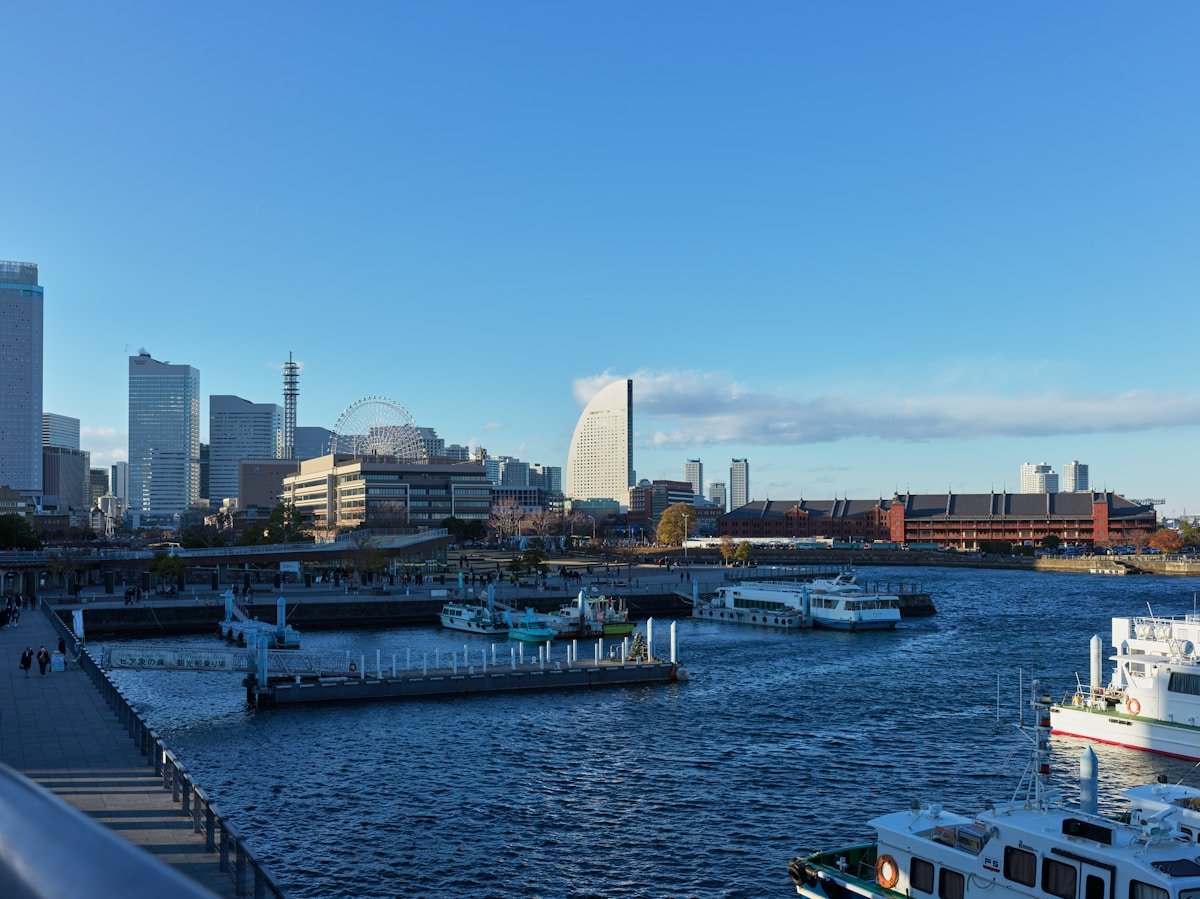
Minato Mirai: The redeveloped waterfront district centres on the distinctive Landmark Tower (72 floors; Sky Garden observation deck approximately ¥1,000 as of 2026) and the Cosmo Clock 21 Ferris wheel. The area around the Red Brick Warehouse (Akarenga Soko) has restaurants, shops, and event spaces in two restored 1910s port buildings. Walk the waterfront to Yamashita Park for views of the harbour and the moored Hikawa Maru ocean liner (museum ship, ¥300 entry).
Chinatown: Yokohama Chinatown is Japan’s largest, with around 600 restaurants and shops in a compact grid of streets. The pork buns (nikuman) sold hot at street stalls for approximately ¥300–¥500 are the obvious snack. Sit-down Cantonese and Chinese meals in the larger restaurants cost approximately ¥1,500–¥3,000 for lunch sets. The ornate Kantei-byo shrine at the centre of the district is free to enter.
Yamate: The hillside district above Yamashita Park has a collection of restored Western-style residences from the Meiji and Taisho eras, built by foreign merchants during Yokohama’s treaty port period. Several are open as free museums; the Foreigner’s Cemetery (Yamate Gaijin Bochi) and the Harbour View Park (Minato-no-Mieru-Oka Koen) offer excellent views. The area is quieter and more architecturally interesting than the waterfront.
Zushi Beach
The nearest proper beach to Kamakura, Zushi sits 10 minutes east by JR Yokosuka Line (¥200 as of 2026). While Kamakura’s Yuigahama and Zaimokuza beaches draw large crowds in July and August, Zushi maintains a slightly calmer, more residential atmosphere and is preferred by families and those wanting a lower-key beach experience.
The beach itself is sandy and clean, facing Sagami Bay with views across to the Miura Peninsula. Beach access is free; the summer season (mid-July to mid-August) brings the usual beach huts (umigoya) with loungers, food stalls, and drinking. Outside summer the beach is almost empty - a different experience altogether, popular with local surfers and dog walkers.
The town has a small independent shopping street with good coffee shops and a well-regarded local fish restaurant (Shiroki) near the station serving local catch at approximately ¥1,500–¥2,500 for a lunch set.
Hayama
A quiet coastal resort associated with the imperial family’s Hayama villa, Hayama sits on the eastern shore of the Miura Peninsula facing Sagami Bay. It lacks a train station - buses run from Zushi Station or Kamakura Station, approximately 30–40 minutes (¥400–¥600 as of 2026) - but the inconvenience keeps the crowds manageable.
Hayama Marina is the focal point: a compact boat harbour surrounded by restaurants and cafes with sea views. The beach at Isshiki is one of the cleanest on the Shonan coast. On clear days Mount Fuji is visible across the bay in the late afternoon, with the mountain silhouetted against the western sky - one of the better views of Fuji from this part of Kanagawa. The Hayama town area has a number of boutique restaurants serving locally caught fish; expect to pay approximately ¥2,000–¥4,000 for a lunch seafood course.
Kita-Kamakura
Not so much a separate destination as an extension of Kamakura, Kita-Kamakura (North Kamakura) is one stop north on the JR Yokosuka Line - barely two minutes and ¥200 as of 2026. The station exit opens almost directly onto the approach path to Engakuji temple, and the valley between Kita-Kamakura and Kamakura proper contains several of the best Zen temples: Engakuji, Jochiji, Meigetsuin (famous for hydrangeas in June), and Tokeiji.
If you have already covered the main Kamakura sights and want to see more temples in a quieter setting, Kita-Kamakura is the natural next step. The forested valleys between the temples are peaceful, particularly early in the morning. Engakuji charges ¥500 entry and is one of the finest Zen temple complexes in Kanagawa, with multiple sub-temples and a serene bell tower above the main compound.
Make the most of your time around Kamakura: Guided day trips from Kamakura handle the logistics - transport, guide, and timing - so you can focus on the experience. For airport arrivals and departures, Kiwitaxi offers fixed-price airport transfers with no meter surprises.
Planning Your Day
For most visitors staying in Kamakura, a morning spent at Kamakura temples followed by an afternoon on the Enoden to Enoshima is the most satisfying single-day combination. For a Yokohama day trip, the JR Yokosuka Line makes it straightforward to combine with a morning in Kamakura before heading north. Zushi and Hayama work best as afternoon add-ons or as standalone beach days in summer.
See things to do in Kamakura for the main temple and hiking routes, where to stay in Kamakura for accommodation options, and best restaurants in Kamakura for where to eat before or after your excursion.
Where to stay: Search hotels in Kamakura on Booking.com
See also: Kamakura travel guide · Things to do in Kamakura · Hakone travel guide · Tokyo travel guide · Nara vs Kamakura · Hakone vs Nikko · Kanto region guide